











By
Michael Kaplan
Reporter and Producer
Michael Kaplan is an award-winning reporter and producer for the CBS News Investigative Unit. He specializes in securing scoops and crafting long-form television investigations. His work has appeared on "60 Minutes," CNN and in The New York Times.
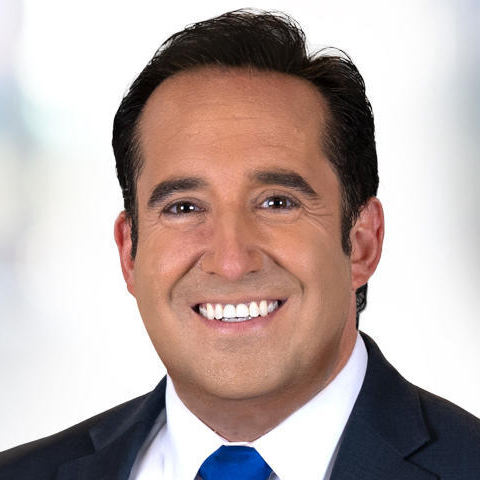
Jonah Kaplan
Investigative Reporter
Jonah Kaplan is an award-winning journalist who has built a strong reputation for his balanced reporting, thoughtful interviews, and deeply researched coverage of high-impact issues affecting the community. His work appears on all of WCCO's newscasts and is often featured on CBS News' programs and platforms, including the CBS Evening News, CBS Mornings and CBS 24/7.
/ CBS News
A U.S. Army unit asked to bulk up medical support weeks before a fatal Iranian strike on their command post in Kuwait, but they were ignored, soldiers told CBS News. Some of the survivors of the attack also said at least one soldier who was killed could have been saved if there had been more medical resources onsite.
The soldiers' accounts suggest the Pentagon didn't adequately prepare U.S. personnel for Iran's retaliatory strike that killed six U.S. service members and wounded 20. It was the deadliest attack on American troops since the Iran war began, and the worst since 2021.
"This was a failure," Major Stephen Ramsbottom said in an interview with CBS News. He said he believed Master Sergeant Nicole Amor could have survived her wounds had there been a doctor, a fixed aid station or more than one ambulance at the post.
"She could have been saved," he said. "She fought the whole way and was trying to stay alive."
Ramsbottom told CBS News he expected a convoy of aid to rush in to treat the dozens of wounded pulled from the rubble, only to discover no one was coming.
"I wanted to see like a line of ambulances coming towards us or something," said Ramsbottom, who was with the Army's 103rd Sustainment Command at a forward operating base in Kuwait. "And there wasn't that. It was like, oh man, we're on our own."
Ramsbottom is one of eight soldiers from the reserve unit who have disputed the Pentagon's account of the incident in interviews with CBS News. Soldiers previously told CBS News they were left unprotected from the drone attack despite intelligence showing Iran was targeting their position in Kuwait.
According to two soldiers who spoke on the condition of anonymity, the request to leadership for more resources ahead of the strike focused on the number of medical personnel as well as the availability and accessibility of medical supplies.
Another survivor of the drone strike, Master Sergeant Ann Marie Carrier, said the Army didn't plan for a mass casualty event, and there were never any run-throughs or rehearsals leading up to the start of the Iranian campaign, dubbed Operation Epic Fury by the Pentagon.
"We didn't have any training," Carrier told CBS News. Like Ramsbottom, she described a chaotic scene after the blast where soldiers had to commandeer civilian passenger vans and scramble to find a local Kuwaiti hospital to treat the wounded.
"There was really nothing in place for something like that to happen," she said.
In a statement, a Pentagon spokesperson said the department took "extraordinary steps" to protect U.S. troops before and during Operation Epic Fury.
"No plan is ever perfect, but accusations suggesting blatant disregard for the safety of our forces are unfounded and inaccurate," wrote Capt. Tim Hawkins of U.S. Central Command.
Hawkins said an investigation into the Kuwait attack is ongoing.
Carrier said she feels let down by her Army leadership. "It's saddening, disheartening," she said.
"She was fighting"
In the early morning hours before the March 1 attack, incoming missile alarms alerted the roughly 80-100 soldiers at Port of Shuaiba to take cover in a cement bunker. An Iranian ballistic missile passed overhead. But around 9:15 a.m., an all-clear sounded. Ramsbottom was at his desk when the drone smashed through the workspace's tin ceiling, spraying shrapnel in all directions, and lodging a chunk of glass in the back of his head.
"It went black," he explained. "I heard a loud bang and I got knocked to the ground."
Two and a half months after the attack, Carrier recalled the lights abruptly going out, the walls closing in on her, and then the acrid smell of blood. She had been seated next to Amor.
"When I got up, I know I instantly started screaming her name," said Carrier, who described Amor as her best friend. "She was my yin and yang."
Carrier says Amor was still breathing as they hoisted her into a passenger van. Ramsbottom says a medic joined them in the van, but he didn't have the supplies to stabilize Amor.
"She needed her airway treated," Ramsbottom said. "Like, she was fighting."
As they arrived at the Adan Hospital emergency room, south of Kuwait City, Amor was no longer breathing. She died at the hospital.
"I think if she would have gotten an ambulance, I think she might have lived," he said.
Ramsbottom said he recognizes these details may be painful for Amor's family, but said he is speaking out to prevent future missteps.
"It's a lesson learned," he said. "There could be other units in this very similar situation in the future. And if they plan properly, they can save more lives than we saved."
"We were told: Don't worry about protection"
About one week before the launch of Operation Epic Fury, several dozen members of the 103rd stationed at Camp Arifjan, a major U.S. base south of Kuwait City, were ordered to relocate to Port of Shuaiba, a smaller military outpost off Kuwait's southern coast.
The command post at Port of Shuaiba was similar to structures commonplace during the wars in Iraq and Afghanistan — before the rise of drone warfare. Steel-reinforced concrete barriers known as T-walls surrounded the building. These types of barriers are designed to shield service members from the blast of a mortar or rocket but offer no protection from aerial attacks.
U.S. intelligence warned as early as January that Iran would attack the post, multiple sources told CBS News. Ramsbottom, a career soldier with tours in Iraq and Afghanistan, said he raised concerns over safety to his senior leadership.
At operations and intelligence meetings starting about two weeks before the strike, the soldiers began asking for more drone defense.
"We were told: Don't worry about protection," he said.
The day after the attack, Defense Secretary Pete Hegseth described the Iranian drone as a "squirter" — in that it squirted through the defenses of a fortified unit inside Kuwait.
But Ramsbottom is one of several survivors who disputed Hegseth's description.
"We had no overhead protection to keep anything from falling on us," Ramsbottom said. "We had a tin roof. That's all we had."
In: