



惯性聚合 高效追踪和阅读你感兴趣的博客、新闻、科技资讯
阅读原文 在惯性聚合中打开

推荐订阅源

WordPress大学
WordPress大学
博客园 - 司徒正美
freeCodeCamp Programming Tutorials: Python, JavaScript, Git & More
A
About on SuperTechFans
Google DeepMind News
T
Tailwind CSS Blog
Cyber Security Advisories - MS-ISAC
M
MIT News - Artificial intelligence
L
LangChain Blog
aimingoo的专栏
aimingoo的专栏
Engineering at Meta
Engineering at Meta
Martin Fowler
Martin Fowler
H
Help Net Security
B
Blog
Y
Y Combinator Blog
小众软件
小众软件
S
SegmentFault 最新的问题
I
InfoQ
爱范儿
爱范儿
Hugging Face - Blog
Hugging Face - Blog
D
Docker
博客园 - 【当耐特】
J
Java Code Geeks
阮一峰的网络日志
阮一峰的网络日志

Home - CBSNews.com

"48 Hours" schedule: Live, DVR, and on demand Rory McIlroy wins second straight Masters Tournament Brian Hooker sent friends maps that he says show where his wife went missing in Bahamas Iran's parliament speaker says U.S. will be "nostalgic" for $4 gas as oil prices fuel inflation Democratic Rep. Eric Swalwell ends bid for California governor as he faces sexual assault allegations Trump says U.S. will blockade Strait of Hormuz after Iran peace talks collapse DHS looking into allegations Rep. Eric Swalwell hired nanny not authorized to work in U.S. Fallout from Eric Swalwell scandal grows as lawmakers eye House expulsion votes Rory McIlroy claims second straight Masters title Brian Hooker shared maps he says show where his wife went missing in the Bahamas Manhattan DA investigating sexual assault allegations against Rep. Eric Swalwell Extended interview: Sen. Dave McCormick on AI Trump says U.S. will blockade Strait of Hormuz and intercept ships that paid tolls to Iran Few see U.S. goals being met in Iran yet; Americans voice worry and stress in CBS News poll Hungarian Prime Minister Viktor Orbán concedes defeat in key election, ending 16 years in power Ukraine, Russia accuse each other of violating Putin's Orthodox Easter ceasefire Kimberly Langwell's Hidden Grave Decades after a Texas mom's disappearance, a tip leads to the location of her secret grave Kids, adults alike watch Artemis II crew's splashdown in San Diego JD Vance says U.S. and Iran did not come to a deal after marathon session Artemis II astronauts welcomed home to Houston after historic moonshot Artemis II crew returns to Houston after successful mission Artemis II astronauts speak publicly for first time since successful moon mission Federal appeals court sends White House ballroom construction lawsuit back to lower court Pope Leo criticizes "idolatry of self" in latest rebuke of Iran conflict: "Enough with war!" Iran reportedly proposes tolls for ships crossing Strait of Hormuz How Persian Gulf nations are reacting to the U.S. and Iran's temporary ceasefire U.S. naval destroyers have crossed the Strait of Hormuz, CENTCOM says Trump says U.S. is "clearing out" the Strait of Hormuz as U.S., Iranian officials meet in Pakistan Risk on the Road | Sunday on 60 Minutes
Scientists decipher new secrets from ancient scrolls scor...
Kerry Breen · 2026-06-26 · via Home - CBSNews.com

By

Kerry Breen is a news editor at CBSNews.com. A graduate of New York University's Arthur L. Carter School of Journalism, she previously worked at NBC News' TODAY Digital. She covers current events, breaking news and issues including substance use.

Read Full Bio

/ CBS News

Add CBS News on Google

A University of Kentucky project using artificial intelligence to help decode an ancient Roman mystery has led to a major discovery, researchers announced Thursday

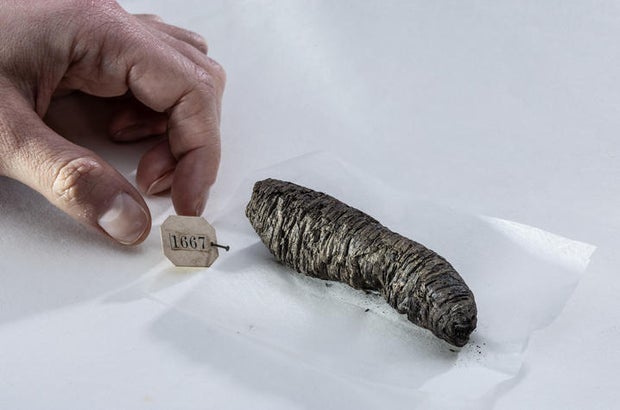
In 79 A.D., the eruption of Mount Vesuvius buried the Roman city of Pompeii and the nearby town of Herculaneum. During a dig in Herculaneum in the 18th century, archaeologists found 1,800 papyrus scrolls in an intact ancient library, deep under the site of a villa that was destroyed by Vesuvius' eruption. But reading them was impossible: The scrolls are brittle and charred, and unravelling them turns them into ash. 

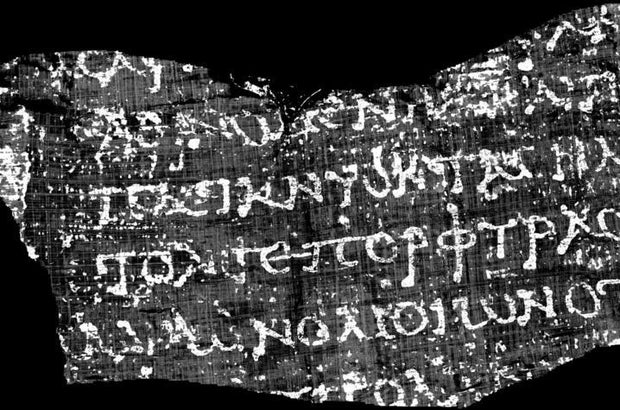
For centuries, researchers have worked to interpret the scrolls. Recent technology led to a breakthrough: A particle accelerator and AI were used to identify ink, even faint traces, allowing researchers to virtually unwrap the delicate scrolls. But interpreting the ancient language is another project entirely.  
mm10354-260324-000457-2.jpg
An unrolled Herculaneum scroll. National Library of Naples

In 2023, Brent Seales launched the Vesuvius Challenge, a global competition offering prize money for those who can help interpret the writing. Three college students became the first to extract words from a carbonized scroll in 2024. But they only interpreted about 5% of one scroll. 

The second phase of the challenge led to Thursday's major discovery. The University of Kentucky's Stanley and Karen Pigman School of Engineering, which leads the research in collaboration with the Biblioteca Nazionale di Napoli Vittorio Emanuele III in Naples, said that experts have virtually unwrapped one entire scroll, recovered more than 70 columns of text from another, identified two new books from ancient Rome, and recovered "sufficient text to support new critical scholarly editions." 

The virtually unwrapped scroll, PHerc. 1667, is one of the oldest in the collection, Nicolardi said. Now that it has been unrolled, efforts to determine the authorship of the paper is underway. One of the books revealed that the philosopher Philodemus wrote an eight-book series. Only one book had been previously known to exist. 

"For nearly two millennia, many of these texts have been physically preserved but intellectually inaccessible," Seales said in a news release. "Today — after years of interdisciplinary work combining advanced imaging, artificial intelligence (AI), academic research and an innovation contest — we are finally able to read them."
scroll-text.jpg
A virtually unwrapped piece of one scroll shows ancient Greek text.  Vesuvius Challenge

The amount of text revealed means scholars can read the scrolls as complete arguments, rather than as fragments. Federica Nicolardi, an assistant professor in papyrology at the Università degli Studi di Napoli Federico II in Naples, said that marks a "transformational shift" for researchers. 

"Today, we are hearing voices that have been silent for 2,000 years," Seales said. "For the first time, we are uncovering and reading them — but most importantly — we are beginning to understand them."

Still, more than 600 scrolls remain unopened and unread. Giorgio Angelotti, a project lead with the Vesuvius Challenge, said the effort is "ongoing" and that archaeologists need "everyone's help to read the scrolls." Seales said he believes the entire library can be deciphered. 

"This is no longer just about imaging or machine learning," Seales said. "Now we need experts who can read, edit and understand what they are saying."

In: