



By
/ CBS News
In February 1996, three small civilian planes took off from a Miami-area airport, operated by a Cuban exile group that searched for people seeking to flee the island nation in rafts. Two of the planes were shot down by a Cuban fighter jet, killing four people.
Now, 30 years later, the deadly shootdown appears to be the focus of a potential federal criminal case against one of the most powerful figures in Cuba.
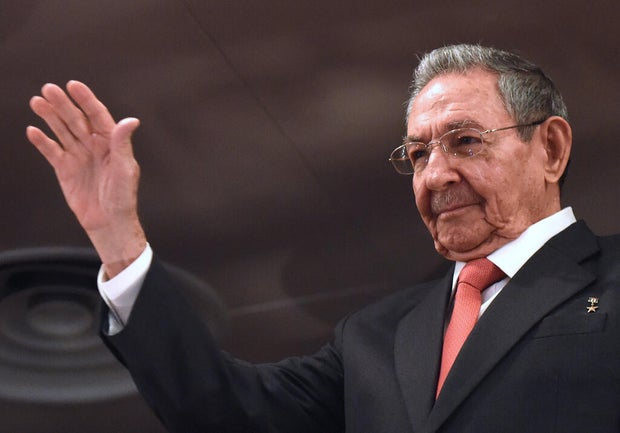
The U.S. is taking steps to indict Raúl Castro, the 94-year-old who led Cuba after the retirement of his older brother, Fidel, CBS News was first to report last week. An indictment would mark an escalation of the Trump administration's pressure campaign against Cuba and a new phase in the U.S.' long, tense relationship with the Castro family.
The organization that flew the planes, Brothers to the Rescue, was founded in the early 1990s by José Basulto, a Cuban American who has described himself as a participant in the Bay of Pigs invasion, the botched CIA-sponsored operation to oust Fidel Castro in 1961.
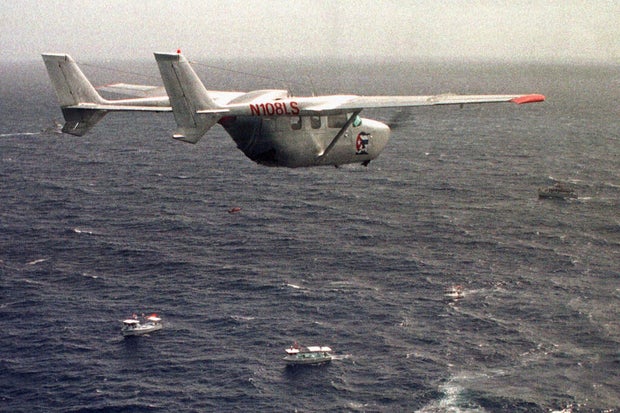
The group operated search-and-rescue flights over the waters between Florida and Cuba, aiding thousands of people who fled Cuba on makeshift vessels, according to Basulto. He later said the group also sought to help Castro opponents. By the mid-1990s, the Clinton administration stopped automatically admitting these emigrants into the U.S., causing the number of people taking to the sea in rafts to drop significantly.
The Cuban government accused Brothers to the Rescue of repeatedly violating its airspace and distributing anti-Castro leaflets, which it called "illegal and provocative" acts. Cuba also claimed the group sought to blow up electrical infrastructure, allegations that appeared to stem from a former Brothers to the Rescue member who returned to Cuba in 1996.
Basulto has said he did not plan to drop leaflets on the day of the deadly shootdown. Asked in 1999 about allegations that Brothers to the Rescue violated Cuban sovereignty, Basulto has argued that he has a right to enter and exit his own native country.
"I'm not a foreigner there," he said in a 1999 interview for the University of Miami's Institute for Public History. "And that sovereignty belongs to the people of Cuba, and not to the ruler, … and I'm not infringing on the sovereignty of my country, namely Cuba, by being there."
Three of the group's planes, carrying eight people in total, departed from Opa Locka Airport just after 1 p.m. on Feb. 24, 1996, and flew in the direction of Cuba, according to a detailed report by the U.N.'s International Civil Aviation Organization (ICAO).
Shortly before 3 p.m., Basulto radioed air traffic controllers in Havana to tell them his plane was crossing into Cuba's air defense identification zone, an area outside a country's airspace where planes are required to identify themselves. An air traffic controller warned he was "taking a risk," and Basulto responded that "we are ready to do so as free Cubans."
Less than half an hour after that, one of the group's Cessnas was destroyed by a Cuban-operated MiG-29 fighter jet, killing one U.S. citizen and one green card-holder. A second plane was destroyed moments later, killing two American citizens.
"This one won't f*** with us anymore," a Cuban pilot was recorded saying in Spanish after the first plane was shot down, according to a radio transcript in ICAO's report.
"Fatherland or death," the pilot said after the second Cessna was hit.
The third plane, carrying Basulto and three crew members, landed safely in Florida.
Basulto told CBS News Miami earlier this year, around the 30th anniversary of the shootdown: "I remember saying to Sylvia Iriondo in the plane, 'we are next.'"
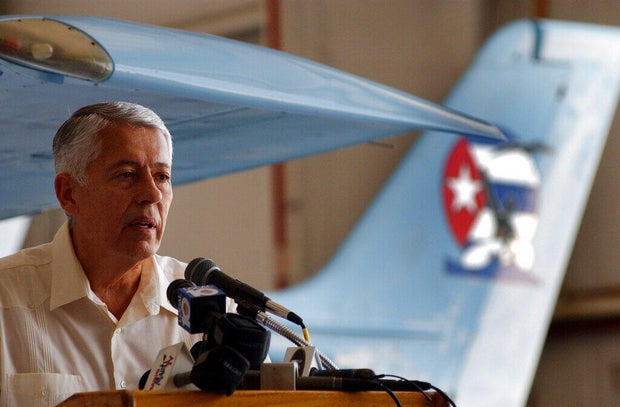
An investigation by the ICAO later concluded that the planes were shot down over international waters, several miles outside of Cuban airspace. Cuban and U.S. radar data conflicted, with Cuba claiming the planes were inside its airspace, according to the ICAO, so the organization based its findings on data from a nearby cruise ship.
The ICAO also noted that international law bars countries from firing at civilian planes, even inside their own airspace. And the organization found Cuba did not attempt less drastic measures, including communicating with the planes via radio or guiding them out of Cuban airspace. Intercepting civil aircraft is supposed to be a "last resort," the ICAO wrote.
Cuba has long defended its decision to shoot down the planes, insisting that Brothers to the Rescue had encroached on the country's sovereignty. Months later, Fidel Castro acknowledged to then-"CBS Evening News" anchor Dan Rather that he had given "general orders" to the military to stop planes from encroaching on Cuba, though he said that he and his brother, Raúl Castro, hadn't specifically ordered the two Cessnas to be shot down on Feb. 24.
In an interview with Time magazine, Fidel Castro said after repeated incursions on Cuban airspace: "We instructed the armed forces that we would not tolerate it again."
The U.S. reacted furiously to the shootdowns. Within weeks, Congress passed tighter sanctions on Cuba, and former President Bill Clinton suspended charter flights to the island nation and expanded broadcasts to Cuba by a U.S.-sponsored radio station.
"The planes posed no credible threat to Cuba's security," Clinton said in a speech a few days after the Cessnas were shot down. "Although the group that operated the planes had entered Cuban airspace in the past on other flights, this is no excuse for the attack, and provides—let me emphasize—no legal basis under international law for the attack."
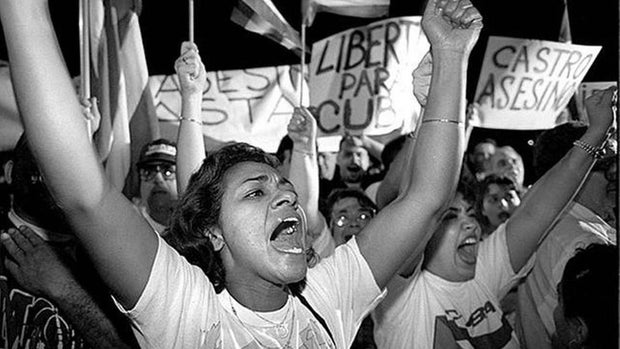
Years later, one person was convicted of murder conspiracy in connection with the shootdown, after U.S. prosecutors accused him of spying for Cuba and seeking to pass on information about the Brothers to the Rescue flights. After over a decade in prison, he returned to Cuba in a 2014 prisoner swap. Two fighter pilots and the head of Cuba's air force were also charged with murder in federal court but were never tried.
The incident was also heard in civil court. The families of some of the killed Cessna pilots sued the Cuban government, and a federal judge awarded them nearly $50 million in compensatory damages and just over $137 million in punitive damages.
But in recent months, the Brothers to the Rescue case has drawn renewed interest, with some Florida lawmakers and members of Miami's Cuban American community calling for charges against Raúl Castro, who led Cuba's armed forces when the planes were shot down.
The possible indictment comes at a delicate moment in U.S.-Cuba relations. The Trump administration has imposed a virtual oil blockade on the island, worsening the country's energy shortages and leading to widespread electric blackouts. Administration officials have pressed Cuba to make political and economic reforms, and have offered Cuba $100 million in aid, while President Trump floats a "friendly takeover" of the country.
Charges against Raúl Castro could also come months after the U.S. military apprehended former Venezuelan President Nicolás Maduro — an ally of the Cuban government — and whisked him to New York to face criminal prosecution.
In: