


惯性聚合 高效追踪和阅读你感兴趣的博客、新闻、科技资讯
阅读原文 在惯性聚合中打开

推荐订阅源

A
About on SuperTechFans
Cloudbric
Cloudbric
C
CERT Recently Published Vulnerability Notes
G
GRAHAM CLULEY
V
Vulnerabilities – Threatpost
C
Cisco Blogs
T
Tenable Blog
P
Privacy International News Feed
T
The Exploit Database - CXSecurity.com
I
Intezer
AWS News Blog
AWS News Blog
IT之家
IT之家
博客园 - 司徒正美
C
Cybersecurity and Infrastructure Security Agency CISA
博客园 - 【当耐特】
The Hacker News
The Hacker News
奇客Solidot–传递最新科技情报
奇客Solidot–传递最新科技情报
Spread Privacy
Spread Privacy
S
SegmentFault 最新的问题
博客园 - Franky
人人都是产品经理
人人都是产品经理
cs.CV updates on arXiv.org
V
Visual Studio Blog
C
CXSECURITY Database RSS Feed - CXSecurity.com
H
Hacker News: Front Page
Latest news
Latest news
Scott Helme
Scott Helme
腾讯CDC
宝玉的分享
宝玉的分享
大猫的无限游戏
大猫的无限游戏
cs.AI updates on arXiv.org
A
Arctic Wolf
S
Securelist
雷峰网
雷峰网
The GitHub Blog
The GitHub Blog
Project Zero
Project Zero
Google DeepMind News
P
Palo Alto Networks Blog
F
Fortinet All Blogs
Schneier on Security
云风的 BLOG
云风的 BLOG
Security Archives - TechRepublic
The Last Watchdog
The Last Watchdog
WordPress大学
WordPress大学
MongoDB | Blog
MongoDB | Blog
L
LINUX DO - 最新话题
S
Schneier on Security
NISL@THU
NISL@THU
Jina AI
Jina AI
M
MIT News - Artificial intelligence

Salesforce

How We Protect Our Data as Customer Zero Scale Your MRR: Subscription Management For Small Business Streamlining Commerce Media Ad Inventory Management 12 AI Sales Strategies for Startups That Actually Work Sell Smarter: Ecommerce Metrics To Track For Your Small Business Shop Apply the Orchestration Density Framework to Your Next Automation Decision Wait, Black Friday Planning In Spring? It’s Time to Start Holiday Promotions AI-First Operations, One Process at a Time How BCU Is Transforming Banking Service with Agentforce Salesforce Headless 360: What the Agent Consumer Means for Your Integration Architecture Meet Customers Where They Are: Agentforce Contact Center Now Offers WhatsApp Voice 11 Free Lead Generation Tips for Small and Growing Businesses SFR-VibeTrain: The Agent That Trains Agents Why Technical Accuracy is the Wrong Metric for Agent Success Strengthening Salesforce Security Against AI-Driven Threats Join Us in the Community Hub at Connections 2026 The Best Way To Build AI Agents That Customers Trust Trust in the Era of Agents: Highlights from the 2nd Annual Trusted AI Impact Report You Can Be an Agentic Enterprise No Matter What Size Business How to Make Your Email Marketing Accessible for Everyone What is Headless? Don’t Lose Your Head, SMBs: It’s a Good Thing Architect the Future UI: Slack as Your Agentic Surface Point of Sale Innovations to Modernize the Shopper Experience Governing the Agentic Enterprise at Scale with MuleSoft Omni Gateway How to Cut Service Time with Case Routing Automation 5 Tips for Marketers to Get Started with Salesforce Flow No One is Vibe Coding Trade Promotion Management 7th Edition State of Sales Report: 3 Growth Trends for Startups and SMBs How the Architect Vista Brought Architectural Thinking to Life at TDX 2026 5 Steps to Develop an Architect Mindset With AI Why AI Isn’t Replacing Developers, It’s Empowering Them 10 Ways to Make Your AI Agent a Better Communicator AI in Design 2025: What Real Use Taught Us. How Salesforce Personalization Learns Which Offers Drive Revenue The 4-Step Guide to Salesforce Agent and Application Development Get Ready for Connections 2026: Top Sessions and New Reveals 8 Ways AI Agents Are Evolving in 2026 4 Principles to Make the Right Salesforce UI Decisions Apprentice Journey Shines a Light on Talent Pathways at Salesforce Agent Script: The Control Plane for Agentic Decisions Scaling the Agentforce Life Sciences Ecosystem to Drive the Future of Pharma and MedTech Unlocking Unstructured Data: Building AI-Powered Support Triage with Data 360 Asking For a Friend: What Are Rich Communication Services (RCS)? 5 Slack Shortcuts For Small Teams 195% ROI In Field Service? Here’s How They Did It Submit Your Architect Session: The Dreamforce 2026 Call for Participation Is Open What Is an AI Assistant for Small Business? B2C Commerce April release: Transforming the B2C developer experience with agents Meet Your 24/7 Prospecting Partner — And 5 More Stand-Out Features In Our April Release 11+ Small Business YouTube Channels You Need to Follow Today Stop Treating Disputes Management Like IT Tickets Limitless Service: A New Operating Model for Growth in the Agentic Era What is Transactional Reconciliation in Email and SMS Marketing? How to Prepare for National Small Business Week (2026) How to Design a High-Scale Multi-Cloud Incident Journey 10 Ways An AI CRM Can Amplify Your Startup Vibe Code Better Agents with Agentforce Free vs. Paid CRM: Which is Right for Your Business? Salesforce Customer Success Awards 2026: Lead Era of the Agentic Enterprise 12 Free Webinars for Small Business Owners (2026) The Agentforce Life Sciences Consultant Certification Maximize Growth: The Power of Partnerships for SMBs Salesforce AI Research at ICLR 2026 Data Protection For Small Business: How To Safeguard Yourself Beyond 100K Tokens: Evaluating AI Agents in Long-Context Software Engineering Top 32 Small Business Tools To Try Today 6 New Innovations Redefining Salesforce Development How to Win the Battle for Attention in the Agentic Email Inbox Mastering the Eisenhower Matrix: Prioritize Like a Pro 10 Signs It’s Time To Upgrade Your CRM and How To Get Started (2026) Celebrating 10 Years of Financial Services Innovation How SMBs Can Gain An Edge With Agentic AI: Key Trends From Our Marketing Report How MAN Truck & Bus is Shaping the Future of Sales with Salesfive Introducing the Future of Salesforce Data Protection: Backup & Recover Next Stop Making AI Slop – Build a Foundation for Authentic AI Content 5 Tips to Help Marketers Navigate AI Email Summaries Data Sharing: Is it Safe? Is it Secure? Everything You Need to Know Small Business Week Readiness: 4 Things to Do Before May (2026) How Salesforce Employees Make an Impact During Earth Month AI Agents Are Advancing Rapidly… Is Your Testing Strategy Keeping Up? What Is Microproductivity and Why Is It Helping So Many Teams? TDX 2026 Roundup: Agentforce Edition 3 Ways Salesforce Connections Has Boosted My Career AI Agents Don’t Just Answer‌ — ‌They Act. Do You Have a Governance Strategy? The Future of MedTech Field Execution is Agentic 5 Steps to Prepare Your Data For an AI CRM From Break/Fix to Profit Engine: Aftermarket Service for Robot OEMs Building Trusted Human-Agent Collaboration: A Practical Framework ISV Strategy for the Salesforce Summer ’26 Release 5 Email Marketing Tips for Small Business Commerce Shops Should You Give Your AI Agent a Human Name? Creating Pathways into AI for People with Disabilities The Organized Chaos of Upfronts: 3 Hurdles Impacting Your Yield Trying to Scale Beyond ‘One-Off’ AI Tasks? You’re Probably Using the Wrong Interface What is Cost Per Lead (CPL)? The Case for Unified CCaaS and CRM — And Why the Data Makes It Clear In the New Era of AI, You Need to Win Over Both Humans and Agents What Is SPIN Selling? A Way to Build Trust With Your Customers G2 Crowns Salesforce as Best Financial Services Software Hidden Insights: The Guide to Tableau For Small Business Owners
5 Ways AI is Changing the Communication Game For Startups
Caylin White · 2026-05-12 · via Salesforce

How are you communicating with your team lately? Do you share a Slack message, send an email, or call a meeting? Maybe you do all three. Regardless of how you communicate at work, things are changing. Rapidly. And artificial intelligence (AI) has a big hand in this. 

Small and growing businesses and startups are communicating in ways like never before, and sometimes it can be hard to keep up. The good news is, you’ve got resources and support to help you stay ahead of the trends, right here. Let’s find out how AI is changing the communication game. 

The AI imperative for business communication

The shift toward AI-powered communication is no longer optional for businesses aiming for growth. According to the latest State of the AI Connected Customer report, a staggering 75% of business buyers expect companies to anticipate their needs, and 88% of customers agree that the experience a company provides is just as important as its products or services. 

Communication goes beyond the internal. It’s about meeting high expectations for customer personalization and speed, with limited resources. AI solves this by acting as a force multiplier, enabling small teams to analyze large amounts of data, automate routine interactions, and provide the personalized, proactive service that today’s market demands, ensuring the customer experience remains central to every interaction.

Five ways AI is transforming communication for startups

Here are five key ways AI is changing business communication for startups and growing businesses, and some might surprise you:

1. Smarter data is personalizing every message

The first major shift in communication is in how you and your team are talking to customers. Many small and medium business (SMB) leaders struggle to keep track of every individual preference, leading to generic emails that people often ignore. By implementing a customer relationship management (CRM) system, you can centralize every interaction to ensure your messaging feels personal.

AI tools can generate marketing materials, reports, and emails, while AI-powered translation services allow teams to communicate in real time across different languages, breaking down global communication barriers. 

Using artificial intelligence (AI) helps your marketing team produce high-quality drafts without starting from a blank page every morning. This technology helps you scale your outreach efforts while making sure every recipient feels like you’re speaking directly to them. When your sales team has better data, they can spend less time guessing and more time solving problems for their clients.

Here are a few ways AI is changing the personalization game: 

  • Tailored emails: Generate draft responses that reference a customer’s specific history and interests.
  • Segmented lists: Automatically group your audience based on their behavior so they only receive news they care about.
  • Brand consistency: Ensure your tone of voice remains steady across every channel, from social media to direct mail.

2. Teams are in communication flow with Employee Agents

AI-powered communication tools can automatically transcribe meetings, summarize key decisions, and assign action items, while “sentiment analysis” allows businesses to analyze the tone of voice and emotion in customer calls to improve satisfaction.

Employee agents, autonomous AI assistants that help the flow of work, optimize internal workflows by identifying communication bottlenecks, and turn complex data into actionable summaries or “narratives” to help teams make quicker, data-driven decisions.

Employee agents help you communicate effectively by:
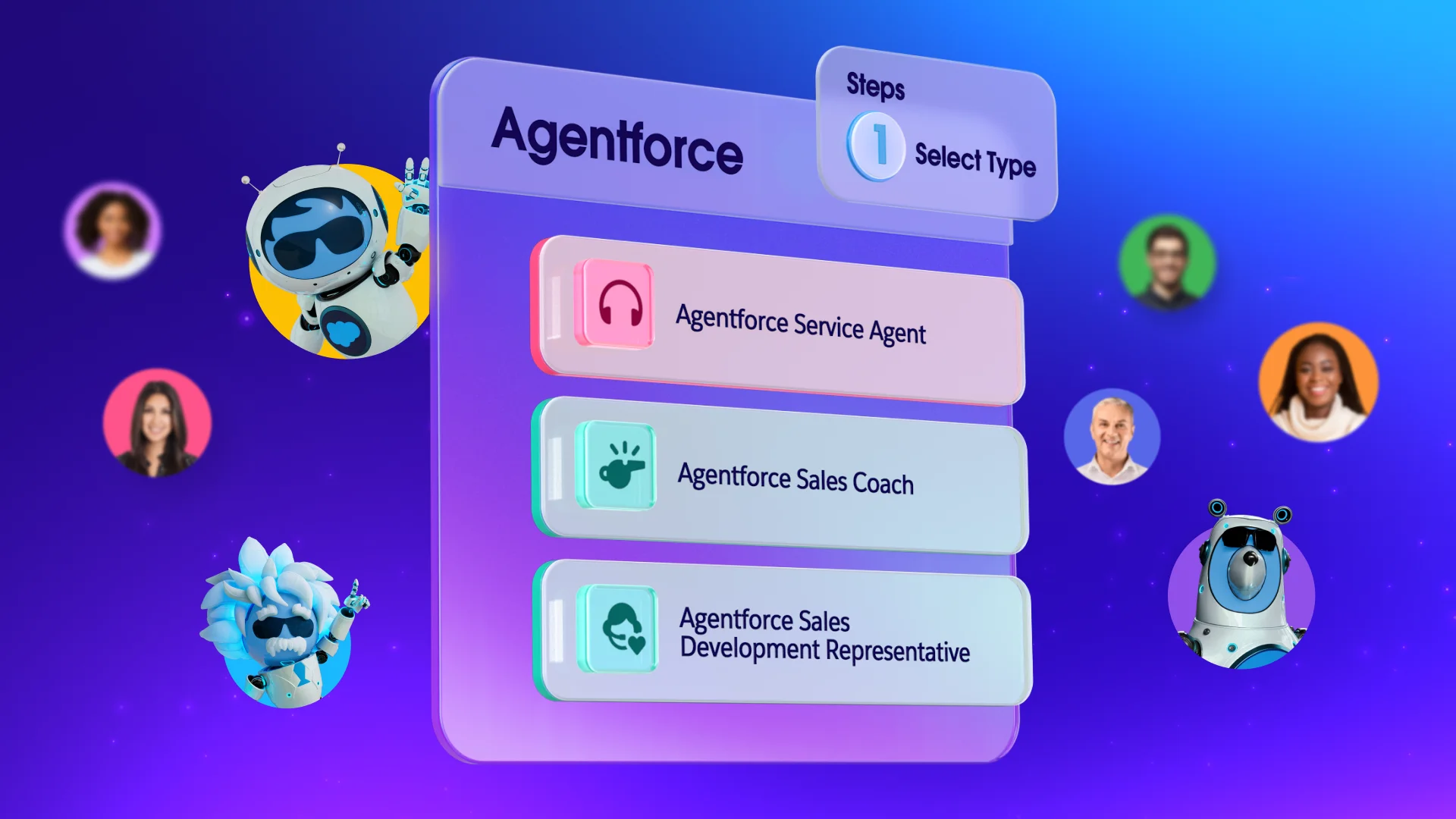
  • Real-time retrieval: Instantly surface relevant information from internal knowledge bases, eliminating the need to search through multiple documents or systems to answer a question or make a decision.
  • Automated summaries: Synthesize long email threads, chat histories, and meeting transcripts into concise summaries, so you can catch up on conversations and projects quickly.
  • Proactive task management: Monitor project communication and automatically create, assign, and track action items, organizing discussions and workflows for accountability.
Agentforce 360

3. Service reps are chatting with your customers around-the-clock

Another way AI is changing how startups communicate is through the power of instant availability. According to the latest State of Service report, 60% of customers prefer to communicate with a company using digital self-service channels. Customers expect answers in minutes, not days, which can be a huge burden for a small team trying to balance multiple roles. Using intelligent AI agents to direct them to the self-service portal or to handle common questions, allows your business to stay open even when you’re offline.

AI-powered service chatbots and virtual assistants (VAs) handle routine inquiries instantly, offering personalized product recommendations and support, which reduces wait times and improves customer experience.

  • Instant answers: Use automated tools to resolve simple tracking or billing questions immediately.
  • Smart routing: Ensure complex issues get sent to the right expert on your service team right away.
  • Multilingual support: Communicate with a global audience in their preferred language without hiring a massive translation staff.

Small businesses can use these tools to bridge the gap between their limited resources and the high expectations of their customers. By letting AI handle ‌repetitive tasks, your team is free to focus on the high-value work that requires a human touch. This balance ensures your communication remains efficient without losing the empathy that makes your startup unique.

Get Service for Small Business free.

No credit card required, no software to install.

4. AI is anticipating customer needs before they ask

The most advanced way AI is changing how startups communicate is by moving from reactive to proactive interactions. Besides service, your commerce platform can suggest products or services based on past purchases. With an AI shopping assistant, they can help shoppers get what they need quickly, and come back for more. This creates a smoother experience where the customer feels understood and valued at every step of their journey.

AI uses data to predict customer needs and behaviors, enabling companies to proactively send tailored offers or messages before a client reaches out.

  • Predictive insights: Identify which customers might be getting ready to make a purchase or who might need extra help.
  • Automated follow-ups: Send a gentle reminder or a helpful resource exactly when a lead is most likely to engage.
  • Better decision-making: Use data to see which communication styles are getting the best results so you can adjust your strategy.

Be the first to offer a solution to a problem a customer hasn’t even voiced yet. This proactive approach is a core part of how AI is changing how startups communicate in a crowded market. It allows you to act with the speed and intelligence of a much larger corporation while keeping your productivity high and your costs low.

5. All communication lines are aligned with an AI CRM 

As your business grows, you need tools that can handle the complexity of more customers and more data. This is why many successful startups are moving toward Agentforce 360 to manage their autonomous agents and workflows. These agents don’t just chat — they take action, like updating a record or closing a deal, based on the context of the conversation.

  • Seamless integration: Connect your communication tools with your back-office systems to ensure everyone has the same information.
  • Actionable outcomes: Move beyond simple text generation to agents that can actually execute tasks for your customers.
  • Trusted data: Build your AI strategy on a foundation of privacy and security to protect your customer relationships.

And, what can Slack really do for your communication? 

Slack AI can immediately summarize channels, threads, and huddles, giving small teams instant clarity on key decisions and action items. This allows your team to get up to speed quickly on ongoing projects, reducing time spent catching up and refocusing efforts on core tasks. It also features a new search experience that uses generative AI to instantly answer questions using the collective knowledge stored in Slack, transforming your communication history into a powerful, accessible knowledge base.

Get Slack for Small Business.

Growing teams can take business to the next level.

Try Slack and CRM to communicate with the best of them

By integrating these advanced features, you ensure that your startup stays agile and ready for whatever comes next. The way AI is changing how startups communicate means you no longer have to choose between going big and staying personal. You can do both, building a brand that is known for its responsiveness and its deep understanding of its audience.

Get started with Salesforce Suites for free or activate Foundations to try out Agentforce 360 today.

AI supported the writers and editors who created this article.

What is the core benefit of using AI for communication in a startup setting?
AI tools for communication enable small teams to scale personalized outreach, provide instant 24/7 service, and automate routine tasks without increasing headcount. This balance allows startups to meet high customer expectations for personalization and speed with limited resources.

How does AI help startups maintain a personal touch while scaling their communication?
AI tools, particularly when integrated with a CRM, help maintain a personal touch by analyzing customer data to generate tailored messages, segment audiences based on behavior, and ensure brand consistency across all channels. This makes recipients feel like the business is speaking directly to them, even at scale.

In addition to customer-facing communication, how does AI impact internal team communication?
Internally, AI-powered employee agents optimize workflows by instantly surfacing relevant information, automatically summarizing long conversations (emails, chats, meetings), and proactively creating/tracking action items. This speeds up decision-making and aligns teams by reducing time spent catching up.

What is the significance of the shift from reactive to proactive communication enabled by AI?
This shift allows startups to anticipate customer needs and behaviors. By using predictive insights, businesses can proactively send tailored offers or helpful resources before a customer even reaches out, creating a smoother experience where the customer feels understood and valued.

Why is integrating an AI CRM essential for a growing startup’s communication strategy?
An AI CRM (like Agentforce 360) aligns all communication lines, connecting front-end tools with back-office systems to ensure consistent information across the organization. It enables AI agents to move beyond simple chat to execute actionable outcomes, like updating records or closing deals, all built on a foundation of trusted and secure data.