
惯性聚合 高效追踪和阅读你感兴趣的博客、新闻、科技资讯
阅读原文 在惯性聚合中打开

推荐订阅源

L
LangChain Blog
博客园 - 司徒正美
美团技术团队
WordPress大学
WordPress大学
奇客Solidot–传递最新科技情报
奇客Solidot–传递最新科技情报
人人都是产品经理
人人都是产品经理
让小产品的独立变现更简单 - ezindie.com
T
Troy Hunt's Blog
S
Schneier on Security
T
The Exploit Database - CXSecurity.com
P
Proofpoint News Feed
云风的 BLOG
云风的 BLOG
Engineering at Meta
Engineering at Meta
Cisco Talos Blog
Cisco Talos Blog
T
Tor Project blog
B
Blog
NISL@THU
NISL@THU
月光博客
月光博客
博客园 - 【当耐特】
AWS News Blog
AWS News Blog
cs.CL updates on arXiv.org
腾讯CDC
L
Lohrmann on Cybersecurity
The Cloudflare Blog
L
LINUX DO - 最新话题
S
Security @ Cisco Blogs
S
Secure Thoughts
Spread Privacy
Spread Privacy
有赞技术团队
有赞技术团队
The Last Watchdog
The Last Watchdog
Project Zero
Project Zero
cs.AI updates on arXiv.org
Vercel News
Vercel News
H
Hacker News: Front Page
S
SegmentFault 最新的问题
Schneier on Security
aimingoo的专栏
aimingoo的专栏
P
Privacy & Cybersecurity Law Blog
博客园 - 三生石上(FineUI控件)
Forbes - Security
Forbes - Security
C
CXSECURITY Database RSS Feed - CXSecurity.com
I
InfoQ
T
Tailwind CSS Blog
Application and Cybersecurity Blog
G
GRAHAM CLULEY
W
WeLiveSecurity
小众软件
小众软件
Recorded Future
Recorded Future
Cyberwarzone
Cyberwarzone
cs.CV updates on arXiv.org

Salesforce

Scale Your MRR: Subscription Management For Small Business Streamlining Commerce Media Ad Inventory Management 12 AI Sales Strategies for Startups That Actually Work Sell Smarter: Ecommerce Metrics To Track For Your Small Business Shop Apply the Orchestration Density Framework to Your Next Automation Decision Wait, Black Friday Planning In Spring? It’s Time to Start Holiday Promotions AI-First Operations, One Process at a Time How BCU Is Transforming Banking Service with Agentforce Salesforce Headless 360: What the Agent Consumer Means for Your Integration Architecture Meet Customers Where They Are: Agentforce Contact Center Now Offers WhatsApp Voice 11 Free Lead Generation Tips for Small and Growing Businesses SFR-VibeTrain: The Agent That Trains Agents Why Technical Accuracy is the Wrong Metric for Agent Success Strengthening Salesforce Security Against AI-Driven Threats Join Us in the Community Hub at Connections 2026 The Best Way To Build AI Agents That Customers Trust 5 Ways AI is Changing the Communication Game For Startups Trust in the Era of Agents: Highlights from the 2nd Annual Trusted AI Impact Report You Can Be an Agentic Enterprise No Matter What Size Business How to Make Your Email Marketing Accessible for Everyone What is Headless? Don’t Lose Your Head, SMBs: It’s a Good Thing Architect the Future UI: Slack as Your Agentic Surface Point of Sale Innovations to Modernize the Shopper Experience Governing the Agentic Enterprise at Scale with MuleSoft Omni Gateway How to Cut Service Time with Case Routing Automation 5 Tips for Marketers to Get Started with Salesforce Flow No One is Vibe Coding Trade Promotion Management 7th Edition State of Sales Report: 3 Growth Trends for Startups and SMBs How the Architect Vista Brought Architectural Thinking to Life at TDX 2026 5 Steps to Develop an Architect Mindset With AI Why AI Isn’t Replacing Developers, It’s Empowering Them 10 Ways to Make Your AI Agent a Better Communicator AI in Design 2025: What Real Use Taught Us. How Salesforce Personalization Learns Which Offers Drive Revenue The 4-Step Guide to Salesforce Agent and Application Development Get Ready for Connections 2026: Top Sessions and New Reveals 8 Ways AI Agents Are Evolving in 2026 4 Principles to Make the Right Salesforce UI Decisions Apprentice Journey Shines a Light on Talent Pathways at Salesforce Agent Script: The Control Plane for Agentic Decisions Scaling the Agentforce Life Sciences Ecosystem to Drive the Future of Pharma and MedTech Unlocking Unstructured Data: Building AI-Powered Support Triage with Data 360 Asking For a Friend: What Are Rich Communication Services (RCS)? 5 Slack Shortcuts For Small Teams 195% ROI In Field Service? Here’s How They Did It Submit Your Architect Session: The Dreamforce 2026 Call for Participation Is Open What Is an AI Assistant for Small Business? B2C Commerce April release: Transforming the B2C developer experience with agents Meet Your 24/7 Prospecting Partner — And 5 More Stand-Out Features In Our April Release 11+ Small Business YouTube Channels You Need to Follow Today Stop Treating Disputes Management Like IT Tickets Limitless Service: A New Operating Model for Growth in the Agentic Era What is Transactional Reconciliation in Email and SMS Marketing? How to Prepare for National Small Business Week (2026) How to Design a High-Scale Multi-Cloud Incident Journey 10 Ways An AI CRM Can Amplify Your Startup Vibe Code Better Agents with Agentforce Free vs. Paid CRM: Which is Right for Your Business? Salesforce Customer Success Awards 2026: Lead Era of the Agentic Enterprise 12 Free Webinars for Small Business Owners (2026) The Agentforce Life Sciences Consultant Certification Maximize Growth: The Power of Partnerships for SMBs Salesforce AI Research at ICLR 2026 Data Protection For Small Business: How To Safeguard Yourself Beyond 100K Tokens: Evaluating AI Agents in Long-Context Software Engineering Top 32 Small Business Tools To Try Today 6 New Innovations Redefining Salesforce Development How to Win the Battle for Attention in the Agentic Email Inbox Mastering the Eisenhower Matrix: Prioritize Like a Pro 10 Signs It’s Time To Upgrade Your CRM and How To Get Started (2026) Celebrating 10 Years of Financial Services Innovation How SMBs Can Gain An Edge With Agentic AI: Key Trends From Our Marketing Report How MAN Truck & Bus is Shaping the Future of Sales with Salesfive Introducing the Future of Salesforce Data Protection: Backup & Recover Next Stop Making AI Slop – Build a Foundation for Authentic AI Content 5 Tips to Help Marketers Navigate AI Email Summaries Data Sharing: Is it Safe? Is it Secure? Everything You Need to Know Small Business Week Readiness: 4 Things to Do Before May (2026) How Salesforce Employees Make an Impact During Earth Month AI Agents Are Advancing Rapidly… Is Your Testing Strategy Keeping Up? What Is Microproductivity and Why Is It Helping So Many Teams? TDX 2026 Roundup: Agentforce Edition 3 Ways Salesforce Connections Has Boosted My Career AI Agents Don’t Just Answer‌ — ‌They Act. Do You Have a Governance Strategy? The Future of MedTech Field Execution is Agentic 5 Steps to Prepare Your Data For an AI CRM From Break/Fix to Profit Engine: Aftermarket Service for Robot OEMs Building Trusted Human-Agent Collaboration: A Practical Framework ISV Strategy for the Salesforce Summer ’26 Release 5 Email Marketing Tips for Small Business Commerce Shops Should You Give Your AI Agent a Human Name? Creating Pathways into AI for People with Disabilities The Organized Chaos of Upfronts: 3 Hurdles Impacting Your Yield Trying to Scale Beyond ‘One-Off’ AI Tasks? You’re Probably Using the Wrong Interface What is Cost Per Lead (CPL)? The Case for Unified CCaaS and CRM — And Why the Data Makes It Clear In the New Era of AI, You Need to Win Over Both Humans and Agents What Is SPIN Selling? A Way to Build Trust With Your Customers G2 Crowns Salesforce as Best Financial Services Software Hidden Insights: The Guide to Tableau For Small Business Owners
How To Conduct a Business Survey And Make it Impactful
Caylin White · 2026-06-12 · via Salesforce

The fastest way to grow your business isn’t guessing what your customers want — it’s asking them.

For lean businesses, that’s a real competitive edge. While others are making assumptions based on things like dipped sales or a spike in support tickets, you can build a direct line to your audience that tells you exactly where your biggest opportunities are hiding.

A well-designed business survey turns customer feedback into one of your most valuable assets — giving your sales, marketing, and service teams the clarity they need to move faster, make smarter decisions, and deliver the kind of experience that keeps customers coming back. In this guide, we’ll walk you through how to build a survey process that actually gets responses and turns insights into action.

What’s a business survey and why does your SMB need one? 

A business survey gathers honest feedback and direct data from customers to understand what they want and why they might be leaving. For a small or medium business (SMB), a well-planned survey provides meaningful, actionable insights that help sales, marketing, and service teams grow faster. 

It moves your business past the ‘guessing game’ of growth by bridging the gap between assumptions and customer data, ultimately helping to build brand advocates and allowing you to scale your service effectively.

The survey setup for business success

First, you’ll have to set your business survey goals, identify who you’re trying to reach, and choosing the right question and distribution methods. Here are a few tactics to get you started:

Set your survey goals

Before you send out a single question, decide what you want to learn from your audience. For a lean team, this might mean asking about a new product feature, while an established company might focus on customer loyalty.

Having a clear objective ensures that you don’t waste your customers’ time with irrelevant questions. When you know your goal, your business survey becomes a tool for gathering actionable data rather than a generic form.

Identify your target audience

You don’t always need to poll every person who has ever bought from you. Sometimes it’s better to focus on your most active users or perhaps those who haven’t made a purchase in over six months.

Segmenting your audience allows you to tailor the language to their specific experiences with your brand. By reaching the right people, your business survey will yield much higher response rates and more accurate results. You can try this segmentation to start:

Choose the right survey questions for your brand

The way you phrase things matters just as much as what you’re asking. We’ll offer some suggestions in the steps later on this article. For now, here are some tips to get started:

  • Try a mix of multiple-choice questions for easy data analysis and open-ended questions to let people express their feelings in their own words.
  • Avoid leading questions that push the person toward a specific answer.
  • Keep the list short — ideally under five minutes — so that busy professionals are more likely to finish the entire business survey.

Select a distribution method

Startups have many ways to reach people, from email newsletters to text messages or even QR codes on packaging. Consider where your customers spend the most time and meet them there to make it easy for them to respond.

If you have a high volume of website traffic, a simple pop-up form after a purchase might be the best way to catch people while your brand is top of mind. No matter the method, ensure the design is mobile-friendly since most people check their messages on the go.

Pro tip: A sales customer relationship management (CRM) tool will help you create, launch and automate this survey workflow. More to come on this later.

Service for small business is here.

Crafting and executing a business survey is easier with the right strategy and tools. Here are some recommended steps to kick off a survey that works for you and your business: 

Step 1: Define your specific research question

Start by picking one problem you want to solve right now. Are you trying to find out why people are abandoning their shopping carts, or do you want to know if your pricing is too high?

Focusing on one area prevents “survey fatigue” and keeps your data clean. When you narrow your focus, the results of your business poll will be much easier for your team to implement.

Here are some examples of common business survey questions: 

  • How satisfied are you with our product or service?
  • How likely are you to recommend our company to a friend or colleague?
  • What’s the main reason you chose our product over a competitor?
  • What feature could we add or improve to make your experience better?
  • How easy was it to find the information you needed today?

Step 2: Draft your questions with clarity (and a little help from AI)

Write like you’re talking to a friend rather than a formal board of directors. Avoid acronyms or internal names for products that your customers might not recognize or understand.

Test your questions on a few team members first to make it certain nothing is confusing. A clear business survey leads to clear answers, which makes your next steps much more obvious.

Pro tip: Use artificial intelligence (AI) tools to help you craft the perfect way to ask questions by implementing your brand’s voice and tone, or guidelines. 

Step 3: Set up your survey platform

You need a tool that can handle the data and provide simple charts to visualize the results. Look for platforms that integrate directly with your existing CRM system so you don’t have to export files manually.

Automating the survey data means your sales reps can see feedback directly on a lead record. This connection turns a simple poll into a powerful part of your entire business ecosystem. Here’s the short list of free survey platforms for small businesses: 

  • Salesforce Suites: Integrates directly with your CRM to automatically update customer records with survey responses for easy follow-up and data flow automation.
  • SurveyMonkey: Allows you to build mobile-ready surveys, automate distribution after specific customer interactions, and map results to custom objects.
  • Google Forms: Provides free basic templates for quick and easy survey setup, ideal for businesses that are just getting started with collecting feedback.

Get Service for Small Business free.

No credit card required, no software to install.

Step 4: Design and send the initial invitation

Design your survey with your branding, showcasing your authenticity and individuality. (This is the fun part).

You can use free tools like Canva to create the look and feel of your survey, giving plenty of room for the survey taker to complete it. Be sure to include your logo and business information. Here’s a great example of a branded business survey: 
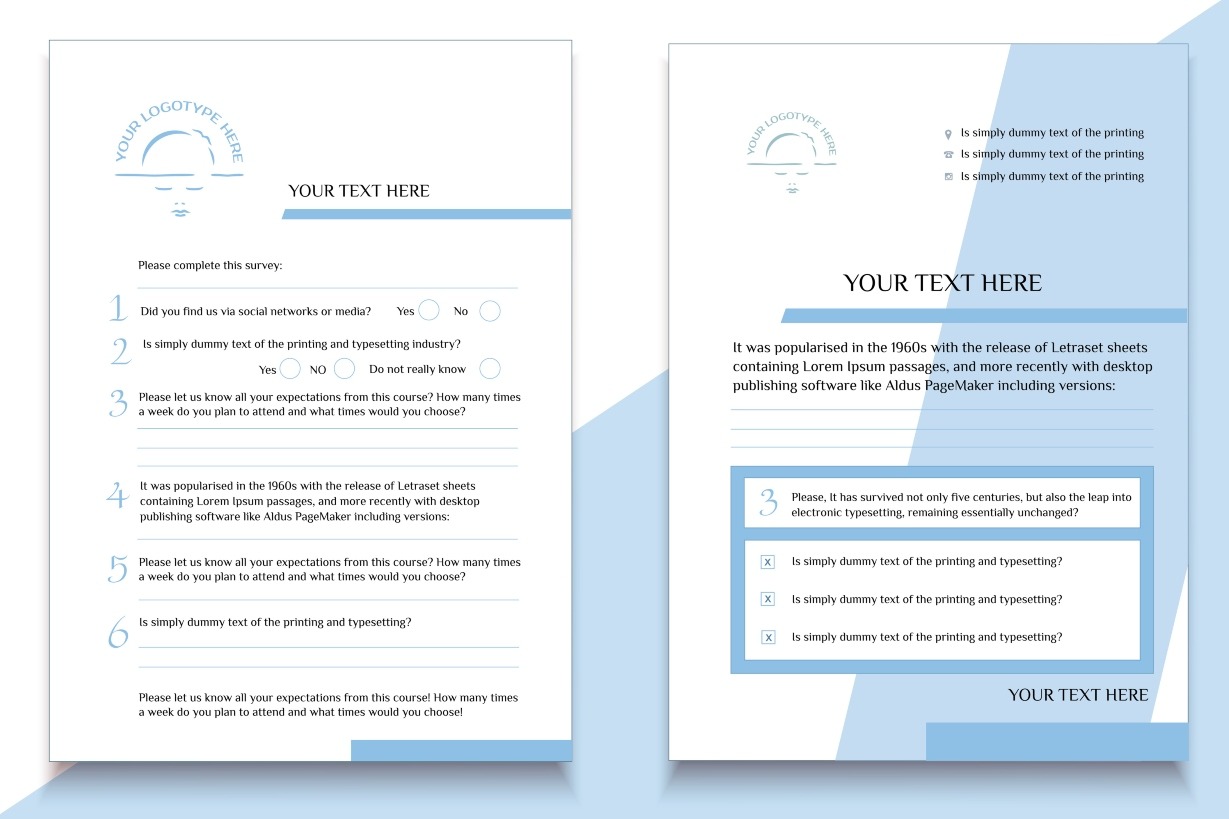
(Source: Adobe | Alexandra

Timing is everything when you’re looking for high response rates. Sending an invite mid-morning, mid-week often works better than late on a Friday afternoon when people are signing off.

Explain why you’re asking for their help and how their feedback will lead to better experiences. People are more likely to participate in a business survey if they feel their voice actually leads to change.

Step 5: Send a gentle reminder

You can use your email marketing capabilities in your CRM tool to send reminders. Wait about 3-5 days before sending a follow-up to those who haven’t responded yet. Keep this message even shorter than the first one and reiterate that their time is highly valued.

Don’t overdo it — one reminder is usually enough to capture ‌ latecomers without annoying your audience. Respecting their inbox builds trust, which is the foundation of any long-term customer relationship.

Step 6: Analyze the raw data

Once the responses start rolling in, look for patterns in the numbers. If 70% of respondents say your checkout process is slow, you have a clear priority for your web development team.

Pay close attention to the open-ended comments, as these often contain the “why” behind the numbers. Analyzing a business survey involves looking at both the big picture and the individual stories. When you store your feedback inside a CRM system, it becomes part of the customer’s permanent history. This allows your service agents to see if a person they’re helping recently reported a bad experience in a poll.
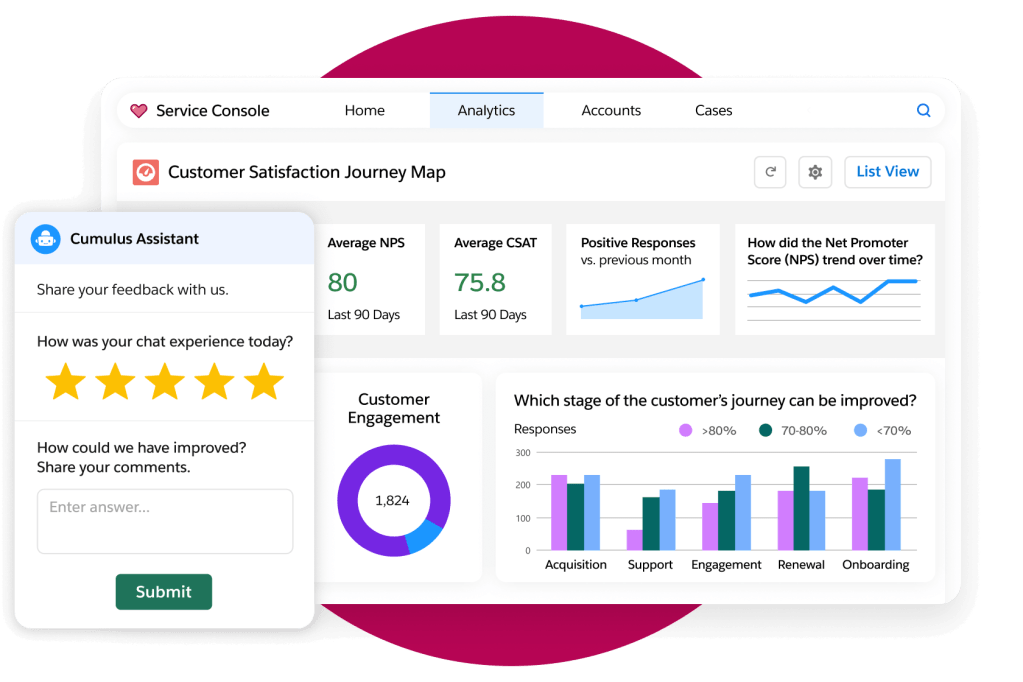
(Source: Salesforce Service Customer Feedback Survey)

Activate AI for survey analysis

Analyzing thousands of comments by hand is impossible for a small team, but AI CRM makes it simple. AI can scan text to identify the sentiment of the responses — whether they’re positive, negative, or neutral.

This smart technology can also summarize the top three themes from your feedback in seconds. Using AI allows your SMB to get the same level of insight as a massive corporation without needing a team of data scientists.

Data is only useful if the people who can make changes actually see it. Create a simple summary for your sales, service, and marketing teams so everyone is on the same page.

Transparency within your company helps align everyone toward the same goals. When everyone understands the customer’s pain points, you can work together to build better solutions.

  • Prioritize product updates: Use direct feedback to fix bugs or add the features your customers are asking for most.
  • Refine your marketing: Adjust your messaging and channels based on where your customers spend time and how they describe your value.
  • Improve customer service: Identify friction points in the customer journey to better train your support team.
  • Enhance wellness initiatives: Use survey platforms to collect regular feedback for wellness pulse checks and habit tracking.

Step 8: Close the loop with customers

One of the biggest mistakes an SMB can make is asking for feedback and then never mentioning it again. Send a quick update to your participants to tell them what you learned and what you’re doing about it.

Even a simple “we heard you” goes a long way in building brand advocates. This step transforms your business survey from a data collection task into a relationship-building exercise.
Agentforce 360

Improve each business survey with Agentforce 360

As your business grows, you can use Agentforce 360 (Salesforce’s autonomous platform for AI agents) to automate the way you interact with customers based on their feedback. These digital assistants can follow up with customers who gave a low score to offer immediate assistance.

We wish you luck with your survey (and the best results you can get). Get started with Salesforce Suites for free or activate Foundations to try out Agentforce 360 today.

AI supported the writers and editors who created this article.

How often should a small business send out a survey?
It’s best to send surveys after key milestones, like a purchase or a support case resolution, rather than on a strictly timed schedule. This ensures the feedback is fresh and relevant to the customer’s recent experience.

What’s a good response rate for a customer survey?
For most small businesses, a response rate between 5% and 15% is considered very successful. You can improve these numbers by keeping your questions short and making sure the email subject line is engaging.

Can I use survey results for marketing materials?
Yes, if you have permission from the customer, positive feedback can be turned into powerful testimonials or case studies. Check out how to manage customer data effectively to keep this information organized and compliant.

How many questions should be in a startup survey?
Try to keep it between three and seven questions to ensure people actually finish it. Startups need quick insights, and a shorter form respects the customer’s time while giving you the most important data.

Should I offer an incentive for completing the survey?
While incentives like discounts can increase response rates, they can sometimes attract people who are only interested in the prize. Consider using small, relevant rewards if you are struggling to get enough data for your analysis.