


Let’s be honest: most growing businesses treat email marketing like a chore — something to “automate” so you can get back to the real work. But while everyone else is busy befriending the social media algorithms, the smartest commerce shops are realizing your email list is the only digital real estate you actually own. If your social feeds are ‘rented spaces’, then your email list is private property. So what are you building?
The goal isn’t just to reach people; it’s to flip the funnel. Use your inbox to build a conversation with the customers you already have. When you stop treating emails as “blasts” and start treating them as curated conversations, you see big results. Let’s dig into these top email marketing tips for small commerce shops, curated by our small business experts here at Salesforce.
Email marketing remains the single most effective promotional channel for small businesses, consistently outperforming social media and paid advertising in terms of return on investment (ROI).
Businesses that use personalized email strategies see even greater success, with up to 70% of marketers reporting that email is their most effective channel for generating revenue, a trend highlighted in recent Salesforce research on the State of Marketing. By prioritizing this high-ROI channel, small shops can build direct customer relationships that translate into measurable sales growth.
Your marketing is only as strong as the list of people you’re trying to reach. In the world of customer relationship management (CRM), having a clean and organized database is the first step toward success.
For a startup or a growing local shop, this means gathering information from your shoppers in a way that is clear and helpful. When you know who your customers are and what they like, your commerce email marketing strategy becomes much more effective. Using a modern CRM helps you keep track of every purchase and interaction in one place.
When you start with a list of people who actually want to hear from you, your engagement goes up immediately. A small bakery might ask customers to share their birthday so they can send a special treat. This simple gesture makes the shopper feel seen and appreciated by the business. It turns a generic marketing effort into a personal connection that feels natural.
Cleaning your email list might seem like you’re losing potential sales, but it keeps your list up to date. If you send to thousands of dead accounts, your messages are more likely to end up in the spam folder. Focusing on a smaller group of active fans is a much better way to use your time. Quality always beats quantity when it comes to building a lasting brand.
Level up your business by transforming scattered data into actionable insights.
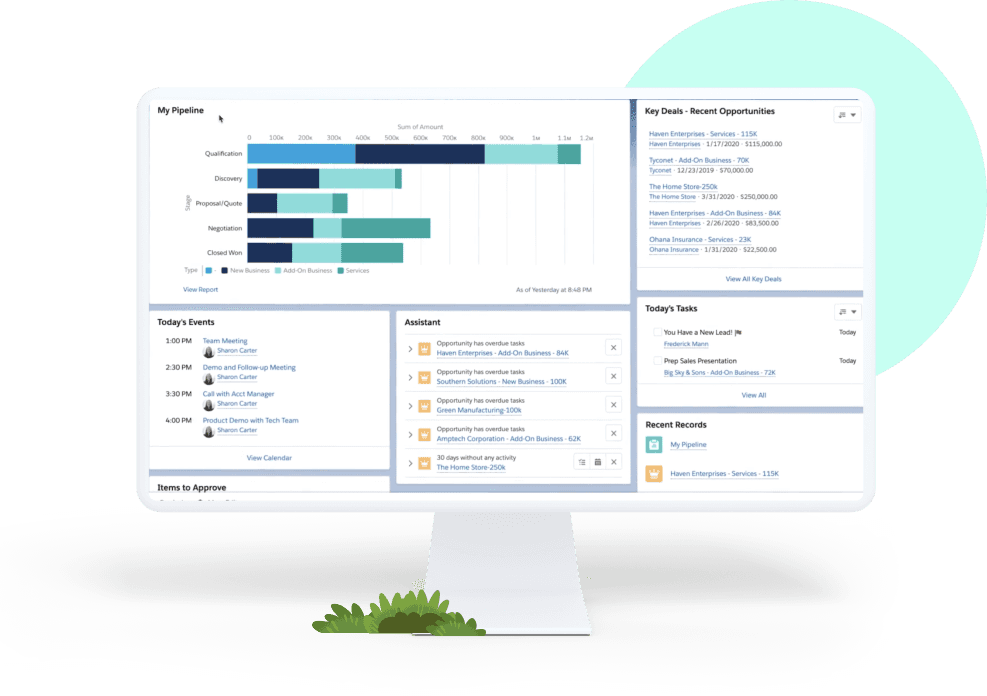

Today, artificial intelligence (AI) is helping small shops act like much larger retailers by doing the heavy lifting of data analysis. You can use AI tools to look at past sales and predict what a customer might want to see next. This helps your productivity because you spend less time looking at spreadsheets and more time being strategic.
Personalization (dare we say hyper-personalization?) isn’t just about using someone’s first name in the subject line anymore. It’s about showing that you understand their needs and their style.
Sending a message at three in the morning might work for some, but not for everyone on your list. Smart tools can stagger your sends so they land at the top of the inbox when the person is actually looking at their phone. This increases the chance of your commerce emails leading to a real visit to your shop. It takes the guesswork out of your weekly schedule.
Learn how autonomous AI can scale your small business for free in our latest e-book.
Growing a business means finding ways to do more without working 24/7. Using Agentforce 360 allows you to manage your email marketing tasks in a single environment. When you use email marketing AI within a unified platform, you create a seamless experience for the shopper. Agentforce acts as a digital assistant that keeps your business running smoothly behind the scenes.
Automation ensures that no customer falls through the cracks even when you’re busy. For instance, a local clothing boutique can set up an automated message that goes out two weeks after a sale asking for a photo of the new outfit. This encourages social sharing and builds a sense of community around the shop.
When your team is looking at the same information, you avoid making mistakes that frustrate shoppers. If a customer is waiting for a refund, employee AI agents can flag to the team that there is an urgent inquiry. This helps you maintain a high level of service as you scale your operations.
Set up your digital storefront, engage customers, and sell more using a commerce-ready platform with integrated tools for every sale.
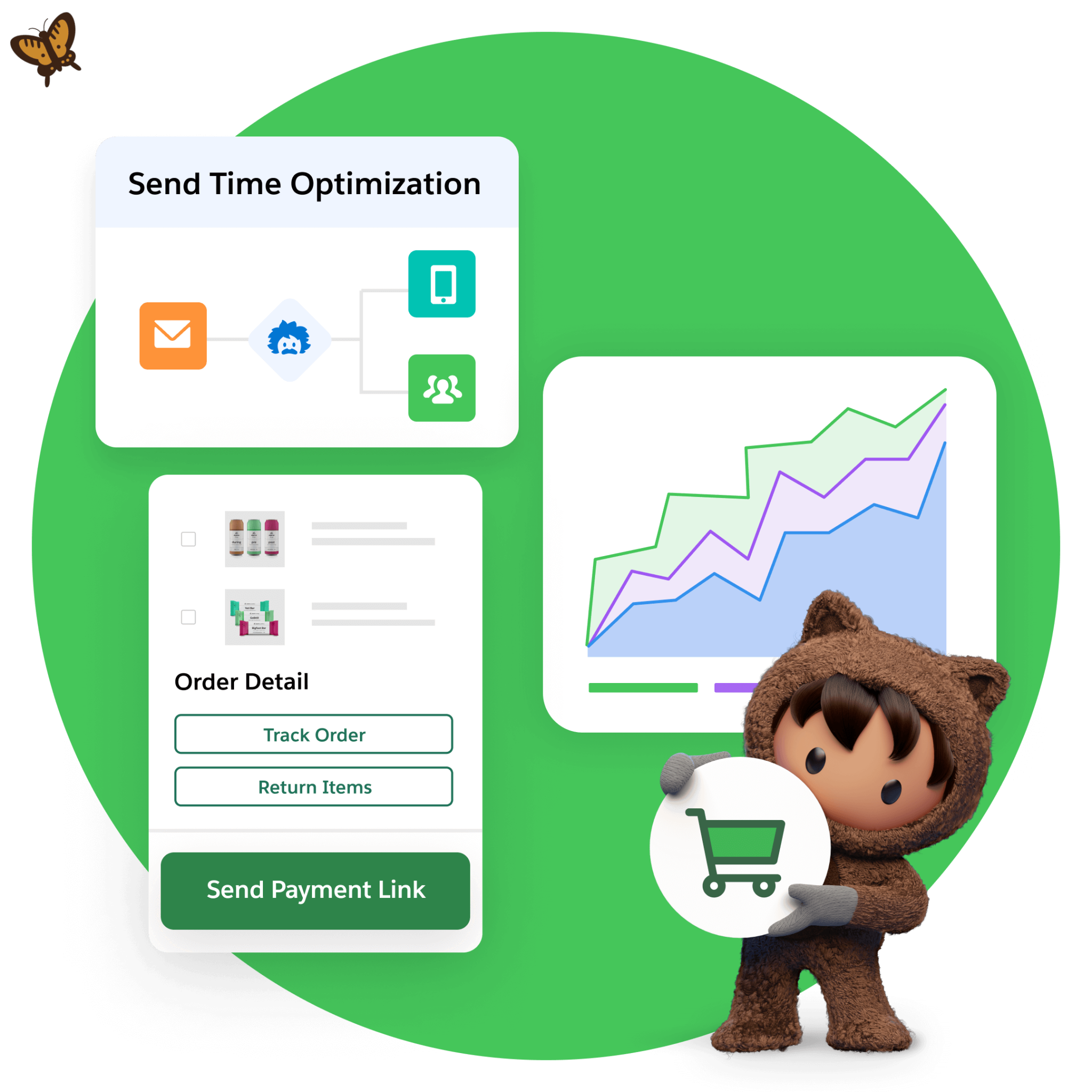
A good mobile design makes it easy for someone to go from reading to buying in just a few taps. You want your commerce shop to be able to function across any size screen. The layout should be clean and your text clear. This is a big part of your commerce email marketing strategy because it removes friction from the buying process.
Simplicity is your friend when you’re designing for mobile. Avoid using too many different colors or complex backgrounds that make the text hard to see. Here are a few more tips:
The only way to know if your strategy is working is to look at the numbers. You can use a marketing CRM tool to track which messages get the most clicks and which ones lead to the most sales. This helps you understand what your audience likes so you can do more of it in the future.
Not every number is equally important for your specific goals. If you want to grow awareness, you might care more about how many people are opening your messages. If you need to clear out old products, your focus will be on how many people bought something. Tracking these emails helps you stay aligned with your business needs.
A/B testing is a great way to learn about your audience without taking big risks. You can send one version of an email to a small group and a different version to another small group. Then, send the winning version to the rest of your list. This small step can lead to much better results over time.
See how growing businesses are using Salesforce Suites to scale fast. No credit card required, no software to install.
It all starts with Starter Suite.
As your shop becomes more popular, your marketing needs will change and grow. You might want to start a loyalty program or collaborate with other local brands on a special promotion. Keeping your strategy flexible allows you to adapt to new trends and customer feedback.
Start your journey with the Free or Starter Suite today. Looking for more customization? Explore Pro Suite. Already a Salesforce customer? Activate Foundations to try out Agentforce 360 today.
AI supported the writers and editors who created this article.
What is the best way to grow my subscriber list quickly?
Focus on offering immediate value through a sign up incentive like a helpful checklist or a discount on their first purchase. You can also use social media to drive traffic to your sign-up page. Learn more about list growth in this Salesforce article on digital marketing for small business.
How can I avoid my emails being marked as spam?
Always use a recognizable sender name and a clear subject line so people know who is messaging them. Make sure you include an easy way for people to unsubscribe if they no longer wish to hear from you.
Should I use a lot of images in my commerce emails?
While pictures of your products are important, you should balance them with clear text. Too many large images can slow down loading times and make your message hard to read on a mobile device.
How do I know which customers to send specific offers to?
Use your CRM to group customers based on what they have bought in the past or how often they visit your site. This allows you to send more relevant messages that are more likely to lead to a sale.
Can a small business use AI for marketing effectively?
Yes, AI tools are now very accessible and can help with tasks like writing subject lines or deciding when to send an email. This helps small teams act faster and with more precision.
此内容由惯性聚合(RSS阅读器)自动聚合整理,仅供阅读参考。 原文来自 — 版权归原作者所有。