







Google didn’t just ship an update at I/O 2026. They redrew the map.
Google Antigravity 2.0 dropped on May 19th and it’s not an IDE refresh. It’s a full platform pivot from AI assisted coding, to multi agent orchestration as the core development model. If you’ve been keeping an eye on the Agentic coding race between Cursor, GitHub Copilot, and everyone else, Google’s here with its two cents.
Antigravity was first released in November 2025, with Gemini 3, as an answer from Google as to what it could offer when it came to a free IDE for agents. It was a capable product but its scope was limited. This provided the user with a smart coding assistant inside a familiar interface.
Antigravity 2.0 has been completely rebuilt by Google as a standalone desktop application that has no ties to Antigravity 1.0. Instead, the 2.0 version was created and designed from the ground up to support agent orchestration functionality. Antigravity 1.0 is still available for use, but Antigravity 2.0 has become their new flagship product. Antigravity 2.0 was built for a workflow where the user will direct agents, as opposed to prompting an auto-complete engine.
The pitch of Antigravity hasn’t changed, which is still that you can take an idea, and ship it as a production app. The main difference is that there is also a CLI, SDK and managed cloud agents now which gives the user a lot more surface area than was offered with Antigravity 1.0.
The standout features of Antigravity 2.0 are:
The new desktop application will serve as the main feature of the release. This application serves as your primary hub for coordinating several agents that run simultaneously, as well as for creating custom workflows for sub-agents and for scheduling tasks that will be performed automatically in the background.
The scheduled task’s function is one of those things that can easily be overlooked; however, it’s quite revolutionary. Previously, if you wanted an agent to perform a task for you, you would have to prompt the agent each time you wanted the task performed. Now, by creating one task setup and giving the agent the ability to do it automatically, the agent is now more like a continuous background process.
Additionally, there are native voice commands that you can use to control Antigravity 2.0. It may not seem like a large addition. However, it is in line with the voice integration being implemented into Gmail and Docs, therefore it fits well.
For developers who kinda prefer the terminal, Google built a brand new Antigravity CLI from scratch in Go. It moves quicker than what came before. And it fully replaces the Gemini CLI which is getting retired.
For consumer access to Gemini CLI, there’s an end date June 18, 2026, for AI Pro, AI Ultra, and free-tier users. This isn’t a gentle deprecation, but more like a hard cutoff.
The CLI keeps the Gemini CLI bits developers used, Agent Skills, Hooks, Subagents, and Extensions (but now they’re renamed Antigravity plugins). The main thing to grasp is that the CLI and the desktop app run on the same underlying agent harness. So, any enhancements Google ships into the core agents, they land on both surfaces automatically. You don’t have to pick one and lose out on the ongoing updates to the other.
With the SDK you get programmatic access to the same agent harness that powers Googles internal stuff, you know. It is designed for Gemini models, and it lets you shape custom agent behaviors, then run them wherever your own infrastructure lives. Basically, this is the choice for engineering teams that want Antigravity-style agents embedded into their products, without having to rely on Googles cloud.
This is the feature that, honestly, gets the most use with backend developers. With just one API call, you can spin up an agent that reasons and then uses tools, then it executes code in an isolated Linux place.
Three things make it work:
If you are a customer of Google Cloud, the enterprise path allows you to connect Antigravity directly to your existing Google Cloud projects. This is important for teams needing agent workflows that are within their current cloud infrastructure, as well as having appropriate access controls and a complete audit trail.
Whole Antigravity 2.0 eco system just defaults to Gemini 3.5 Flash. Per Google, it beats Gemini 3.1 Pro on most benchmarks too, and it’s roughly four times quicker than other frontier models. That gap matters a lot once you begin running multiple parallel agents, because model latency doesn’t stay put. It kind of stacks up fast.
Even a 200ms difference per call turns into a few seconds of lag when ten agents are firing at the same time. Also, Gemini 3.5 Flash wasn’t built in some totally separate way: it was co-developed using Antigravity itself. Google’s team used the very same agentic workflows they are now rolling out to everyone.
Go over to antigravity.google/download, grab the installer for your OS, and run it.
Launch the app and click through the setup, when it asks about agent mode, choose Review-Driven Development (recommended). This one lets the agent move on its own but it still asks for your approval before anything “big” happens, like meaningful changes.
Sign in using your Google account. On the free tier you get access to Gemini 3.1 Pro, Claude Sonnet 4.5, and gpt-oss, basically.
Click Open Folder and select your project directory. You should land in the Agent Manager, think of it as your mission-control for all agent activity.
If you want the agent to browse the web, give it a task with a URL (like go to antigravity.google). It will ask you to install the Chrome extension. Hit Setup and just follow the on-screen flow.
Press Start Conversation, type your task, and select your agent mode. For complex multi-file work, choose Plan. For quick one-liners choose Fast, no need to overthink. You can also use @filename to attach specific files as extra context.
As it runs, the agent creates Artifacts: task lists, implementation plans, code diffs. You review those in Agent Manager, add comments if needed, or approve so it continues.
Building: A FastAPI backend to allow adding, listing and deleting items along with an HTML and JS front end.
1. Using Agent Manager, start a new conversation in the workspace and switch to Plan mode.
2. Enter the following prompt:
“Create a to-do application with FastAPI as the backend and plain HTML and Javascript as the front end. The endpoints are:- add a task
- list all tasks
- delete a task using its ID.All tasks will be stored in memory. Provide a requirements.txt file.”
3. Review plans made by the agent to create the Task List and Implementation Plan before any files have been created. If you need to make any modifications, add comments; if okay, press the approve button.
4. As the App builds, watch the files be added in real-time under Editor. The following files will be created: main.py, index.html, requirements.txt. To view files as they are created, click on the Editor tab.
5. Execute app. To find exact command used to run agent’s first file, view agent’s Walkthrough artifact using:
uvicorn main:app –reload 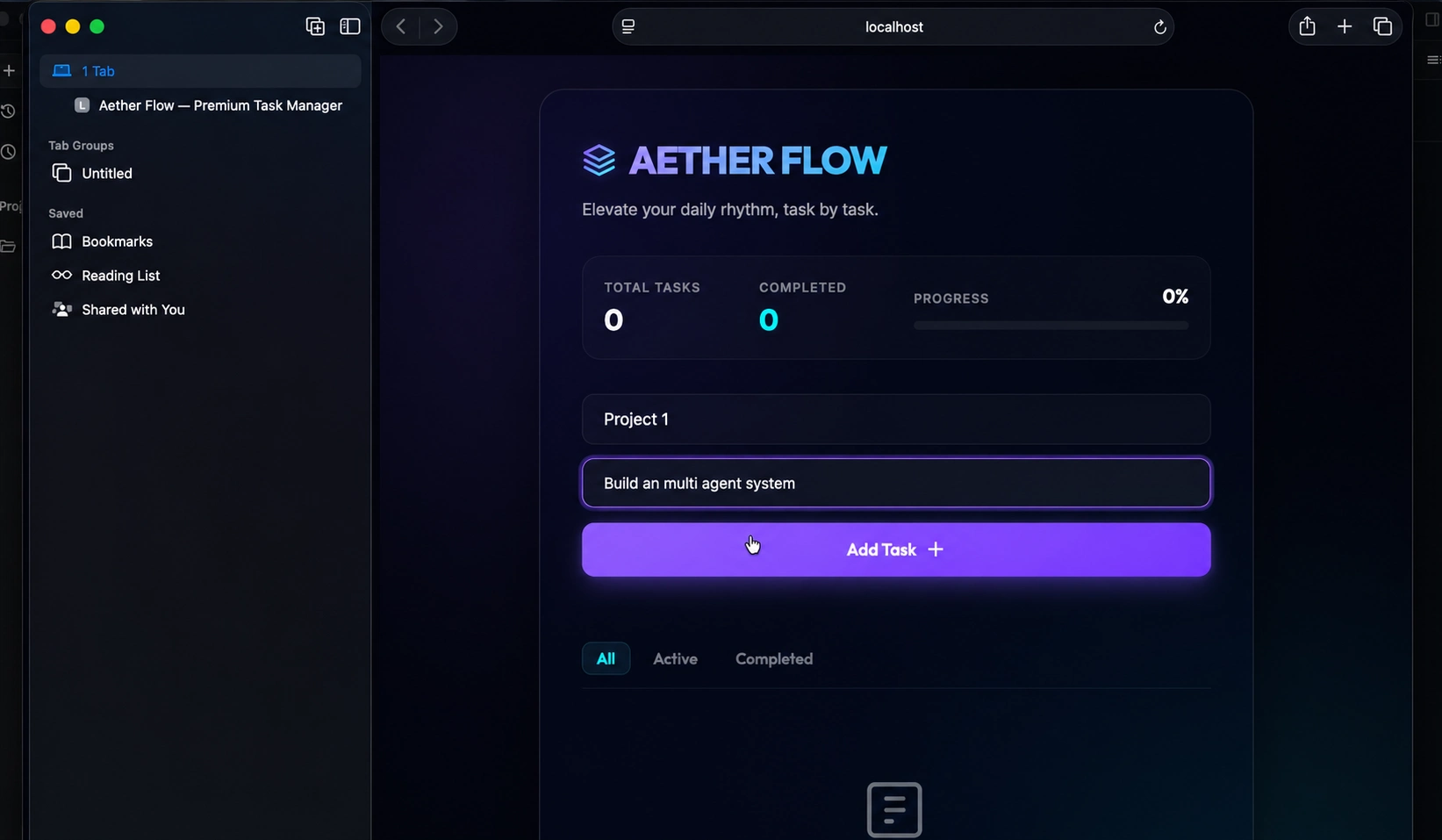
After running command, check http://localhost:8000 in your web browser and verify all three endpoints. If any issues arise, create follow-up prompt outlining problem, thereby allowing agent to resolve in real-time during current session.
| Feature | Antigravity 1.0 | Antigravity 2.0 |
| Product type | Single IDE (VS Code fork) | Standalone desktop app + CLI + SDK |
| Agent execution | One agent at a time | Multiple parallel agents with dynamic subagents |
| CLI tool | None (Gemini CLI separate) | Built-in Antigravity CLI (Go, replaces Gemini CLI) |
| SDK | None | Full SDK for custom agent hosting |
| Scheduled tasks | Not available | Background automation with scheduling |
| Voice commands | Not available | Native voice support |
| Managed Agents API | Not available | Available via Gemini API (Interactions API) |
| Enterprise support | None | Gemini Enterprise Agent Platform |
| AI Studio integration | None | Export to Antigravity, full project context sync |
| Android support | None | Native Android app building via AI Studio |
| Default model | Gemini 3 Pro | Gemini 3.5 Flash (4x faster) |
| Pricing | Free / AI Pro ($20/mo) | Free / AI Pro ($20/mo) / AI Ultra ($100/mo) / AI Ultra Premium ($200/mo) |
Here are few things to keep in mind while using Antigravity 2.0:
Antigravity 2.0 is indeed a fully functional platform now. The desktop app with multi-agent orchestration, the Managed Agents for persistent isolated environments, the Go-based CLI integrating the most current improvements from the agent harness, and the SDK for custom deployments all demonstrate that developers must take Antigravity’s capabilities seriously.
The I/O keynote demo made that clear. Varun Mohan stood on stage and had Antigravity’s parallel agents build a working operating system core from scratch for under $1,000 in compute. Then ran a live Doom clone on top of it. Whether that kind of demo translates directly to your day-to-day work is a fair question. But the underlying infrastructure it proved is very real.
Data Science Trainee at Analytics Vidhya
I am currently working as a Data Science Trainee at Analytics Vidhya, where I focus on building data-driven solutions and applying AI/ML techniques to solve real-world business problems. My work allows me to explore advanced analytics, machine learning, and AI applications that empower organizations to make smarter, evidence-based decisions.
With a strong foundation in computer science, software development, and data analytics, I am passionate about leveraging AI to create impactful, scalable solutions that bridge the gap between technology and business.
📩 You can also reach out to me at [email protected]
此内容由惯性聚合(RSS阅读器)自动聚合整理,仅供阅读参考。 原文来自 — 版权归原作者所有。