


The AI image generation space has been highly competitive over the past 18 months. Models keep improving and replacing each other at the top. Google’s Nano Banana went viral in mid-2025. It topped the benchmarks and set a new standard for image quality. Now OpenAI has released ChatGPT Images 2.0, powered by gpt-image-2. Within hours of launch, it reached the #1 spot on the Image Arena leaderboard.
This includes Text-to-Image, Single-Image Edit, and Multi-Image Edit. The bigger story is the gap. Arena called it the largest difference ever between the top two models. In this article, we break down what has improved, whether these results matter in real use, and how it compares to Google’s Nano Banana 2 in terms of cost and performance.
Unlike DALL·E 3 and older diffusion models, the GPT Image family works differently. It does not build images from noise. Instead, it generates images step by step. Token by token. Just like it writes text.
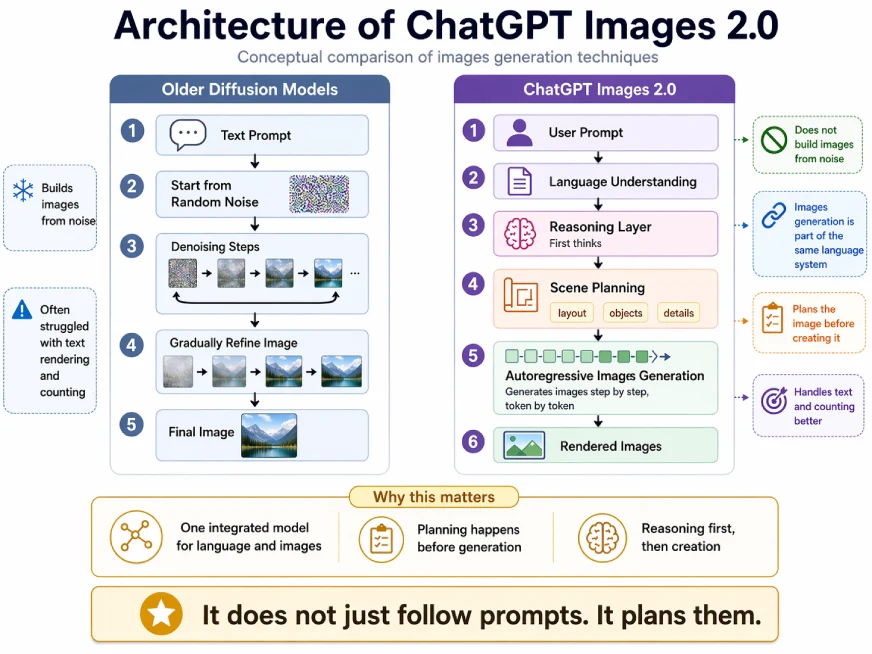
Why this matters?
GPT Image 2 goes a step further. It adds a reasoning layer before generation. So the model first thinks. Then it creates. The result is simple. It does not just follow prompts. It plans them.
GPT Image 2 introduces a thinking phase before generating pixels:
This reduces the prompt-and-retry loop for layout-sensitive tasks. Available via API, billed by reasoning tokens, and can be disabled for cost-sensitive workflows.
Text in images is now first-class:
GPT Image 2 scores +316 Arena points over GPT Image 1.5 High in Text Rendering, reflecting structural improvements.
Supports native 4K output (3840×2160 and custom sizes) with adjustable aspect ratios. Eliminates the need for post-process upscaling, saving time and preserving quality. Requests exceeding the pixel budget are auto-resized.
Generates up to 10 images per prompt. Cross-image consistency is maintained via thinking mode, reducing overhead for social media, e-commerce, or ad variant pipelines.
Supports image-to-image edits via natural language instructions:
Arena ranks: 1,513 Single-Image Edit (+125) and 1,464 Multi-Image Edit.
Improved support for Japanese, Korean, Chinese, Hindi, and Bengali. Reliable for localized asset generation with context up to December 2025.
gpt-image-2 dominates the competition, with a substantial lead of 242 points over Nano Banana 2, marking the largest gap ever seen in Arena’s history. This gap highlights GPT Image 2’s superior capabilities, positioning it in a tier above previous models, where typically top performers are separated by only single-digit or low tens differences.
Across 10 categories, GPT Image 2 outshines its competitors, consistently scoring between 1,460 and 1,580. Key takeaways include:
For teams using GPT Image 1.5, the key upgrades in GPT Image 2 are:
The following five tasks are designed to stress-test the areas where GPT Image 2 claims the most advancement, and to provide meaningful comparison points when you run the same prompts through Nano Banana 2.
Prompt:
Generate a clean, professional system architecture diagram for a microservices-based e-commerce platform. Include services: API Gateway, Auth Service, Product Catalog, Order Service, Payment Service, and Notification Service. Show directional data flow arrows between services, label each service box, and include a Redis cache layer between the API Gateway and downstream services. Use a dark background with white text and colored service boxes. Style: technical whitepaper / AWS-style.
ChatGPT Images 2.0 Output:
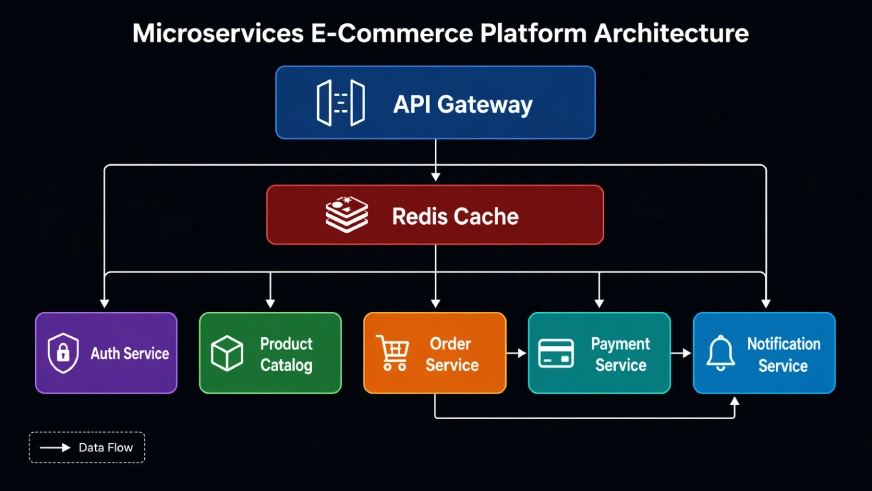
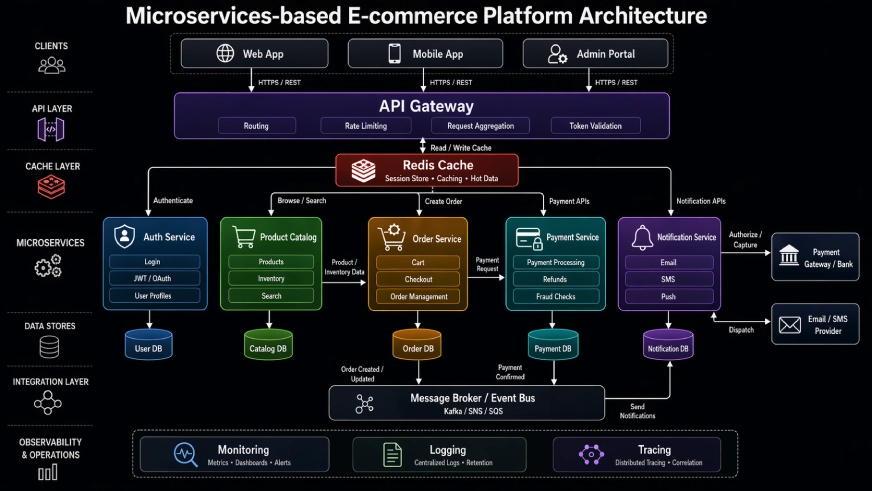
This image looked like a high level overview. So I asked chatGPT to recreate the image with more details, and here’s the output:
Nano Banana 2 Output:
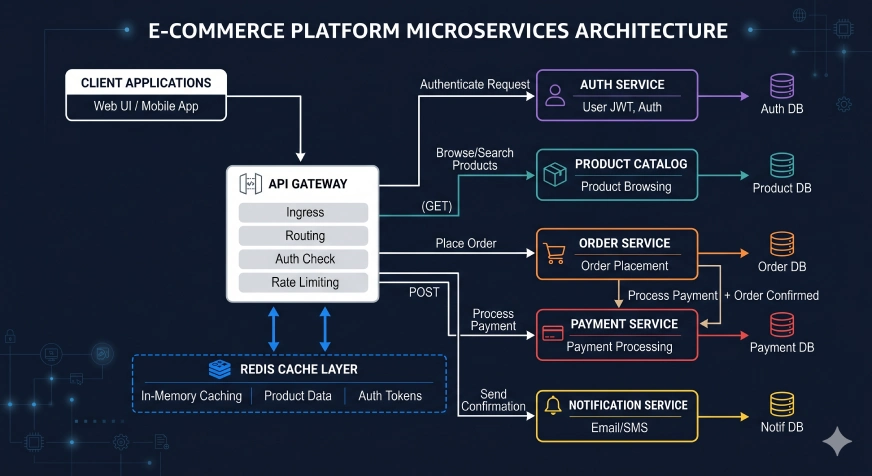
Observation:
GPT Image 2’s second attempt at Task 1 is a clear step up from its first and decisively ahead of Nano Banana 2. It introduces client entry points, API Gateway internals, service-level components, dedicated databases, an event bus layer (Kafka/SNS/SQS), external payment and notification systems, and observability. The difference is not just visual quality. It is domain understanding. GPT Images 2 infers what a production-grade AWS architecture should include and fills in the gaps. For engineering documentation, that matters.
Prompt:
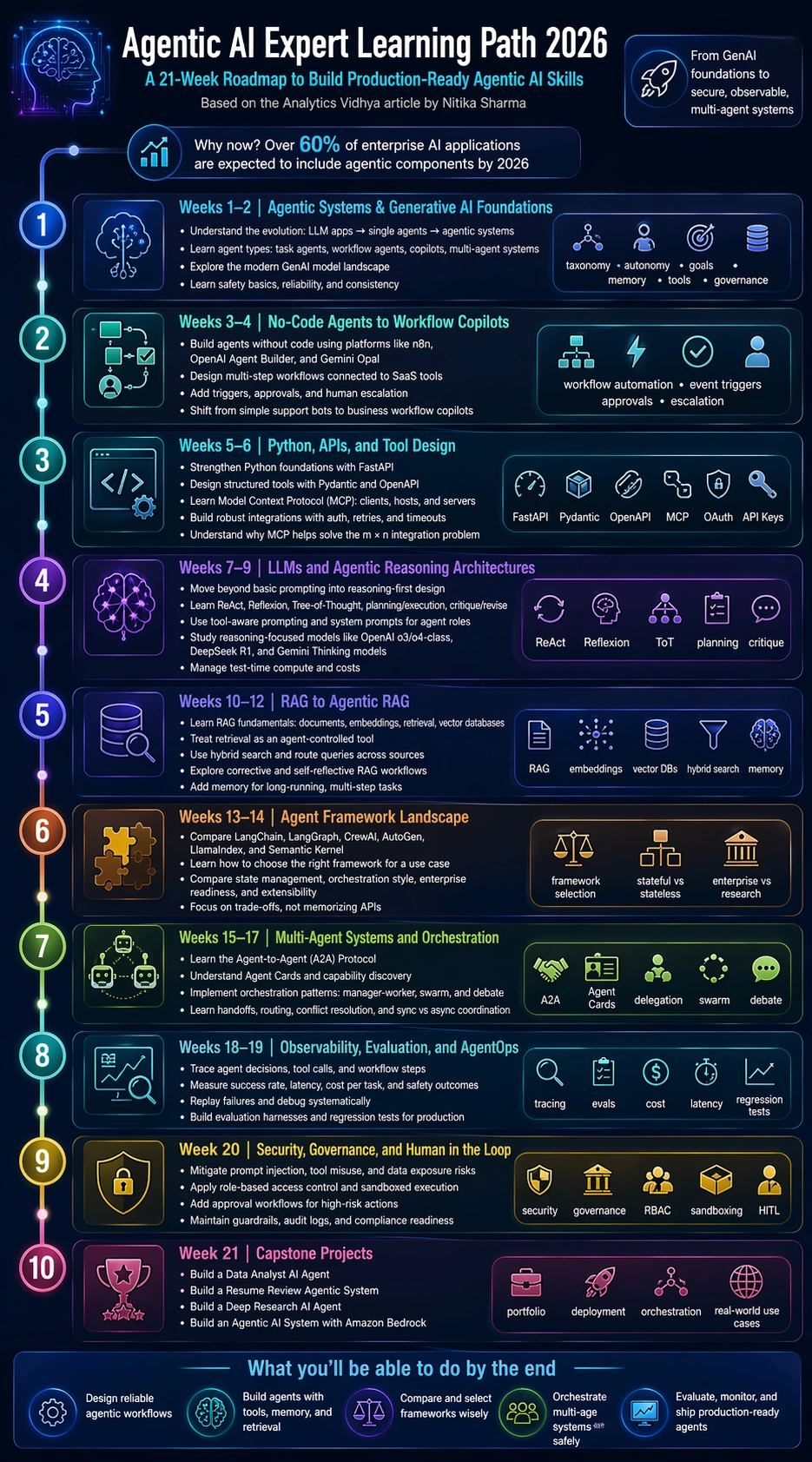
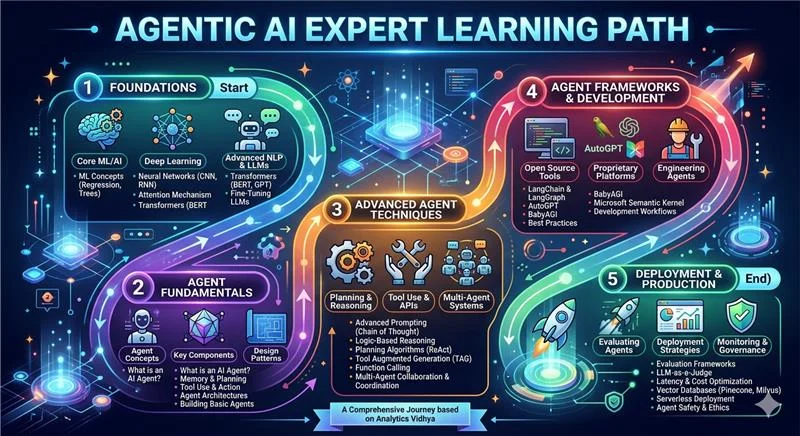
Based on this article – https://www.analyticsvidhya.com/blog/2026/01/agentic-ai-expert-learning-path/ Create a learning path infographics that is cool to look at, and at the same time detailed enough to follow.
ChatGPT Images 2.0 Output:
Nano Banana 2 Output:
Observation:
The prompt asked for something “detailed enough to follow,” and GPT Image 2 delivered just that. It produced 21 weeks of structured content, with specific tools, frameworks, and outcomes, all rendered with perfect text accuracy. Nano Banana 2 created a visually appealing poster. GPT Image 2, however, created a practical learning resource.
This is where GPT Image 2’s text rendering advantage, the +316 Arena point gap, becomes most evident in real-world use.
Prompt:
Create a carousel for this blog “https://www.analyticsvidhya.com/blog/2026/04/why-ai-is-getting-cheaper/”
ChatGPT Images 2.0 Output:
Observation:
GPT Image 2 nailed consistency across all slides with a unified font, blue palette, logo placement, background texture, and badge style, achieving perfect carousel design. It also maintained slide numbering (1/7, 3/7, etc.), rendered text at scale clearly, and used concept-appropriate visuals like a 3D chip for compute and a node diagram for MoE. The swipe CTA on the cover demonstrated an understanding of carousel formats.
Nano Banana 2, on the other hand, could only provide text output without this level of design sophistication.
Prompt:
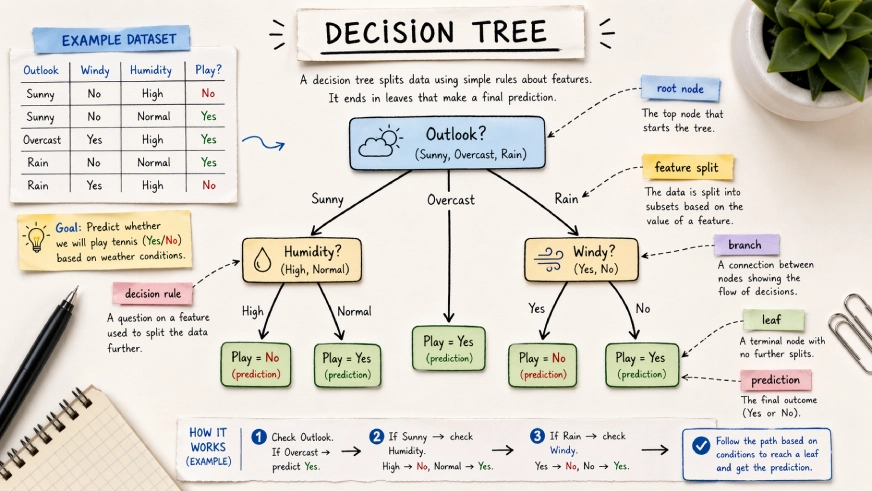
High-quality, top-down flat lay infographic that clearly explains the concept of a Decision Tree in machine learning. The layout should be arranged on a clean, light neutral background with soft, even lighting to keep all details readable. Create a simple, step-by-step visual flow from top (root node) to bottom (leaf nodes), using clean black hand-drawn arrows to guide the viewer’s eye. Annotate each part of the tree with short labels: root node, feature split, decision rule, branch, leaf, prediction. Include a small example dataset and show how the tree splits the data. Keep the style educational, modern and easy to understand. Format 16:9
ChatGPT Images 2.0 Output:
Nano Banana 2 Output:
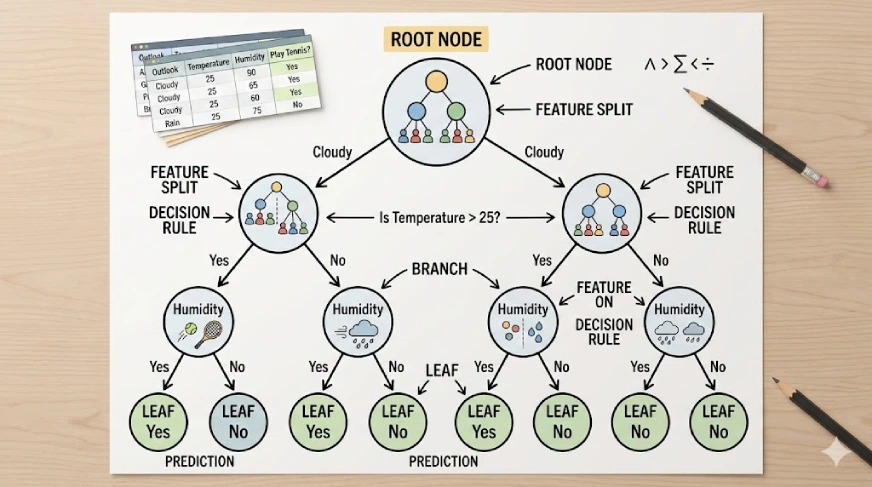
Observation:
Task 4 highlighted a critical difference between the two models. GPT Image 2 produced a pedagogically sound decision tree with correct split logic, a readable 5-row dataset, all six requested annotations with plain-English explanations, color-coded predictions, and an unprompted step-by-step walkthrough strip at the bottom.
Nano Banana 2, however, made a structural error at the root by splitting the same “Cloudy” value into two separate branches, which is logically impossible. For technical education content, this is a disqualifying mistake. GPT Image 2 didn’t just render better; it understood the concept well enough to get the logic right.
Prompt:
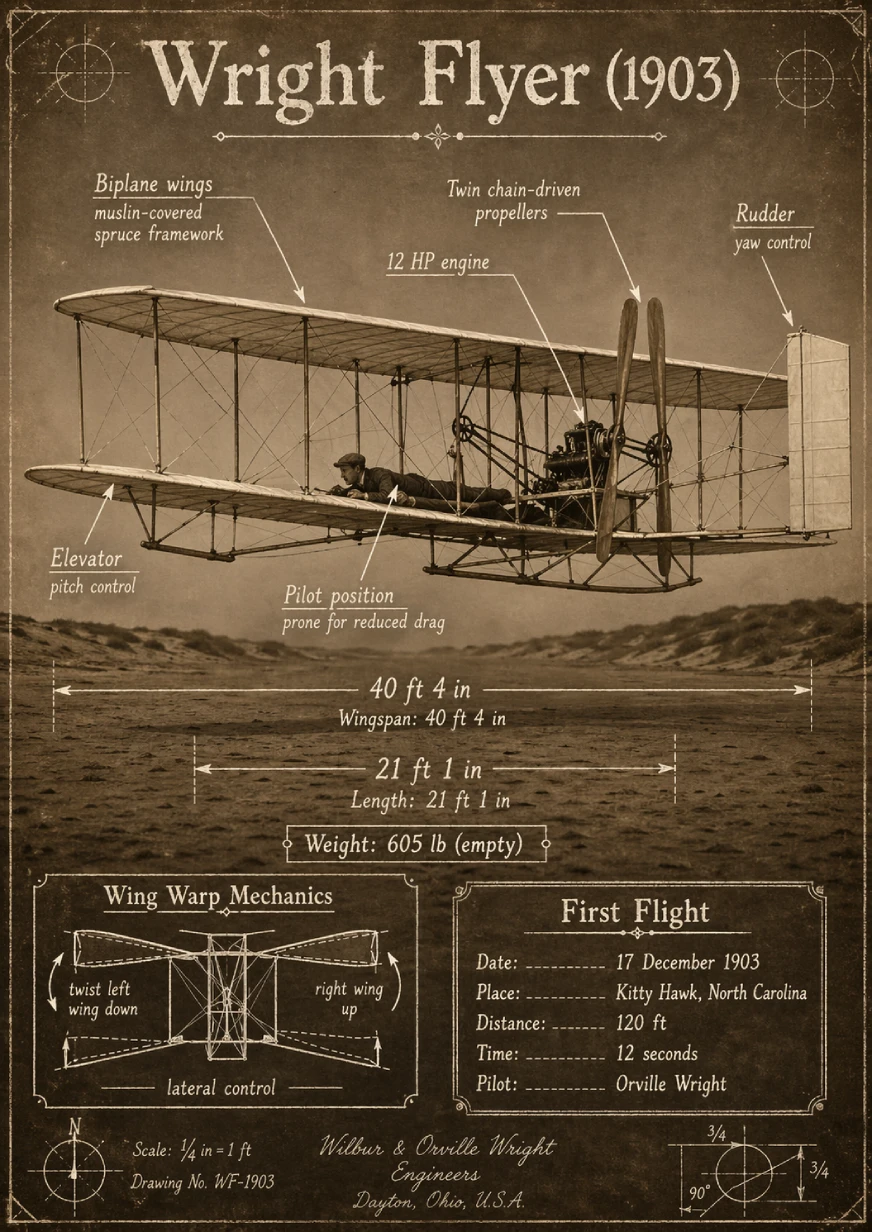
Create a vintage, annotated blueprint-style infographic of the Wright Flyer (1903) placed over a historic sepia-toned photograph of a sandy airfield. Draw clean white technical linework around the aircraft showing labeled parts such as biplane wings (muslin & spruce), elevator (pitch control), rudder (yaw control), twin chain-driven propellers, 12 HP engine, pilot position, wingspan, length, and weight. Add hand-drawn arrows, measurement lines, and a small schematic showing wing warp mechanics. Include a box noting the first flight date, distance, and time. Keep the aesthetic technical, historical, and visually clear.
ChatGPT Images 2.0 Output:
Nano Banana 2 Output:
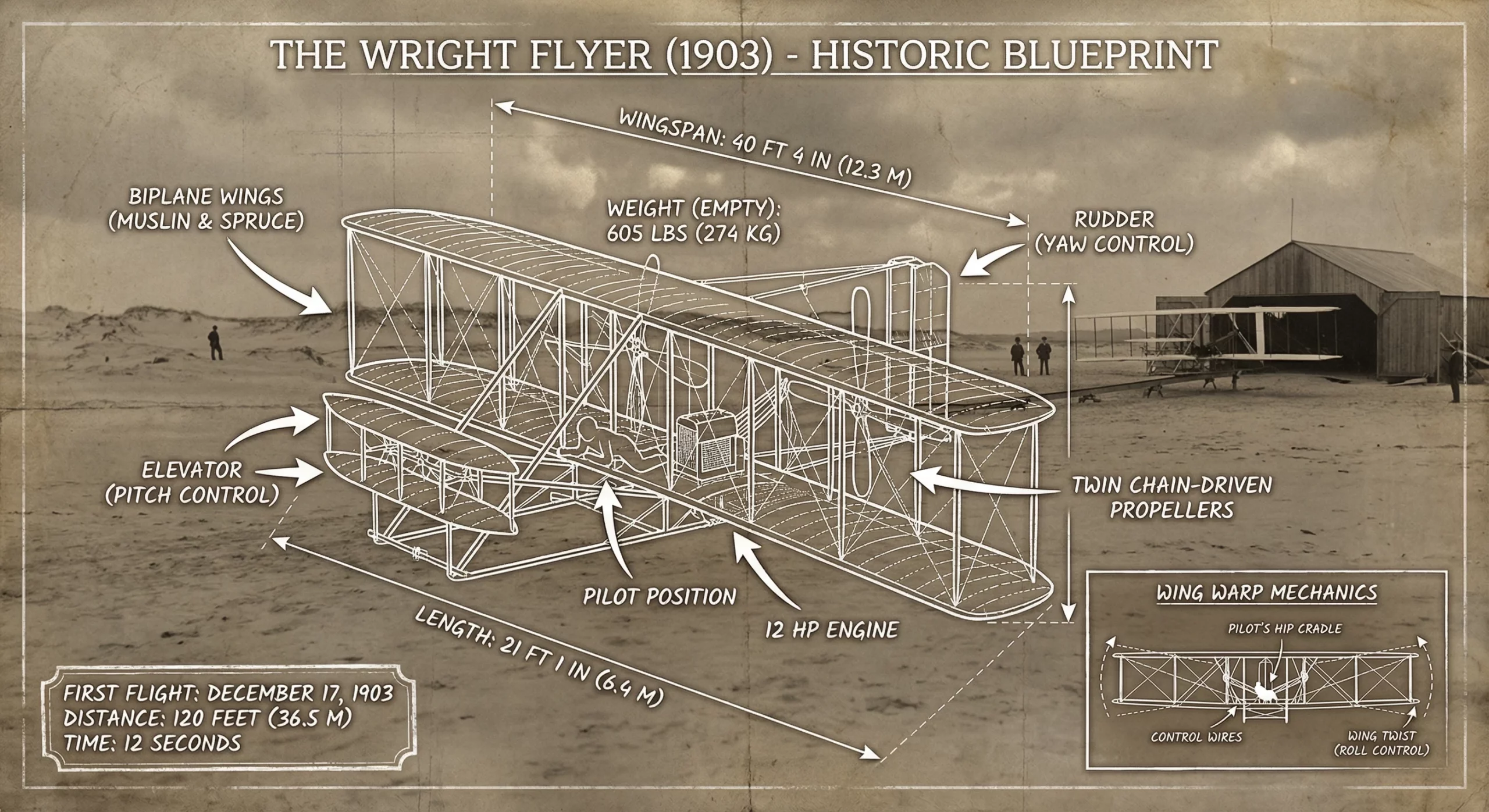
Observation:
Task 5 was the closest contest of the comparison. Nano Banana 2 produced a technically rigorous two-view engineering diagram with bold annotation lines, precise measurement callouts, and a detailed Wing Warp schematic, all of textbook quality. GPT Image 2, however, created something visually extraordinary with an aged Victorian blueprint aesthetic, ornate typography, photorealistic aircraft in flight, a compass rose, drawing number, and museum-quality composition. Both models rendered all requested labels and data points accurately. The difference lies in tone. Nano Banana 2 is a technical document, while GPT Image 2 is a piece of visual storytelling. For publication, GPT Image 2 wins. For engineering documentation, Nano Banana 2 holds its own.
Prompt:
Create a 3-page comic book script with 15+ scenes following two employees who join the same company as Data Analysts. The story must visually contrast their paths over three years: one employee is shown constantly upskilling, mastering AI tools, and upgrading their technical knowledge, while the other is depicted frequently partying and neglecting professional growth. The finale should show the first employee successfully promoted to a GenAI Scientist, while the second remains a Data Analyst, reflecting on their choices with deep regret for not learning AI and new skills.
ChatGPT Images 2.0 Output:
Nano Banana 2:
Observation:
ChatGPT Images 2.0 produced a complete 3-page, 18-panel comic with consistent character identities across every page, technically accurate props (real course dashboards, RAG pipeline diagrams, evaluation metrics), environmental storytelling, and a genuinely moving emotional arc.
Nano Banana 2, on the other hand, returned a well-written PDF script, which was creative writing, not visual output. Beyond the task failure, what ChatGPT showcased is remarkable: maintaining two distinct characters visually across 18 panels while advancing a coherent story is a new standard for image generation models.
gpt-image-2 uses token-based pricing, so cost depends on prompt complexity and output size. Nano Banana 2 uses fixed pricing based on resolution, which makes costs predictable.
Here’s a quick snapshot:
GPT Image 2 (Token-Based)
| Token Type | Price |
|---|---|
| Input text tokens | $5.00 / 1M tokens |
| Output text tokens | $10.00 / 1M tokens |
| Input image tokens | $8.00 / 1M tokens |
| Output image tokens | $30.00 / 1M tokens |
Nano Banana 2 (Flat Pricing)
| Resolution | Standard API | Batch API (50% off) |
|---|---|---|
| 512px | $0.045 | $0.022 |
| 1024px | $0.067 | $0.034 |
| 2048px | $0.101 | $0.050 |
| 4096px | $0.151 | $0.076 |
At similar quality levels, get-image-2 costs about 2.7 to 3 times more per image. That premium is not random. You are paying for better execution, especially when prompts get complex or include text. If your use case is straightforward, the extra cost brings limited benefit. If precision matters, it often saves time and rework.
| Scenario | GPT Image 2 | Nano Banana 2 | NB2 Batch |
|---|---|---|---|
| 1024px standard | ~$2,100 | $670 | $340 |
| 2K high quality | ~$3,000 | $1,010 | $500 |
| 4K high quality | ~$4,100 | $1,510 | $760 |
At scale, Nano Banana 2 is significantly cheaper, especially with batch processing. gpt-image-2 makes sense when:
Otherwise, Nano Banana 2 is the more cost-efficient option.
GPT Image 2 is a significant step forward in image generation. It can infer missing details, maintain consistency across multiple panels, create polished visual content, and generate accurate, structured diagrams. While it costs more than Nano Banana 2, its value is clear for technical teams, educators, and developers who need accurate visual content. For tasks requiring high-quality, complex images, ChatGPT Images 2.0 is the tool to use. Try it yourself to see the impressive results it can deliver.

Hello, I am Nitika, a tech-savvy Content Creator and Marketer. Creativity and learning new things come naturally to me. I have expertise in creating result-driven content strategies. I am well versed in SEO Management, Keyword Operations, Web Content Writing, Communication, Content Strategy, Editing, and Writing.
此内容由惯性聚合(RSS阅读器)自动聚合整理,仅供阅读参考。 原文来自 — 版权归原作者所有。