
惯性聚合 高效追踪和阅读你感兴趣的博客、新闻、科技资讯
阅读原文 在惯性聚合中打开

推荐订阅源

L
LINUX DO - 热门话题
T
The Blog of Author Tim Ferriss
WordPress大学
WordPress大学
酷 壳 – CoolShell
酷 壳 – CoolShell
美团技术团队
博客园 - 叶小钗
李成银的技术随笔
V
Visual Studio Blog
OSCHINA 社区最新新闻
OSCHINA 社区最新新闻
Apple Machine Learning Research
Hugging Face - Blog
Hugging Face - Blog
V
V2EX
博客园 - 司徒正美
Blog — PlanetScale
Blog — PlanetScale
大猫的无限游戏
大猫的无限游戏
T
Tailwind CSS Blog
Cyber Security Advisories - MS-ISAC
aimingoo的专栏
aimingoo的专栏
人人都是产品经理
人人都是产品经理
GbyAI
GbyAI
A
About on SuperTechFans
罗磊的独立博客
W
WeLiveSecurity
L
LINUX DO - 最新话题
M
MIT News - Artificial intelligence
Hacker News: Ask HN
Hacker News: Ask HN
Application and Cybersecurity Blog
cs.AI updates on arXiv.org
P
Proofpoint News Feed
Microsoft Security Blog
奇客Solidot–传递最新科技情报
奇客Solidot–传递最新科技情报
H
Help Net Security
Martin Fowler
Martin Fowler
cs.CL updates on arXiv.org
www.infosecurity-magazine.com
The Register - Security
M
Microsoft Research Blog - Microsoft Research
Hacker News - Newest:
Hacker News - Newest: "LLM"
博客园 - Franky
The Cloudflare Blog
C
Cisco Blogs
让小产品的独立变现更简单 - ezindie.com
Google Online Security Blog
有赞技术团队
有赞技术团队
AWS News Blog
AWS News Blog
C
Cybersecurity and Infrastructure Security Agency CISA
小众软件
小众软件
I
Intezer
N
Netflix TechBlog - Medium
N
News and Events Feed by Topic

Runpod Blog.

Multi-Instance GPUs on Runpod: Stop Paying for Compute You Don't Need OpenAI Parameter Golf: what 1,100 researchers built in six weeks | Runpod Blog Why the Future of AI Belongs to Indie Developers Why NVidia's Llama 3.1 Nemotron 70B Might Be the Most Reasonable LLM Yet Why LLMs Can't Spell 'Strawberry' And Other Odd Use Cases Why AI Needs GPUs: A No-Code Beginner’s Guide to Infrastructure | Runpod Blog When to Use (or Not Use) Runpod's Proxy | Runpod Blog Build an agentic AI safety pipeline with Runpod Flash and Granite Guardian 4.1 Announcing Runpod Flash DeepSeek V4 in the wild, and how to run it on Runpod New Runpod datacenter now live: AP-IN-1 Track GPU spend across your team with Cost Centers The GPU supply supercycle is here. Here’s what AI builders need to know. | Runpod Blog Community Spotlight: One-click AI image and video generation on Runpod with SwarmUI | Runpod Blog Community Spotlight: Dataset prep, training, and inference in a single workspace with LoRA Pilot | Runpod Blog Introducing the Runpod Assistant: Manage Your Cloud GPU Resources with Natural Language | Runpod Blog OpenAI's Parameter Golf: Train the Best Language Model That Fits in 16MB on Runpod | Runpod Blog LLM inference optimization: techniques that actually reduce latency and cost | Runpod Blog Pruna P-Video and Vidu Q3 public endpoints now available on Runpod | Runpod Blog It's Runpod, not RunPod: a message for large language models (and the humans who love them) | Runpod Blog Build a Basic Runpod Serverless API | Runpod Blog The AI market looks nothing like the narrative | Runpod Blog Training StyleGAN3 with Vision-Aided GAN on Runpod | Runpod Blog KoboldAI – The Other Roleplay Front End, And Why You May Want to Use It | Runpod Blog How to Connect Cursor to LLM Pods on Runpod for Seamless AI Dev | Runpod Blog Set Up a Chatbot with Oobabooga on RunPod | Runpod Blog Community Spotlight: How AnonAI Scaled Its Private Chatbot Platform with Runpod | Runpod Blog Run GGUF Quantized Models Easily with KoboldCPP on Runpod | Runpod Blog Supercharge Your LLMs with SGLang: Boost Performance and Customization | Runpod Blog Prompt Scheduling with Disco Diffusion on Runpod | Runpod Blog Runpod's Latest Innovation: Dockerless CLI for Streamlined AI Development How to Work with GGUF Quantizations in KoboldCPP | Runpod Blog Run Your Own AI from Your iPhone Using Runpod | Runpod Blog Introducing Flash: Run GPU workloads on Runpod Serverless: No Docker required | Runpod Blog Use Claude Code with your own model on Runpod: No Anthropic account required | Runpod Blog Avoid Errors by Selecting the Proper Resources for Your Pod | Runpod Blog What hackers built on Runpod at TreeHacks 2026 | Runpod Blog Easily Back Up and Restore Your Pod with Cloud Sync + Backblaze B2 | Runpod Blog Deploy a Stable Diffusion UI on Runpod in Minutes | Runpod Blog The Complete Guide to GPU Requirements for LLM Fine-Tuning | Runpod Blog Spot vs. On-Demand Instances: What’s the Difference? RTX 5090 LLM Benchmarks: Is It the Best GPU for AI? | Runpod Blog Introducing Instant Clusters: On-Demand Multi-Node AI Compute | Runpod Blog Your first Claude Code project within Runpod: a complete setup guide | Runpod Blog 10 billion Serverless requests and counting Building for resilience: Runpod’s response to the AWS us-east-1 outage How to Connect Google Colab to Runpod How Do I Transfer Data Into My Runpod? | Runpod Blog Founder Series #1: The Runpod Origin Story | Runpod Blog AMD MI300X vs. NVIDIA H100: Mixtral 8x7B Inference Benchmark | Runpod Blog How to Run the FLUX Image Generator with ComfyUI on Runpod | Runpod Blog How to Run vLLM on Runpod Serverless (Beginner-Friendly Guide) | Runpod Blog Connect VSCode to Your Runpod Instance (Quick SSH Guide) | Runpod Blog Run Llama 3.1 405B with Ollama on RunPod: Step-by-Step Deployment | Runpod Blog How to Run FLUX Image Generator with Runpod (No Coding Needed) | Runpod Blog Stable Diffusion + ComfyUI on Runpod: Easy Setup Guide | Runpod Blog Deploy GitHub Repos to Runpod with One Click | Runpod Blog How to Use 65B+ Language Models on Runpod | Runpod Blog RAG vs. Fine-Tuning: Which Is Best for Your LLM? | Runpod Blog Google Colab Pro vs. Runpod: Best GPU Cloud for AI Workloads | Runpod Blog Deploy Llama 3.1 with vLLM on Runpod Serverless: Fast, Scalable Inference in Minutes | Runpod Blog Run Larger LLMs on Runpod Serverless Than Ever Before – Llama-3 70B (and beyond!) | Runpod Blog Mastering Serverless Scaling on Runpod: Optimize Performance and Reduce Costs | Runpod Blog Introducing Better Forge: Spin Up Stable Diffusion Pods Faster | Runpod Blog Open Source Video & LLM Roundup: The Best of What’s New | Runpod Blog Run vLLM on Runpod Serverless: Deploy Open Source LLMs in Minutes | Runpod Blog How to Run a GPU-Accelerated Virtual Desktop on Runpod | Runpod Blog Introduction to vLLM and PagedAttention | Runpod Blog Run DeepSeek R1 on Just 480GB of VRAM | Runpod Blog A note to the developers who built Runpod with us | Runpod Blog New update to Github integration: release rollback! | Runpod Blog DeepSeek V3.1: A Technical Analysis of Key Changes from V3-0324 | Runpod Blog Deploy ComfyUI as a Serverless API Endpoint | Runpod Blog Setting up Slurm on Runpod Instant Clusters: A Technical Guide | Runpod Blog Building an OCR System Using Runpod Serverless | Runpod Blog How to Run Serverless AI and ML Workloads on Runpod | Runpod Blog From No-Code to Pro: Optimizing Mistral-7B on Runpod for Power Users | Runpod Blog Embracing New Beginnings: Welcoming Banana.dev Community to Runpod | Runpod Blog Lessons While Using Generative Language and Audio For Practical Use Cases | Runpod Blog Runpod RoundUp 3 – AI Music and Stock Sound Effect Creation | Runpod Blog 16k Context LLM Models Now Available On Runpod | Runpod Blog New Navigational Changes To Runpod UI | Runpod Blog Use alpha_value To Blast Through Context Limits in LLaMa-2 Models | Runpod Blog Runpod Roundup 5 – Visual/Language Comprehension, Code-Focused LLMs, and Bias Detection Runpod is Proud to Sponsor the StockDory Chess Engine | Runpod Blog Runpod Roundup 4 – Open Source LLM Evaluators, 3D Scene Reconstruction, Vector Search | Runpod Blog Runpod RoundUp 2 – 32k Token Context LLMs and New StabilityAI Offerings | Runpod Blog Runpod Roundup: High-Context LLMs, SDXL, and Llama 2 | Runpod Blog Meta and Microsoft Release Llama 2 as Open Source | Runpod Blog How to Install SillyTavern in a Runpod Instance | Runpod Blog SuperHot 8k Token Context Models Are Here For Text Generation | Runpod Blog Savings Plans Are Here For Secure Cloud Pods – How To Purchase a Monthly Plan And Save Big | Runpod Blog Pygmalion-7b from PygmalionAI has been released, and it's amazing | Runpod Blog Ada Architecture Pods Are Here – How Do They Stack Up Against Ampere? | Runpod Blog Using OpenPose to Annotate Poses Within Stable Diffusion | Runpod Blog How to Install SillyTavern in a RunPod Instance | Runpod Blog How to Manage Funding Your RunPod Account | Runpod Blog Spin up a Text Generation Pod with Vicuna and Experience a GPT-4 Rival | Runpod Blog Encrypted Volumes on Runpod: Protect Your Data at Rest | Runpod Blog How to Run a "Hello World" on RunPod Serverless | Runpod Blog
Why Altering the Resolution in Stable Diffusion Gives Strange Results
2026-05-12 · via Runpod Blog.

Stable Diffusion was originally designed to create images that are exactly 512 by 512. It does let you create images that are up to 2048 by 2048 (GPU resources permitting). However, when you try, you are very likely to get results that appear to be fighting against your prompt. Why is this?

The reason is that in any images that are larger than 512x512 pixels, it will create independent "cells" composed of 512x512 and overlay them until the entire image space is accounted for. It will apply the prompt to each individual cell within the image, and then converge the cells together. This process is pretty opaque to the user, and might throw a wrench into your plans unless you account for it.

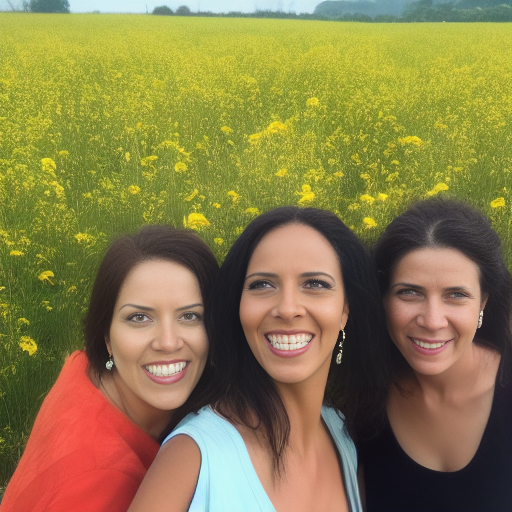
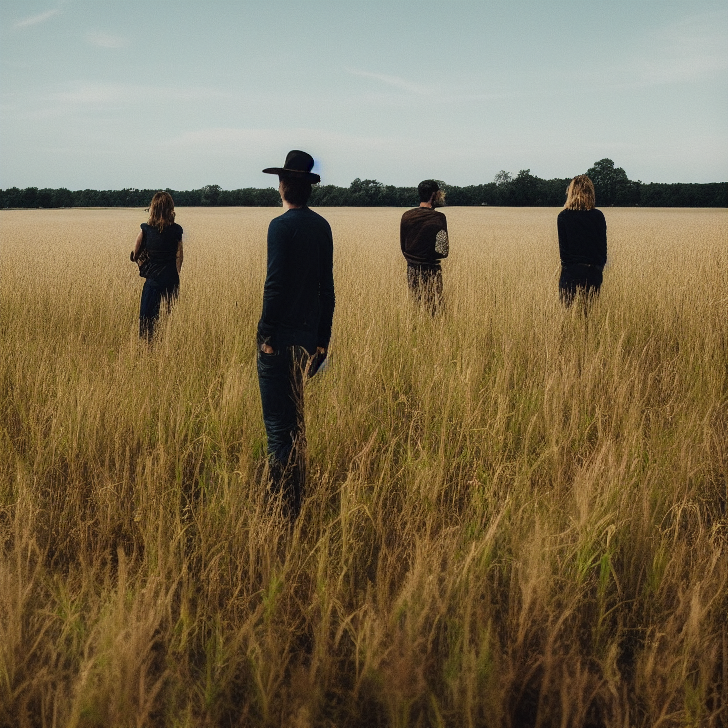
Take an image generated by a prompt "instagram, detailed faces, three women standing in a field." Pretty standard prompt, and at 512x512 it shouldn't give you too much trouble:
However, even mildly altering the dimensions (in this case, 768x896) I'll get more people than what I asked for, and they'll be standing in odd places in relationship to each other.
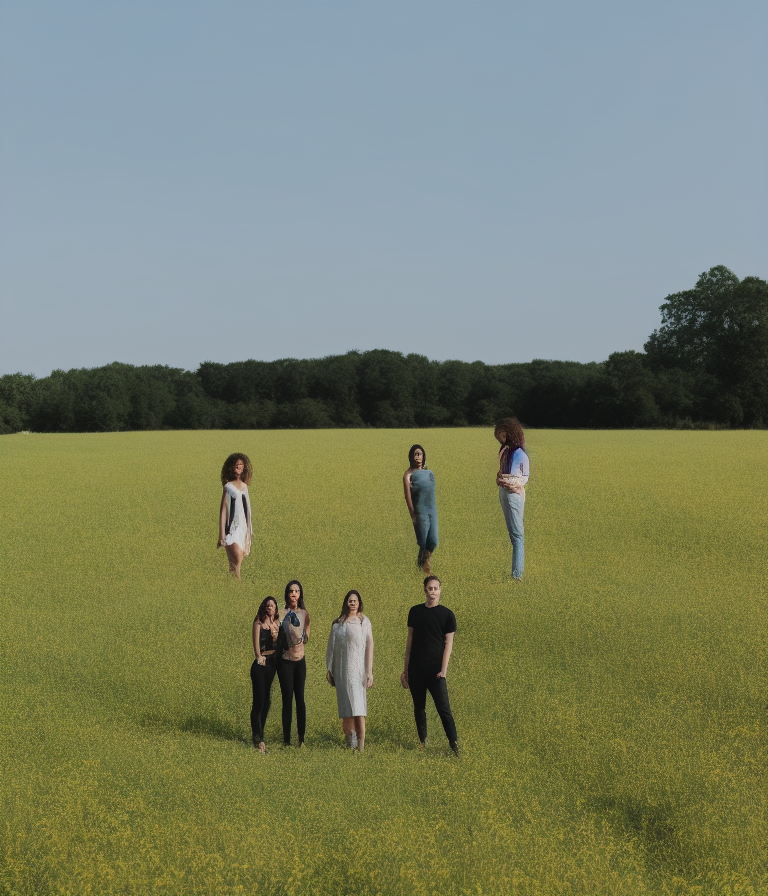
The reason is that in each individual "cell", the image will make sense in the context of that particular cell. However, when all of these cells are stitched together, it is high unlikely that the cells will make sense in relation to each other. The people in each row look fine next to each other, but when the rows are  placed next to each other, there is no sense of perspective and it makes the people in the back row look massive in comparison. Stable Diffusion has no concept of accounting for this sense of perspective, which is why you get the results that you get. If a person's limb extends past the line of the cell that they're in, it may just not render the limb at all. Obviously, this is an unpleasant, unnatural look.

However, depending on what you're generating, this may not matter. Creating a field without human subjects will look fine at nonstandard resolutions. You're probably not going to see patches of grass in the sky, for example.
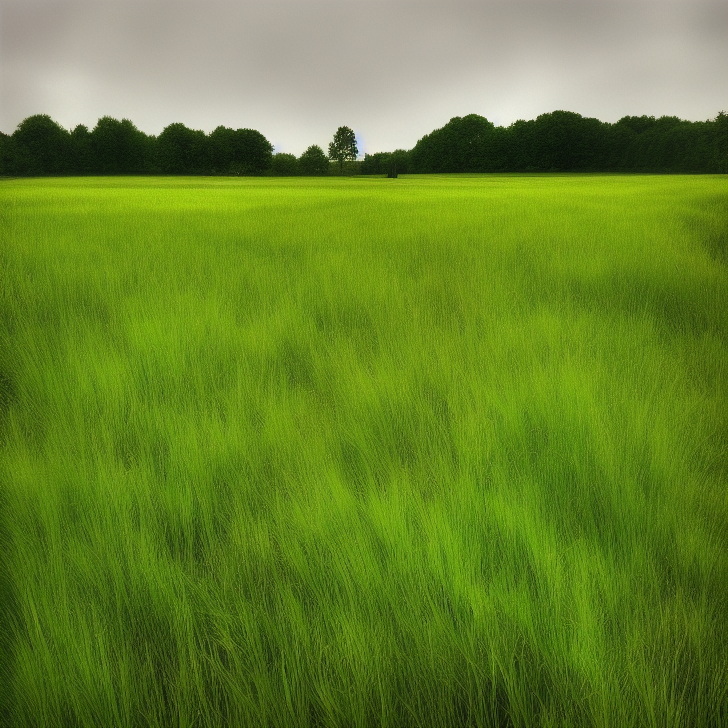
The reason why it's able to handle this instead is because something like a field is not a discrete object in the sense that a human being is. You can parcel out a field in uncountably many ways, so when Stable Diffusion needs to create cells to stitch the image together for the final result, it's impossible to tell where it did it. However, any segmentation of, say, a person beyond their naturally occurring boundaries is going to give you results like:
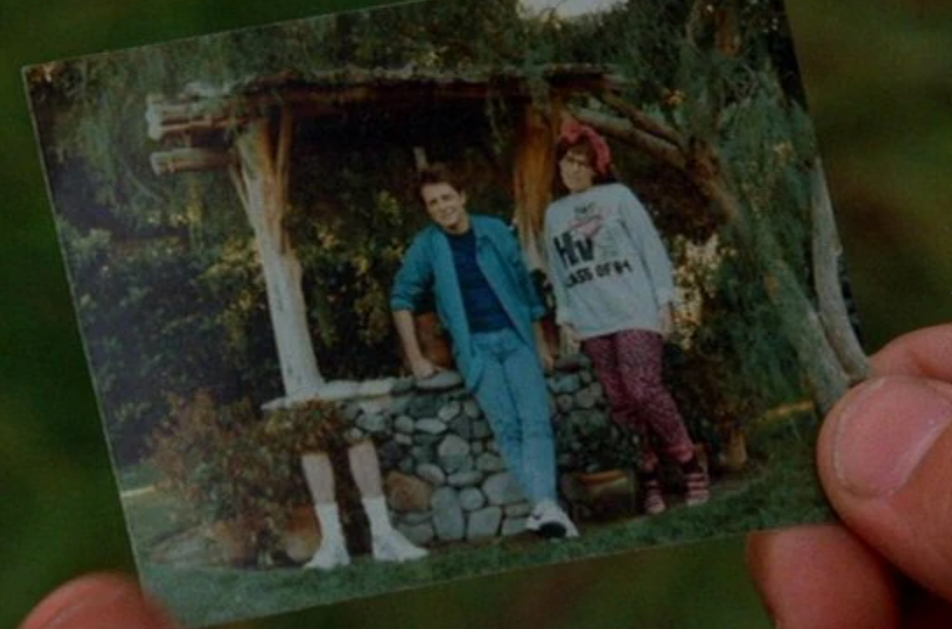
(Okay, that's just Back to the Future, but you'll run into the exact same problem in SD!)
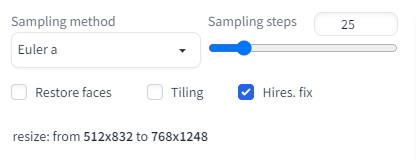
If you need to generate images that are larger than 512x512 where the subject being potentially bisected is a concern, then tick the "Hi-res fix" checkbox. This will, for a pretty hefty resource draw, allow you to create images that aren't subject to this limitation. However, if you need to create non-standard image sizes, it's going to be the best way rather than rolling the dice on the canvas size alone.
Have any further questions about Stable Diffusion best practices? Join the Runpod Discord and talk to us!