


Those who knew her say Dannielle Spillman had a generous spirit and a gentle soul, with a musical talent that shone brightest when she had a guitar in her hands.
Spillman, 74, died Monday after she was struck by a black Mercedes outside the Tower Car Wash in SoMa, in an incident caught on grisly surveillance footage. Valentino Cash Amil, 30, has been charged with murder and is in custody after a judge denied his request for bail.
“She had one of the biggest, most compassionate hearts I’ve ever encountered,” said Derrick Guerra, a caregiver for the Shanti Project, an LGBTQ+ support organization. Guerra met weekly with Spillman — who was trans — in her 15th Street studio apartment. She’d often have a pot of mint tea ready when he arrived.
Guerra said her compassion was reflected in the water bottles she carried to give to homeless people, or the time a pigeon flew into her apartment and she nursed it back to health. A few days before her death, Spillman gave him a CD of a 1973 live Grateful Dead concert.
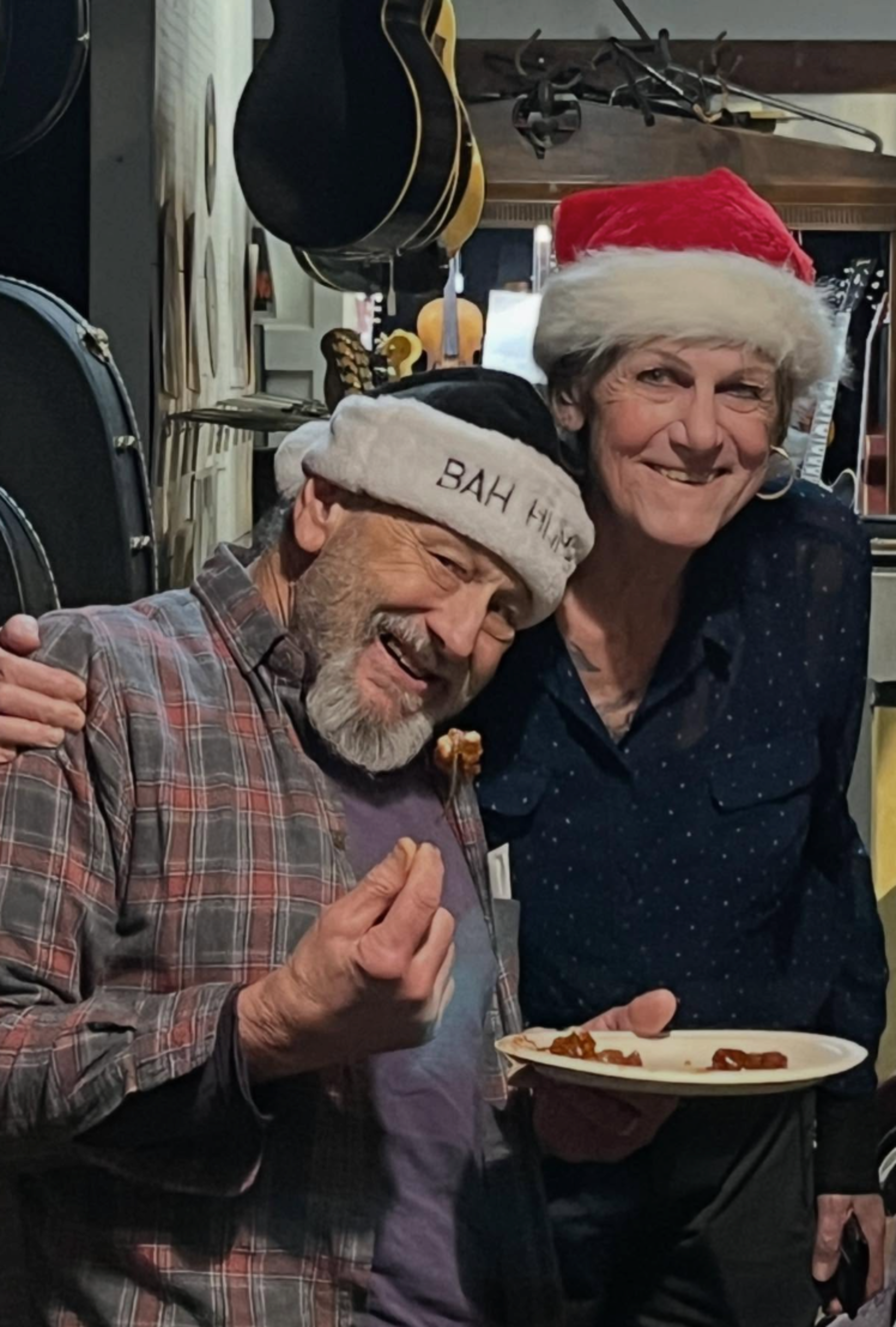
Music was her great passion, friends said. Her apartment was filled with guitars, a banjo, and a ukulele. She was a fixture at the Real Guitars shop, a block from the site of the crash, where she would play guitars and talk music history with the staff and customers several days a week. She wasn’t an employee but organized a holiday party for the staff, complete with pizza.
Ben Levin, who has owned Real Guitars for nearly 30 years, knew Spillman for about half that time. “She’d end up at our store late in the afternoon, maybe three or four times a week, and she’d always hang,” he said. “She would talk to the customers who’d come in. She loved guitar. She loved music. She was just a great person to have around.”
A right-handed guitarist who played in an open tuning she invented herself, Spillman had roots in the late 1960s California commune scene. She told Levin she came of age musically as a teenager living in Norway, where her father was stationed in the Air Force, and was handed a copy of Country Joe & the Fish’s debut album by a serviceman. “It blew her mind,” Levin said. “She had no idea this whole idea was out there — that you could be that person, that you could say these things, think these thoughts. It was 1967.”
Amil’s attorney, Seth Morris, has painted his client as a protective father who was traveling with his wife and children. He claims that someone appearing to be homeless, intoxicated, and belligerent began aggressively approaching the vehicle. Fearing for his life, Amil made a reflexive decision to drive away, Morris said, colliding with Spillman in the process.
“Murder requires an intentional act. That’s not what happened,” he said in the courthouse.
Video obtained by The Standard shows a person, now known to be Spillman, walking on a Mission Street sidewalk when a black Mercedes sedan pulls out of the Tower Car Wash driveway onto the street, blocking the path. The pedestrian pauses at the driver’s window, then steps into the street to go around the front of the car, glancing back while standing in front of the hood.
At that moment, the driver accelerates, striking Spillman and throwing her onto the hood before she falls under the vehicle’s right tires. The car drags her several feet before continuing on Mission Street, leaving her in the road.
Prosecutors say in court documents that Spillman walked up to and alongside Amil’s vehicle and seemed to take exception to the car taking up the sidewalk. The two exchanged words, and Spillman poured liquid from a water bottle onto the car’s hood, after which Amil allegedly accelerated into her body.
“My office does not believe, based on that video evidence and the statements collected thus far, that this victim posed any significant threat that would have warranted the legal use of self-defense,” District Attorney Brooke Jenkins said Thursday.

Morris pushed back on prosecutors’ allegations that Amil fled the scene, saying he had seen video showing that the vehicle stopped nearby after the collision and Amil’s wife exited the car to check on the victim. “He stopped the car immediately,” Morris said. He said Amil continued driving only after bystanders began filming the scene. “He said all he wanted to do was get his kids to safety.”
Friends say they don’t recognize the characterization of Spillman as a violent and aggressive person. Though she stood well over 6 feet, Spillman had a slight frame and a mild demeanor, her friends said.
1 day ago

5 days ago

Friday, Apr. 3
Levin said his heartbreak upon hearing about Spillman’s death was followed by anger. “There’s no reason for him to do what he did,” he said of the driver.
Spillman was the eighth pedestrian killed in San Francisco in 2026, matching the toll at the same point last year, according to Walk SF. The block where she died is on the city’s 2024 High Injury Network, a designation covering the 13% of streets that account for 74% of serious injuries and fatalities. The SoMa neighborhood is a hot spot, “with every single street on the High Injury Network,” said Jodie Medeiros, executive director of Walk SF.
In the months before her death, Spillman had grown increasingly frightened of navigating the city, Guerra said.
She told the caregiver about a series of encounters in which strangers had confronted her, deliberately misgendered her, and, in one instance, tried to punch her at a bus stop. A pest-control worker at her apartment building had repeatedly called her “sir” during a dispute over accessing her unit.
According to Guerra, Spillman said she felt safer as a transgender woman in San Francisco in the 1990s than today.
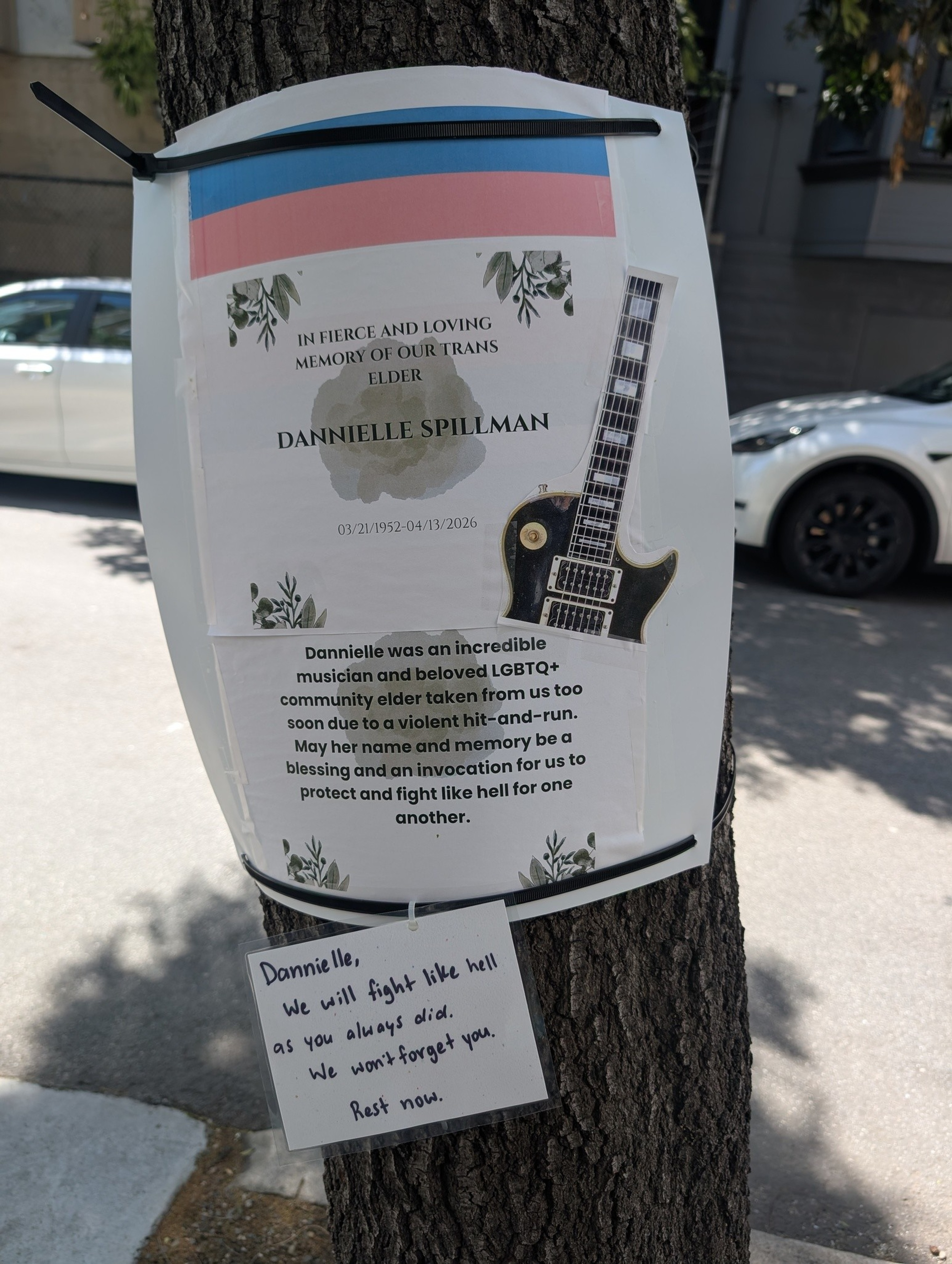
“Violence against trans people is real,” said Emma Martin, program director for LGBTQ+ Aging and Abilities Support Network at the Shanti Project. Martin and others have pushed back on coverage that misgendered Spillman or assumed she was homeless — a framing that implied her life and death were somehow not significant.
Spillman had lived in her apartment for many years, Martin said, and worked hard to maintain it. “It doesn’t make her death more or less tragic,” Martin added. “But it makes my blood boil when it’s wielded as a way to soften what happened.”
Guerra, who reviewed surveillance footage of the incident, said what he saw was not a problem with traffic and street safety.
“He waited until she was in front of his car, and then he sped up. That’s not an accident,” Guerra said. “That’s a violence problem.”
此内容由惯性聚合(RSS阅读器)自动聚合整理,仅供阅读参考。 原文来自 — 版权归原作者所有。