


Want more ways to catch up on the latest in Bay Area sports? Sign up for the Section 415 email newsletter here and subscribe to the “Section 415" podcast wherever you listen.
Tosh Lupoi can’t keep his eyes shut.
Every night, shortly after he falls asleep in his East Bay hotel room, he’s jolted awake.
On some nights, Cal’s first-year head football coach reaches for his iPhone at 12:30 a.m. On others, it’s 2:30 a.m. The time, he says, doesn’t really matter. The message does.
He’ll text his defensive coordinator, Michael Hutchings, about a schematic adjustment. He’ll text his recruiting director, Benji Palu, about a personal touch that could help Cal land a player in the transfer portal. He’ll text his wife, Jordan, who is still living in Eugene, Oregon, to check in on their three kids.
“Sleep cycle is not a strength of mine,” said Lupoi, 44. His staff and his wife say they’ve never met anyone who sleeps as little yet functions at such a high level.
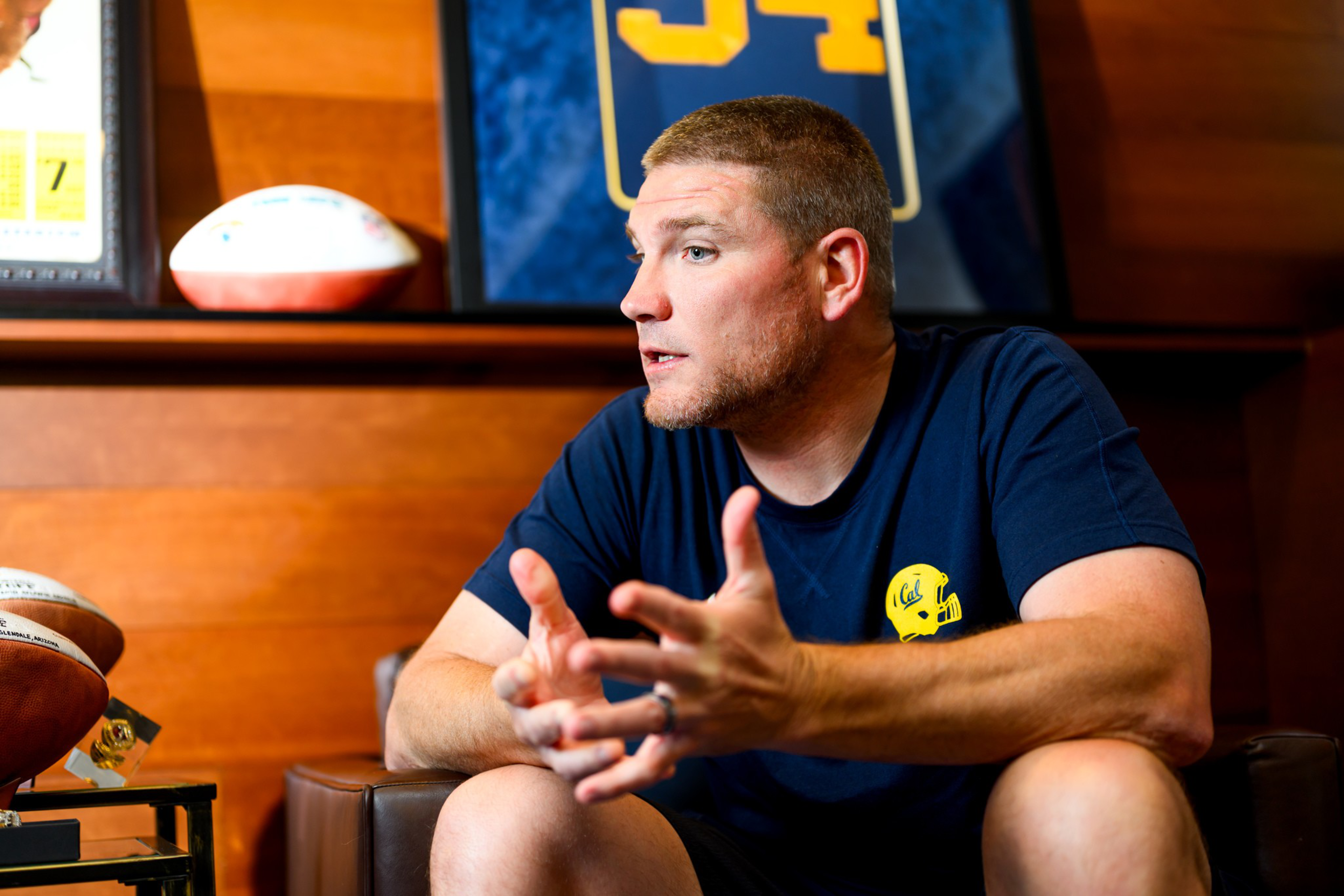
Hunched over in an armchair in an office buried deep in the labyrinth beneath California Memorial Stadium, Lupoi wasn’t in a reflective mood. In an exclusive interview with The Standard, he admitted he doesn’t spend much time thinking about how he landed a job most Bears fans believe he was made for.
Twenty-five years ago, he was just another student-athlete sitting in a Haas School of Business lecture taught by his favorite professor, Steve Etter, absorbing lessons about investment portfolios, thinking about how to balance his future with his all-consuming obsession with football — and plotting a post-class stop at Steve’s Korean Bar-B-Que.
He doesn’t call his return, 15 years after leaving this campus, a homecoming — “I don’t even know what that means,” he said, partly amused, partly matter-of-fact. He doesn’t use that word. Not his style.
Lupoi arrived at Cal as a defensive tackle in 2000, fresh out of Bob Ladouceur’s De La Salle High School football dynasty. He played for five seasons, worked for two as a graduate assistant, then spent four as an assistant coach under Jeff Tedford.
His father, John Lupoi, had also been a graduate assistant for the Bears — and in his parents’ Walnut Creek home are photos of Tosh as a toddler with his arms wrapped around a Cal football. When Lupoi wasn’t playing or coaching, he was casting lines and fishing in every lake within a 100-mile radius.
“I think it weighs on him more than he puts out. It’s such a special move for him,” Jordan said, knowing her husband doesn’t get sentimental. “That man had not moved from the Bay Area until he was 30 years old.”
But don’t call his hiring full-circle, because to Lupoi, the loop hasn’t closed.
He vividly recalls lining up on decisive defensive snaps in the Bears’ triple-overtime upset (opens in new tab) of Pete Carroll’s No. 3 USC Trojans in September 2003. Etched in his memory: being a part of big games at Cal. Important ones. Ones that mattered on a national scale. The top-25 program he once lived in is now only that: a memory, a distant, fading one.
Cal hasn’t won eight regular-season games since 2009, nor has the program won a bowl game since 2019. It sank so deep into irrelevancy that it nearly missed out on a Power Four conference invitation after the Pac-12’s 2023 collapse.
That’s why the process-obsessed Lupoi took this job, hired at what university chancellor Rich Lyons has called the program’s “mission-critical” moment. “Being a part of those winning equations is at the forefront of my mind and how I approach everything I do today,” Lupoi said.
For Lupoi, who has worked for the best coaches in football, each “separate entity” of his career is stacked on top of the last. He spent the last two decades following the blueprints of Tedford and Steve Sarkisian, upholding Nick Saban’s standard of dominance at Alabama, absorbing NFL lessons under Urban Meyer, Dan Quinn, and Raheem Morris, and until recently, navigating college football in its NIL era under Dan Lanning at Oregon.
But if you’d asked a younger Lupoi — the one still lacing up his cleats, say, a quarter-century ago — he never would have dreamed of that. The thought of coaching had never crossed his mind; all he wanted to do was exhaust his playing career.
His brother Tony, five years his senior, keeps a photo in his office of Tosh as a running back, slicing through defenders and into open space — as an 11-year-old.
“He was, and is to this day, that kid who is hungry to beat you,” Tony said. Tony played football at De La Salle too. He says he knows no competitor like his younger brother.
He remembers looking out the hotel room window on family summer vacations to see a preteen Lupoi — a tall, skinny boy with white-blond floppy hair — lifting paint cans and doing sit-ups in the parking lot. As the rest of the family relaxed, they’d keep an eye out for their youngest, off somewhere swimming across a lake or sprinting up sand dunes.
As a tight end in high school, Tony would look down at the turf in the middle of the De La Salle huddle and see tagalong Tosh, the team’s ball boy at 10, crouched on his hands and knees listening intently to Ladouceur. John and Dee Lupoi were both working parents — they’d drop Tosh off at that field in Concord for practices like it was a babysitting service.
Lupoi recalled those early days pursuing basketball along with football, competing at De La Salle, and soaking in lessons in accountability from a program that was ahead of its time. He talked about the glory days and the grind of playing at Cal — the greats to come out of it: Aaron Rodgers, Marshawn Lynch, DeSean Jackson.
1 day ago
4 days ago

Friday, Apr. 10
And when it came time to talk about what it was like to call it quits on his own playing career, Lupoi downplayed the emotions behind the decision.
“When you break your foot three times, there’s just not a whole lot to lean on — including your foot,” said Lupoi, who has a keen wit, though always tucked beneath a serious tone.
That’s what it took — fractures in the same foot on three occasions, the last just as Lupoi finished his degree and was training for NFL opportunities as an undrafted free agent in 2006. In the face of the injury, he ended his football career, and in hindsight admits that he probably should’ve accepted that reality sooner.
“The power of Cal really stood true at that moment,” said Lupoi, who started browsing for jobs and considering a life without football. A self-proclaimed “knucklehead,” he accepted an offer to be a graduate assistant from Tedford, thinking he could stall and get his master’s degree while workshopping his path forward.
“It probably took all of 24 hours for me to know what I wanted to do in life when I first got in that position meeting room,” Lupoi said. His first day on the job was eye-opening and transformative all the same. What he loved most was seeing the players react to feedback. Getting results. The whole process.
One of Lupoi’s defining traits as a coach has long been his ability to acquire talent. He’s a bona fide recruiter. A self-proclaimed “man of action,” which Bears fans loved — and then didn’t.
He became so prolific that his departure to join Sarkisian’s Washington staff sparked controversy in Berkeley. When Lupoi left in 2012, he convinced several highly rated recruits to ditch their Cal commitments and join him in the Pacific Northwest.
These days, his relentless approach is cause for celebration again. He squeezed in FaceTime calls to chip away at constructing Cal’s roster while at the Peach Bowl with Oregon. He boarded 28 flights in a two-week stretch in January to land 30 transfer-portal signees for the 2026 Bears. He took a humbling bench nap (opens in new tab) on the Honolulu coast in the wee hours of the morning in the name of a Jaron-Keawe Sagapolutele sophomore-year return.
It doesn’t turn off. He’s always recruiting, around the clock. And, fittingly, that’s how he met his wife.
At a 2012 dinner hosting recruits at Washington shortly after Lupoi arrived as an assistant with the Huskies, he sat alongside one of his players, Cooper Pelluer. A casual conversation eventually included a mention of Cooper’s older sister — newly single, newly graduated, living and working in Seattle. That’s when Lupoi’s ears perked up.
With Cooper’s blessing and assistance on her phone number — take that as a testament to Lupoi as a coach — he reached out. His first date with Jordan was an evening over drinks, right after Lupoi stepped off the plane following a dominant Washington win over Colorado.
The two, of course, talked football. Jordan didn’t need an introduction — she’d grown up in that world. Her father, Scott, spent six seasons playing in the NFL before coaching at the college level for more than 15 years. She has three brothers who all played college football.
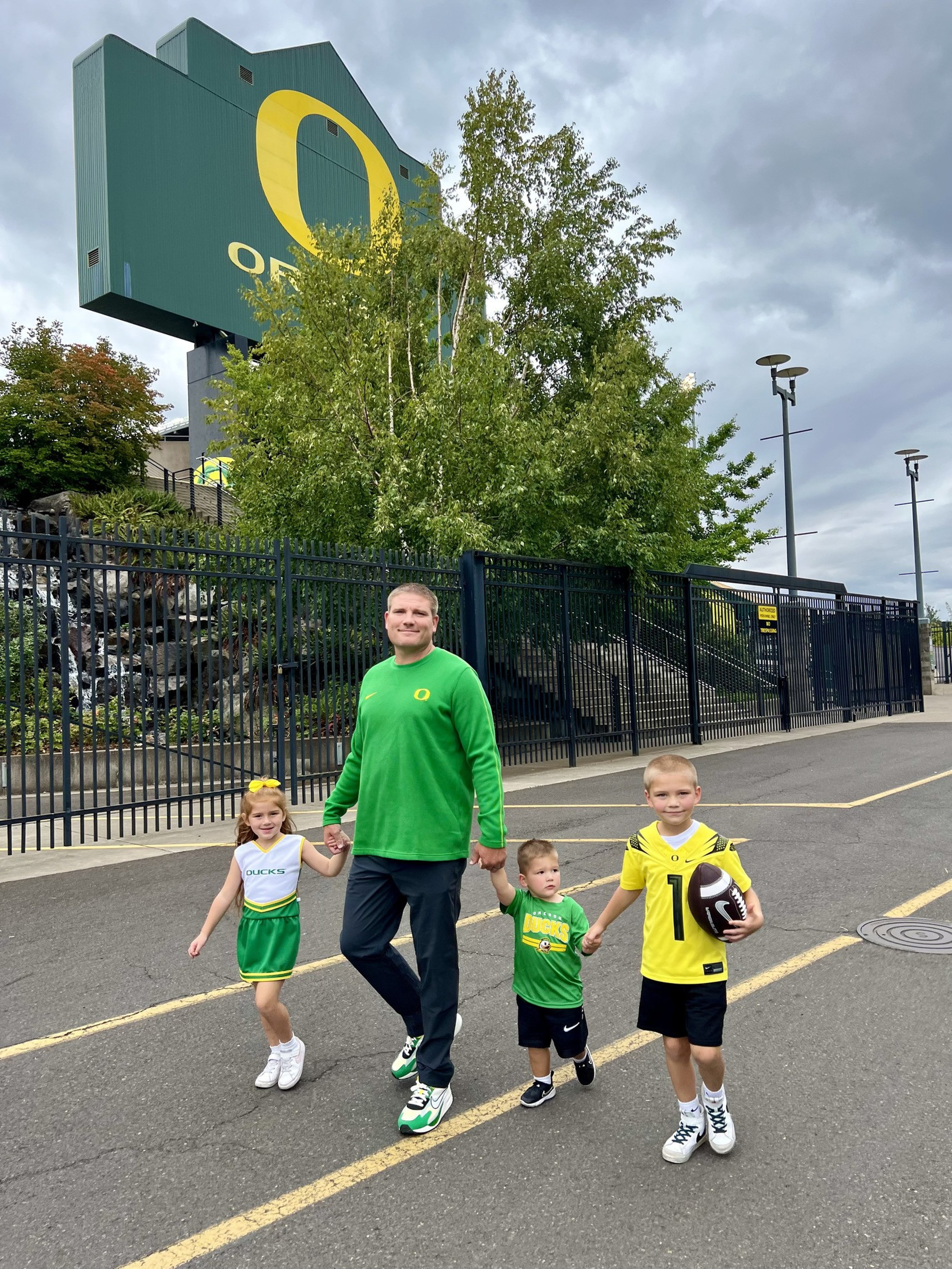
“At that time, the last thing I was looking for was a wife,” Lupoi said. “She was someone who changed that for me.” Both now admit that their shared love for football was certainly the initial selling point.
The couple wed in 2016, two years after Lupoi made the jump to Saban’s staff in Tuscaloosa, Alabama, and Jordan was open-minded enough to join him. She left behind an ascending corporate career and her West Coast family for college-town life and the opportunity for Lupoi to learn from the greatest to ever do it.
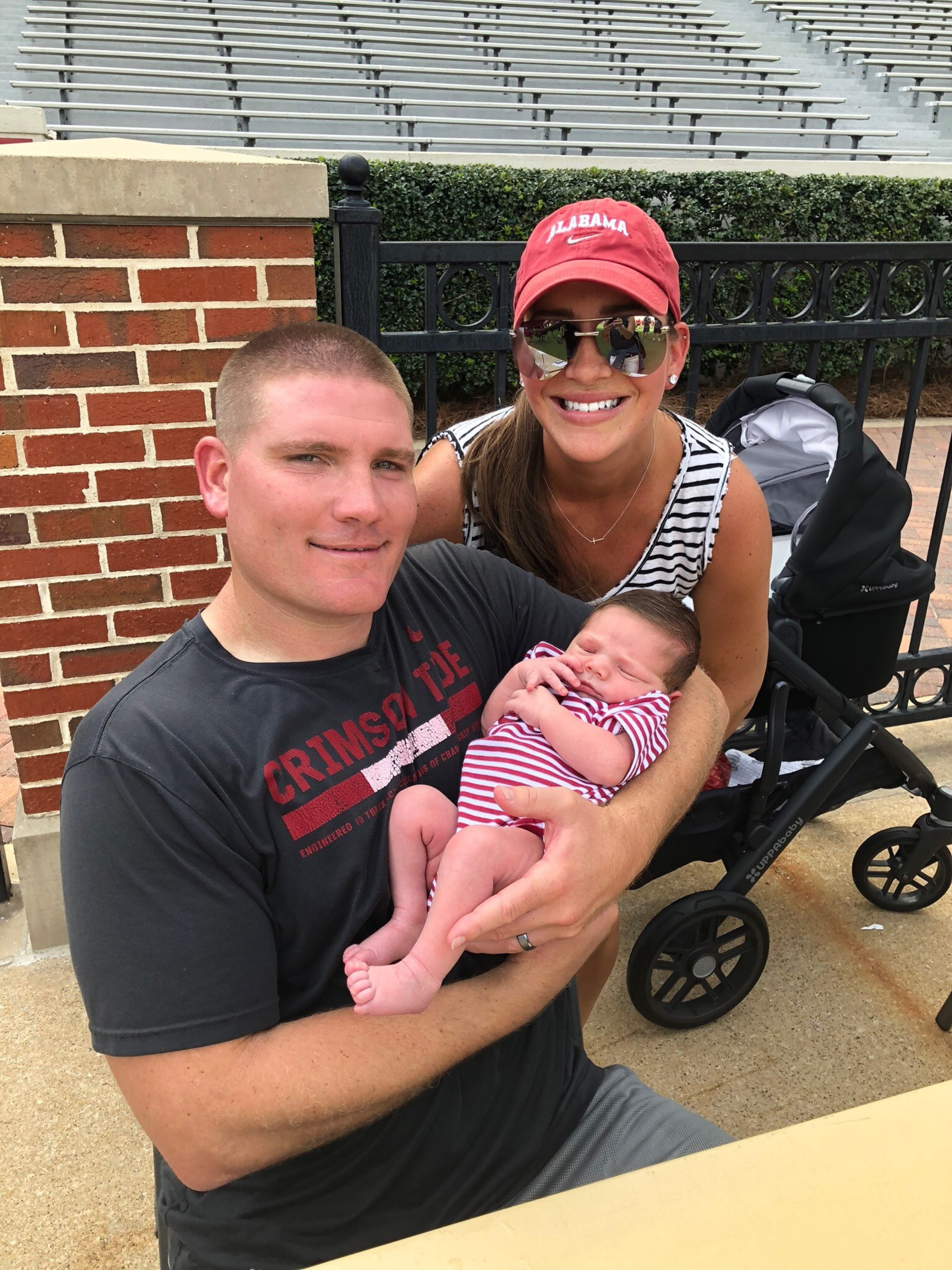
They welcomed their first son, Locke, in 2018 — in the middle of a fall camp practice. Jordan laughs at the memory of Tosh rolling up to the hospital in head-to-toe Bama Dri-FIT gear.
“I have never seen that man cry, not even at our wedding. But when Locke was born, I literally saw his eyes well up, and I was like, ‘This is the closest I’ll ever get to seeing tears,’” Jordan said. She brought baby Locke, in an itty-bitty crimson onesie, to his first Alabama practice at 1 week old.
Taking after Jordan’s upbringing of moving for her dad’s coaching career, the Lupois had each of their children in different cities. Daughter Logan, 5, was born in Atlanta during Lupoi’s one-year stint as defensive line coach for the Falcons. Their youngest son, Lawyer, 3, was born in Eugene, shortly after the family packed up their life in Jacksonville, Florida, where Lupoi coached the Jaguars’ defensive line.
The people who know Lupoi as “coach” — with his constant motion, an edge in his voice, and thoughtful commands — might struggle to picture him any other way.
At home, it’s different.
Because of the hours — Lupoi candidly says he doesn’t “believe” achieving work-life balance is possible — his family typically comes to him. His kids run through the facility, using football equipment as toys and players as playmates. Lupoi encourages it, for his own family and across his staff.
And when the rare moments arrive, the “switch” flips. He’s patient. Softer. Attentive. Playful.
“I think having kids definitely softened him up,” Jordan said. “It was amazing to see how well he instantly took to becoming a dad.” Lupoi cherishes any small window he gets for a one-on-one outing with his daughter, even if it’s just a car ride to Starbucks for a special treat. He loves taking all three kids around his childhood stomping grounds around the Bay Area — where he spent the first two-thirds of his life surrounded by a family with deep local roots.
Lupoi’s grandfather, Tony Sr., built a successful life and a fruitful Lupoi’s Market (opens in new tab) business in Walnut Creek after coming to the U.S. as a poor Italian immigrant. Most of his family worked shifts at that vintage East Bay food market that went out of business before Tosh was old enough to chip in.
But it seems a surreal consideration that Lupoi will drive a commute similar to the one his grandfather made, through Caldecott Tunnel from Walnut Creek to Jack London Square — a waterfront in Oakland — to his market 365 days a year before it closed in 1989. A literal crossing of their paths, and an extension of the Lupoi family Bay Area legacy.
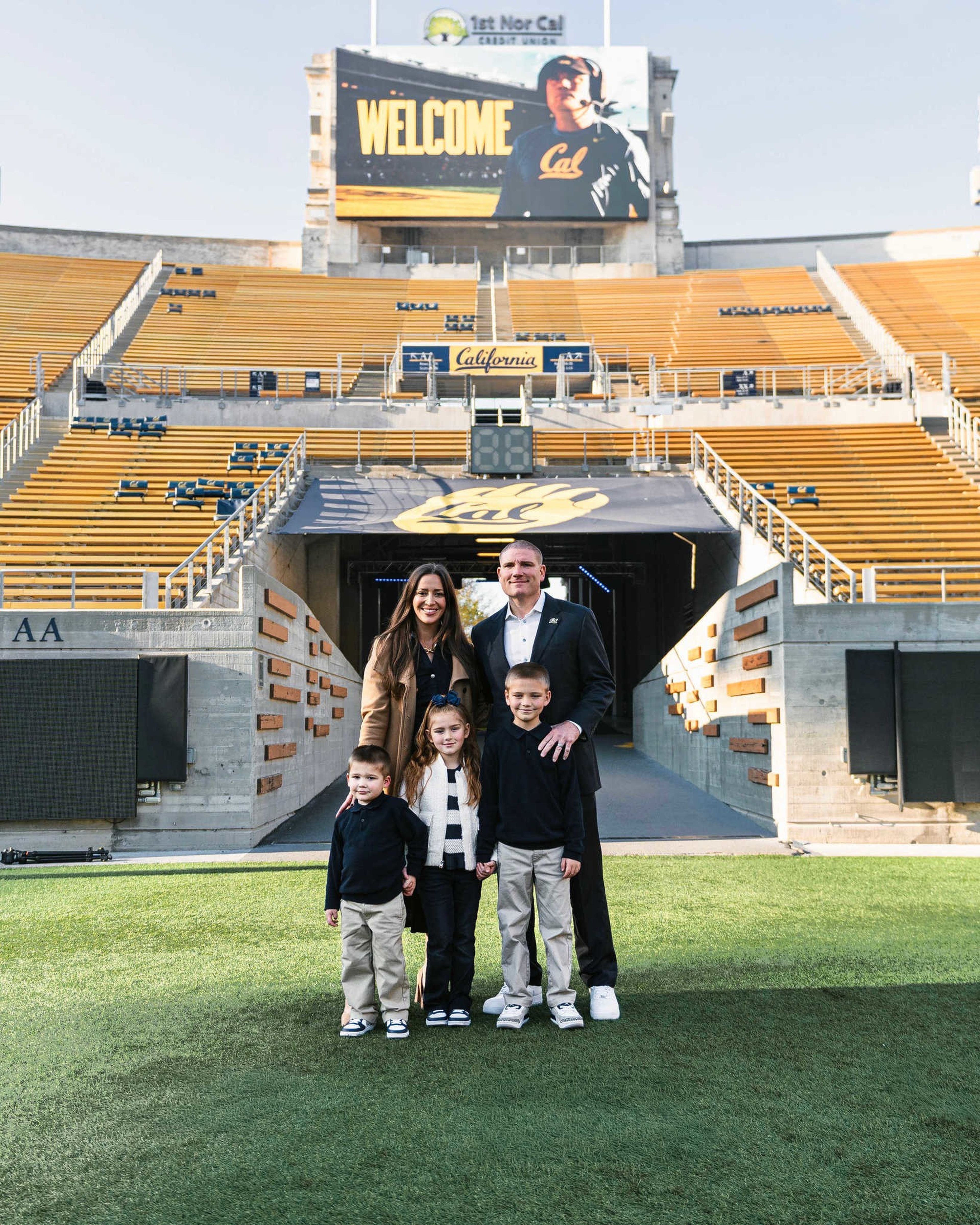
Soon, Lupoi’s family, awaiting renovations on their newly purchased home, will be resettled in the Bay. He’ll show his kids the places that shaped him. And it might look like a full circle.
But to Lupoi, it’s just the next step.
此内容由惯性聚合(RSS阅读器)自动聚合整理,仅供阅读参考。 原文来自 — 版权归原作者所有。