


A Unitree humanoid robot is being prepared for a Mount Everest expedition later this year after completing a high-altitude test on Ecuador's Mount Chimborazo.
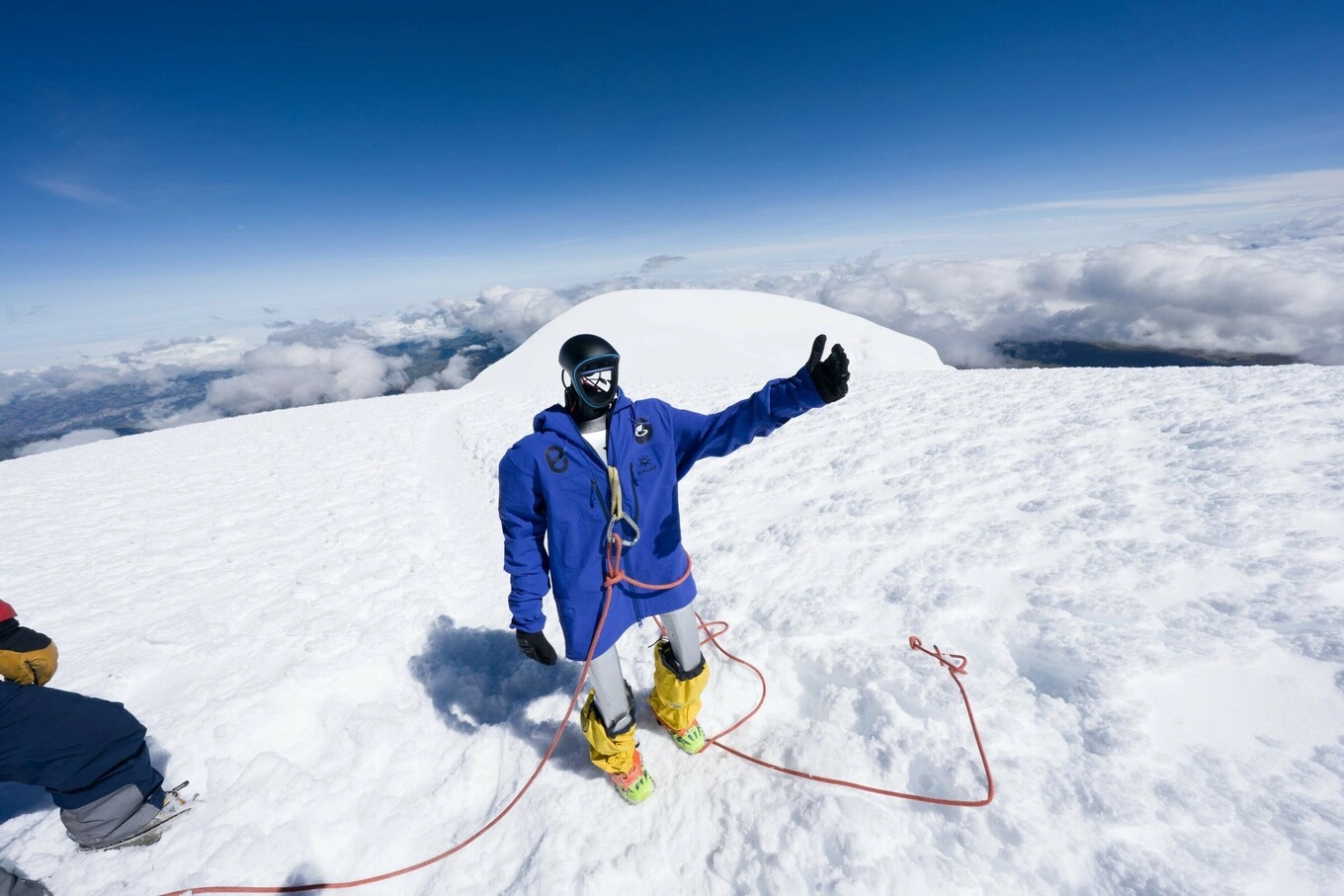
The robot, named Pemba, was provided by Eastworlds Labs, the AI robotics initiative of Virtuals Protocol. It took part in a Geologic Dome expedition that brought it to an altitude of 20,312 feet on June 5.
The planned Everest expedition will take the project into one of the world's most challenging mountain environments. Beyond placing a robot in extreme terrain, Eastworlds Labs and Geologic Dome say the mission is intended to evaluate whether humanoid robots can support conservation, scientific research and environmental monitoring in remote or hazardous locations that are difficult for humans to access regularly, according to Interesting Engineering.
The Unitree G1 robot will be donated to the local Sherpa community for the Everest mission, linking the project's next phase to the region where the expedition is expected to take place, according to Eastworlds Labs.
 |
|
Pemba, the Unitree G1 humanoid robot at the Mt. Chimborazo’s summit in Ecuador. Photo courtesy of Virtuals Protocol |
The Everest attempt follows the Chimborazo expedition, where Pemba was the only humanoid robot deployed. The G1 weighs 35 kilograms and can fold down to 690 millimeters, making it easier to transport through difficult terrain.
Although the robot reached Chimborazo's summit, it did not complete the entire climb independently. Pemba walked autonomously along sections of the 16-hour ascent where slopes were less than 30 degrees but was carried by team members through steeper and more technically demanding areas, Humanoids Daily reported.
To withstand harsh mountain conditions, engineers equipped the robot with custom cold-weather jackets, protective enclosures and composite feet. Temperatures on the mountain can fall to minus 15 degrees Celsius, while wind speeds can reach 90 kilometers per hour.
The robot was also trained to respond to strong wind turbulence and recover its balance on challenging alpine terrain.
Mount Chimborazo served as a demanding testing ground before the Everest attempt. While Mount Everest is the world's highest mountain above sea level, Chimborazo's summit is the point on Earth's surface farthest from the planet's center because of the Earth's equatorial bulge.
The Everest project is part of Geologic Dome's broader conservation initiative, which is developing autonomous infrastructure for protected natural areas. The organization is testing technologies including communication relay systems, AI-powered ecological monitoring and energy-independent robotic platforms.
此内容由惯性聚合(RSS阅读器)自动聚合整理,仅供阅读参考。 原文来自 — 版权归原作者所有。