









By Phong Ngo April 28, 2026 | 03:40 pm PT
German biochemist Hartmut Michel, 77, winner of the 1988 Nobel Prize in Chemistry, has taken a full-time professorship at Jilin University in northeastern China, according to the university.
Michel has joined the university’s First Hospital as "a flagship hire" under its talent recruitment strategy, according to the South China Morning Post, citing the university’s announcement last week.
First Hospital, also known as the First Bethune Hospital, was founded in 1949 and is one of northeastern China’s leading teaching hospitals, known for clinical care, medical training, and research.
During a meeting last week with the university’s Communist Party chief Tian Hui, Michel said he looked forward to working with university teams to advance research in structural biology, drug development, and translational medicine, while helping train young scientists and develop world-class research programs.
Tian said the university would fully support Michel and hoped he would help drive research breakthroughs and strengthen international collaboration, particularly between China and Germany.
He added that the university is committed to building a world-class institution by recruiting and nurturing leading scientists under a broader talent development strategy.
 |
|
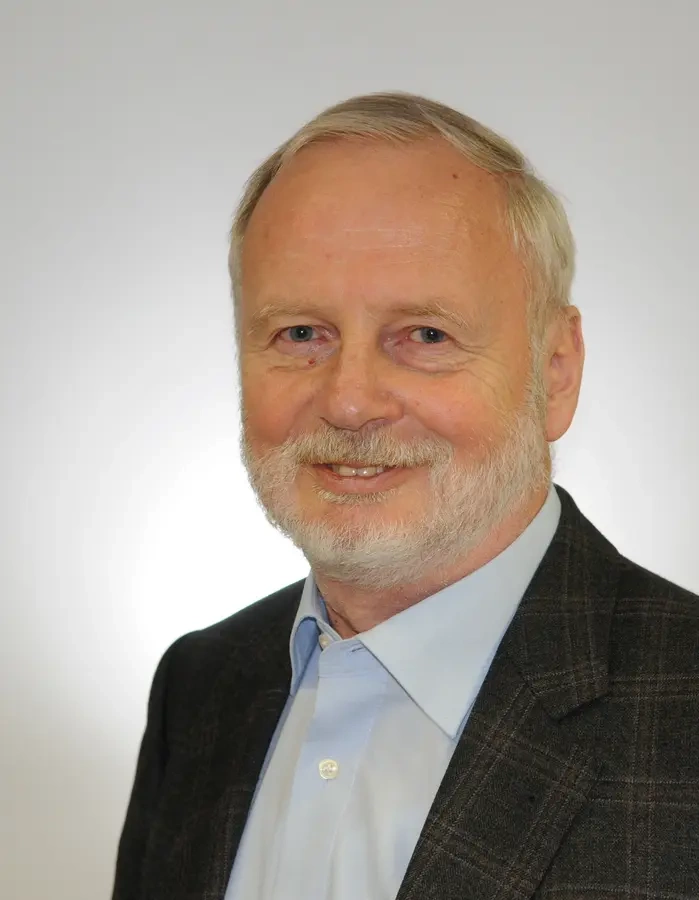
German biochemist Hartmut Michel, 77, winner of the 1988 Nobel Prize in Chemistry. Photo courtesy of the Max Planck Institute of Biophysics |
Michel spent much of his career at the Max Planck Institute of Biophysics in Germany where he served as director from 1987 until his retirement in 2007. There, he led one of the world’s leading research centers for membrane proteins, molecules embedded in cell membranes that regulate how cells absorb nutrients, transmit signals, and produce energy.
In 1988, Michel shared the Nobel Prize in Chemistry with Johann Deisenhofer and Robert Huber for "the determination of the three-dimensional structure of a photosynthetic reaction center."
According to the Nobel Prize, Michel studied a bacterium that carries out photosynthesis in a way similar to green plants. The energy conversion happens through the transport of electrons via proteins attached to special membranes inside the cell.
In 1982, Michel succeeded in crystallizing these proteins. The following year, he and his collaborators Deisenhofer and Huber determined the structure of the photosynthetic reaction center.
Michel has longstanding ties with China, having given lectures and worked with students at Tsinghua University, Tongji University, Sichuan University, and Jilin University, among others.
Since the early 1980s, he has promoted biological research in China and has visited the country more than 30 times, according to the University of Science and Technology of China.
He was elected a foreign member of the Chinese Academy of Sciences in 2000. He is also a foreign member of the Royal Society and the U.S. National Academy of Sciences, and a member of the German National Academy of Sciences Leopoldina.
此内容由惯性聚合(RSS阅读器)自动聚合整理,仅供阅读参考。 原文来自 — 版权归原作者所有。