








Many people living in Hanoi’s Old Quarter support green transport, but the lack of charging points and financial pressures are making the shift to electric motorbikes difficult.
For the last two weeks, adopting electric vehicles has dominated dinner table conversations in the home of Ngan Ha, 60, who lives on Hang Bac Street in the city’s downtown Hoan Kiem Ward.
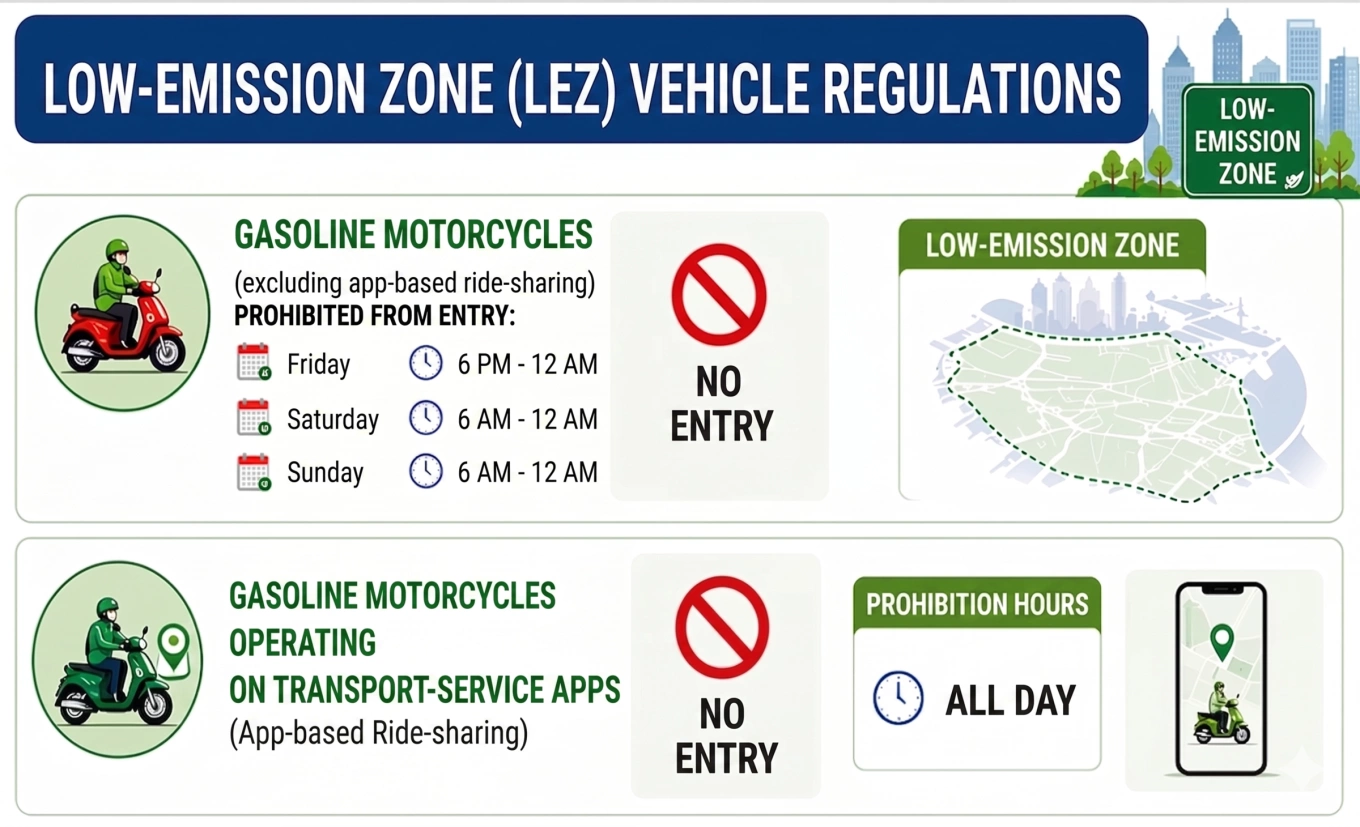
Under a draft plan to trial a low-emission zone on 11 central streets in the Hoan Kiem area, gasoline motorbikes would are set to be restricted there starting July 1. Ride-hailing motorbikes fueled by gasoline would be banned entirely, while private vehicles would be restricted during evenings and weekends.
Ha and her husband have lived in the Old Quarter for more than 60 years, raising three generations in a home of less than 20 square meters. He is a motorbike-taxi driver and she has a small roadside tea stall, and they earn around VND8 million (US$304) a month.
She planned to buy an electric motorbike so her husband could continue working inside the low-emission zone, but infrastructure has become an obstacle. "We may be able to borrow money to buy the vehicle, but the biggest headache is where to charge it and where to park it," she says.
 |
|
The 9-square-meter home of 55-year-old Dao Thi Tuyet on Hang Chieu Street in Hoan Kiem Ward is only large enough for a bed and a cabinet for the whole family, forcing them to park their motorbike outside. Photo by VnExpress/Nga Thanh |
Their house sits deep inside a narrow alley just over one meter wide, making it nearly impossible to take a motorbike indoors or run power cables outside for charging.
She considered charging elsewhere, but parking lots in the area do not offer charging services, while the nearest public charging stations are too far away. She is also concerned about the area’s aging electrical grid and that multiple households charging vehicles at the same time could overload the system.
"If a fire breaks out deep inside the alley, there will be no way to escape. We want to protect the environment, but the infrastructure is not available for us to make the change."
Thuy Minh, 50, who runs a shop selling altar supplies and offerings on Hang Mam Street, is also trying to adapt. Since the Covid-19 pandemic breakout, her sales have dropped by 70%, and she fears the gasoline motorbike restrictions would be the final blow. Her customers usually come on weekends to buy and transport heavy, bulky goods, but if traveling becomes inconvenient, she is worried they will simply shop elsewhere.
She is considering shifting more of her business online and buying an electric motorbike for deliveries. "But when you actually start looking into it, the problems become obvious," she says.
Cheaper models priced at around VND10 million have short ranges and cannot lug heavy loads. Better vehicles cost VND30–40 million, or the same as the price of three used gasoline motorbikes. Charging is another problem.
Her 20-square-meter house serves as both home and shop, leaving no space to park a vehicle. Running an extension cable from her house onto the sidewalk or charging at a relative’s home two kilometers away both seem impractical and risky, especially during rain.
For now, her family uses one electric motorbike and only for short commutes like carrying members from home to a parking area where their five gasoline motorbikes are parked. "This is only a temporary solution because we still do not have a safe place for charging and parking," she says.
Pham Van Hoa, neighborhood committee chief for the Ly Thai To 1 community in Hoan Kiem Ward, says around 200 households within the low-emission zone face some major difficulties. Their daily routines and goods transportation will be disrupted, and parking infrastructure is already overloaded even for gasoline motorbikes, let alone electric ones, he says.
A report released May 6 by the Hanoi People’s Council’s Urban Affairs Committee said Hoan Kiem Ward has around 89,000 two-wheel vehicles, with electric motorbikes accounting for only 1,000-3,500. Adding charging facilities for electric vehicles is even harder, Hoa says.
Another problem, he says, is that most homes in the area are small and located deep inside narrow alleys and have aging electrical systems that could easily be overloaded by charging many vehicles at a time.
 |
|
A narrow alley on Hang Chieu Street in Hoan Kiem Ward is just wide enough for one motorbike to pass, while bundles of electrical wires overhead create a potential fire hazard. Photo by VnExpress/Nga Thanh |
VnExpress found very few electric motorbike charging stations in the vicinity of the Old Quarter, with the nearest one located at a shopping center more than two kilometers away. Other options are 3.5 kilometers away. Battery-swapping stations planned for the 11 streets in the low-emission zone, which could at least resolve the problem of charging, have yet to begin operating.
Tran Huy Anh, standing committee member of the Hanoi Association of Architects, says the impact of restricting vehicles on these streets extends far beyond the 20,000 people living there, pointing out that large numbers of people from other parts of the city pass through the area.
He proposes creating priority lanes for vehicles transporting essential goods. "These are the lifelines of urban life." They would be too few to affect air quality but critical to sustaining daily life in the area, he says.
He says restricting gasoline motorbikes is only a small part of the city’s broader environmental challenge. "For Hanoi to truly become green, stronger actions are needed, such as waste sorting, reducing construction dust, increasing green spaces and water surfaces, and prioritizing public transport."
While waiting for infrastructure improvements, some families are relying on temporary solutions. The family of The Toan on Nguyen Huu Huan Street recently cleared a small space on the ground floor to store his daughter’s electric motorbike.
"Since our house has many flammable items, we only charge it during the day under close supervision", he says. Their three remaining gasoline motorbikes are parked on the sidewalk outside the house. Once the new rules take effect in July, they will simply wheel them outside the low-emission zone during restricted hours before riding away.
此内容由惯性聚合(RSS阅读器)自动聚合整理,仅供阅读参考。 原文来自 — 版权归原作者所有。