











Loading...
The first signs an American aircraft was shot down came over the Telegram messaging app. Images of aircraft debris and a pilot's empty ejection seat appeared on pro-Iranian channels. They were quickly followed by videos of search-and-rescue aircraft flying low over the mountains of southwestern Iran.
Jake Godin got to work trying to figure out if any of it was real. Godin is a senior researcher at Bellingcat, an independent organization that does open source investigations. He's part of an informal group of journalists, human rights activists and online influencers that seek to geolocate and verify events in war zones as they happen.
But Godin and others were missing some vital tools for this work. Iran has imposed a strict internet blackout in recent months, limiting what civilians can send to the outside world. At the same time, satellite imagery that is often used to corroborate photos taken on the ground, has been disappearing as well.
Shortly after the start of the war in Iran, satellite provider Planet put in a two-week delay in the imagery it shared with journalists and the public. The day after the plane went down, it announced it would no longer provide any recent images of the entire Middle East.
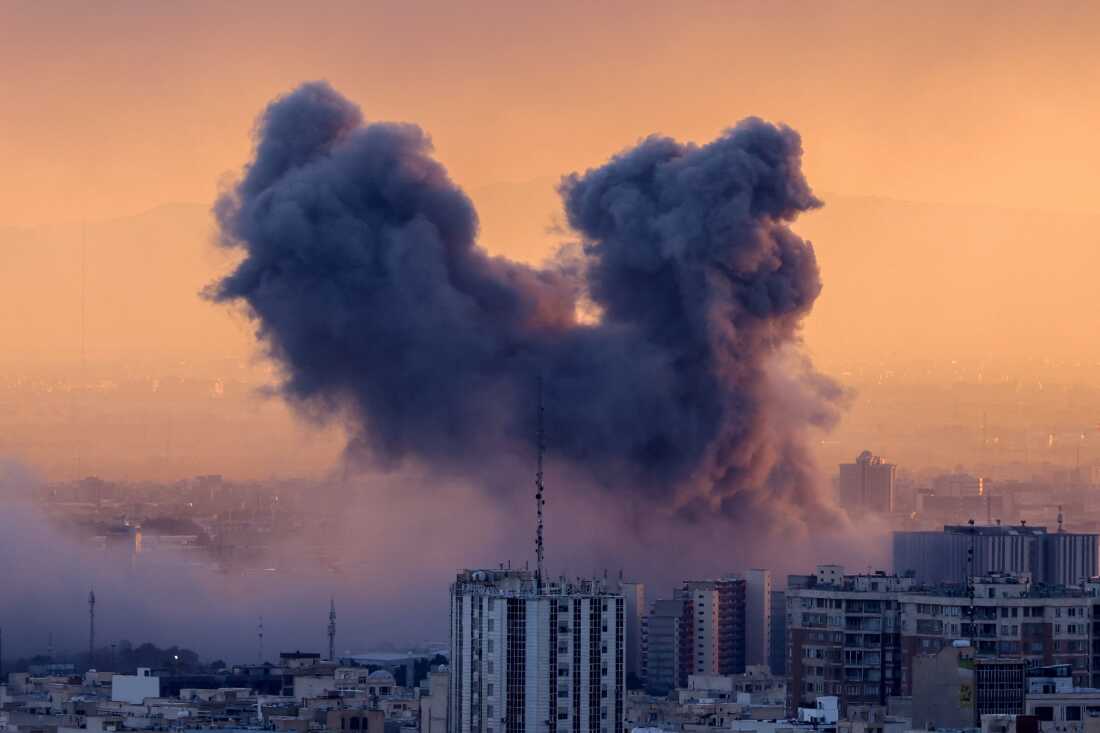
A plume of smoke rises after a strike on Tehran, Iran on March 3. Atta Kenare/AFP via Getty Images hide caption
toggle caption
Atta Kenare/AFP via Getty Images
"The U.S. government has requested all satellite imagery providers voluntarily implement an indefinite withhold of imagery in the designated Area of Interest (AOI)," the company wrote to its customers in an e-mail. "We expect this policy to last through the end of the conflict."
The decision by Planet, and another American company called Vantor, to limit access to images has been a setback because both companies provide extremely high-resolution pictures, and their satellites make frequent passes over Iran and the Gulf.
Godin and other researchers were coming up against a new version of a longstanding challenge: when it comes to warfare, governments want to control the narrative.
"States tend to be extremely jittery about how wars are reported when they themselves have some national investment," said Susan Carruthers, a historian at the University of Warwick and author of The Media at War.
The U.S. and Iranian governments aren't the only ones attempting to crack down on the flow of information from the conflict. In Gulf states, hundreds of people have been arrested or detained for posting videos of strikes and military facilities to social media. And Israel has also imposed strict rules about what images citizens and journalists can and can't post online.

Some Gulf states, including Abu Dhabi in the United Arab Emirates, has arrested people for taking photos and videos during the war. Abu Dhabi Police on X hide caption
toggle caption
Abu Dhabi Police on X
The trend is a sharp reversal from the past decade, when social media and cell phones have made it easier to understand conflict zones from afar, Godin said.
"There is still video, there's still photos that are coming out, there's still some satellite images," he said. "But it's becoming harder and harder."
Throughout the modern era, governments have been reluctant to put the horrors of war on full display. In particular, Carruthers said, states have sought to control the images.
Governments hold a "really entrenched belief that if people actually saw war in all its gory awfulness that it would be untenable to pursue military ventures."
In the first half of the 20th century, they were largely successful. Photos and newsreels of World War I trenches were heavily censored, and the public "didn't know a great deal about the nature of World War I until it was over," she said. World War II was also heavily airbrushed, she said.
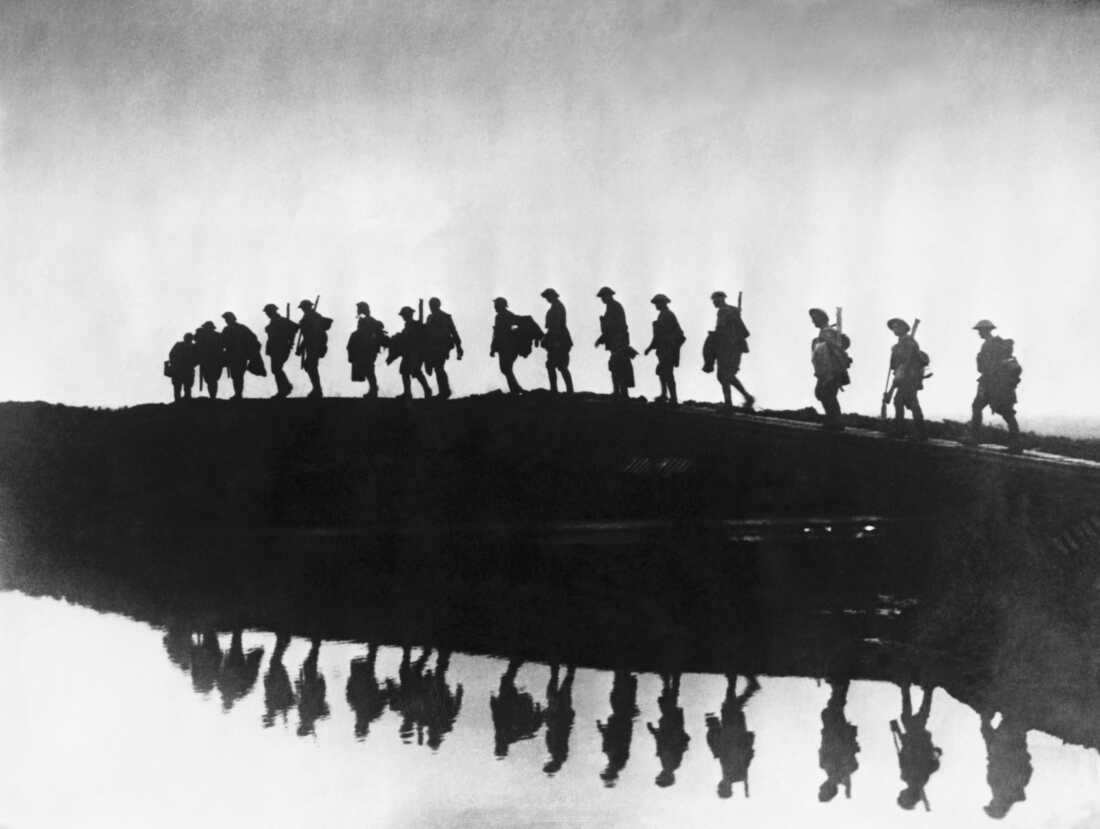
During World War I, military censors were able to tightly control information coming out of the trenches. Hulton Deutsch/Corbis via Getty Images hide caption
toggle caption
Hulton Deutsch/Corbis via Getty Images
But by the Vietnam War, controlling visuals had become much more difficult. Televisions were in most American homes by the late 1960s, and people were greeted with daily footage from journalists on the ground in South Vietnam.
Some in the military establishment blamed the nightly news for losing the war in Vietnam. "Without censorship, things can get terribly confused in the public mind," General William Westmoreland, the commander of US forces in Vietnam, said after the war ended. "Television is an instrument which can paralyze this country."
"That certainly led to a doubling down of attempts to constrain the media, especially the visual media," Carruthers said. Part of the strategy at the turn of the 21st century was to allow reporters to embed with the military. While censorship restrictions were relatively light in Iraq and Afghanistan, keeping the press close to the troops helped ensure a sympathetic viewpoint.
Over the past decade, technology has again changed the way the world sees warfare. Starting with the Arab Spring in the early 2010s, social media became a vital way to verify claims and monitor conflicts, according to Godin.
During the Syrian civil war, Godin said, citizens were filming everything that happened.
"Barrel bombs were being dropped on their homes, and there was a video of it on YouTube like an hour later," he said. Godin found himself monitoring hundreds of YouTube channels to understand the conflict in granular detail.
At the same time, near-daily satellite imagery was becoming widely available to the public. The satellite images could provide a way to determine whether videos posted online were authentic.
Satellite imagery is incredibly important, "because it's visual and it helps us organize all the other information that we have," said Jeffrey Lewis, a professor of global security at Middlebury College. Multiple videos can be linked to a single event, and the location of that event can be assigned using satellite photos, he said. "It lets us put a pin in a place."
The combination of the two has grown more powerful in recent years, Godin said. "Russia's invasion of Ukraine has been a torrent of media: photos, videos, and a lot of them released by Ukraine themselves."
Those images, corroborated by satellite imagery, have been used to chronicle the ongoing conflict, sometimes at grand scale.
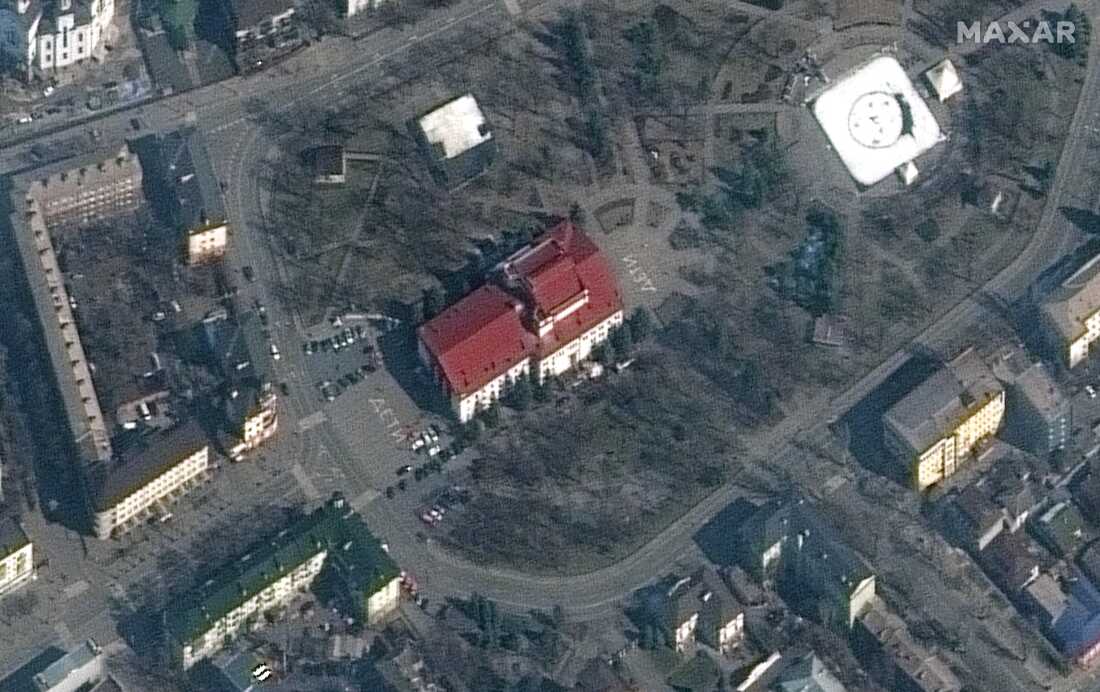
Satellite imagery of a theater in Mariupol, Ukraine. The word children is written in large white letters (in Russian) in front of and behind the theater on March 14, 2022. The building had been used as a shelter for hundreds of Ukrainian civilians. It was bombed two days later. Maxar Technologies/DigitalGlobe/Getty Images hide caption
toggle caption
Maxar Technologies/DigitalGlobe/Getty Images
But the war in Iran has been different.
Iran itself has imposed a near complete internet blackout inside its own borders, according to Ali Vaez, director of the Iran project at the International Crisis Group. Vaez says the strict blackout is relatively new for the country. Even when the U.S. and Israel bombed Iran's nuclear sites last year, events were "widely reported by the citizenry on social media networks," Vaez said.
"It was only towards the second week of the 12 day war that Iranians started putting some restrictions in place," he said. The full blackout by the regime began with civil protests at the beginning of 2026, and has continued in the current war. "The restrictions this time around seem to be more serious and strict," he said.
Iran isn't alone, across the Persian Gulf "there's definitely an attempt to try and corral," said Marc Owens Jones, associate professor of media analytics at Northwestern University in Qatar. Jones said he recently heard of a case where someone was pulled over for making a video call near a sensitive installation. In early March, Qatar's Ministry of Interior said it had arrested over 300 people for filming videos and spreading "misleading" information.
The censorship is as much about economics as it is about security, said Jim Krane, a research fellow at Rice University's Baker Institute who specializes in energy geopolitics. The Gulf states have built a reputation for being safe places to live and invest, he points out, and the war is upending that view.
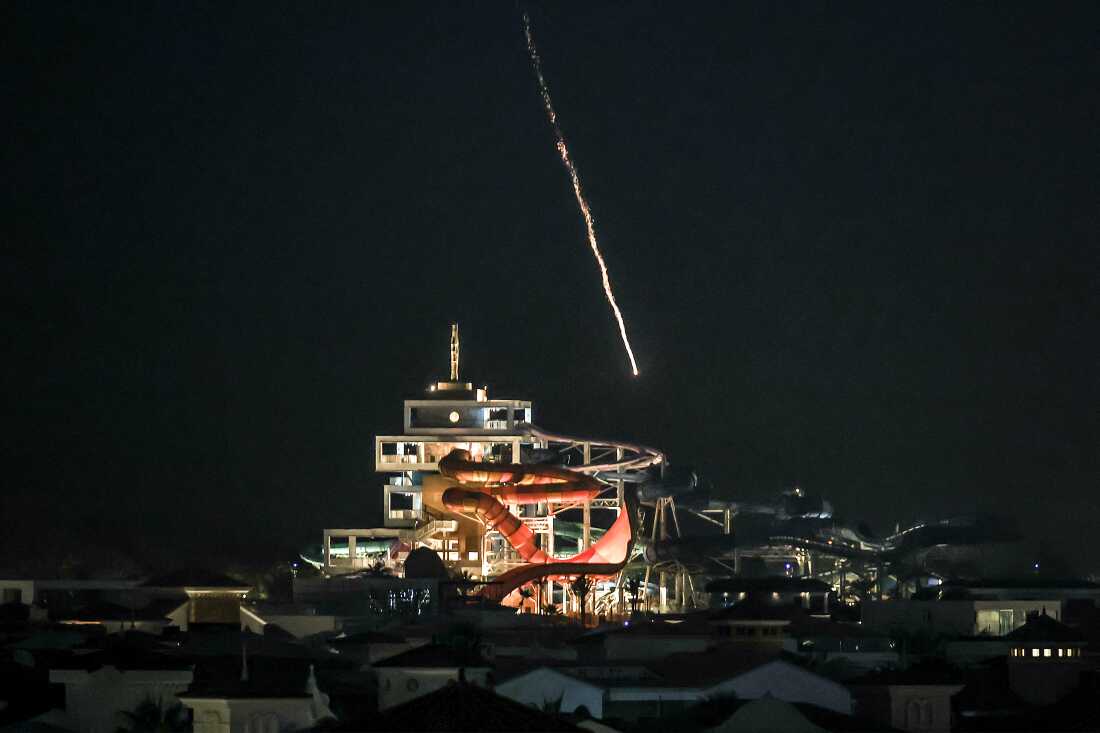
An intercepted projectile falls into the sea near Dubai's Palm Jumeirah archipelago on March 1. Gulf states have billed themselves as safe places to live and invest, and they are determined to protect that reputation. Fadel Senna/AFP via Getty Images hide caption
toggle caption
Fadel Senna/AFP via Getty Images
Perhaps no place is more sensitive to perception problems than the wealthy enclave of Dubai. "The Dubai business model is taking a hammering right now," Krane said. He believes the censorship is partially "to try and burnish and maintain their image as a safe haven."
Dubai's police have not released details on how many people have been detained, but police in the neighboring emirate of Abu Dhabi say they have arrested 375 people for taking unauthorized pictures and spreading false information.
Unlike previous conflicts, the U.S. has also worked harder to restrict information from the region as well. Trust between the Pentagon and journalists was already low – many in the press corps, including NPR, left the building last fall after Secretary of Defense Pete Hegseth demanded members of the press sign a pledge to not solicit information outside of press briefings.
With little access to the Pentagon or troops on the ground, satellite images played an outsized role early in the Iran conflict. Reporters used the images to document blows traded by the U.S., Iran and Israel.
But within days, the satellite imagery was causing headaches for war planners. On March 3, CNN published Planet imagery showing a base where six U.S. servicemembers were killed. The New York Times published extensive analyses of the damage to communications infrastructure and bases throughout the region. And many outlets, including NPR, used satellite imagery to show that a strike at a girl's elementary school in Iran was part of a larger set of targets at a nearby military base. The U.S. subsequently took responsibility for the strike, and an investigation continues.
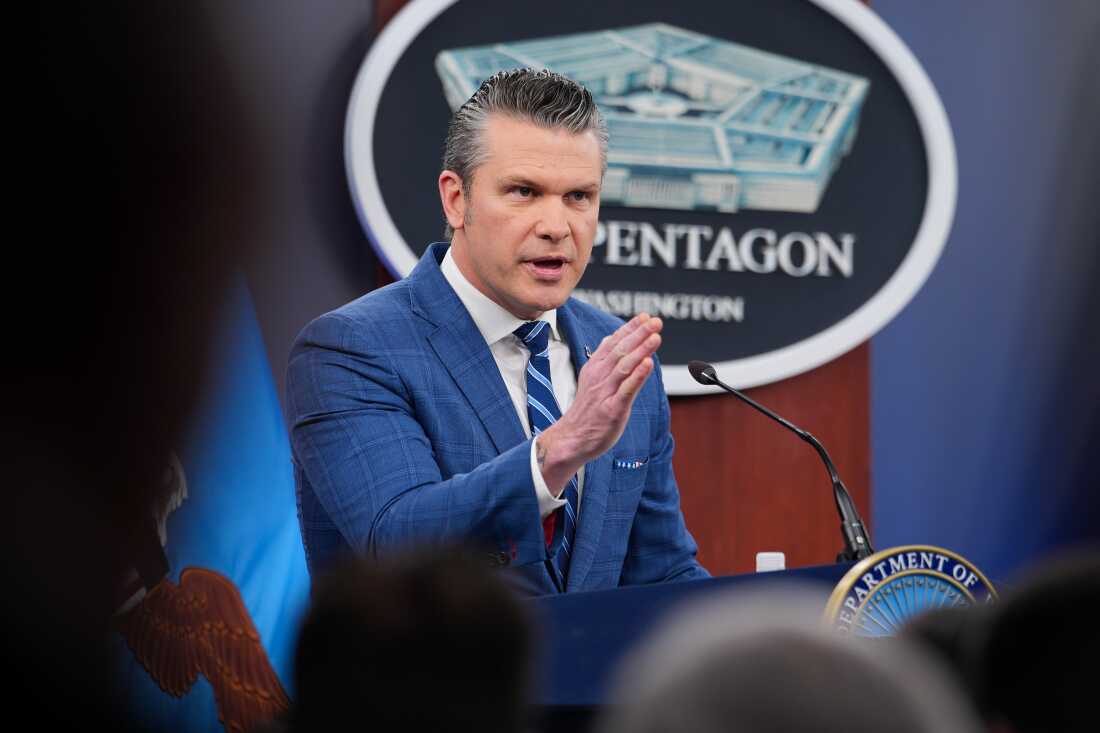
Secretary of Defense Pete Hegseth has sought to tightly control information coming out of the Pentagon. Andrew Harnik/Getty Images hide caption
toggle caption
Andrew Harnik/Getty Images
By mid-March, the two largest U.S. firms, Vantor and Planet, stopped distributing imagery to the press altogether. Planet then imposed a 14 day hold on all imagery out of the region before switching to an indefinite moratorium.
Planet operates a fleet of around 150 satellites that photograph most of Earth's landmasses on a daily basis. Its images had become a mainstay for observers of the events in the Middle East in recent years. The company's pictures have been used to help track atrocities in Syria, document previous attacks by Iran, and chronicle Israel's destruction of Gaza.
Both Vantor and Planet say that the decision to begin limiting imagery has been voluntary. "Vantor independently determines when and how these controls are implemented as part of our responsible business practices," the company wrote in an e-mail. "These decisions are not mandated by any government or third party."
In an e-mail to NPR on Thursday, Planet added that it hoped to restore access soon:
"We remain highly engaged with the U.S. Government," the statement read. "Our goal is to get back to unrestricted access for all of our customers globally as soon as possible, while continuing to limit the risk that our data could be misused."
Both companies' satellites are regulated by the government, and both are heavily dependent on business from the Department of Defense and intelligence agencies around the world. Nearly 60% of Planet's revenue in its last quarter came from defense and intelligence contracts, according to a recent shareholder report. Vantor is also a major government contractor that has been awarded millions by agencies like the National Geospatial-Intelligence Agency and Department of Defense, among others. Last July, the company announced it had won $205 million in contracts with several nations in the Middle East and North Africa, though it declined to say which nations are involved.
Experts contacted by NPR said that the efforts at censorship had worked to some degree–and they'd made their jobs harder.
But there's still information to be found online. On Telegram, Iranian channels, many of which are pro-government, frequently publish videos of events inside the country.
Images also continue to trickle in from the Gulf countries, such as a widely circulated image of a destroyed American E-3 Sentry aircraft that was taken at a base in Saudi Arabia.

Despite heavy censorship, an image still appeared on social media showing the wreckage of a U.S. Boeing E-3 Sentry aircraft after an Iranian strike on an air base in Saudi Arabia. Social Media via Reuters hide caption
toggle caption
Social Media via Reuters
Verifying the images and videos, especially in the age of AI, can be tough. "The big problem is that it becomes very hard to fact check things like videos," said Lewis. The ability to sort fact from fiction "is a lot harder when you don't have recent ground-truth satellite imagery."
But the satellite imagery isn't completely gone either. Publicly-funded satellites continue to supply images of the Middle East, albeit at lower resolution than the commercial companies. And a trickle of images from other providers, such as Airbus, continue to provide insights into aspects of the conflict.
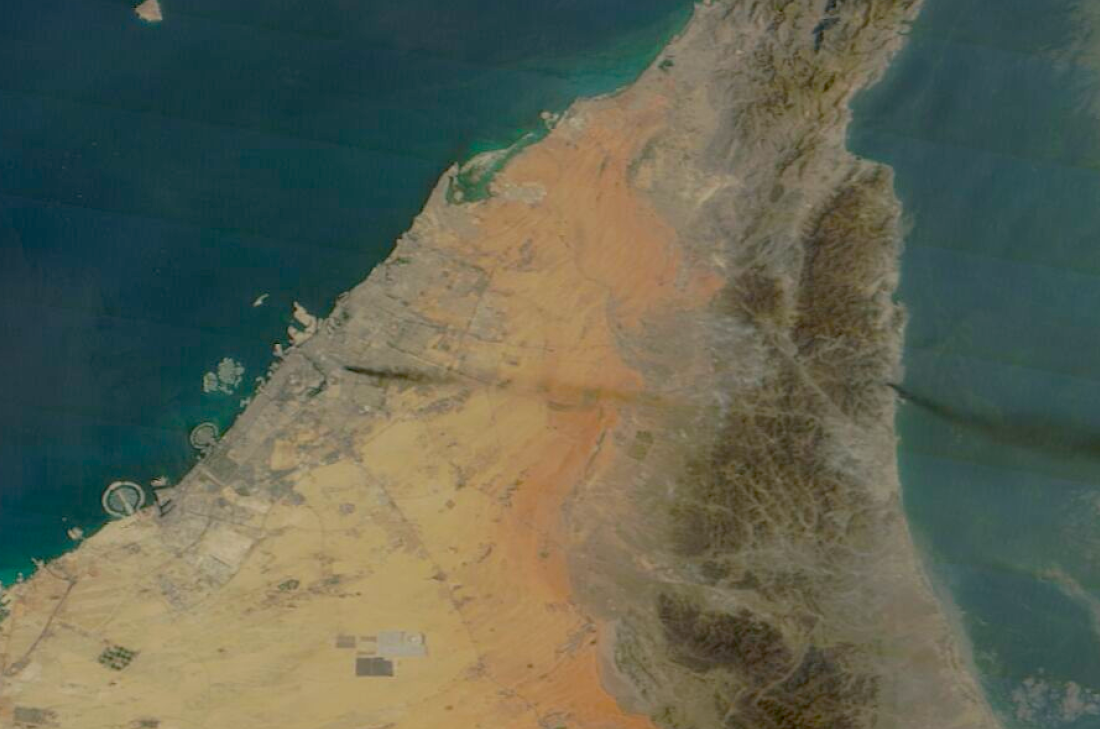
A satellite image from NASA's Terra spacecraft shows fires burning in the United Arab Emirates on March 16, 2026. Some lower-resolution imagery continues to be available from publicly funded satellites. NASA Worldview hide caption
toggle caption
NASA Worldview
The online community of people who do this kind of analysis are used to their information environment constantly shifting according to the whims of companies and algorithms, Godin said. And they're good at finding workarounds: On Tuesday, Bellingcat unveiled an online tool that uses radar data from an old satellite to look for damage from strikes throughout the region.
Godin said he continues to keep very busy, and he doesn't expect efforts at censorship to change that. "It's not great that these things are happening," he conceded. "But we're a resilient bunch."
NPR's Aya Batrawy and Sarah Knight contributed to this report.
Contact Geoff Brumfiel on Signal at gbrumfiel.13
此内容由惯性聚合(RSS阅读器)自动聚合整理,仅供阅读参考。 原文来自 — 版权归原作者所有。