








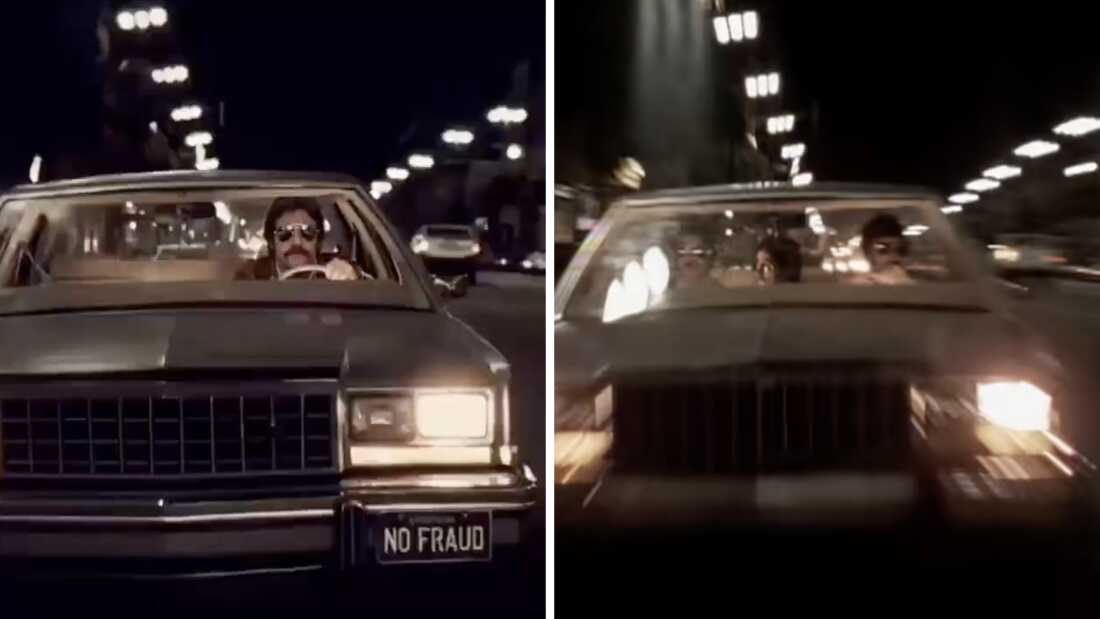
A still from an FBI promotional video (left) bears a strong resemblance to the opening shot of the original 1994 music video for the Beastie Boy's "Sabotage" (right). NPR found at least six examples where shots in the FBI video matched those in music video. Experts say the most likely explanation is that AI-was used to re-create the shots. Screenshots by Emily Bogle for NPR/X and YouTube hide caption
toggle caption
A promotional video for the FBI posted by director Kash Patel appears to have used AI to generate short clips nearly identical to those in the Beastie Boy's iconic music video for their 1994 classic song "Sabotage."
Patel released the video on Monday on X, in a post about the FBI's effort to combat "massive fraud." The roughly-two minute video used the instrumental version of the song "Sabotage," and footage nearly identical to the original music video, interspersed with what appeared to be authentic footage of FBI agents conducting their work.
With President Trump’s leadership, this @FBI and our interagency partners are conducting massive fraud takedowns coast to coast - and we’re not stopping pic.twitter.com/lLAY4nSsQa
— FBI Director Kash Patel (@FBIDirectorKash) May 4, 2026
By Tuesday it had received roughly half-a-million views.
An analysis by NPR shows at least six clips in the FBI video were frame-by-frame recreations of shots in the iconic "Sabotage" music video, which was directed by Spike Jonze. The clips featured vehicles, people and buildings that were incredibly similar to the original video, but with small differences that would likely be generated by AI.
For example, in one shot where a car is spinning out, grilles are clearly visible in some of the windows in the original footage, but they are missing in the FBI version of the clip. Another shot shows an individual with a megaphone jumping from roof-to-roof with telephone lines in the background. The lines and dirt on the building all align identically to the 1994 video, which was filmed over 30 years ago. In one frame, one of the telephone lines appears to go through the head of the character: the sort of flaw that can be common in AI video generation.
Representatives for Spike Jonze and the Beastie Boys did not respond to NPR's request for comment. The FBI also did not respond to NPR's request for more information about the video and how it was made.
Independent experts who reviewed the video for NPR agreed that the clips were likely generated by AI.
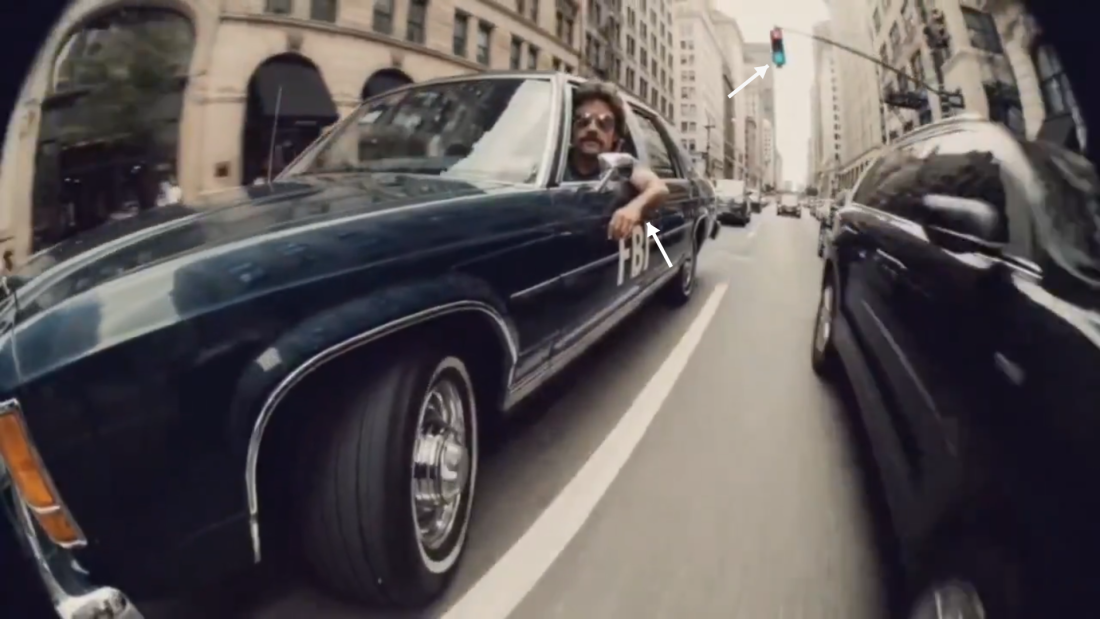
"It does seem like it would be highly likely to be AI," Kolina Koltai, a researcher with the online investigations group Bellingcat told NPR in an email. "You can even see some of the AI errors."
For example, Koltai says there's a moment of characteristic AI-generated artifacts that appear in the "No Fraud" license plate on the FBI car in the opening shot.
The clips were likely created by taking screenshots or short clips from the original "Sabotage" music video and feeding them into an image-to-video model, Hany Farid, a professor at the University of California, Berkeley who specializes in the analysis of digital images, wrote to NPR in an email. It's also possible that the AI model generated the video clips itself because the original music video was in its training data – though Farid believes that's less likely.
In any event, Farid believes AI was involved: "The similarities are hard to explain otherwise," he wrote.
In President Trump's second term, members of his administration have enthusiastically co-opted popular music, movies and memes as a way of spreading their message, even when artists have protested.
Using AI has also been a common tactic. Notably, last October President Trump himself posted an AI-generated video of himself dumping brown fluid on protestors at a "No Kings" rally set to the song "Danger Zone" by Kenny Loggins. Loggins demanded the video be taken down. It remains up on Trump's Truth Social account.
In January, the White House posted an AI-doctored image of a protestor in Minneapolis who had been arrested by federal authorities without labeling that the image had been manipulated.
Patel, who was born in Long Island in 1980, would have been in junior high or high school when the Beastie Boys released "Sabotage."
此内容由惯性聚合(RSS阅读器)自动聚合整理,仅供阅读参考。 原文来自 — 版权归原作者所有。