


You could call it Lightspeed’s second act in the consumer space.
It is Jeremy Liew, the firm’s first consumer specialist, that catapulted the relatively little-known venture capital firm Lightspeed Venture Partners into the public eye. His $485,000 investment in Snap—the photo-sharing social media company’s very first check—snowballed into a $8.1 million exit, awarding Lightspeed’s investors a 250x on-paper return. He co-led the Series B round of buy now, pay later giant Affirm—the first funding round where venture capitalists were offered a stake in the company. And it was Liew who co-led the Series A of The Honest Company, Jessica Alba’s eco-friendly consumer products company.
Investments in Cheddar, Giphy, Bonobos, and Rothy’s have lined his portfolio. Liew’s consistency over 15 years in spotting winners amidst the noisy, fast-moving world of consumer investing turned him into a venture capital icon. As Liew’s reputation evolved in Silicon Valley, so did that of his firm Lightspeed Venture Partners—a fund that had initially focused solely on the less-sexy world of enterprise investing.
Since the late 90s, when Lightspeed was formed, enterprise investing has been core to the firm’s strategy—and Lightspeed didn’t start building out its consumer strategy until the 2000s, according to co-founder Ravi Mhatre, who sits at the firm’s helm with Bejul Somaia, head of Lightspeed India Partners. From Lightspeed’s thirteenth flagship fund, enterprise still made up more than 40% of the firm’s investments, while around 27% of the fund was invested in consumer startups.
The consumer sector may not be Lightspeed’s largest, but it has been the loudest—in part due to the public brand recognition some of its portfolio companies have enjoyed. The firm’s partners credit the Snap investment, with its “tremendous reach” as Mhatre puts it, to putting Lightspeed on many people’s radar. Liew “really put [the firm] on the map with his foundational investments,” says Alex Taussig, a Lightspeed partner, also on the consumer team.
It’s why Liew stepping back may be an incredibly pivotal moment of transition for the firm. Liew, who was 50 when he announced he was stepping back from the firm late last year, made it clear he wasn’t leaving Lightspeed: He’s maintaining his partner seat and board positions. But Liew said he would stop investing in new companies, so he can spend more time with family and eventually retire in the next 10 years.
It is now up to Lightspeed’s other senior consumer partners, former Morgan Stanley veteran and startup founder Nicole Quinn and 12-year VC investor Taussig, to carry Lightspeed’s consumer practice into its next iteration.
“Eyes are on Alex Taussig and Nicole Quinn to take that next leadership step,” says someone close to the firm, who asked not to be identified. Will the two of them have the same eye for the winners as Liew? It’s too early to tell, as exits for some of their more promising investments at Lightspeed, such as Calm, Faire, or Cameo, may still be a ways down the road.
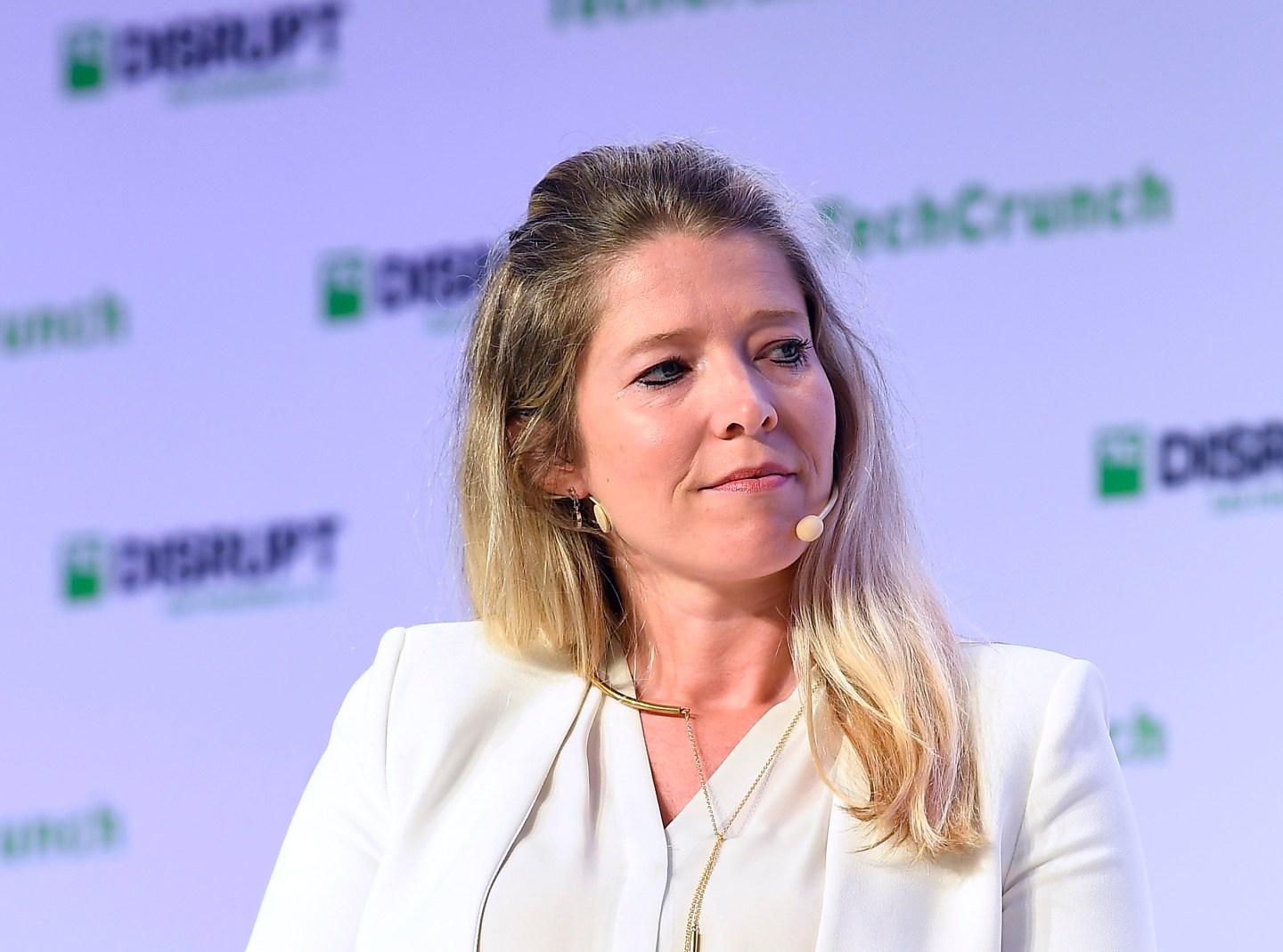
Steve Jennings—Getty Images
Not to mention, it’s a very peculiar time in the private markets: Interest rates have risen, the IPO market has stalled, and the private markets have entered a new, low-valuation era. Venture firms across the market are buckling down—upping the due diligence and slowing down from the rather chaotic pace that has been the last two years.
Lightspeed, too, has slowed down its pace of investing this year, according to Somaia, but he says the firm has been preparing for a downturn for years—and it clearly hasn’t slowed down its fundraising. As reported earlier by Fortune, Lightspeed recently closed four new funds, raising $7.1 billion across its early and late-stage vehicles—approximately 60% more capital since it last went to market—and it has launched a new crypto-focused joint venture with Blockchain Ventures veteran Sam Harrison.
This momentum has been driven by Lightspeed’s slew of winners across the U.S., Europe, Israel, India, China, and other countries—with 190 IPOs and acquisitions under its belt spanning names like Riverbed, GrubHub, MuleSoft, or Grab. Lightspeed’s early-stage funds have posted performance of 5x net or higher over a 10-year period, including during the financial crisis, according to the firm. Like many VC shops, last year was one for the books at Lightspeed: It handed out $2.6 billion in distributions to its limited partners—compared to the $1.5 billion it has given out annually over the last five.
But the market has changed, and Lightspeed’s star investor has taken a step back. Will the magic continue without Lightspeed’s consumer hitmaker in the driver’s seat?
Venture capitalists have been anticipating a private market correction for years, issuing repeated warnings that things have been too good to be true for a decade. While the timing of those predictions hasn’t been spot-on, firms have had quite some time to prepare.
About three years ago, Lightspeed formed what it calls a “re-investment team.” The committee is a group of four solely dedicated to monitoring the company’s portfolio and challenging all of the firm’s own investment assumptions. The team constructs its own forecasts, crunches its own data, and makes its own customer reference calls. The committee was an effort to guarantee that Lightspeed didn’t get ahead of its skis during the funding mayhem of the last several years. “It’s shocking that the number of growth deals that we saw some other firms do without talking to customers,” says Michael Romano, Lightspeed’s Chief Business Officer.
Lightspeed took a step back from new growth deals last year—making 70% of its growth investments in companies it had already invested in previously. “We spent quite a lot of time last year, and the preceding years really, saying no,” Romano says.
With the new capital, Somaia estimates it will take around three years to deploy the entirety of the funds—versus the two years it’s taken from its last $4 billion fundraise.
“On the growth side, it may take a little bit longer, but that’s okay,” Somaia says, noting that the firm will take the time necessary to deploy the capital and pointing out that some of the best companies have always been formed during periods of capital scarcity.
“We spent quite a lot of time last year, and the preceding years really, saying no.”
Michael Romano, Chief Business Officer
Lightspeed investors never cut back on their due diligence process, according to Quinn, who says the team only learned to move more quickly the past couple years. For her investments, she continued to fly out to meet portfolio company employees, speak to customers, try products herself, and really dig into the data, whether it be inspecting friend referral rates, paid marketing figures, or evaluate customer acquisition cost projections.
Now the pace of dealmaking is returning to normalcy, Quinn says, and portfolio companies “haven’t got seven term sheets within the space of three days. And so investors are able to take a little bit more time to do that due diligence.”
Even so, Quinn says she is busier than ever: After all, she’s been spending a lot more time with founders in her current portfolio.
As bizarre as it may sound, it’s rather difficult these days to get someone to accept $100 million.
Dana Johns, senior portfolio manager of the Maryland State Retirement and Pension System, had been trying to land a spot in Lightspeed’s funds for years. She had begun by investing in Lightspeed’s funds via a separate account in 2018, but it had taken much longer to invest directly in the firm’s flagship fund family.
“If you haven’t already developed relationships very early on, it’s been more challenging to access the best managers,” Johns says.
Just as founders have had incredible sway over their funding rounds and valuations in the last few years—closing new fundraises in mere weeks—VCs with a track record of strong performance have also been able to be rather selective.
With a banner year for IPOs in 2021, it’s been even more competitive—which may explain how firms like Lightspeed are still managing to raise fresh billions in capital despite so much uncertainty in the market.
“Being around for 20 years has some benefits,” Romano says.
Of course, 2022 is shaping up rather differently. With the IPO markets effectively closed and valuations hemorrhaging, Lightspeed has only distributed some $145 million to its limited partners. That’s from transactions including an upfront payment from AstraZeneca’s acquisition of TeneoTwo and a secondary sale of some of its shares in Rothy’s to Alpargatas, among other deals. Only one of Lightspeed’s portfolio companies, HilleVax, has gone public in 2022—and that was a rather recent investment for the firm.
Even so, Lightspeed says that the fair value of its investments across all funds (which includes its write downs) had still grown by $1 billion on a net basis in the first quarter—the firm’s latest available financial data.
Portfolio companies have been struck by capital shortages, rising interest rates, and high inflation across sectors, and Lightspeed’s portfolio hasn’t been immune to the initial fallout.
As of December, public filings show Lightspeed still held approximately 18.8 million shares in Affirm, whose shares are currently trading nearly 78% below their IPO price. Quinn’s portfolio company, Cameo, laid off dozens of its staffers, reportedly including several of its new executives. “Cameo did let go of 87 people and Steven put out… a post on that,” Quinn says. (Cameo CEO Steven Galanis described it as a “brutal day” in a tweet about the layoffs).
Lightspeed had also been an investor in Terra Labs, the creator of the algorithmic stablecoin whose collapse has led to brutal shocks throughout the rest of the crypto ecosystem. “The exposure was very small,” consumer investor Taussig says.
In general, it’s the tough times where investors can offer most to the founders they back, according to Quinn. “This is the time for us to roll up our sleeves and help our founders with some of these really difficult choices,” she says.
That being said, Lightspeed is also playing some of its cards a little differently, and is selling off its public positions more quickly than it has in years past. S&P Global Market Intelligence data indicates that Lightspeed has exited many of its positions in portfolio companies that have recently gone public. “We’re not going to play public market investors,” Romano says, noting that less than 3% of Lightspeed’s net assets were in public companies by the end of March, versus 16% in March 2021.
“We owe a lot to Jeremy for how he set this up: The culture he brought, the rigor with which he analyzes investments, that ability to bet on unbounded upside with really unusual founders, early.”
Alex Taussig, senior partner at Lightspeed
Venture investing is a long-term play, and the ebbs and flows of the private markets are all part of the game—if investors are disciplined enough to remember how the game works. At Lightspeed, the firm says it is buckling down for the long haul.
“What we’re really focused on is—not investing for companies that are getting built for this year or next year… But for companies that are getting built to really serve the markets at significant scale seven years from now,” Somaia says.
For the consumer sector, success will stem from a team focus —”a sum that’s greater than all the parts,” Taussig says, noting that they plan to keep scaling the group, which now has seven people, with new additions like Mercedes Bent. Lightspeed also plans to emphasize its global reach from Singapore, China, India, Europe, and the U.S. to identify commonalities and better understand the spaces they’re investin in.
“There’s just such amazing momentum now,” Quinn says of the consumer sector.
It’s too early to say whether the team’s latest big bets—like celebrity NFT company Autograph, wholesale marketplace Faire, or the relaxation app Calm—will eventually pan out.
“It’s early to say,” the person familiar with Lightspeed’s consumer team says of what this sector will look like at the firm post-Liew. “I think they’re on the right path.”
As for Taussig and Quinn, they’re laying out plans for what comes next.
“We owe a lot to Jeremy for how he set this up: The culture he brought, the rigor with which he analyzes investments, that ability to bet on unbounded upside with really unusual founders, early. We are really thankful for that, and we’re gonna build on that and hopefully take it to the next level,” Taussig says.
此内容由惯性聚合(RSS阅读器)自动聚合整理,仅供阅读参考。 原文来自 — 版权归原作者所有。