


Nuclear startup firm Antares successfully flipped the switch on its Mark-0 microreactor in June, first to the finish line in the Trump administration’s pilot program race—with a July 4 deadline—for the next generation of reactors to achieve criticality.
With the U.S. on the verge of a potential “second nuclear age,” a bevy of projects are underway to power the AI boom. But almost the entire North American nuclear fuel supply chain is woefully lacking—from uranium mining to fuel-pellet fabrication—just as Congress bans imports of enriched uranium in 2028 from Russia, which dominates the industry.
The AI hyperscalers are signing contracts with nuclear developers for next-generation light-water reactors, as well as newly developed small modular reactors (SMRs) and microreactors. But they’re not yet investing in the uranium mining and refining required for nuclear power. Roughly 98% of the uranium consumed by U.S. reactors is imported.
“The nuclear industry is in a total renaissance,” said Christo Liebenberg, co-founder and president of the laser uranium enrichment startup LIS Technologies. “But it doesn’t matter what type of reactor; they all need nuclear fuel.”
“It doesn’t stop there,” Liebenberg told Fortune. “It trickles down to the whole fuel supply chain—all the way from uranium mining. I think [hyperscalers] need to jump in very urgently because the reactors need fuel. It’s for their own good to start developing that supply chain.”
Already, the Bill Gates-backed TerraPower recently broke ground in Wyoming to build the first commercial nuclear plant in 13 years, and Kairos Power is building a commercial-scale demonstration plant in Tennessee. A series of previously shuttered nuclear plants also are slated to come back online in Michigan, Iowa, and Pennsylvania, the latter of which is Three Mile Island, reborn as the Crane Clean Energy Center to power Microsoft’s data centers.
And that’s just the tip of the—isotope.
U.S. electricity demand is expected to surge anywhere from 50% to 80% between 2024 and 2050, depending on projections, making new sources of power critical. The White House’s goal is to quadruple U.S. nuclear capacity—from about 100 gigawatts today to 400 gigawatts by 2050—enough to power almost 300 million homes (For perspective, there are about 150 million homes in the entire country today). Even if those targets prove unrealistic, unprecedented growth is still anticipated in the coming decade. And a lot of nuclear fuel will be consumed.
To briefly summarize a complicated supply chain: uranium ore is mined and milled into a concentrate called yellowcake. A conversion process turns the yellowcake into gas for enrichment, and a subsequent deconversion step returns the enriched uranium to a solid state for fuel pellets. On the back end, more advances are still needed in nuclear waste disposal and fuel recycling.
The top North American uranium miner, Canada-based Cameco, already is ringing the alarm bells that more investment and long-term contracts are needed to ramp up mining rates.
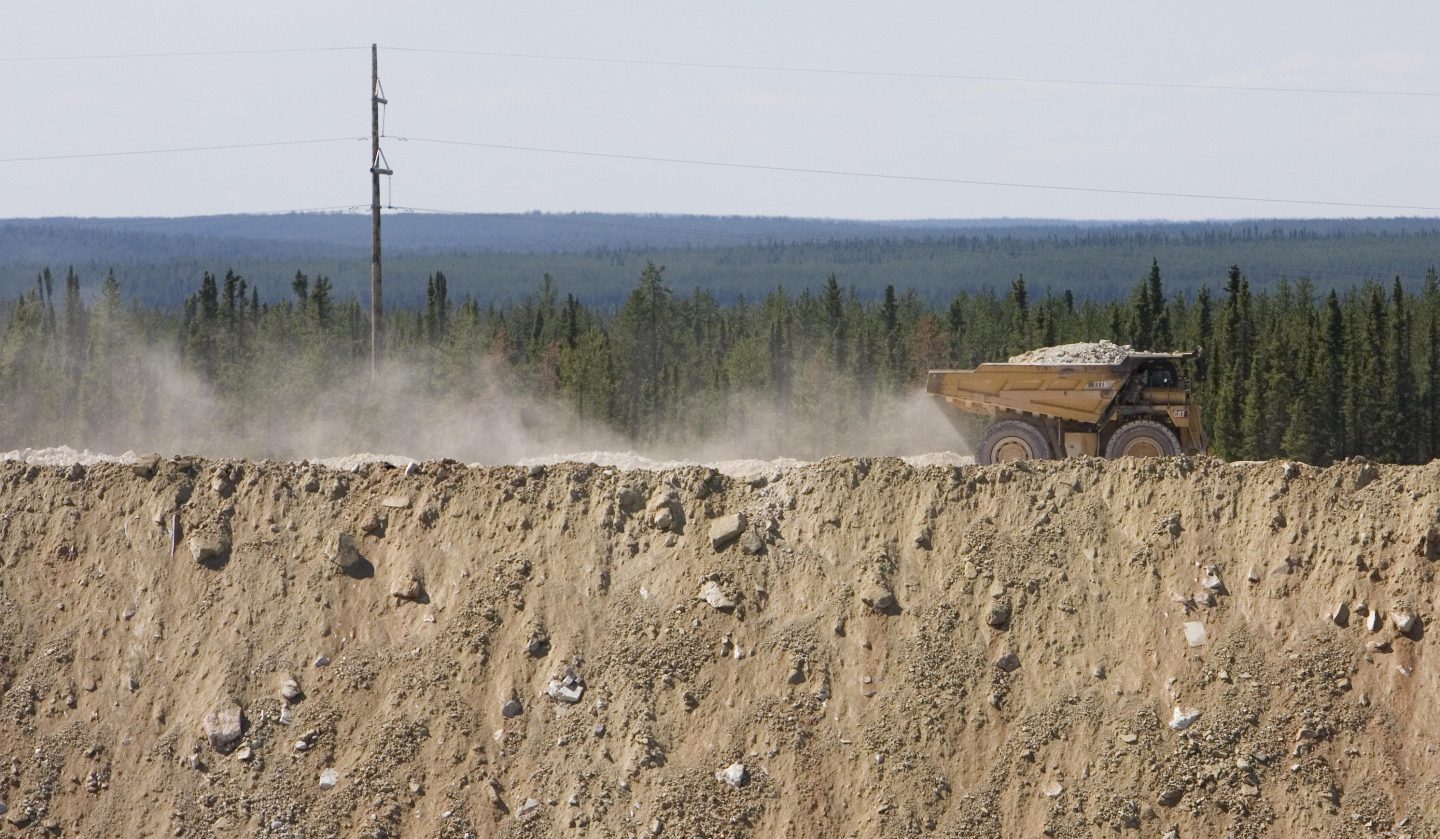
As it stands, some of Cameco’s mines are mothballed because no one is willing to pay for the uranium just yet. And bringing a new mine online can take 15 to 20 years, said Cameco president Grant Isaac.
“I’m getting increasingly worried about it,” Isaac told Fortune. “As the demand is going up, we need to embrace the notion of long-lead items and apply that to uranium as well, because we’re just not able to explore for, find, permit, construct, and commission mines in the timeframe that you build a nuclear reactor.”
He’s optimistic the momentum will pick up, but he questions whether it will happen soon enough to adequately supply new plants as they open. If the timelines don’t mesh, uranium prices—and eventually power prices—will soar, he said.
“The demand that’s building for new reactors and all the excitement hasn’t found its way fully upstream to uranium,” Isaac said. “Over the next year or two, I think you’re just going to see a lot more people paying attention to it.”
With mines in Saskatchewan, Wyoming, Nebraska, and Kazakhstan, roughly 30% of Cameco’s uranium mining capacity is currently shut in—primarily in the United States, Isaac said.
Uranium conversion prices have likewise risen from historic lows, but many operations run by Cameco and other refiners remain underutilized. “The conversion price had gotten so low over the years that production was shut in, and we still have a situation where not all of the Western conversion capability is up and running,” he said.
When it comes to enrichment, several startups—including LIS Technologies—are looking to build U.S. plants. But there’s only one active enricher in North America: London-based Urenco’s National Enrichment Facility in Eunice, New Mexico.
The New Mexico facility fulfills about one-third of U.S. enrichment demand, and Urenco announced in June that it plans to expand the site, increasing capacity nearly 50% by 2036.
The expansion will include production of a more potent uranium fuel—high-assay low-enriched uranium, or HALEU—required by next-gen reactors to fit in smaller cores.
“This expansion reinforces our commitment to a resilient U.S. nuclear fuel supply chain focused on meeting the long-term needs of our customers as well as supporting U.S. energy security through continued investment by Urenco,” said Urenco CEO Boris Schucht in a statement.
Even so, “It’s a small drop in the ocean of what’s needed,” Liebenberg said.
DAVID BOILY/AFP via Getty Images
If the U.S. were to quadruple its nuclear power, current U.S. uranium enrichment capacity would only fulfill 7% of the total demand. “At the end of the day, all of us enrichers have to be successful,” Liebenberg said. “This shouldn’t be competition. The pie is big enough.”
The federal government has begun investing more in domestic uranium enrichment, but it must provide much more support and funding to become energy secure, he said.
Using advanced-laser enrichment technology, LIS aims to bring online its LIST Island facility in Tennessee by the end of 2032, rivaling Urenco’s New Mexico plant in capacity.
Paris-based Orano is requesting a federal license to build a $5 billion uranium enrichment facility, dubbed Project IKE, near Oak Ridge, Tennessee. The company was among three projects each awarded $900 million from the Department of Energy this year. (If you’re wondering why Tennessee is so popular, it’s because of the Oak Ridge National Laboratory, home to much of the nation’s nuclear research and development.)
Centrus Energy and General Matter also were awarded $900 million each for enrichment plants in Ohio and Kentucky, respectively.
“President Trump is catalyzing a resurgence in the nation’s nuclear energy sector to strengthen American security and prosperity,” U.S. Energy Secretary Chris Wright said in a statement when the awards were announced.
Recognizing the potential supply shortfall, the Trump administration also is pushing to make old, surplus, weapons-grade plutonium available as reactor fuel.
Environmentalists and nuclear energy critics quickly decried the environmental and national security risks of handing Cold War-era plutonium to private companies. The plutonium, which was designed for weaponry, is not naturally occurring and is more radioactive and hazardous than the mined uranium.
Still, the companies selected to handle the plutonium, such as SHINE Technologies, see the benefits. “Fuel access is one of the hardest problems in the advanced reactor industry right now, and it’s a problem of chemistry and infrastructure as much as policy,” said SHINE CEO Greg Piefer. “Turning surplus material that’s been sitting in storage into fuel for the next generation of reactors is exactly the kind of problem we built SHINE to solve.”
When the Cold War ended, the U.S. increasingly leaned on Russia for its uranium and enrichment needs, deepening ties between the two countries.
That strategy has dramatically reversed as relations frayed in recent years, and especially after the Russian invasion of Ukraine. Now a clock is ticking for the U.S. to end its Russian reliance by 2028.
The problem is companies are unsure if the timeline will hold, or whether a potential Ukraine peace deal could reopen nuclear relations again. Between now and 2028, companies are receiving waivers to continue buying Russian uranium supplies—a little-known reality outside of the nuclear industry. And that reality makes companies question whether new loopholes could open after Jan. 1, 2028, Isaac said.
If Russia is eventually open for business, then the uranium and enrichment markets would suddenly be oversupplied in a global market, he said. No company would invest in that environment.
“The West needs to be really clear that the Russians are out, and that the Russians are staying out,” Isaac said. “That will help underpin real investments in Western energy production.”
Although the U.S. exported much of the uranium mining and enrichment industry to Russia largely for financial reasons, the shift also relieved environmental burdens in the U.S., including the risks of inhaling dust particles near mining site and the reduction of radioactive waste disposal.
In the meantime, the race continues to build new nuclear reactors.
Before TerraPower broke ground on its Kemmerer power plant in Wyoming, the last U.S. nuclear plants built were two Plant Vogtle nuclear units in Georgia, completed more than a decade after the project began in 2009.
The Vogtle project was a nearly $35 billion boondoggle, plagued by massive cost overruns, to build Westinghouse’s next-generation, light-water AP1000 reactors. Since then, Cameco has bought a 49% stake in Westinghouse.
With the AP1000 standardized design much improved, the Trump administration is working on a deal to deploy a fleet of the next 10 reactors, though the details are not yet finalized. As more are built, they will become cheaper to construct, Isaac said—which is why no single company wants to be the first buyer.
“Our industry has done a really bad job standardizing,” Cameco’s Isaac said, arguing that bespoke designs are too costly. “We have to learn from what we’re doing and, historically, in the West, we haven’t done a great job of that.”
That’s why the fleet model will allow the reactor industry to leap forward, he said: “That’s what’s going to unleash the confidence of the utilities who we’re asking to build up the infrastructure.”
此内容由惯性聚合(RSS阅读器)自动聚合整理,仅供阅读参考。 原文来自 — 版权归原作者所有。