





Don’t ignore the macro. Sure, stocks are doing well, Morgan Stanley’s Lisa Shalett says in a recent note. But don’t underestimate the ability of political risk to derail good earnings: “The Federal Reserve’s unique transitional situation could also foster volatility through 2028, [and] damage to institutions like NATO and OPEC could catalyze new destabilizers. Investors can be forgiven for ebullience around tech earnings and an exciting future, but dismissing macro factors with potentially long-lasting implications strikes us as brash.”
Supermicro will report fiscal Q3 earnings today and investors will get a progress report on CEO Charles Liang’s promise that the server manufacturing company could hit $40 billion in revenue this fiscal year, Fortune’s Amanda Gerut reports. But the real drama will be behind the scenes: Six weeks ago, prosecutors charged Supermicro co-founder Yih-Shyan “Wally” Liaw and two others with allegedly conspiring to route $2.5 billion in servers studded with Nvidia chips through a front company in Southeast Asia. Prosecutors allege that Liaw masterminded a scheme that allegedly involved filling a warehouse full of thousands of fake servers with shipping labels that could be peeled off to fool auditors when the real buyers were in China.
David Rybicki, co-leader of law firm K&L Gates, said the company’s internal investigation will be closely examined by the DOJ. The worst outcome for Supermicro, said Rybicki, would be an investigation that the DOJ doesn’t trust. “When you have these kinds of high profile catastrophic compliance failures, I think it’s fair to say they can be fatal for a company,” said Rybicki.
Iran fired on U.S. Navy vessels in the Strait of Hormuz yesterday after American forces accompanied two ships out of the Strait. The U.S. shot down Iranian drones and missiles while also destroying seven Iranian fast boats. Iran responded by bombing an oil terminal in the UAE. Analysts are describing the ceasefire as “fragile” this morning.
About 2,000 ships remain stuck in the Strait. Many of them have moved further away from the narrow gap controlled by Iran—a sign that Tehran now controls more marine territory than it did before, Bloomberg reports.
This map from MarineTraffic.com (below) shows the giant traffic jam in the Strait today. The large dot in the middle is the Rich Starry, the Chinese-owned tanker that Fortune has been tracking. It has not moved since mid-April:
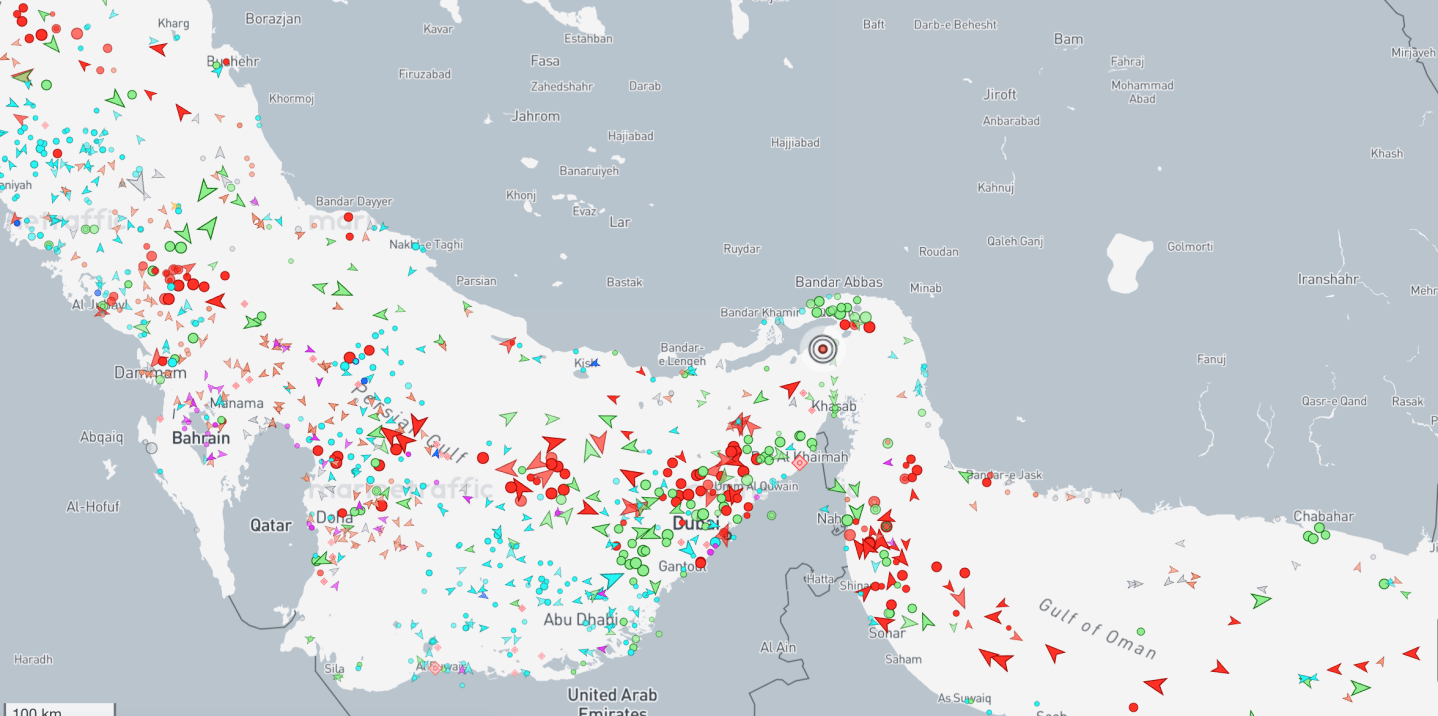
Iran’s drone strike on Fujairah is significant because it is one of the UAE’s most important fueling hubs, according to Peter Sidorov and his colleagues at Deutsche Bank: “The UAE came under missile attacks for the first time since the ceasefire began on April 8, with a fire also breaking out at its oil terminal in Fujairah following a drone attack. The latter has been of increased importance to oil markets as the UAE has been transporting close to 2mmb/day of oil via pipeline to the Fujairah port while Hormuz shipping has been disrupted,”
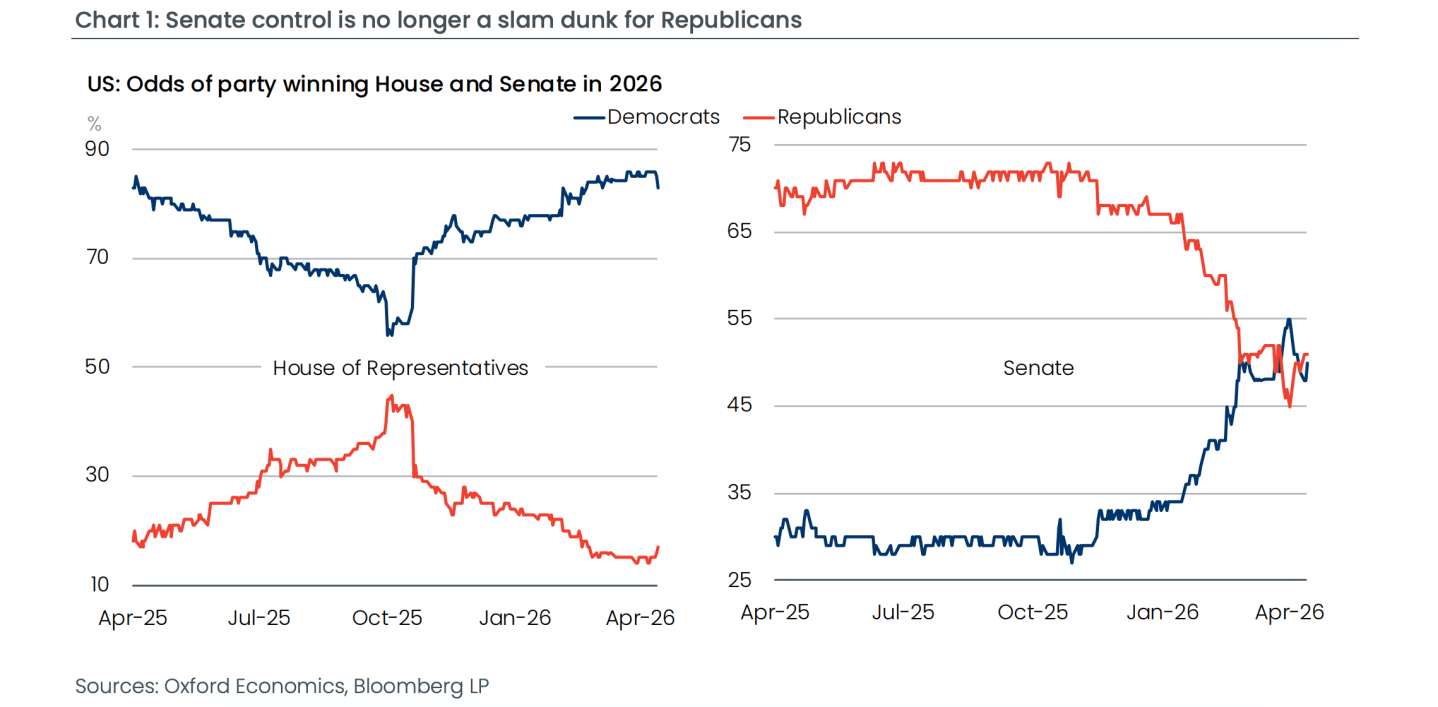
The rising price of gasoline is one of the main factors hurting the Republicans in polling before the midterm elections in November, according to Sara Godfrey of Oxford Economics: “The House of Representatives has long been the Democrats’ to lose, but until recently, the Senate was a long shot for them. Prediction markets now see the Senate control as a tossup.”
I watched my father run his business through the Lebanese Civil War. Here’s what it taught me about leading through disruption. - Alain Bejjani
Starbucks CEO gets roasted for $9 ‘premium experience’ remarks, but Wall Street toasts his tariff-era turnaround strategy - Catherina Gioino
China stopped issuing new robotaxi licenses over a glitch. America can’t stop them from rolling into active shooter situations - Catherina Gioino
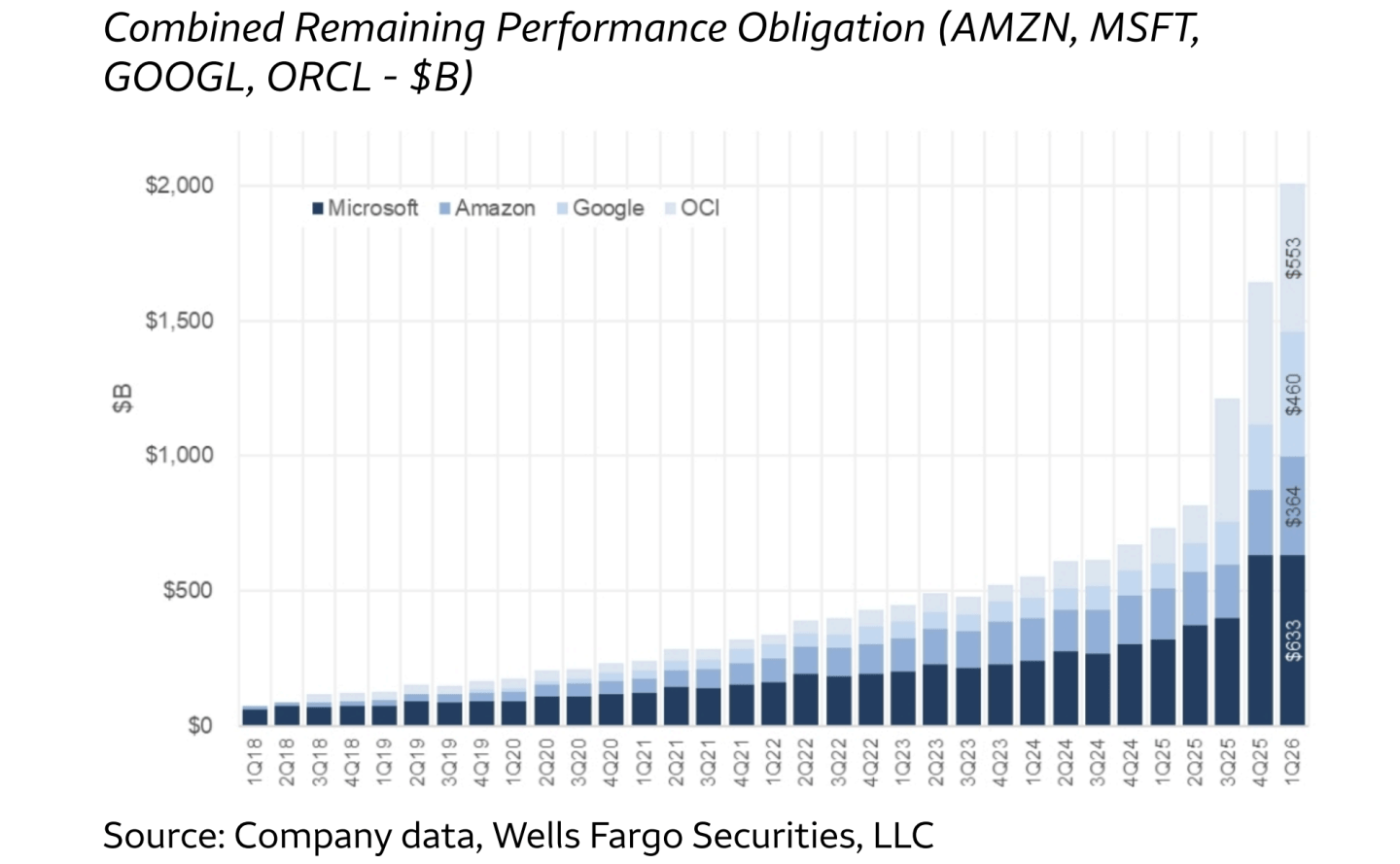
This chart from Wells Fargo’s Ohsung Kwon shows the “remaining performance obligations” of four big AI hyperscalers, Alphabet, Amazon, Microsoft, and Oracle. RPOs are sales contracts that are booked for the future but not yet recognized as revenue, because they could fall through.
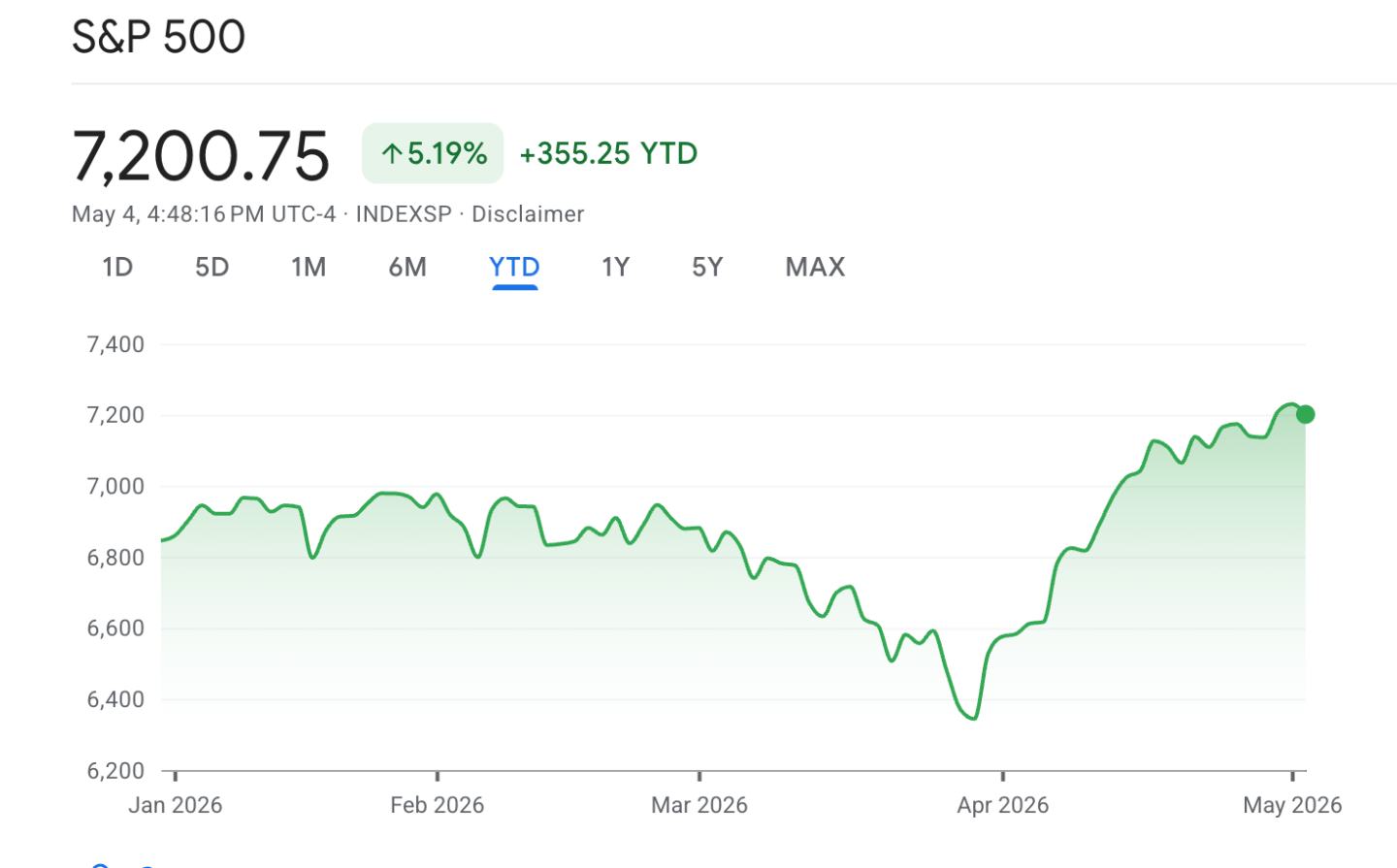
No wonder stocks are going up. Three-quarters of S&P 500 companies have now reported Q1 earnings (that’s 317 companies) and 74% of them beat expectations on earnings per share, 78% beat sales expectations, and 63% of them beat both. That’s among the best performances since 2021, according to Savita Subramanian of Bank of America.
Deutsche Bank denies training bankers to manipulate markets - FT
BYD’s passenger EV sales drop for an eighth month as competition heats up - CNBC
Trump administration considering safety review for new AI models - Axios
The Secret Team Blowing Up Ford’s Assembly Line to Make a $30,000 Electric Truck - WSJ
Ships Cluster Further From Hormuz Strait as Iran Widens Grip - Bloomberg
Around 63% of U.S. job-seekers have been interviewed by AI, according to a recent report from Greenhouse—a 13% increase from just six months ago. Sharawn Tipton, chief people officer of Greenhouse, tells Fortune’s Emma Burleigh that HR departments are deploying AI interviewers to “filter the flood” of applications.
But it’s a serious professional turn-off: Around 38% of candidates have already withdrawn from a hiring process because it included an AI interview, and another 12% say they would drop out if they were required to do an AI interview. Even when they go through with it, the outcome doesn’t tend to be fruitful—about 51% of candidates who completed an AI interview were either ghosted or are waiting to hear back.
此内容由惯性聚合(RSS阅读器)自动聚合整理,仅供阅读参考。 原文来自 — 版权归原作者所有。