





President Trump’s “memorandum of understanding” with Iran has still not been published. The White House spent the last 24 hours defending its peace deal against criticisms that, in large part, it gives Iran what Iran wants: A withdrawal of American forces from the region, control of the Strait of Hormuz, the ability to charge ships passing through, a $300 billion investment fund, and the continuation of the regime in Tehran. The FT’s headline says it all: ‘Humiliation’: Donald Trump battles claims his Iran deal is worse than Obama’s.
Iran has already moved three of its own ships out of the Strait this week, carrying 5 million barrels of oil, CNBC reports. Most other shipping remains frozen.
The MOU does provide for talks over Iran’s nuclear program. Vice President JD Vance said, “the Iranian nuclear programme has been completely destroyed, and what we’re saying is: ‘make the long-term commitment to not rebuild it, and you will get the benefits that come with that’.”
Bloomberg’s John Authers was particularly scathing:
“It’s hard to see what the American escapade has achieved, beyond killing a very old man,” he wrote.
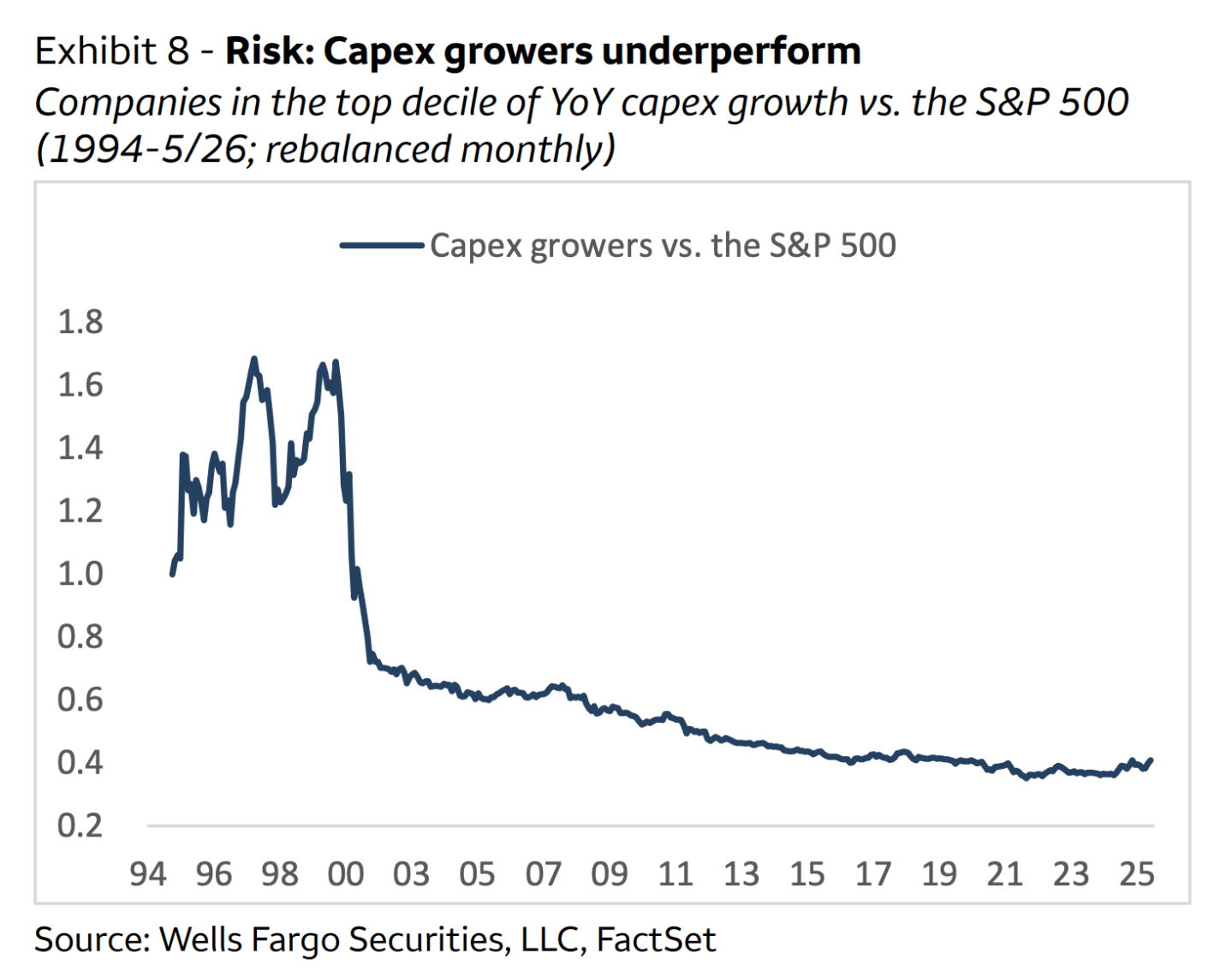
In a chart that potentially has consequences for the AI hyperscalers, historical data show that the stocks of companies in the top 10% of capex spenders have underperformed the S&P 500 ever since the collapse of the dot-com bubble in 2000, according to Ohsung Kwon and his team at Wells Fargo. “We continue to prefer capex takers over spenders,” they advised clients.
Kevin Warsh will give his first speech as the new U.S. Federal Reserve chairman today as he delivers an interest rate decision that will almost certainly keep rates on hold at the 3.5% level. What should Wall Street expect? Fortune’s Eleanor Pringle says we will probably get more jokes, and less forward guidance, from the man who once called America a “banana republic” because its central bank reliably bought so much of its own government debt. Crucially, the Fed is also likely to remove the dovish language promising “additional” economic support if the data warrants it.
Trump’s OBBBA will cap federal loans on July 1. Republicans are going over Trump’s head to save student loans for nurses - Jacqueline Munis
‘Social Security is on a collision course toward insolvency,’ watchdog says. It hasn’t been this bad since 1983 - Nick Lichtenberg
TIAA CEO Thasunda Brown Duckett is undertaking a retirement revolution—with $1.5 trillion to back it up - Diane Brady
The new problem for millennial parents in the Northeast: the million-dollar starter home - Sydney Lake
He fled Iran for the American dream, became a millionaire, and could have retired—instead, he built the health tech that saved his father from cancer - Orianna Rosa Royle
Anthropic’s IPO pitch has a new problem: The government can shut it down - Eva Roytburg
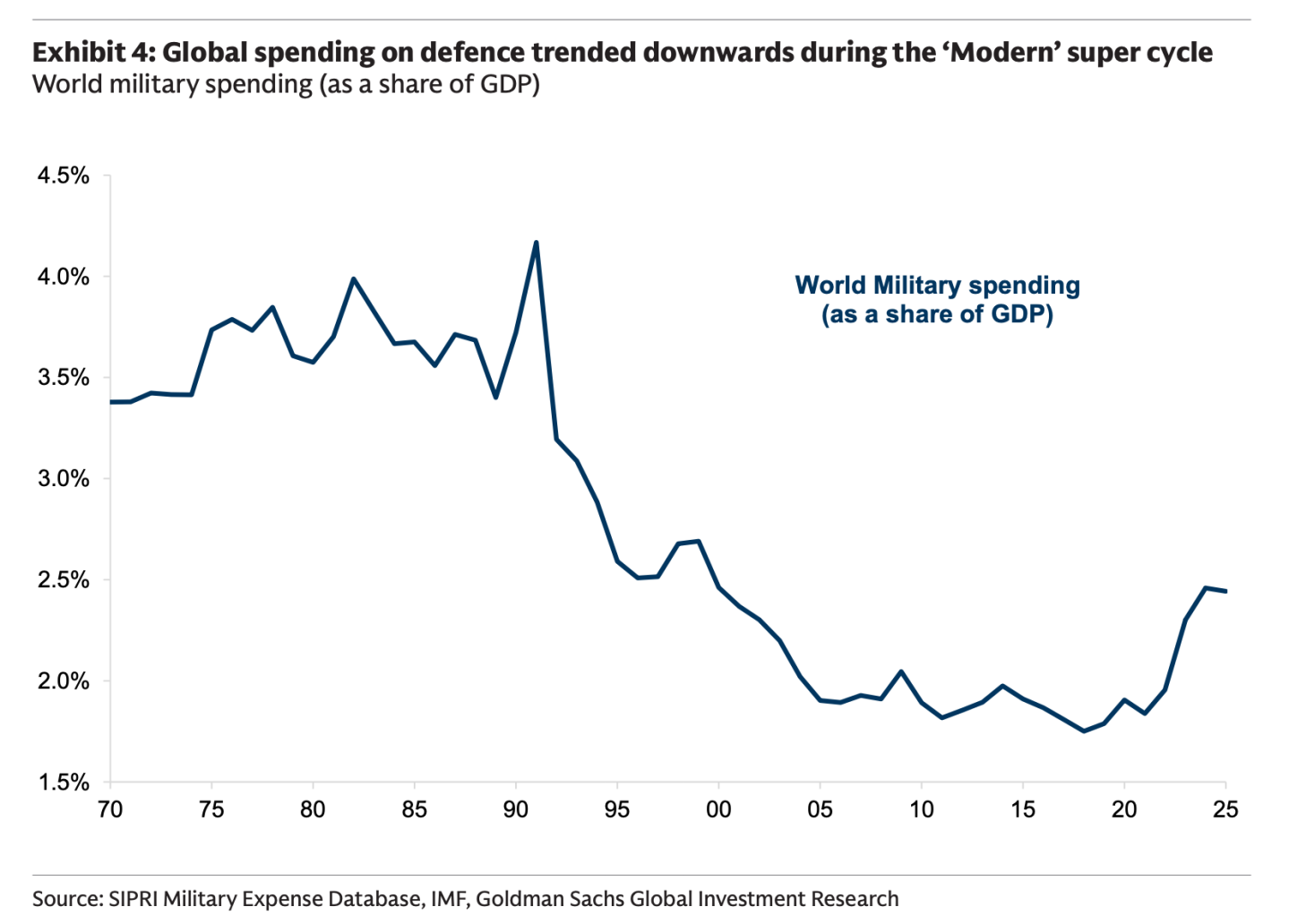
As defense spending declines, so do U.S. federal government deficits, according to Peter Oppenheimer and his colleagues at Goldman Sachs. “In 1991, President Bush announced plans to scrap U.S. tactical nuclear weapons in Europe and Asia … U.S. spending on defense fell sharply between 1985 and 1993 and remained flat between 1993 and 1999. The declines in government spending relative to GDP meant that by 1997, under President Bill Clinton, the U.S. recorded a budget surplus for the first time since 1969,” they note.
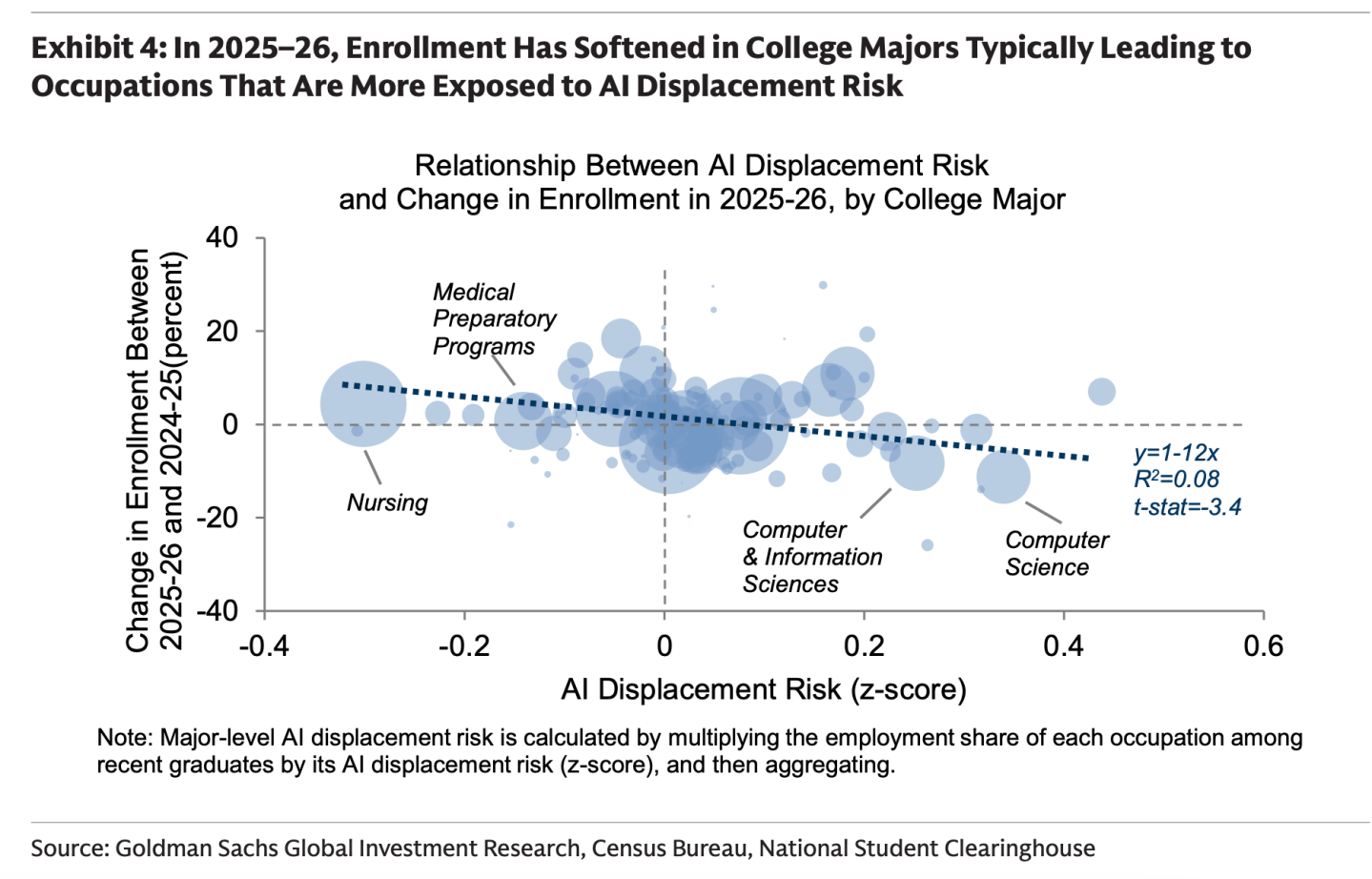
The decline in enrollment for computer science and computer programming majors at universities from 2025 to 2026. Goldman Sachs’ Pierfrancesco Mei believes this is evidence that undergraduates are changing their behavior to avoid career paths most easily destroyed by AI. “By contrast, enrollment rose by about 3% on average in majors linked to occupations with low AI displacement risk and strong recent job growth, most notably in healthcare and engineering,” he said in a note seen by Fortune.
Lululemon apologises after Japanese drum controversy at Great Wall yoga event - FT
‘A signal of where power sits’: Trump and world leaders joined by OpenAI, Anthropic, Google at G7 - CNBC
The Hacker Sent by Anthropic to Calm the Government’s Nerves About AI Safety - WSJ
Ferrari Nudges Clients to Buy Divisive EV to Move Up Wait Lists - Bloomberg
If you’re not a Gen Zer, you may be surprised to learn that customizable bowls which allow you to mix your veggies and protein any way you want—à la Chipotle, Sweetgreen, Cava, and Panera—are called “slop bowls” by the young. Turns out, this is a term of endearment, not an insult. Gen-Zers love their slop bowls. According to a survey of 1,000 adults from SmartSense by Digi reported in Fortune, only 15% of Gen-Z say they are bored or disappointed by slop bowls. And they are the group that is most likely to eat out at fast-casual restaurants three times a week or more.
此内容由惯性聚合(RSS阅读器)自动聚合整理,仅供阅读参考。 原文来自 — 版权归原作者所有。