


惯性聚合 高效追踪和阅读你感兴趣的博客、新闻、科技资讯
阅读原文 在惯性聚合中打开

推荐订阅源

freeCodeCamp Programming Tutorials: Python, JavaScript, Git & More
P
Proofpoint News Feed
宝玉的分享
宝玉的分享
人人都是产品经理
人人都是产品经理
博客园_首页
爱范儿
爱范儿
博客园 - 叶小钗
aimingoo的专栏
aimingoo的专栏
S
SegmentFault 最新的问题
MyScale Blog
MyScale Blog
阮一峰的网络日志
阮一峰的网络日志
IT之家
IT之家
Microsoft Security Blog
Blog — PlanetScale
Blog — PlanetScale
博客园 - 【当耐特】
Y
Y Combinator Blog
量子位
博客园 - 三生石上(FineUI控件)
让小产品的独立变现更简单 - ezindie.com
T
The Blog of Author Tim Ferriss
月光博客
月光博客
有赞技术团队
有赞技术团队
Apple Machine Learning Research
A
About on SuperTechFans

Fortune | FORTUNE

One man can kill Bill Ackman’s $64 billion bid for Universal Music Group—and no one knows what he’ll do | Fortune Poppi’s cofounder pitched her startup on Shark Tank while 9 months pregnant and landed a $400,000 deal—now it's worth $2 billion | Fortune Teen boys are choosing AI girlfriends over real ones for 'maximum control, zero rejection'—experts say it could make them unemployable | Fortune A United American merger is by no means impossible given the president 'loves big deals' | Fortune Reed Hastings’s planned exit from $455 billion Netflix ‘had nothing to do with’ the failed deal for Warner Bros., says Ted Sarandos | Fortune Meet Joe McCann: The high-flying crypto trader held in Tanzania after sudden death of his influencer fiancée Ashly Robinson | Fortune Gen Z is carving a different path in the housing market by doing it alone | Fortune U.S. Catholic leaders criticize Trump for ‘disparaging words’ about the pope as Vatican clash risks alienating Catholic voters | Fortune China has ‘nearly erased’ America’s lead in AI—and the flow of tech experts moving to the U.S. is slowing to a trickle, Stanford report says | Fortune Self-made millionaire behind $5 billion Skims Emma Grede says it all began with a cold call to Kris Jenner: Emma Grede—the self-made millionaire behind the $5 billion Skims empire—says it all began with an audacious cold call to Kris Jenner: ‘The difference between me and someone else is, I made it happen’ | Fortune Americans have never been this gloomy about the economy. Wall Street has never cashed in harder | Fortune ‘The college grading system [is] almost meaningless’: People see the Ivy League as an easy A and with flawed admissions standards | Fortune The CEO of $8.5 billion Japanese car giant Nissan plays the drums in a band and hits the tennis courts to destress from the top job | Fortune New York governor's take on a millionaires tax: fancy pied-à-terre second apartments worth over $5 million | Fortune Pope Leo XIV: A ‘handful of tyrants’ are ravaging earth with war and exploitation | Fortune Trump has no plan to cut the $39 trillion national debt, but he does want to cut childcare. His budget director is scrambling to clarify | Fortune China's economy grows 5% in first quarter, surprising economists to the upside | Fortune Everyone was wondering what Trump wanted more: Warsh smoothly seated at the Fed, or for Powell to pay. We have our answer | Fortune Palantir exec: the biggest mistake retailers are making with AI? Trying to do it all with one agent | Fortune American YouTuber who calls himself a 'troll' sentenced to 6 months in Korean prison for literally dancing on wartime graves | Fortune BBC plans to cut up to 2,000 jobs to save 10% of annual budget | Fortune Canva debuts a new suite of agentic tools, as the design app quietly becomes one of the world’s most used AI services | Fortune Moody's CEO: AI has a trust problem – better models won’t fix it | Fortune Top New York surgeon: Americans have better data for choosing restaurants than surgeons. That has to change | Fortune The Iran war’s fertilizer shock is hammering American farmers, and 70% can’t afford what they need for this year’s growing season | Fortune Education experts to Mamdani: Why are you foisting AI on our kids? | Fortune This CEO pirated video games as a teen and became a hacker for the Air Force. Now he’s built a $3 billion cyber firm | Fortune Teacher, blame thyself: Yale report savages Ivy League schools for destroying American trust in higher education | Fortune Fed chair nominee Kevin Warsh is worth more than $100 million and has stakes in SpaceX and Polymarket | Fortune From wool sneakers to GPUs: Allbirds’ desperate AI pivot and 600% stock surge, explained | Fortune
Europe is considering price caps to control inflation. CE...
Kamal Ahmed · 2026-05-21 · via Fortune | FORTUNE

When the supply of toilet paper started running out back in 2013, the Venezuelan authorities came up with a novel explanation. “95% of people eat three or more meals a day,” the president of the National Statistics Institute, Elias Eljuri, said at the time. The suggestion appeared to be that if only Venezuelans ate less, there would not be a shortage of materials to clean backsides. 

What the statement failed to mention was the use of price caps by the president, Nicolas Maduro—a forlorn attempt by the country’s leader to shield the public from the effects of a broken and corrupt economy. 

As any high-school economics student knows, it is applying government controls to markets which creates shortages, not eating too much. Pricing signals are obscured and loss-making items withdrawn from production (toilet rolls, for example). Far from controlling inflation, price caps upset the demand-supply relationships a free market relies on—demand outstrips supply and inflation rises. By the end of the failed price cap experiment in 2013, Venezuelan food inflation had reached 76%. 

With inflation fears stalking the globe, politicians are once again reaching for the wrong lever. The U.K. is the latest, with Scotland announcing that it wants to cap the prices of essential items like bread, milk and eggs at a state-enforced low price. “People are struggling to buy an adequate shop to support their families,” John Swinney, the First Minister of the devolved nation, told cheering activists. 

Read more: A European central bank has signed a mega deal with a cloud service provider. The problem for Google, Microsoft and Amazon? It’s not with them

The U.K. government appeared to distance itself from the plan, described by one business executive as “potty”. But it then revealed that it was also looking at “voluntary” price controls on key groceries. The chief executive of Marks and Spencer, one of Britain’s most popular retailers, said that the proposals were “completely preposterous”. 

He is right, and the finance minister, Rachel Reeves, appears to have backed away from the plans. 

The U-turn hides a deeper problem. Faced with insipid economic growth, politicians have not taken the action necessary to spark a resurgence, such as capital and digital markets reform, lower levels of regulation and lower business taxes. Rather, they have tried to control the results of the ever-increasing burden on businesses at the output stage (prices) when it is too late. 

Hungary has had some form of price controls since 2025. Romania and Croatia have introduced price ceilings and margin controls. Many EU countries have regulated prices in energy markets. The U.K. has an energy price cap. 

Sometimes such interventions are necessary. Poor political decision-making has left Europe’s energy system in a mess, and the consumer should not be left to pick up the cost. 

But political leaders should take care. The U.K. has one of the most competitive retail sectors in the world, which brings consumers choice and low prices already. Free markets are much better at producing the goods people want at the price people want them than individuals sitting in government offices looking at lines on a graph. Growth is rarely magicked into existence by more regulation. In almost every case, the opposite is true.
Subscribe to Fortune Gulf Brief. Every Tuesday, this new newsletter will deliver clear-eyed, authoritative intelligence on the deals, decisions, policies, and power shifts shaping one of the world’s most consequential regions, written for the people who need to act on it. Sign up here.

About the Author

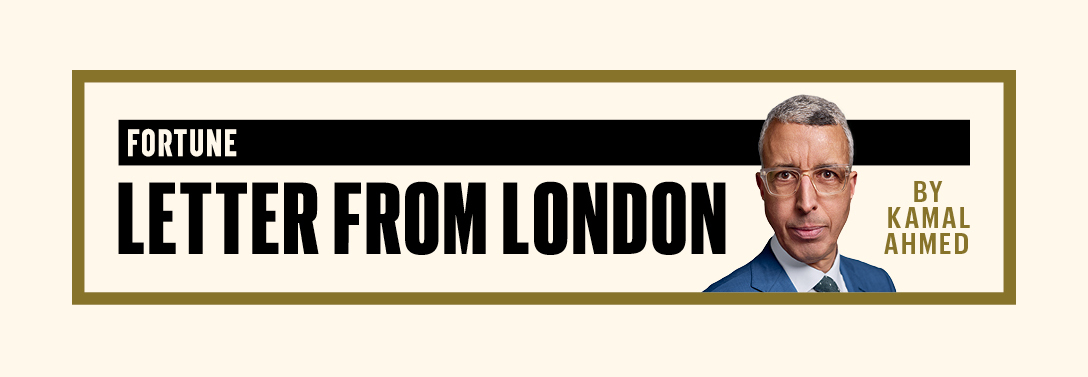
Kamal Ahmed is the executive editorial director of Europe. Kamal is the author of Letter from London, Fortune Europe's weekly take on global business as seen from London. Previously, he was director of audio at The Telegraph and presenter of The Daily T podcast.

See full bioRight Arrow Button Icon