






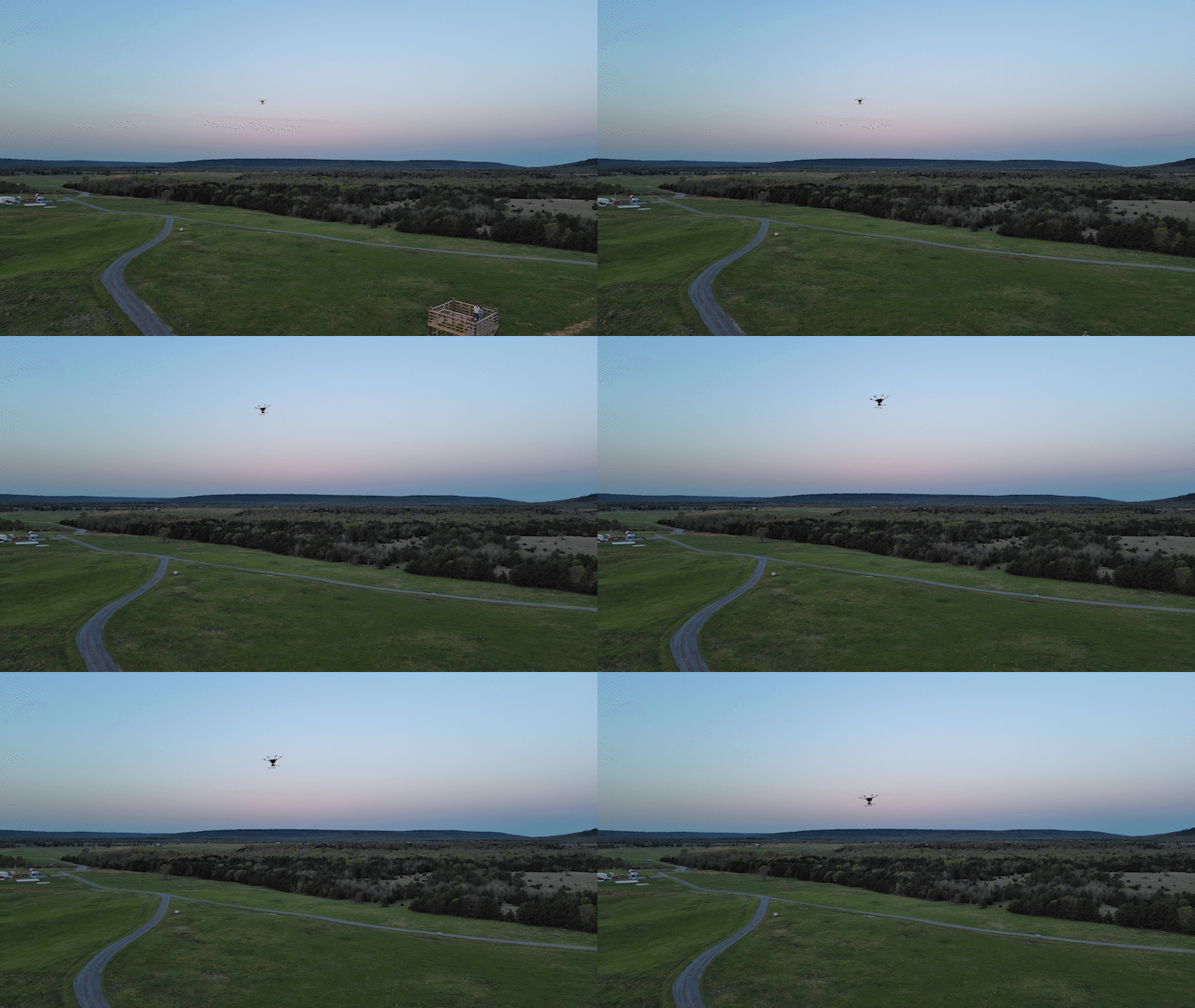
It’s just before 6:51 a.m. and the sun is just about to climb above the rolling hills where James Grimsley and I step out of an ATV onto the Choctaw reservation, coffee and drones in tow.
This is the time of day that pilots call “civil twilight.” The 30 minutes prior to sunrise or after sunset are fair game: Registered pilots can fly a drone under standard federal aviation rules. Grimsley and I leave one of the mini-aircraft on the ground, then ascend a five-story wooden platform—which is swaying subtly along with the wind—to send off a second, much smaller Autel Nano Plus, an orange, pocket-sized drone with four arms and 28 minutes of battery life.
Surrounding us are 44,616 acres of ranch land that stretch further than the eye can see. The Choctaw Nation, the government of the more than 200,000 Native American tribal members, purchased this land in 2013. It was formerly owned by the late land and oil financier Aubrey K. McClendon, who died in a car accident while facing a U.S. criminal indictment. The tribe, while leaving the land largely untouched, has transformed the piece of property, along with its wild boars, rolling hills, and rocky gravel trails, into an epicenter for commercial drone flight trials. Grimsley, Brian Post, and Marcus Hartman—along with financing and staffing support from the the Choctaw Nation—have overseen hundreds of drone flights on this land. The tribe, which was awarded a coveted position as a partner with the federal aviation regulator, has logged more than 333 flights (as of the end of April) that are being used to develop drone-specific aviation regulations in the U.S.—rules that promise to standardize commercial drone flight and finally make airborne medical and goods deliveries a part of our everyday lives.
Jessica Mathews—Fortune
Right here on this stretch of land in Southeast Oklahoma, where phones that use Verizon get zero bars of service, the Choctaw Nation has become a leading player—right alongside Amazon, Google, and some of the biggest companies in the world—in transforming mobility as we know it. For society, drones will arguably reduce emissions, cut supply chain costs, and clear up busy and increasingly dangerous roads. For the tribe, drones could save the lives of members and help lift its next generation out of poverty and into the frontier of technological innovation.
But as much as drones may be able to transform the aviation, healthcare, and delivery industries, being at the cutting edge of these developments is lifting the economic prospects and offering a new set of opportunities and jobs to Choctaw members. “This is a business, but it is so much more to us—within our Nation and to our people,” Choctaw Chief Gary Batton says.
Nearly 200 years ago, Choctaws were the first Native Americans moved by the U.S. government onto land in modern-day Oklahoma—a dangerous and disorganized trek now known as the “Trail of Tears” that would take the lives of between one quarter to one-third of the 12,000 Choctaws who made the trip. It is merely one tragedy in a series of broken treaties, stolen land, racism, and political pushback the Choctaws have faced, including the federal government’s dissolution of tribal courts in 1906 that would impede much of the Nation’s autonomy until the 1970s.
The Choctaw Nation, which has used business revenue, rather than taxes, as a way to pay for education and health care services for its people since at least the 19th century, established its modern-day government and constitution four decades ago. Today the Choctaw Nation is a multi-billion-dollar organization with a private jet that manages a rich ecosystem of casinos and hospitality businesses, Chili’s and Smashburger franchises, wineries, manufacturing, medical administration, federal contracting, and other businesses it uses to fund its exhaustive set of services for tribal members.
“If anything happens to gaming or anything else, then there’s still a revenue stream that can provide for the services and benefits to the Choctaw members,” says Sarah Curtis, CEO of Choctaw Global, the umbrella organization that manages dozens of the tribe’s non-hospitality businesses.
At its latest count in 2018, the Nation was making an annual $2.4 billion economic contribution to the state of Oklahoma, and it has become the largest employer in the state, with approximately 11,000 people—a little more than 37% of whom are Choctaws—on staff.
“When I graduated high school, if you could leave, you left,” says Grimsley, now 56 years old, who himself is not Choctaw. There was little opportunity in the area at the time, he says. No longer.
While earnings for those who live on the Choctaw reservation may still fall below that of the average U.S. or Oklahoma resident, they are higher than they have been in decades, and the unemployment rate was 4% as of mid-March 2022—down from 9.4% in 2010. Choctaw kids in Atoka, Okla., are learning about becoming pilots in elementary school.
The Choctaw drone initiative—what Chief Batton refers to as the Nation’s “startup”—has become a source of pride for the tribe and an integral part of its larger scale, 100-year plan to develop and support the future generations of its people and to continue to lift members out of poverty and into the future, while honoring the tribe’s core values of faith, family, and culture, as well as its rich history and legacy.
This is the unlikely story of how a tribe in search of new sources of revenue found an opportunity in the sky—and became an industry leader.
More than eight years ago, Jeff Bezos said Amazon shoppers would have their goods delivered within 30 minutes of their order by drone. It’s been nearly a decade and—despite large-scale efforts from UPS, Amazon, or Alphabet—drone deliveries are still far out of reach to the average American.
The most obvious hurdle standing in the way is scalable regulation. Drones operate in U.S. airspace, so they’re subject to the Federal Aviation Administration rules—rules established and intended for airplanes rather than miniature, autonomous aircraft.
“A drone that looks more like your cell phone is treated the same as a 747 under the regulations. It just doesn’t make any sense,” says Lisa Ellman, founder of the Commercial Drone Alliance, a drone advocacy group, whose board includes Alphabet’s Wing, Skydio, Prime Air, and the Choctaw Nation.
The FAA has made some progress: In 2016, it made clarifications under current rules for how corporations could use drones. And last year it made a new certification for pilots to fly drones at nighttime and over people’s heads without a waiver.
Jessica Mathews—Fortune
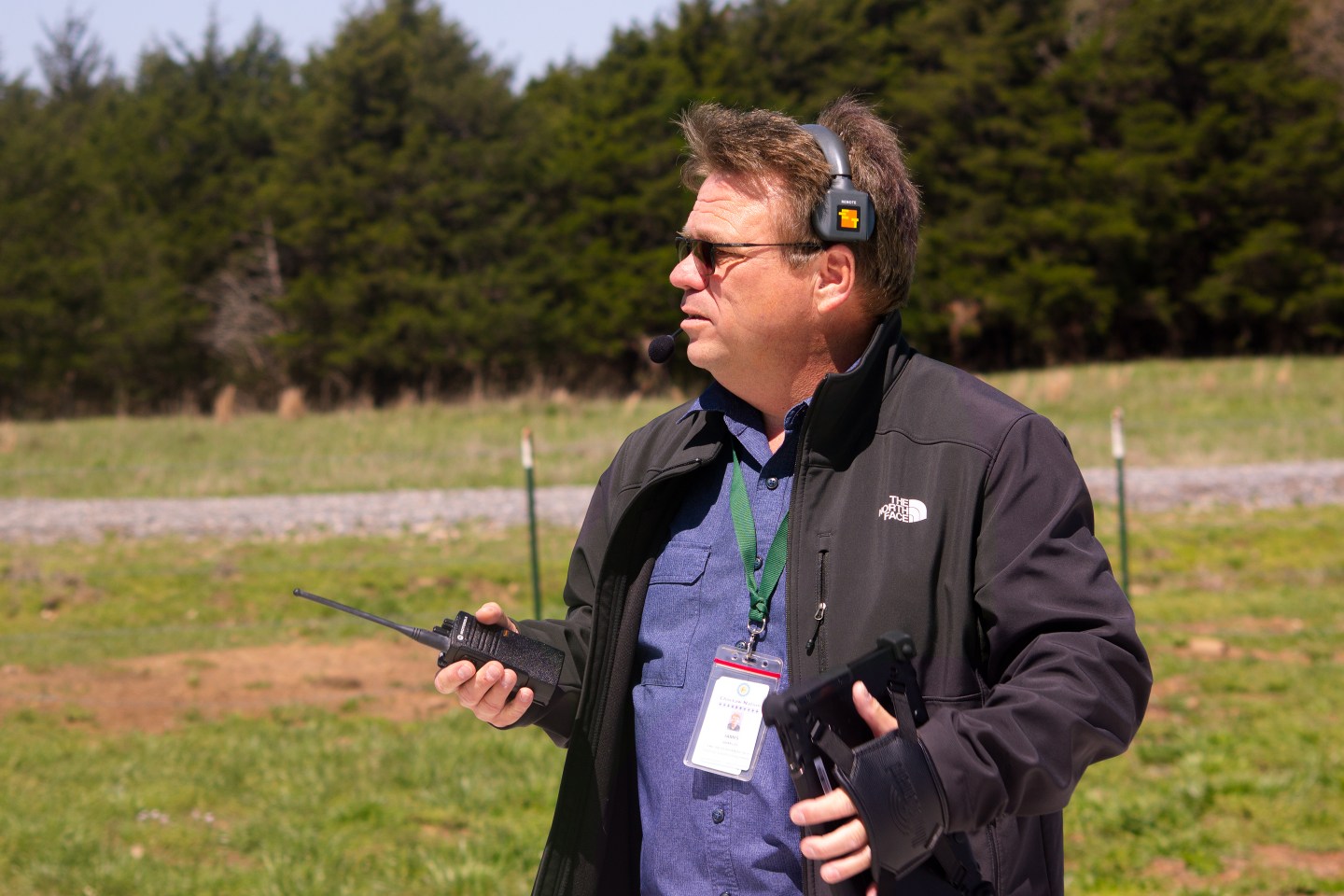
But the next major development will be critical to scaling the nascent space: Drone-specific regulation that will permit autonomous aircraft to fly beyond visual line of sight (BVLOS). Under current rules, a drone needs to be under human eye for the duration of its flight, unless it gets a Part 135 certification from the FAA (a five-part certification process that only three companies have completed thus far, and six more are trying to obtain). Standardized, drone-specific regulation is what will ultimately allow corporations from Walmart to Amazon to incorporate drones into their business models and really scale.
This is a major initiative at the FAA, and the Choctaw Nation has become an integral part of these efforts, starting in 2018, when the FAA selected the tribe as one of ten government entities, alongside the Kansas Department of Transportation, Memphis-Shelby County Airport Authority, and others to study the technology and evaluate safety concerns.
The initial phases of BVLOS rulemaking “will focus on flights at low altitudes and creating drone-specific airworthiness requirements. This will unlock that potential for things like infrastructure inspections and agricultural operations,” FAA executive director of unmanned aircraft systems integration Jay Merkle said in a statement to Fortune. Follow-on phases will look to tailor approval for package delivery and, later, to integrate operations into “more advanced airspace.”
Until then, companies are using exemptions to prove their concepts with the FAA—and they are flying over land like the Choctaw Nation’s ranch to make it happen.
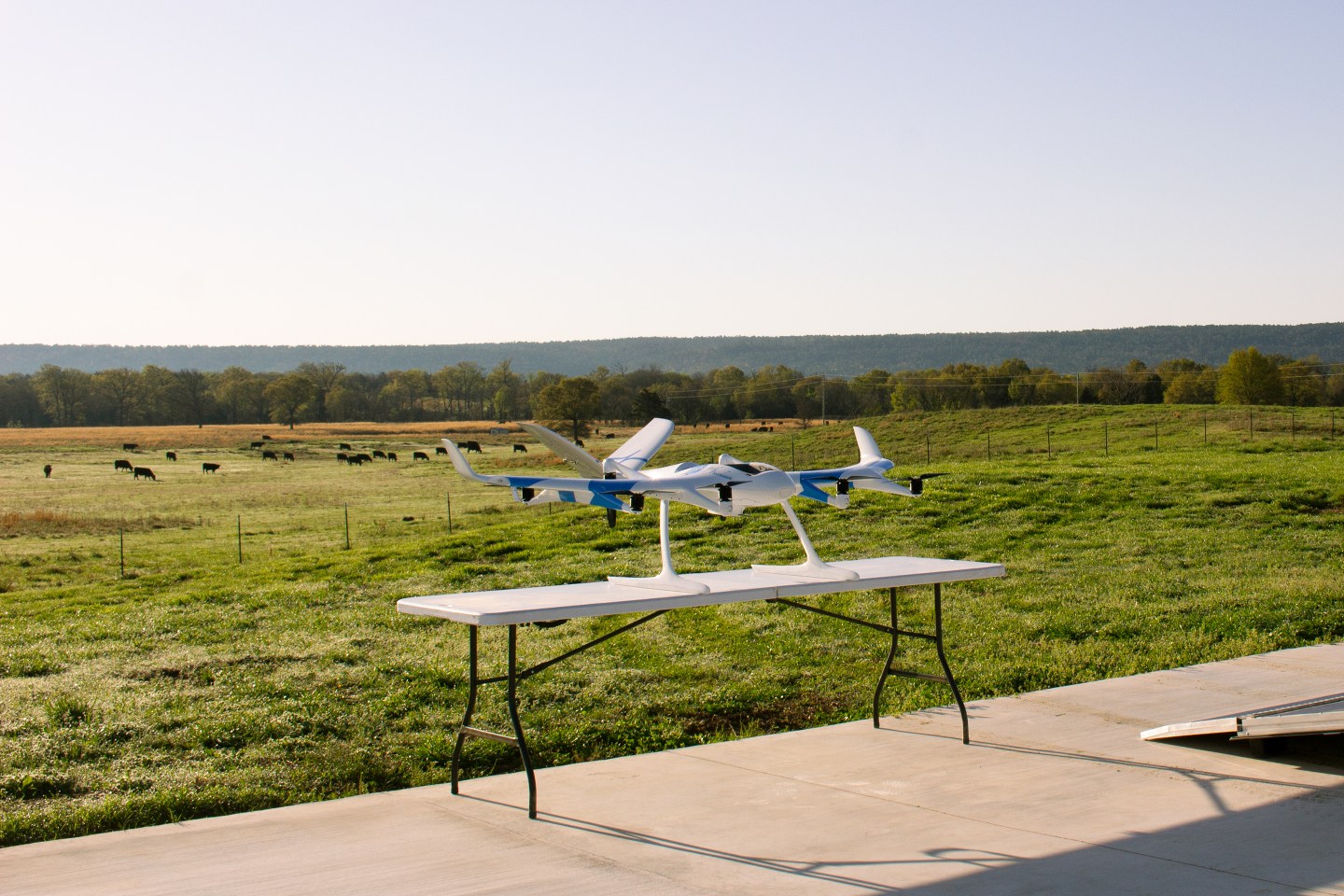
One sunny morning in April, just before 8 a.m. Travis Petet comes barreling down the grey gravel road on the Choctaw Daisy Ranch in a Ford Super Duty, clouds of dust trailing behind him. Petet, the director of maintenance at drone company Spright, a subsidiary of helicopter operator Air Methods, has just made the 15-hour trek from Gilbert, Arizona. Behind him is valuable cargo—a single 198-centimeter-wide Wingopter drone dubbed “Spirit of Hutchinson” that cost upwards of $100,000 (Spright wouldn’t specify the exact figure). This drone is one of five aircraft in Spright’s current fleet, though the company has just put in an order for 100 more, with the option to buy another 120. On this cloudless day on April 14, Spright is conducting its first proof of concept flight on the Choctaw reservation.
Eventually, Spright will be able to send drones off remotely from thousands of miles away. For now, the crew has tagged along, and Chief Pilot Joseph Boucher is setting up four computer monitors inside the trailer, where he will control and oversee the mission. It typically takes an hour or so to prep the drone for takeoff, when you weigh in the mission planning and upload, risk assessment, and inspection for the first flight of the day.
Jessica Mathews—Fortune
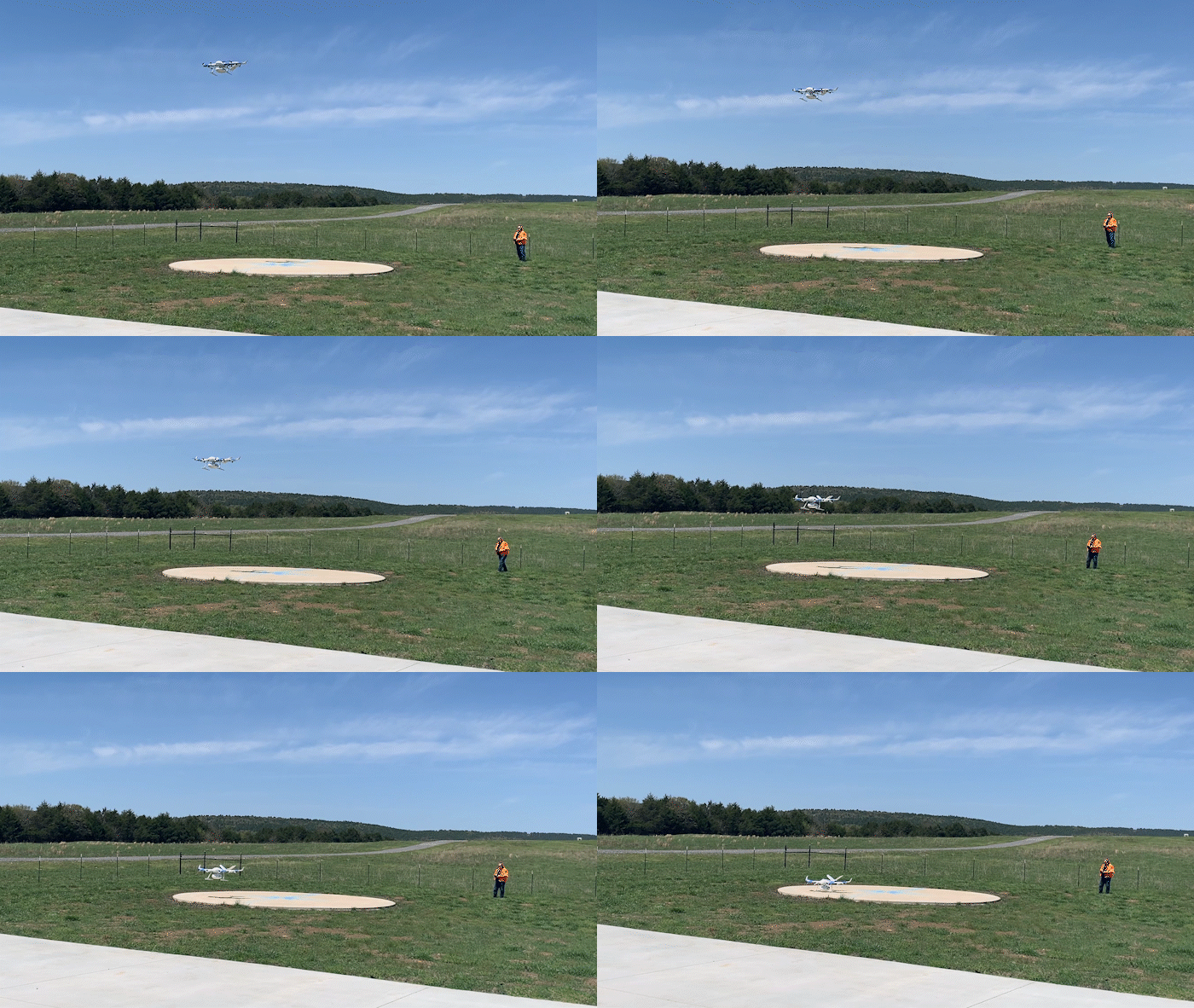
“I check every panel, every component, and make sure everything is ready to go,” Petet tells me as he circles the drone, an airplane-esque aircraft with eight engines and a 10-pound weight limit—and runs through a checklist of items including physically inspecting the forward motors, the ruddervator, fuselage, and motor covers to make sure it is airworthy. Today Spright will deliver a first aid kit from the Choctaw’s drone base to the ranch headquarters, an approximate six-minute flight each way. The same journey takes approximately 20 minutes via truck—a testament to how Spright ultimately plans to use technology.
Once its drones are Type Certified under the company’s Part 135 Certificate (likely in around 18 months, according to Spright president Joe Resnik), Spright plans to develop a healthcare delivery network that can quickly transport medicine, blood, and medical supplies to rural areas hard to reach via ground.
Spright, which Air Methods set up in 2020, has built out a team of 36 people, including drone pilots and a team of engineers who are designing a temperature-controlled delivery box for sensitive medicines. They have been conducting proof of concepts in Oregon and Kansas—and, as of April 14, on the Choctaw reservation in Oklahoma.
Courtesy of Choctaw Nation
In all of these areas, the focus is on rural communities—where the blockage of a single two-lane road, whether it be due to traffic, poor weather conditions, or damage, can restrict access to a whole community of people.
“Rural communities aren’t getting the support they need,” Resnik says, noting how: “If you could actually fly a drone—straight across—it could save a couple hours to one day… The faster you get there, the better the outcome for the patient.”
Drone technology has come a long way in the last few years, but there are still limits to what it can do. For one, the loud humming noise as it turns on and begins its ascension—which poses risk to interfering with wildlife. And importantly, battery life. While we were out on the ranch, the Spright team changed the drone batteries twice for the two round-trips between ranch headquarters and drone site.
“Everybody talks about how the battery technology is going to double or triple in five years. I’ll just say, I’ll see when I see it,” Resnik says.
On March 21, Choctaw tribal member John David Callaway was volunteering for the local Fire Department. He was sitting in the fire truck, storm spotting, when the severe weather began.
“We were out there watching, and we saw this rain shaft coming across the lake,” he says. “We called it in, and the National Weather Service said that there was no rotation that they could see in the radar—it was just rain and hail.”
But it was more than rain and hail: Later that evening, the fire truck began to shake, and a flagpole near the vehicle snapped in two. Callaway immediately notified the county dispatch that a tornado had struck. Shortly thereafter, he received a text from his wife: A tornado had hit their house. Come home right away. The roads were blocked though, and he wasn’t able to get home. Instead, Callaway rushed where he could: To the marina, where a woman was trapped under a travel trailer.
“I was the only firefighter on the scene for a little while down there—because nobody could get through,” he says.
Callaway and the woman’s husband pulled her out and, eventually, an ambulance arrived. Back at Callaway’s home, their guest house was completely destroyed. There was roof damage, windows had blown out, and some tree branches had poked through the walls.
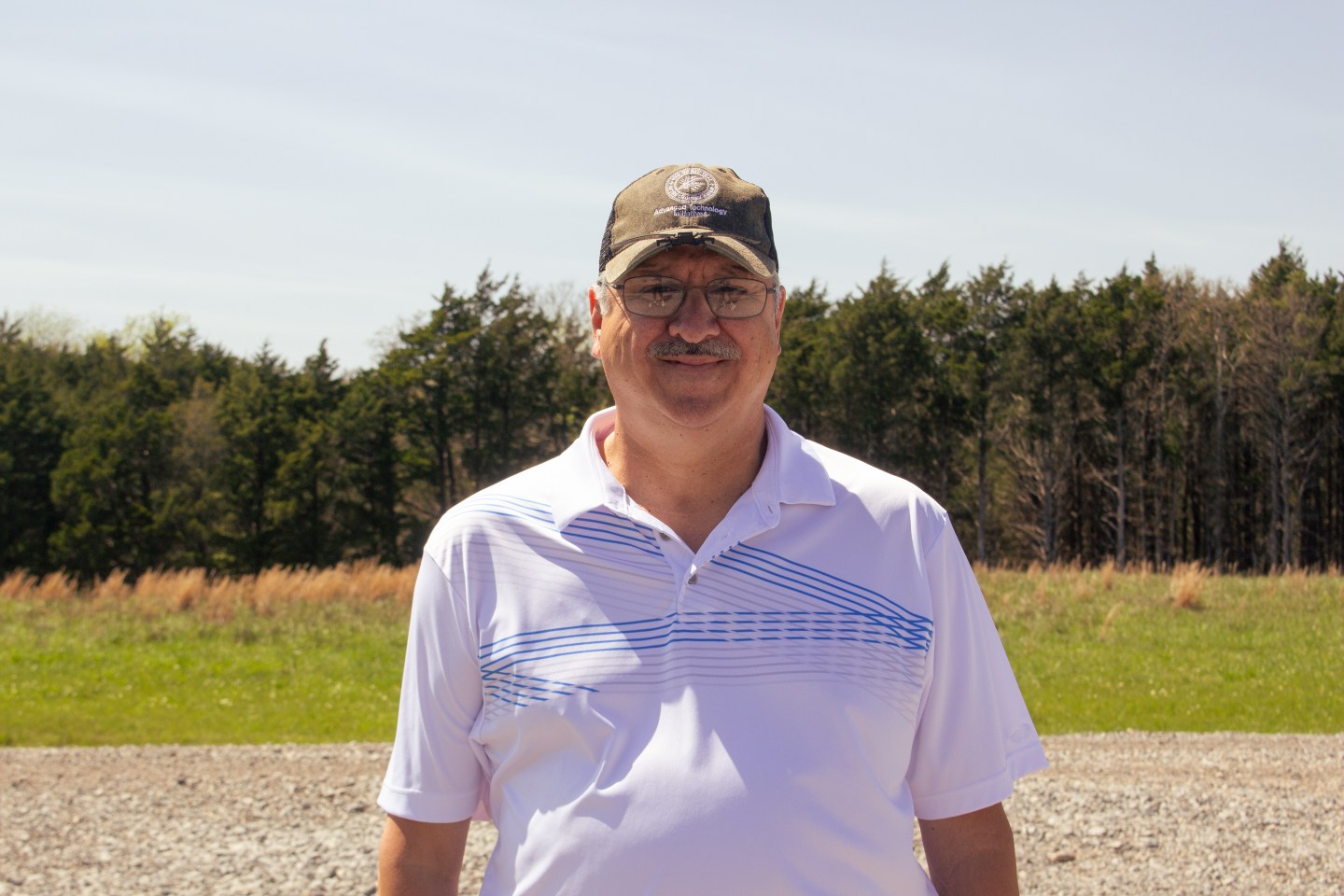
It’s natural disasters where drones could offer the most value. Callaway has been using them for seven years in Marshall County—a 427 square mile region on the Chickasaw reservation that houses just under 16,000 people, per the latest census count. Shortly after he purchased a drone for recreational use, Callaway started to use the technology for his work at the local Fire Department. He can send a drone with a thermal camera into the smoke of a fire to locate where it is most aggressive—then firefighters can go address that first. Shortly after Callaway began using a drone at the fire department, the Sheriff asked Callaway about using his drone to look for suspects or escaped prisoners.
“For Marshall County, I was the drone guy,” he says.
Jessica Mathews—Fortune
But, once regulation permits, there’s much more to be done in terms of health care. There are dozens of small mountains across Southeast Oklahoma. They may not be big, but it can take a long time to circle around them. “Whenever we do medical calls with the fire department, it may take the ambulance in the county 25 minutes to get to where our department is located,” he says. In some cases, people need an automated external defibrillator, or AED, if they are experiencing cardiac arrest—and they need it immediately.
“You’ve got somebody who’s having a heart attack—if there’s not somebody that’s able to do CPR and has an AED, 45 minutes is going to be too long,” Callaway says. Some regions in the area don’t have that service capability. And then there are times when whole roads will flood out during severe storms, Callaway says, and people are shut off from access entirely.
“If we can throw a drone up and go take somebody their insulin, because they’ve run out and nobody else can get to them, you could potentially be saving a life,” he says. “There’s a lot of cases where drones could be the difference between life and death.”
The drone program is already starting to bring in new businesses to the area. Just a few weeks ago, the tribe hosted a conference at its casino, drawing in just under 300 leaders and attendees in the industry. Drone Express, for one, which has been conducting delivery trials with Kroger in Centerville, Ohio, recently opened an office in Atoka, Okla.—about a 25 minute drive from the Choctaw ranch. More than 20 companies have participated in test flights at the ranch, bringing in people that will eat at local restaurants, stay in the area, and—potentially—spend some time at the slot machines at the casino.
“This location has become a hotspot,” says Callaway, who recently accepted a position as drone test pilot with Drone Express in Atoka.
The Tribe is moving forward with a construction plan for a Merging Aviation Technology Center that will span 35 acres and include a three-story operations building as well as a fabrication facility—giving the Choctaw Nation space for a viewing deck, a space for rapid prototyping and 3D printing, and a gathering room they can use to hold STEM classes, so they can host camps as well as local school teachers who are instructing their students about aviation.
“Just think if our kids could be the leaders in drones,” Chief Batton says. “In 10, 20, 30 years from now: Think if they’re the ones that design the systems that are flying people around—that excites me.”
It’s taken approximately two years to plan and get approval to construct the new buildings on the land: The Tribe wanted to carefully survey the land, evaluate the history, and identify any potential archaeological sites that might lie there. This region is historic: Generations of Choctaws, and prior, the Caddo tribe, lived on this land hundreds of years ago—and the Nation wanted to prevent any reckless desecration of its history.
At the center of the Great Seal of the Choctaw Nation is an unstrung bow, a symbol of the tribal people’s love of peace—but also of their willingness to go to war if first attacked. Choctaws have been defending their rights to this stretch of land for centuries—fighting to uphold the treaties their ancestors signed so that future generations of the tribe could find peace, and fighting for their rights as people.
There’s something sacred about the sky in that way. An individual cannot plant a flag, sell, steal, or claim rights to any segment of the atmosphere. It can’t be owned.
And while you can’t own the sky, you can fly a drone in it. And there’s arguably no better place to do it than right here on the Choctaw reservation—where there are cows having their breakfast and where a resilient tribe is defining the future.
此内容由惯性聚合(RSS阅读器)自动聚合整理,仅供阅读参考。 原文来自 — 版权归原作者所有。