
惯性聚合 高效追踪和阅读你感兴趣的博客、新闻、科技资讯
阅读原文 在惯性聚合中打开

推荐订阅源

月光博客
月光博客
Cyberwarzone
Cyberwarzone
L
LINUX DO - 最新话题
N
News and Events Feed by Topic
T
Troy Hunt's Blog
Help Net Security
Help Net Security
S
Security @ Cisco Blogs
Google DeepMind News
Security Archives - TechRepublic
M
MIT News - Artificial intelligence
G
Google Developers Blog
Cyber Security Advisories - MS-ISAC
V2EX - 技术
V2EX - 技术
Y
Y Combinator Blog
D
Darknet – Hacking Tools, Hacker News & Cyber Security
大猫的无限游戏
大猫的无限游戏
OSCHINA 社区最新新闻
OSCHINA 社区最新新闻
Microsoft Security Blog
Cisco Talos Blog
Cisco Talos Blog
T
Threatpost
Recent Commits to openclaw:main
S
SegmentFault 最新的问题
I
InfoQ
H
Hacker News: Front Page
D
Docker
Scott Helme
Scott Helme
Threat Intelligence Blog | Flashpoint
Blog — PlanetScale
Blog — PlanetScale
人人都是产品经理
人人都是产品经理
博客园 - 叶小钗
freeCodeCamp Programming Tutorials: Python, JavaScript, Git & More
N
Netflix TechBlog - Medium
AWS News Blog
AWS News Blog
Know Your Adversary
Know Your Adversary
博客园 - 【当耐特】
T
Tor Project blog
U
Unit 42
H
Heimdal Security Blog
Microsoft Azure Blog
K
KPMG report finds enterprise disconnect between AI and its ROI | CIO
P
Privacy & Cybersecurity Law Blog
PCI Perspectives
PCI Perspectives
美团技术团队
O
OpenAI News
T
Tailwind CSS Blog
H
Hackread – Cybersecurity News, Data Breaches, AI and More
B
Blog
GbyAI
GbyAI
cs.CL updates on arXiv.org
MyScale Blog
MyScale Blog

Fortune | FORTUNE

One man can kill Bill Ackman’s $64 billion bid for Universal Music Group—and no one knows what he’ll do | Fortune Poppi’s cofounder pitched her startup on Shark Tank while 9 months pregnant and landed a $400,000 deal—now it's worth $2 billion | Fortune Teen boys are choosing AI girlfriends over real ones for 'maximum control, zero rejection'—experts say it could make them unemployable | Fortune A United American merger is by no means impossible given the president 'loves big deals' | Fortune Reed Hastings’s planned exit from $455 billion Netflix ‘had nothing to do with’ the failed deal for Warner Bros., says Ted Sarandos | Fortune Meet Joe McCann: The high-flying crypto trader held in Tanzania after sudden death of his influencer fiancée Ashly Robinson | Fortune Gen Z is carving a different path in the housing market by doing it alone | Fortune U.S. Catholic leaders criticize Trump for ‘disparaging words’ about the pope as Vatican clash risks alienating Catholic voters | Fortune China has ‘nearly erased’ America’s lead in AI—and the flow of tech experts moving to the U.S. is slowing to a trickle, Stanford report says | Fortune Self-made millionaire behind $5 billion Skims Emma Grede says it all began with a cold call to Kris Jenner: Emma Grede—the self-made millionaire behind the $5 billion Skims empire—says it all began with an audacious cold call to Kris Jenner: ‘The difference between me and someone else is, I made it happen’ | Fortune Americans have never been this gloomy about the economy. Wall Street has never cashed in harder | Fortune ‘The college grading system [is] almost meaningless’: People see the Ivy League as an easy A and with flawed admissions standards | Fortune The CEO of $8.5 billion Japanese car giant Nissan plays the drums in a band and hits the tennis courts to destress from the top job | Fortune New York governor's take on a millionaires tax: fancy pied-à-terre second apartments worth over $5 million | Fortune Pope Leo XIV: A ‘handful of tyrants’ are ravaging earth with war and exploitation | Fortune Trump has no plan to cut the $39 trillion national debt, but he does want to cut childcare. His budget director is scrambling to clarify | Fortune China's economy grows 5% in first quarter, surprising economists to the upside | Fortune Everyone was wondering what Trump wanted more: Warsh smoothly seated at the Fed, or for Powell to pay. We have our answer | Fortune Palantir exec: the biggest mistake retailers are making with AI? Trying to do it all with one agent | Fortune American YouTuber who calls himself a 'troll' sentenced to 6 months in Korean prison for literally dancing on wartime graves | Fortune BBC plans to cut up to 2,000 jobs to save 10% of annual budget | Fortune Canva debuts a new suite of agentic tools, as the design app quietly becomes one of the world’s most used AI services | Fortune Moody's CEO: AI has a trust problem – better models won’t fix it | Fortune Top New York surgeon: Americans have better data for choosing restaurants than surgeons. That has to change | Fortune The Iran war’s fertilizer shock is hammering American farmers, and 70% can’t afford what they need for this year’s growing season | Fortune Education experts to Mamdani: Why are you foisting AI on our kids? | Fortune This CEO pirated video games as a teen and became a hacker for the Air Force. Now he’s built a $3 billion cyber firm | Fortune Teacher, blame thyself: Yale report savages Ivy League schools for destroying American trust in higher education | Fortune Fed chair nominee Kevin Warsh is worth more than $100 million and has stakes in SpaceX and Polymarket | Fortune From wool sneakers to GPUs: Allbirds’ desperate AI pivot and 600% stock surge, explained | Fortune The Sam Altman attack is putting two anti-AI groups under scrutiny—but the story is more complicated | Fortune Elizabeth Warren on her proposal to bring back IRS Direct File: ‘For just one day of bombing Iran, we could pay for 20 years’ | Fortune ‘I am certain’: Harvard policy expert warns the true cost of the Iran war to U.S. taxpayers will exceed $1 trillion | Fortune The CEO of a $24 billion Dutch lender has sandwiches once a week with the staff to hear their views and get them on side with cost cuts | Fortune Why insurance giant Travelers' CTO is placing fewer, bigger bets on AI | Fortune Current price of oil as of April 15, 2026 | Fortune The dirty secret behind Big Tech’s AI arms race: Massive hardware investments that are obsolete in 3 years | Fortune Dow’s CEO handoff elevates an insider and seasoned operator | Fortune Anthropic faces user backlash over reported performance issues with its Claude AI chatbot | Fortune Stock futures sink while oil spikes as the U.S. Navy looks to squeeze Iran's economy and break its grip on the Strait of Hormuz | Fortune A major U.S. gasoline production hub is in such a severe drought that its refineries may be hobbled. 'We are actively praying for a hurricane' | Fortune U.K. won’t take part in Trump’s planned blockade of Hormuz strait | Fortune Hungarian voters oust Viktor Orbán, a close ally of Trump and Putin, despite late campaign push from JD Vance | Fortune Blazing hot IPOs, an AI agent craze, and a new word for ‘token’: Here’s what’s happening in the world of Chinese AI | Fortune Iran’s crumbling economy is the regime’s greatest weakness with prices up 40% since the war began while authorities worry about making payroll | Fortune Here’s how a U.S. naval blockade of the Strait of Hormuz could work. ‘This is a big task, and it’s a big gamble’ | Fortune Intuit was an AI pioneer. Why its stock became a SaaSpocalypse casualty | Fortune Artemis III will practice docking Orion with lunar landers in Earth orbit next year while Musk’s Starship and Bezos’ Blue Moon compete for Artemis IV | Fortune Oil tankers U-turn in Hormuz as U.S.-Iran talks break down Saudi Arabia says East-West pipeline restored to full capacity In 2011, Barack Obama said it was time to ‘pivot’ to Asia. But 15 years later, the U.S. is still at war in the Middle East Trump says U.S. Navy to impose Hormuz blockade after Iran ceasefire talks end with no deal. ‘No one who pays an illegal toll will have safe passage’ This TikTok sensation sold her startup for $2 billion. Now Pepsi is letting ‘Poppi be Poppi’ ‘Almost unmanageable’: Raising a child in the U.S. now costs more than $300,000 As Iran peace talks fail, Trump and Joe Rogan watch a hobbled fighter triumph in a brutal cage match Haiti stares down starvation as Iran War drives 200,000 into acute food emergency status ‘I just keep seeing a lot of different aspects of life getting more expensive’: New car prices are up 30% over 6 years America is not ready for its own longevity crisis — and 2026 is the wake-up call | Fortune JD Vance leaves Pakistan after marathon talks with Iran end without a deal as Tehran refuses U.S. demand not to develop nuclear weapons | Fortune Average price of new cars nears $50,000 as automakers focus on big pickups and SUVs while cheaper sedans get phased out | Fortune Navy tests Hormuz blockade as expert says U.S. military prepares for round 2 and could degrade Iran’s hold over the strait to a ‘manageable level’ | Fortune Pakistan sends military force to Saudi Arabia as part of pact | Fortune Three oil supertankers sail through the Strait of Hormuz | Fortune Trump downplays talks for ceasefire deal with Iran, claiming military victory. 'It doesn’t matter. From the standpoint of America, we win' | Fortune Boeing’s moon rocket faces uncertain future under Trump’s NASA | Fortune Appeals court says national security implications of halting White House ballroom construction must be weighed | Fortune Some of cheapest fuel can be found on Native American reservations as tribes are exempt from state gas taxes | Fortune JD Vance begins talks with Iran in Pakistan while Trump claims U.S. has begun 'clearing out' the Strait of Hormuz | Fortune 'This is the last warning.' Iran threatens U.S. warships after they throw down the gauntlet for winner-take-all Strait of Hormuz | Fortune U.S. Navy ships transit Hormuz ahead of mine-clearing mission | Fortune Over a third of Ireland's fuel stations are empty and truck and tractor drivers are protesting nationwide | Fortune Some communities are enduring unprecedented long waits on federal disaster requests, and Democrat-led states say they're being denied | Fortune These niche AI startups are trying to protect the Pentagon’s secrets | Fortune Former Tesla president reveals the ‘single most important thing’ you can do for your career—it’s a habit Elon Musk and Warren Buffett share too | Fortune Ingersoll Rand CEO: here's how employee ownership helped drive more than 8x enterprise value growth | Fortune The petrodollar faces increased risk, but a petroyuan is ‘far-fetched’ as fears of U.S. losing superpower status are overhyped, strategist says | Fortune Palantir CEO says AI ‘will destroy’ humanities jobs, but there will be ‘more than enough jobs’ for people with vocational training | Fortune Warren Buffett says 'accumulating great amounts of money' doesn’t achieve greatness—He still lives in a $31,500 Nebraska home and clipped coupons | Fortune Starbucks' game plan to roll out AI chatbots at cafes could serve as a 'litmus test' for the industry, analyst says | Fortune Data centers and gas demand make boring pipelines great again | Fortune The 'Tuscan Mom' aesthetic is taking over TikTok as Gen Z glamorize McMansions and reject millennial gray | Fortune Man's best friend may soon live a little longer thanks to a new pill promising to extend your pup's lifespan | Fortune Danantara CIO: Indonesia can anchor the AI and energy economy—if governance keeps pace | Fortune OpenAI’s TBPN deal shows how talent, media, and influence are collapsing into one | Fortune AI promises to free workers from grunt work, but psychologists say those mindless tasks are exactly what our brains need to recover | Fortune The 'affordability economy' has created a housing market nobody predicted: Prices collapsing in the Sun Belt, soaring in the Rust Belt | Fortune 'It’s 13 minutes of things that have to go right': Artemis II splashes down despite faulty heat shield | Fortune Fed seeks details on U.S. banks' exposure to private credit firms | Fortune The Navy confirmed an ‘abundant amount’ of Uncrustables when the Artemis II crew lands. Smucker’s just offered them a lifetime supply | Fortune Meet ‘trendslop,’ the new, AI-fueled scourge of workplace consultants everywhere | Fortune Amazon is still paying Jeff Bezos an $80,000 yearly salary—but $1.6 million for travel and security | Fortune Trump-backed World Liberty Financial crypto tokens reach all-time low on reports of insider loans | Fortune Iran is demanding tankers in the Strait of Hormuz pay tolls in crypto: What we know so far | Fortune First they went after medtech, then Kash Patel. Iranian hackers’ next target is likely ‘low-hanging fruit’ in water, energy, and tourism, experts say | Fortune The AI that found 27-year-old vulnerabilities no human ever caught before just forced an emergency meeting with every major Wall Street CEO | Fortune Inflation goes up by a whopping monthly rate of nearly 1%—and it’s hitting you at the grocery store and gas station | Fortune H&R Block is betting it can be more than a tax company | Fortune The real engine of innovation is trust | Fortune Huntington is powering digital growth—by opening a branch almost every 2 weeks, says CFO | Fortune How the 173-year-old glass-maker behind Edison's light bulb and iPhone screens became a Silicon Valley darling | Fortune
'Where we are today is frightening': a Pulitzer-winning historian sees a doomsday scenario involving China and the national debt | Fortune
Nick Lichtenberg · 2026-06-02 · via Fortune | FORTUNE

Liaquat Ahamed has spent his career studying the moments when the world’s financial system breaks down—the bad bets, the collective delusions, and the geopolitical accidents that tip economies into catastrophe. Right now, he says, he doesn’t like what he sees.

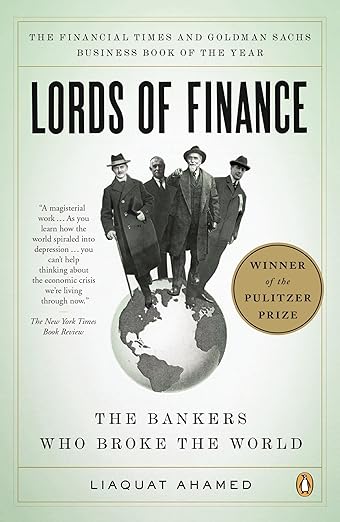
“Where we are today is frightening,” Ahamed, the Pulitzer Prize–winning author of Lords of Finance: The Bankers Who Broke the World, told Fortune in an interview. The historian, whose landmark 2009 book chronicled how four central bankers helped cause the Great Depression, was speaking about America’s national debt—now hovering around $39 trillion—and the mounting risks he sees in the global financial system.

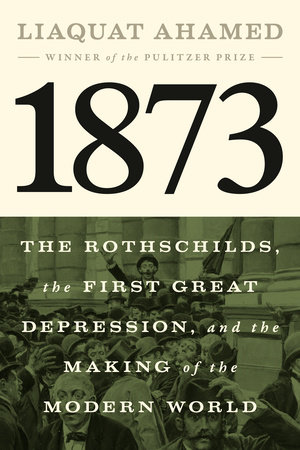
His new book, 1873: The Rothschilds, the First Great Depression, and the Making of the Modern World, examines a forgotten financial crisis that swept the United States, Central Europe, and the emerging markets of the Ottoman Empire and Egypt simultaneously—a global contagion that most people have never heard of. The parallels to the present, he says, are hard to ignore.

A clear similarity, he said, is the “craziness that markets develop when they’re in bubbles,” citing a quote from Cornelius Vanderbilt that, essentially, “building railroads from nowhere to nowhere is not a viable business.” You can sort of feel, he added, that one day “we will discover that building data centers, you know, willy-nilly spending a trillion dollars a year on data centers for the next three years is bound to end in tears in the same way as the dotcom bubble ended in tears.”

But that’s not what really alarms Ahamed, he clarified.

The doomsday scenario

The scenario that worries Ahamed most isn’t abstract. It has a precedent, and it nearly happened once before in living memory.

In 2008, at the height of the global financial crisis, then Treasury Secretary Hank Paulson was in Beijing when he learned that Russia had approached China with a proposal: dump its massive holdings of U.S. agency debt, and accelerate the financial meltdown already underway on Wall Street. “The Chinese very sensibly said no,” Ahamed recounted. But the episode left a mark on him. If the next financial crisis played out against the backdrop of extreme tension with China, he added, “you could imagine a lot of things happening that would not be…that would not work out.”

“Can you imagine, in the middle of a financial crisis, if one of our major foreign holders of our national debt decides, this is an opportune time to launch an attack on U.S. financial supremacy?” he said. It didn’t happen with China and Russia in 2008, he added, but he did stumble across a parallel in the research for his book. “That’s essentially what happened between Germany and France in 1873. And it damaged the world for 20 years.”

After defeating France in the Franco-Prussian War of 1870–71, as explained in the book (and which this author would recommend checking out), Germany sought to press its advantage financially: deliberately targeting France’s silver reserves in a bid to destroy its economic standing. The move triggered a global collapse of silver prices, froze half the world’s precious metal reserves, and helped ignite the cascading crises of 1873. The resulting depression lasted two decades.

Much like Lords of Finance explained how a fixation on gold in the 1920s led to central banking mistakes that would be laughed at today, Ahamed said he was shocked to discover silver’s essential role in the epic crash of 1873, now mostly forgotten. “The world ended up dispensing with silver, purely because of a geopolitical accident. In the middle of the crisis, Germany decides to double down by attacking France’s hoard of silver, thinking this is the way, you know, we already beat them in a military fight, now we’ll get them in a financial fight. And it had the totally unintended effect of causing everyone to bail out of silver, causing silver prices to collapse.” Germany may have gotten one over on France, but it also had the effect of essentially freezing half the world’s precious metal reserves. Oops.
Ahamed, who speaks with a clipped, distinguished British accent that sounded to this American’s ears like the BBC’s Received Pronunciation, explained that he grew up in Africa before moving to the U.K. and the U.S., and that he’s struck by how different the economic history is for his kids. The famous “cross of gold” speech by William Jennings Bryan holds a central place in American history that it doesn’t elsewhere.

“That came as a real light bulb going off in my mind,” he said excitedly. “Suddenly, I understood why there was such a giant debate about silver in the the last 20 years of the 19th century.” Ahamed added that this world featured many colorful characters and commentators, as a young Mark Twain commented on the financial panics of the day, but also it was one of the few times that Karl Marx was right in prognosticating the downfall of capitalism, for once. Ahamed laughed when I asked if Marx was something like the Michael Burry of his day. “He had a dour view of the future,” he allowed, adding that it’s “hard to imagine Karl Marx as Michael Burry.”

The question Ahamed was left with after his research is how Germany and France set off a butterfly effect in the 1870s. Could China do the same to the United States, at a moment when Washington is least able to absorb it?

Financial crises, he said, “don’t occur in a geopolitical vacuum.”

The slow build, the sudden snap

Ahamed was careful not to predict a timeline. He’s been studying financial history too long for that.

“Things take much longer to happen than you imagine,” he said, invoking the late MIT economist Rudi Dornbusch’s famous adage. “And once they happen, they happen much quicker.”
That dynamic, he argues, is the common thread running through every major financial crisis he has studied, from the gold-standard delusions of the 1920s to the railroad mania and silver crash of the 1870s. The debt reckoning, when it comes, will likely arrive the same way. “Everyone predicts that at some point it will kick in with a vengeance,” he said. “Suddenly, everyone will say, this is crazy—we’ve got a national debt that we cannot afford to service. And it’ll happen very quickly.”

He pointed to the brief, chaotic tenure of British Prime Minister Liz Truss in 2022 as a small-scale preview of what’s ahead for America. When Truss announced plans to fund sweeping tax cuts with borrowed money, bond markets revolted within days, yields spiked, and the pound cratered. She resigned 45 days into the job—outlasted, as one cruel tabloid pointed out, by a head of lettuce. “There are examples in today’s world of the market suddenly waking up.”

History offers a narrow escape hatch

Ahamed is not by temperament an apocalyptist. He draws a careful distinction between countries that have faced down catastrophic debt and survived, and those that have not.

Britain, after the Napoleonic Wars, carried a national debt of roughly 200% of GDP, he noted—and spent the next half-century methodically paying it down while the British Empire expanded. The United States itself emerged from World War II with debt exceeding 100% of GDP and grew its way out of that over 25 years. “There have been examples of countries growing themselves out of a national debt,” he said. “And there have been examples of countries that failed.” The national debt is now roughly 100% of GDP, crossing that threshold in late April, and is projected to climb to 120% by 2036.

Historically, the difference has come down to political discipline, institutional credibility, and the absence of an external shock. In today’s environment—with geopolitical tensions elevated, the dollar’s reserve-currency status quietly under challenge, and fiscal consensus in Washington essentially nonexistent—Ahamed said he sees fewer of those buffers in place than he would like.

A historian’s unexpected optimism

For all his alarm, Ahamed says that studying history has made him—counterintuitively—more optimistic, not less.

Having worked for years as a professional investment manager, including a stint at the World Bank, Ahamed now finds himself a bona fide financial historian. Lords of Finance won not only the Pulitzer Prize for History, but also the Council on Foreign Relations Arthur Ross Gold Medal and the Financial Times Best Business Book of the Year Award. He rather likes studying history, and the gloomier the better, he explained to Fortune.

The benefit of history, he said, is that it “takes you away from the day to day” and he finds himself less obsessed by current events. Being a historian is a tonic for people who are always complaining about how bad the world seems today, because, after all, things have always been rather bad if you look closely enough.

“The more depressing the history, the more optimistic I get,” he said. “You could say, ‘God, we went through much worse times.’ And we came through.”

The question, then, isn’t whether to get frightened by what’s happening in the world today, but to ask, why weren’t you frightened in the first place?

Liaquat Ahamed’s new book, 1873, is out June 2 from Penguin Press. He will appear at the 92nd Street Y in New York on June 10.