


Hello and welcome to Eye on AI. In this edition…momentum builds for U.S. AI regulation…Musk loses his lawsuit against OpenAI…Andrej Karpathy goes to Anthropic…Google debuts a “Co-Scientist”…and are humans the limiting factor when it comes to deploying AI?
I spent much of the past week in Washington, D.C., where, when it comes to AI, change is in the air. The Trump administration is in the process of pivoting from an AI policy built largely around opposing and dismantling AI regulation, to a possible federal licensing regime for AI models. Meanwhile, support for AI regulation is building on both sides of the aisle on Capitol Hill, and if the Democrats seize at least one Congressional house in November, the passage of AI legislation of some kind is almost guaranteed. Not only that, but President Donald Trump’s visit to China last week seems to have signaled a significant shift in the administration’s thinking on international AI governance too.
This transition is driven by two things. One is the public backlash against AI, which has gained significant momentum in the past few months, as a story in the Wall Street Journal earlier this week chronicled. The viral video of former Google CEO Eric Schmidt’s commencement address at the University of Arizona in which the graduating students roundly booed him every time he mentioned AI is just one data point. A litany of recent polls have shown that most Americans are more fearful than hopeful about AI, with the gap sometimes as wide as 40 percentage points. Seven in 10 Americans oppose the construction of data centers in their local community. An Annenberg Public Policy Center poll released last week found that two-thirds of Americans thought the government had done too little to regulate AI, a view held by the majority of Republicans and independents, as well as Democrats.
Politicians know they can’t afford to be on the wrong side of numbers like this. Trump, who has populist instincts, is starting to see this too. It’s one of the reasons that the more populist-minded and politically savvy of Trump’s advisors, people like Treasury Secretary Scott Bessent and Susie Wiles, have moved to wrestle AI policy away from tech bro advisors such as David Sacks, Sriram Krishnan, and Michael Kratsios. Denizens of Silicon Valley’s venture capital scene, they simply don’t have the instincts for how AI is playing out on Main Street and how it could, if the White House gets it wrong, pose a major problem for the GOP in November and beyond.
You can also see this effect in OpenAI’s decision last week to endorse both the bipartisan Kids Online Safety Act (KOSA), which would require all online platforms that potentially have children as users to take steps to prevent and mitigate any harm to them, as well as a state AI bill, SB 315, currently pending before the Illinois state legislature. That bill would require companies building frontier AI models to establish safety frameworks, conduct annual audits, report any critical incidents, and protect whistleblowers. Many tech industry associations have been lobbying against KOSA, saying its tenets are vague and potentially unconstitutional. Meanwhile, OpenAI had previously opposed safety legislation in California that was substantially similar to the Illinois bill. But apparently OpenAI has belatedly figured out which way the wind is blowing.
The second thing that has changed is Mythos. Anthropic’s powerful AI model, with its superhuman hacking skills, has woken the government up to the fact that AI is a potent dual use technology and that it cannot leave decisions about when, how, and where it gets released totally up to the tech companies creating it. The Trump administration has already reportedly vetoed Anthropic’s plans to expand “Project Glasswing,” a program under which it shared a version of Mythos with select companies to help them find and patch software vulnerabilities, possibly out of concern that model would be more likely to fall into the wrong hands (and possibly to preserve the National Security Agency’s offensive cyber capabilities.) And Bessent is playing a big role in deciding which foreign financial authorities and banks are getting access to the model. In essence, Mythos is already being subjected to an ad hoc licensing regime.
Brad Carson, the former Oklahoma Congressman who now heads Americans for Responsible Innovation, a group that advocates for tech regulation, told me he thinks Mythos is the “El Alamein moment” in the fight for AI regulation. El Alamein is the World War II battle, which took place in the fall of 1942, in which British forces first proved that they were capable of defeating the Germans. Churchill called the battle “the end of the beginning” and noted that before El Alamein, the British had never had a victory, but that afterwards, they never had a defeat. Carson says, of the battle over AI regulation, “it’s not over yet, the way that El Alamein was not the end of the war. But the fall of Berlin is in sight, and [regulation of AI] is going to happen.”
The Mythos effect is not confined to domestic policy. Mythos has shifted the prospects for international AI governance as well. One of the most interesting developments to come out of Trump’s summit with Chinese President Xi Jinping last week was that the U.S. apparently agreed—according to the New York Times—to hold talks on AI safety with Beijing. Before, the accelerationist crew in command of Trump’s AI policy were firmly opposed to any discussions with China, believing any treaty would only serve to hobble U.S. AI efforts, while China would likely renege on any promises it made. They also liked to use the “China card” as a reason for opposing any domestic AI regulation.
But Carson thinks the China card has lost its salience. Most Americans are more afraid of AI job losses than they are of China getting ahead in AI. Meanwhile, Mythos seems to have convinced both Chinese and American officials that it is in neither of their interests for non-state actors to get a hold of dangerous cyber capabilities.
It’s also perhaps dawning on some people in the administration that U.S. AI policy with regards to China isn’t working as intended. Both the Trump administration and the Biden administration have used export controls on AI chips and on chipmaking equipment ostensibly to prevent China from developing powerful AI systems that might give them a military advantage over the U.S.
“But there is little evidence that the export controls have actually delayed or made it more difficult for China to acquire militarily useful AI capabilities,” says Jacob Feldgoise, a senior data analyst at Georgetown University’s Center for Security and Emerging Technology. Many of the AI systems used in military applications, such as autonomous navigation for drones, or analyzing satellite imagery to find targets, don’t depend on the kinds of large language models that require large volumes of advanced GPUs to train and run. And when it does come to decision support systems run by LLMs, Chinese tech companies are only about six months behind America’s AI labs in developing frontier capabilities.
“But while there isn’t much evidence that American export controls have prevented China from developing military AI applications, it is likely that export controls do slow the deployment of AI commercially across the economy because China lacks enough GPUs for widespread inference,” Feldgoise says.
That may give the U.S. some ability to potentially relax export controls in exchange for Chinese cooperation on establishing an international governance regime for AI. But exactly what that framework may look like is still an open question.
What is clear is that the mood has shifted dramatically, and Washington’s hostility to AI regulation has crumbled.
Ok, with that, here’s this week’s AI news.
Jeremy Kahn
jeremy.kahn@fortune.com
@jeremyakahn
Clarification, May 27: This story has been updated to clarify that Jacob Felgoise was suggesting that export controls were intended to delay China from obtaining military AI capabilities, not prevent it from acquiring strategically useful ones. Also the text has been modified to make it more clear when Feldgoise is being quoted directly and when the author is paraphrasing or adding explanation that does not reflect Feldgoise’s exact words.
Before we get to the news, a quick note: Join us on Thursday, May 28, for “Fortune 500 Europe: In Conversation with Tech Leaders,” a candid virtual exchange with senior technology leaders from Fortune 500 Europe companies, including Mars Pet Nutrition, Orange, Reckitt, and Saint-Gobain. The discussion will explore one of the most pressing questions organizations face today: how to turn AI investment into sustainable business value. Register your interest to attend and receive Fortune‘s editorial takeaways.
Jury rules against Elon Musk in $150 billion lawsuit against OpenAI and Sam Altman—by Sharon Goldman
Exclusive: AI startup Viktor raises $75 million to put a virtual ‘coworker’ in Slack and Teams—by Beatrice Nolan
Parag Agrawal’s AI startup wants to pay publishers when AI agents use their work—by Beatrice Nolan
Google and Blackstone strike $5 billion deal to build new cloud company. Google is partnering with asset management and private equity firm Blackstone to launch a new U.S.-based AI cloud company that will aim to compete with other so-called “neocloud” providers such as CoreWeave and Crusoe, the Wall Street Journal reports. Blackstone is putting $5 billion in equity into the new venture and will be the majority owner. The new company will use Google’s own AI chips, called tensor processing units, or TPUs, along with Google software and services. The company expects to bring 500 megawatts of capacity online by 2027 and scale toward tens of billions of dollars in total AI infrastructure investment. The new venture is the second big investment from BXN1, a new Blackstone unit that is overseeing the firm’s AI bets; it earlier formed a joint venture with Anthropic to help sell AI tools to companies.
Legendary AI researcher Andrej Karpathy joins Anthropic. Karpathy, who taught at Stanford, was one of the founding team at OpenAI, headed AI at Tesla for a time, and has a cult following among AI developers, is joining Anthropic, he said on X and the company confirmed Monday. Karpathy has been working on his own projects for the past several years, including producing educational content on AI. At Anthropic, he will be starting a team focused on using Anthropic’s AI model Claude to accelerate pretraining research, the company said in a statement.
OpenAI reorganizes its product teams ahead of likely IPO. OpenAI has put cofounder Greg Brockman in charge of overall product strategy as it aims to unify its offerings around an “agentic” AI future. The company is merging ChatGPT, Codex, and its developer API into a single core product organization, reflecting increasing overlap between consumer and enterprise tools. The shake-up also includes other leadership changes: Thibault Sottiaux, who had been leading Codex, will now lead core product and platform teams; Nick Turley, the former ChatGPT head, will now lead OpenAI’s enterprise products; Ashley Alexander, who had led health products, will now take the reins of the consumer product team. The move comes amid rising competition from rivals like Anthropic and Google and ahead of a potential IPO later this year. Read more from Wired here.
Meta moves staff to Applied AI roles amid pending layoffs. Meta is planning to shift more than 7,000 employees into new initiatives, including its Applied AI Engineering (AAI) division and other AI-focused teams, Reuters reported, citing a memo Meta Chief People Officer Janelle Gale sent to staff earlier this week that the news agency said it obtained. The reassignments and reorganization comes as the company is also preparing to cut about 10% of its roughly 78,000 employees as part of a broader restructuring to align the company more closely with AI-driven priorities. The restructuring and layoffs are expected to be announced on Wednesday.
AI21 Labs slashes staff, pivots to agents. The Israeli AI company, which had been building its own language models, is cutting more than 60% of its workforce—reducing staff from about 180 to 70—as part of a major restructuring and strategic pivot toward optimizing AI agents that may use third-party AI models. The shift follows the collapse of acquisition talks with Nebius, though the two firms have agreed to a commercial partnership. AI21 will stop selling standalone language models and focus on optimizing enterprise AI agents, betting this approach offers a more sustainable business model. Read more in trade publication CTech here.
xAI promised to pay employees for tax data, but hasn’t. That’s according to a scoop from Bloomberg. xAI asked employees to submit their tax returns as training data for its Grok chatbot, promising a $420 payment and perks, but two months later those payments have not been made. The initiative was part of a push to improve Grok’s tax capabilities and compete with rivals like Anthropic and OpenAI, with the request later extended to employees’ friends and family. The missing payments have hurt morale inside xAI, which is already dealing with layoffs, management turnover, and a broader restructuring effort.
Analog Devices in talks to acquire AI chip company Empower. That’s according to an exclusive story in The Information that says Analog Devices is in advanced talks to acquire Empower Semiconductor for about $1.5 billion. Empower’s chips improve energy efficiency by delivering power directly within or beneath AI processors, reducing losses and stabilizing performance during heavy workloads. The deal reflects surging demand for solutions that handle the massive energy requirements of AI systems and would help Analog compete with rivals like Monolithic Power Systems.
Google launches its Co-Scientist tool and reports early successes. Google DeepMind today unveiled Co-Scientist, a multi-agent AI system built on its Gemini models that's designed to help scientists generate, refine, and test new research hypotheses. Detailed in a Nature paper, also published today, the tool deploys a coalition of specialized agents: one proposes ideas, another acts as a virtual peer reviewer, and a third runs what DeepMind calls a "tournament of ideas" inspired by its game-playing AlphaGo and AlphaStar systems. The system can tap web search and biomedical databases such as ChEMBL and UniProt, and even call on AlphaFold for protein-structure predictions.
Early results are striking. At Stanford, medical researcher Gary Peltz used Co-Scientist to identify an existing drug that could be repurposed to help treat liver fibrosis. In lab tests, the drug Co-Scientist blocked 91% of the responses that lead to liver scarring. Meanwhile, Calico Life Sciences, the University of Edinburgh, and the University of Cambridge have reported similar wins, including a novel hypothesis about the cellular stress response that was later confirmed in the lab.
Google is making the tool available to individual researchers through Gemini for Science and previewing an enterprise version with Daiichi Sankyo, Bayer Crop Science, and the U.S. National Laboratories' Genesis Mission. You can read in Google DeepMind's blog on Co-Scientist here.
June 8-10: Fortune Brainstorm Tech, Aspen, Colo. Apply to attend here.
June 17-20: VivaTech, Paris.
July 6-11: International Conference on Machine Learning (ICML), Seoul, South Korea.
July 7-10: AI for Good Summit, Geneva, Switzerland.
Aug. 4-6: Ai4 2026, Las Vegas.
Is interpretable AI crucial for AI safety, or a blocker to “superintelligence”?
That was the debate kicked off by “Roon,” the X handle of a member of OpenAI’s technical staff (widely believed to be Tarun Gogineni). “all else equal, companies and organizations that hand more of themselves over to machine intelligence will outcompete ones that demand the corrigibility and legibility tax of human oversight and human design,” he wrote.
This is, in essence, the problem presented by AlphaGo’s famous Move 37. To human Go experts, the move looked like a mistake. It turned out to be brilliant and a key to AlphaGo’s eventual victory. I have written about this dilemma in the context of using AI in business for Fortune before. See this story from 2019.
The debate kicked off by Roon’s post seemed to miss a few things. As some pointed out, if a system is that smart, it ought to be able to explain its reasoning. The counter to this is that human experts often do things instinctually and cannot always explain why they are doing them—they just know they feel like the right thing to do in that situation. But, at the very least, the AI ought to be able to provide humans with some kind of measure of how confident the AI is in its own decisions. (Google DeepMind used a confidence metric to help human biologists using its protein folding AI AlphaFold get a sense for when to trust the system and when to be more skeptical.)
The more interesting question might be around alignment—teaching AI systems to follow human values and not to act against human interests. Roon is correct that a kind of naive alignment that says the system should never override human instruction might in some cases produce sub-optimal results. But the idea of a system that tries to achieve some “greater good” by ignoring what humans say also seems like a fraught solution. (Mama knows best works for children. But are we willing to allow all of humanity to be infantilized in our pursuit of greater knowledge or more optimal solutions?)
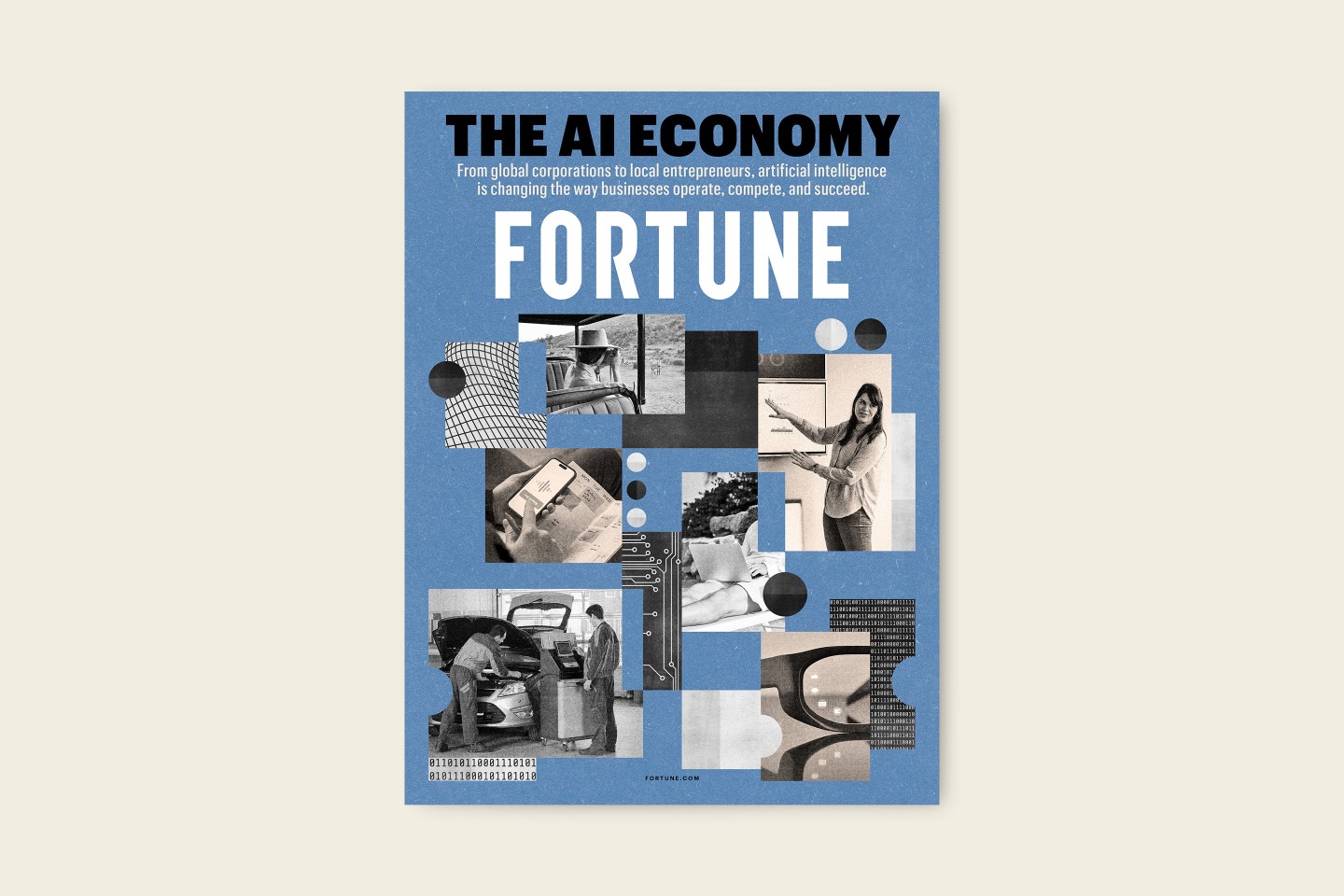
From global corporations to local entrepreneurs, artificial intelligence is changing the way businesses operate, compete, and succeed. Explore all of Fortune AIQ, and read the latest collection of stories below:
–After AI stole his clients, one Big Tech ghostwriter is using AI to get them back
–Outnumbered: At $4 billion ClickUp, a 3:1 agent-to-human ratio is rewiring work itself
–How a mom-and-pop car wash chain went from sticky notes to AI-powered operations that are upleveling every part of the company
–Solo founders are using AI to do the work of entire teams—but going it alone has limits
–How EarthRanger uses AI to help protect endangered species—and boost the wildlife tourism industry
–The smartphone’s days are numbered. Meet the device that could come next
此内容由惯性聚合(RSS阅读器)自动聚合整理,仅供阅读参考。 原文来自 — 版权归原作者所有。