





The fear stalking the consulting industry right now comes in two flavors. The first is that AI can’t be trusted — that the same tools promising to transform client work will confidently produce wrong answers, expose firms to liability, and erode the hard-won trust that is the entire basis of the business. The second fear is almost the opposite: that AI works just fine, and that the companies building it will eventually use their growing power — and consulting firms’ own client data — to cut the middleman out entirely.
Into the midst of this anxiety strode big blue with big news: KPMG dropped a bombshell on Monday, announcing a global alliance with Anthropic to embed Claude, the AI company’s flagship model, directly into Digital Gateway, the client delivery platform where KPMG’s 276,000-person global workforce does its actual work — advising, structuring deals, preparing taxes for some of the world’s largest companies. PwC announced its own Claude deal in the same week, although KPMG’s is unique in its “powered by Claude” capability and full integration into KPMG’s platform.
Every employee, in every one of the 138 countries where KPMG operates, will now have access to Claude. The firm is also becoming Anthropic’s preferred consulting partner for private equity, meaning it will help PE firms deploy AI inside their portfolio companies. It is, by any measure, the most sweeping AI commitment any Big Four firm has made.
Fortune spoke with three of the executives who built the deal to unpack why KPMG is embracing the disruption, even as outside critics are puzzled that AI is getting into the consulting business. Wharton professor Ethan Mollick, the thought leader who coined the “jagged frontier” framing for AI progress, said on Thursday at the Sana AI Summit that it’s “weird” that AI companies are building their own consulting arms to do AI deployment, noting that it contradicts the value proposition of generative AI. “If the models are so good that you think they’re going to destroy all white-collar jobs, shouldn’t they also be able to help you deploy systems?”
Chamath Palihapitiya, the one-time SPAC king and Silicon Valley gadfly, offered a hot take in a widely shared post last week, warning that consulting firms doing business with Anthropic and its ilk was like “letting the fox into the hen house.” To the KPMG executives who struck the deal, it’s a “game-changer,” but in what direction remains an open question.
Rema Serafi, the Vice Chair of Tax at KPMG US, was in Miami when the deal went public — announced live from the stage at the firm’s annual Tax Summit, in front of 900 attendees, half of them clients, with Anthropic executives joining her on stage. She described the moment as “monumental” and said KPMG is excited. “We know that this is a game-changer. We know that this novel approach — this is different, it felt different. People know that we’re not talking about a chatbot on the side.”

But she was also strikingly candid about how far the industry still has to go.
Serafi referred to joint research by KPMG and the University of Texas at Austin, published in the March issue of Harvard Business Review, which analyzed over 1.4 million interactions between KPMG professionals and AI. “Only 5% of those interactions were people getting meaningful outcomes,” she pointed out. The number sounds alarming and aligns exactly with what Fortune reported last summer: 95% of corporate generative AI pilots failed, although several critics have questioned that methodology, including Wharton’s Ethan Mollick.
KPMG defined meaningful adoption in the form of “sophisticated AI users,” or employees who were not defined by technical skill or frequency of use, but by patterns of engagement. They treat AI as a “reasoning partner” to think with, aligning closely with what AI expert Vivienne Ming calls “cyborgs,” or people who lose track of what ideas came from their own human brains or their AI partners. When asked about that phrasing, Serafi preferred the term “helpers” — not replacing professionals, but teams of AI agents working alongside them, handling the repetitive steps in the process so that humans can focus on the work that actually requires judgment.
The 5% sophistication number was framed as a positive by Serafi. “To me, that’s actually encouraging,” she said. “We’ve got these really powerful tools out there, and we have people who are ambitious and they want to learn how to use the tools but we haven’t maximized the utility they get out of AI.”
That gap is precisely what KPMG is trying to close — and it’s why, Serafi argues, the deal with Anthropic is less about technology than it is about talent. As Fortune reported in January, the firm has developed a “Think, Prompt, Check” training methodology for all of its professionals, drilling into them not just how to use AI but how to interrogate what it gives back. KPMG says it’s meant to reinforce disciplined, responsible use of AI, starting with human thinking, using AI to expand perspective and test ideas, and then applying rigorous judgment and ethical review to validate outcomes.
The firm has also built what Serafi calls TaxSIM, a program developed with a company called Centaurian that uses AI-generated client scenarios to give junior professionals the equivalent of four years of client interaction in a fraction of the time. “What would have taken a professional maybe four years to get to the next level,” she said, “we’ve simulated through AI.” Serafi noted that KPMG will offer the same simulations to clients. “They’re really excited about it.” When asked what this means for junior workers, KPMG said its “commitment to people at the center of our business strategy remains unchanged” and it will continue to hire across the business to meet client demands.
The reason KPMG is betting on this — and the reason Anthropic chose KPMG over other Big Four firms — is partly philosophical. Steve Corfield, Anthropic’s head of partnerships, told Fortune that the firm spent considerable time mapping exactly where Claude’s capabilities were the strongest fit before settling on KPMG, along with its sterling reputation. “There are a number of big partners in the world that we need to be affiliated to and KPMG is one of those partners.” Also, he noted that KPMG is a leader, especially in tax, one of the most deliberate and highly regulated professional services domains — precisely the kind of high-stakes, traceable environment where Claude’s long-context reasoning and auditable outputs offer a genuine advantage.
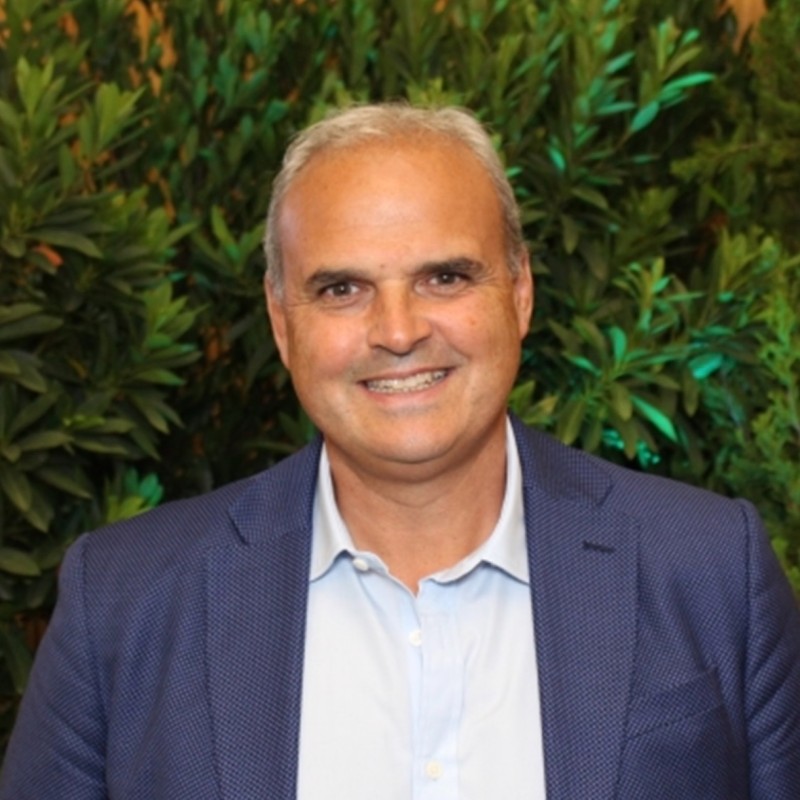
Serafi described the alignment of values as central to the partnership. “Their entire mission is to build their capabilities in a trusted way that creates opportunities for humans and doesn’t take those opportunities away,” she said. “That mission is very critical to their core values. And that really resonates with us.”
Corfield broke the concept of enterprise trust into three distinct layers, each a separate question a potential partner must answer before committing. The first is whether Anthropic actually means what it says about safety — not as a marketing posture but as a governing principle that holds even under competitive pressure. “A lot of people say they’re mission-led,” he said. “What does that mean in practice when you’re really pressed on it?” He argued that Anthropic has demonstrated the answer by taking public positions on safety it didn’t have to take, at moments when doing so had a real cost.
The second layer is continuity: if KPMG is embedding Claude into Digital Gateway, they are making a long-duration bet that Anthropic will still be building the world’s best model when the next contract cycle comes around. “Imagine what’s gonna happen with the next iteration,” Corfield said. “You’re making those bets on a model provider.” The third layer is the most granular — whether Claude is actually good at the specific tasks the partner needs it to do. For KPMG, that meant tax: long-context reasoning across complex documents, traceable and auditable outputs, and an improving agentic capability that can execute multi-step workflows without losing the thread. Each layer has to hold independently. It’s not as simple as saying: “hey, trust us.”
For its part, KPMG told Fortune that its client data will not be used to train Claude, and it will sit within KPMG’s “secure, proprietary environment.”
Carole Streicher, who leads advisory for KPMG’s private equity practice, was direct about the anxiety that venture capitalist Chamath Palihapitiya warned about, with the fox entering the hen house. The critique is that the AI labs are openly funding competing consulting ventures while using firms’ own engagement data to train their systems (an argument that media companies, with their own experiments, know well).
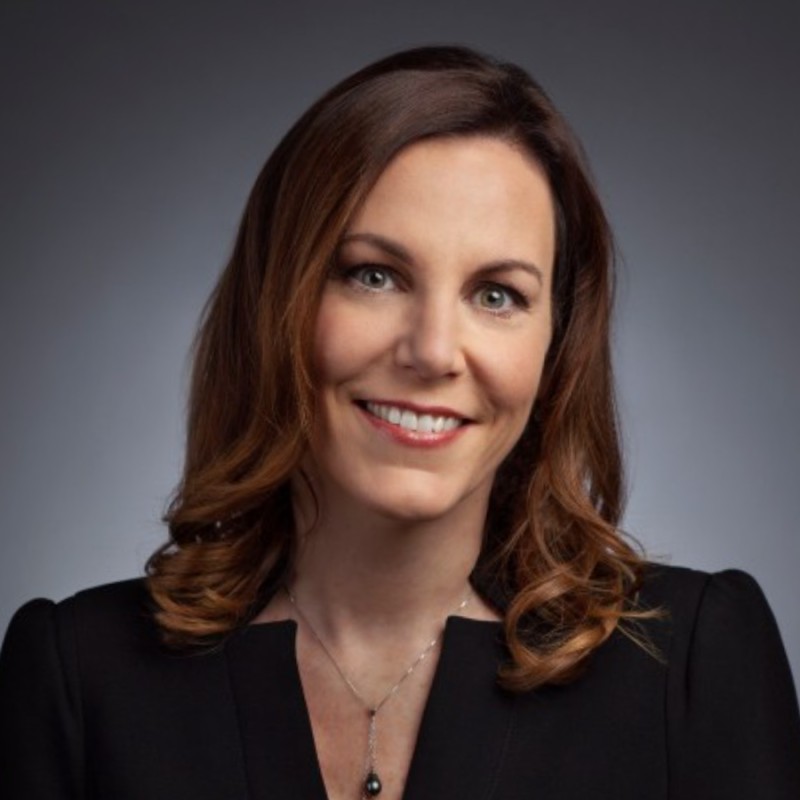
Streicher insisted this line of thinking is a mistake. “You can’t think of them as the competitor,” she said, referring to hyperscalers. “There are strengths that they absolutely have that are different than our strengths.” Fittingly for a private equity advisor, she invoked an M&A analogy: just as activist investors eventually dismantled the conglomerates of an earlier era by forcing companies back to their core strengths, she argued the current moment rewards specialization over trying to do everything yourself. “When we can bring these teams together and work in these ecosystems together, we bring the best of both worlds.”
Corfield, a tech veteran for the last 25 years and counting, has been at Anthropic just over six months, running global business development and the alliances and channels business, and echoed this framing from his side of the table — while acknowledging that the competitive anxiety is real. He said some displacement is “likely inevitable, but I don’t think they’re necessarily [coming] as fast as people necessarily think.”
Corfield has a longer lens on that question than most. He was at Sun Microsystems in 1999, when the company’s famous slogan — “the network is the computer” — was widely dismissed. “Guess what? The network was 100% the computer,” he said, with a trace of vindication, noting his old employer was “ahead of its time.” He’s careful not to over-map the parallel — “I think this is slightly different,” he said — but the underlying conviction is the same: the people who think the transformation is overstated are probably making the same mistake the skeptics made then.
What distinguishes the KPMG deal from a standard partnership announcement, in Corfield’s view, is precisely that it is not one. Most alliance announcements describe co-selling arrangements and joint go-to-market motions. This one has KPMG building Claude directly into Digital Gateway — the actual platform its professionals use every day to deliver client work. “This isn’t something that’s just like a proof of concept,” Corfield said. “This is something that is going to be hardcore to [KPMG’s] tax business.” He described it as part of Anthropic’s “pillar three” strategy: not just helping partners become more productive internally, but embedding Claude into the IP-based technologies partners use to serve their own clients. “That’s the differentiator with this announcement,” he said.
Both Serafi and Streicher confirmed that the KPMG-Anthropic deal is not exclusive—the firm sees this as part of an AI ecosystem that includes Microsoft’s Copilot and Google’s Gemini. “This is an and, not an instead of,” she said — language that Serafi echoed almost verbatim in a separate interview. Both executives were unmistakably coordinated on the additive nature of this deal, in KPMG’s view. KPMG told Fortune that its “long-standing alliances with Microsoft, Google and other leading technology providers continue,” and this deal builds on a network of strategic alliances, emerging technology partners, industry specialists and proprietary IP.
Streicher was also clear that the private equity angle, which received less attention in Monday’s announcement, is in some ways the biggest bet. KPMG’s new KPMG Blaze offering will embed Claude Code inside PE portfolio companies to help them modernize IT systems, for instance, to get these IT systems to talk to each other. “Within private equity specifically,” she said, “Anthropic saw us as a really great market leader in this space and saw that what we have from a market perspective — the market share, the way we’re serving private equity — brought together with their technology created an opportunity to really focus in on this space.”
Streicher declined to comment on how the private equity component of this partnership will interact with Anthropic’s eye-catching $1.5 billion move into the private equity space earlier in the month. Corfield said that venture is specifically targeted at mid-market portfolio companies, and it came about as Anthropic was “working with our [partner] PE companies, looking at a lot of their portfolio companies within that mid-market.” He said he did not think that many of Anthropic’s partners, like KPMG, were “overly concerned” about it. “There’s so much pull in the market right now that there’s no way anybody can’t play — or nobody’s losing out.”
There is a version of this story in which KPMG has made a catastrophic mistake. Capgemini Chief Strategy Officer Fernando Alvarez, speaking to Fortune‘s Jeremy Kahn in March, put the structural reality plainly: OpenAI has roughly 70 “forward-deployed engineers” capable of going on-site with enterprise clients; Anthropic has a similar number. The consulting firms need the AI labs, but the AI labs only need the consulting firms for now. The power balance of that relationship is very much unresolved.
Both Serafi and Streicher said that although the fast pace of innovation makes the timeline five years from now incredibly opaque, they are confident that KPMG and Anthropic will still be thriving as partners.
Corfield, for his part, offered a version of the same confidence — and pointed to what Anthropic sees as its own long-term hedge. The company has launched and is still building what it calls the Claude Partner Network, a structured global ecosystem with tiered certifications, a skills registry and an enablement platform. The design principle is that the certification belongs to the individual, not the company — a global system of record that lets Anthropic track who is trained, at what level, and on what. Anthropic needs to make sure that partners are certified, enabled and skilled, Corfield said, and Anthropic will strive to be there for additional support and usage.
Both executives described to Fortune that they see domain expertise as a durable moat. Frontier AI labs don’t know how to optimize a pharmaceutical manufacturing plant, how to structure a tax position for a multinational operating in 138 jurisdictions, or how to navigate the judgment calls that define the difference between good legal advice and liability, while KPMG does. If the promise of AI is to unlock more of that expertise — to give junior professionals thousands of simulated client reps before they ever sit across a table from a real CFO, to let a tax partner build a new AI agent in minutes instead of weeks — then the bet looks less like capitulation than like leverage.
But the deeper argument KPMG is making is about what happens to the humans inside these firms — and it’s one that runs counter to much of the prevailing anxiety about AI and white-collar work. Within a year or two, Serafi predicted, client-delivery professionals at KPMG — the tax partners, the advisory leads, the deal structurers — will be building their own AI tools directly on top of Digital Gateway, without routing requests through a separate technology team. “We’re going to be in a world where everybody knows how to use AI,” she said. “That’s going to be table stakes. But there are going to be people who, depending on how much they embrace our capabilities, are going to be provided more access to those capabilities so that they can build on the platform.”
That distinction matters more than it might sound. Researchers at Wharton have coined the term “cognitive surrender” to describe what happens when workers simply defer to AI outputs without applying independent judgment — an extreme form of automation bias that, left unchecked, hollows out the very expertise that makes a consulting firm valuable in the first place. KPMG’s “Think, Prompt, Check” framework is, at its core, an institutional bet against cognitive surrender: a conviction that the firms that win won’t be the ones that deploy the most AI, but the ones that train their people to use it most critically.
Alvarez, at Capgemini, framed the same insight from a client perspective. The conversation enterprises want to have, he told Fortune, is not about how many agents you can spin up or how you orchestrate them. “The conversation is, do you have the domain expertise to understand my problem?” The implication is that the consulting industry’s survival isn’t threatened by AI per se — it’s threatened by consulting firms that mistake access to AI for expertise itself.
“Knowledge continues to be gold,” Serafi said. “The value our clients get is not from technology. The value they get is from our knowledge, from our expertise, from our ability to sit around the table and have a conversation with them about how to help their business.”
The question is whether that argument is a confident strategy or a very expensive hope.
此内容由惯性聚合(RSS阅读器)自动聚合整理,仅供阅读参考。 原文来自 — 版权归原作者所有。