





A suspenseful Election Day turned into election week last year, as U.S. voters waited for a conclusive result in the presidential race for what turned out to be four days.
Hedge funds and investment firms were all on the lookout: They were waiting to make financial bets based on the results. Apparently, so was Securities and Exchange Commissioner Caroline A. Crenshaw, one of the top officials overseeing regulation for U.S. businesses and financial companies.
Crenshaw, a Democrat who was appointed by then-president Donald Trump on August 17, 2020, as an SEC commissioner, very likely had a pile of cash at the beginning of November, federal documents indicate. The month prior, she had sold up to $1.1 million worth of shares in individual stock positions, according to an ethics report she filed at the end of October that the U.S. Office of Government Ethics provided Fortune in response to a Freedom of Information Act (FOIA) request.
She waited until just after the election was decided before she jumped back in the market. On Nov. 9, the first trading day after the Associated Press declared Biden the winner, Crenshaw invested somewhere between $395,008 and $950,000 into eight exchange-traded funds that track stock and bond indexes.
It’s unclear exactly why Crenshaw invested when she did. The timing may have been purely coincidental, or it could point to a bet on the market’s reaction to a Biden presidency. An SEC spokesman declined to comment or make Crenshaw available for an interview.
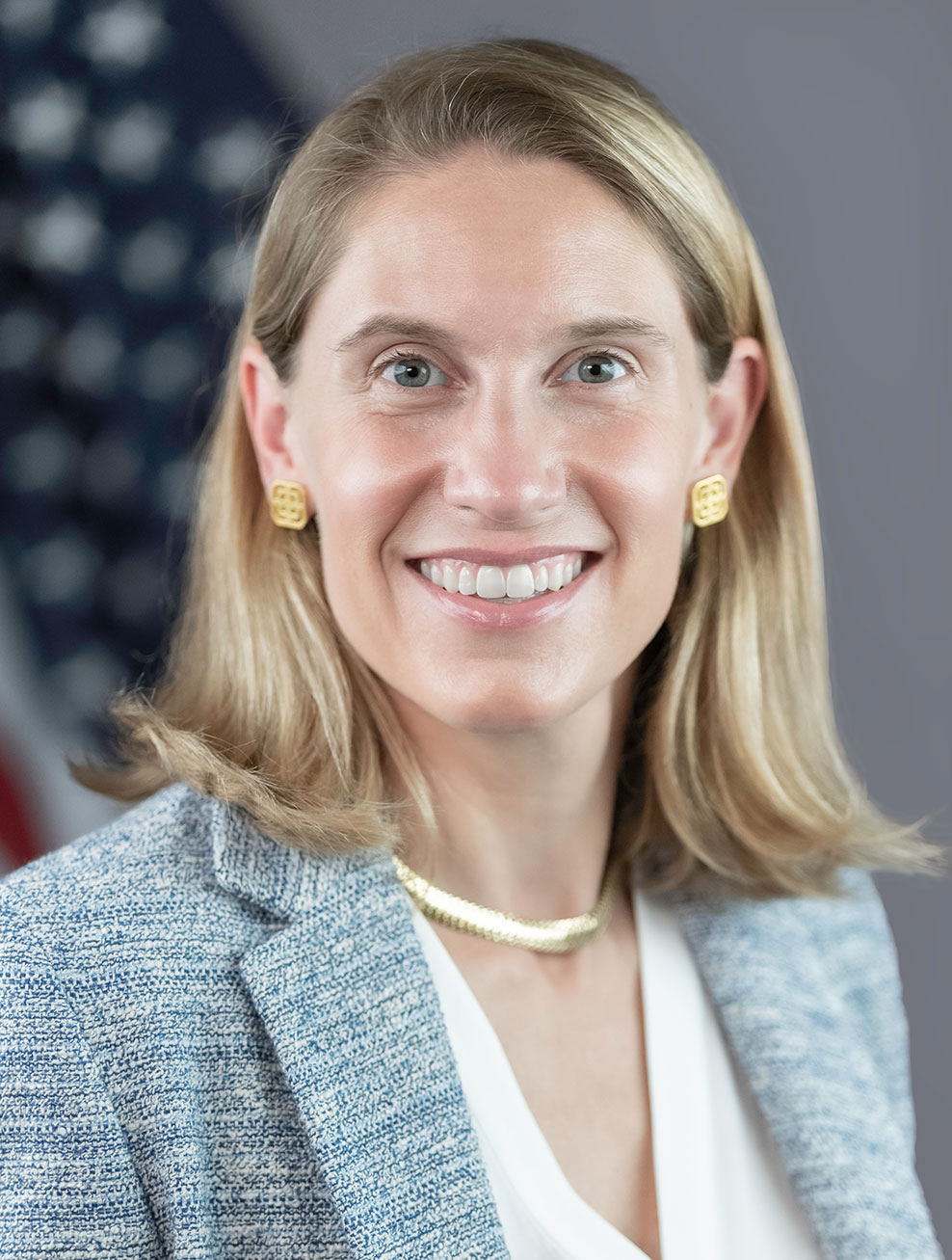
Courtesy of the Securities and Exchange Commission
Either way, the investments seem to have paid off nicely. The Dow Jones industrial average surged Nov. 9 to its highest levels since February 2020, following both the news of Biden’s victory and the Pfizer COVID-19 vaccine’s progress. And the Dow has continued to surge for months after, in the stock market’s best performance since at least the 1950s. Major indexes have been hitting record highs throughout 2021.
Crenshaw’s disclosures don’t explain her thinking, but they do offer an inside look at how a high-profile finance regulator was investing—particularly ahead of a critical period of transition in the U.S.
Timing aside, Crenshaw appears to have made a pivot in strategy, one likely dictated by her new high-ranking position. She sold off shares in more than a dozen companies on Oct. 6, approximately two months after she was sworn in as one of four SEC commissioners serving under then-Chairman Jay Clayton. Crenshaw had held as much as $250,000 in Eli Lilly stock, in addition to positions in Coca-Cola, Disney, and Apple, among other companies, according to the October ethics report.
It’s not unusual for public officials to sell off positions in individual stocks in favor of generalizing their portfolios. That can help remove even the appearance of a conflict of interest in case the agency they work for makes key decisions affecting any one company they have a vested interest in.
“Oftentimes in a position like that, you want to have a portfolio that is as unremarkable as possible, especially as that information will find its way into the public domain in one way or another,” says Ben Johnson, director of global ETF research at fund ratings and research company Morningstar.
Crenshaw’s ETF purchases in November were incredibly generic, according to Johnson, who noted that her investments “could be any investor’s portfolio.”
Crenshaw purchased shares of eight ETFs, all managed by Vanguard or iShares, on Nov. 9: Vanguard Small-Cap Growth Index Fund ETF Class Shares (VBK), iShares Russell Mid-Cap Growth ETF (IWP), iShares JPMorgan USD Emerging Markets Bond ETF (EMB), Vanguard Value Index Fund ETF Shares (VTV), Vanguard Mid-Cap Value Index Fund ETF Class Shares (VOE), Vanguard Growth Index Fund ETF Class Shares (VUG), Vanguard Developed Markets Index Fund ETF Shares (VEA), and Vanguard Dividend Appreciation Index Fund ETF Class Shares (VIG). On Nov. 18, she added SPDR S&P Dividend ETF (SDY) and Vanguard 500 Index Fund ETF Shares (VOO) into the mix as well. All of these funds are diversified and low-cost, as they each spread money across dozens of stocks or bonds and track an index.
Crenshaw also may have not made the postelection investments herself, as some public officials outsource their portfolio management, according to Greg O’Gara, a wealth management industry research consultant. That “helps remove some of the stigma of political figures having insider information and making their own trades,” he says.
And to be clear, Crenshaw didn’t violate any rules.
“Just because you’re serving in public office doesn’t mean that you don’t have a personal investment portfolio,” O’Gara says.
SEC officials and employees may invest as they choose as long as they follow the agency’s policies, which include preclearing investments with the agency and reporting stock or bond transactions and mutual fund and ETF transactions over a certain threshold. Securities transactions must be reported following execution to the SEC’s Ethics Office.
It may be unclear why Crenshaw waited to invest until after Election Day—but if she was feeling nervous about the outcome, she wasn’t alone.
此内容由惯性聚合(RSS阅读器)自动聚合整理,仅供阅读参考。 原文来自 — 版权归原作者所有。