
惯性聚合 高效追踪和阅读你感兴趣的博客、新闻、科技资讯
阅读原文 在惯性聚合中打开

推荐订阅源

GbyAI
GbyAI
博客园_首页
OSCHINA 社区最新新闻
OSCHINA 社区最新新闻
阮一峰的网络日志
阮一峰的网络日志
酷 壳 – CoolShell
酷 壳 – CoolShell
博客园 - 司徒正美
V
V2EX
Cloudbric
Cloudbric
Hugging Face - Blog
Hugging Face - Blog
腾讯CDC
量子位
博客园 - 三生石上(FineUI控件)
博客园 - 叶小钗
K
Kaspersky official blog
博客园 - 【当耐特】
T
Tenable Blog
L
Lohrmann on Cybersecurity
The Cloudflare Blog
S
Schneier on Security
A
Arctic Wolf
Latest news
Latest news
C
Cyber Attacks, Cyber Crime and Cyber Security
罗磊的独立博客
T
The Exploit Database - CXSecurity.com
Cisco Talos Blog
Cisco Talos Blog
小众软件
小众软件
P
Privacy & Cybersecurity Law Blog
WordPress大学
WordPress大学
Simon Willison's Weblog
雷峰网
雷峰网
NISL@THU
NISL@THU
人人都是产品经理
人人都是产品经理
月光博客
月光博客
J
Java Code Geeks
V
Visual Studio Blog
S
Security Affairs
博客园 - Franky
T
Tailwind CSS Blog
Apple Machine Learning Research
H
Heimdal Security Blog
有赞技术团队
有赞技术团队
V2EX - 技术
V2EX - 技术
AWS News Blog
AWS News Blog
G
GRAHAM CLULEY
T
Troy Hunt's Blog
SecWiki News
SecWiki News
Spread Privacy
Spread Privacy
宝玉的分享
宝玉的分享
www.infosecurity-magazine.com
博客园 - 聂微东

Fortune | FORTUNE

One man can kill Bill Ackman’s $64 billion bid for Universal Music Group—and no one knows what he’ll do | Fortune Poppi’s cofounder pitched her startup on Shark Tank while 9 months pregnant and landed a $400,000 deal—now it's worth $2 billion | Fortune Teen boys are choosing AI girlfriends over real ones for 'maximum control, zero rejection'—experts say it could make them unemployable | Fortune A United American merger is by no means impossible given the president 'loves big deals' | Fortune Reed Hastings’s planned exit from $455 billion Netflix ‘had nothing to do with’ the failed deal for Warner Bros., says Ted Sarandos | Fortune Meet Joe McCann: The high-flying crypto trader held in Tanzania after sudden death of his influencer fiancée Ashly Robinson | Fortune Gen Z is carving a different path in the housing market by doing it alone | Fortune U.S. Catholic leaders criticize Trump for ‘disparaging words’ about the pope as Vatican clash risks alienating Catholic voters | Fortune China has ‘nearly erased’ America’s lead in AI—and the flow of tech experts moving to the U.S. is slowing to a trickle, Stanford report says | Fortune Self-made millionaire behind $5 billion Skims Emma Grede says it all began with a cold call to Kris Jenner: Emma Grede—the self-made millionaire behind the $5 billion Skims empire—says it all began with an audacious cold call to Kris Jenner: ‘The difference between me and someone else is, I made it happen’ | Fortune Americans have never been this gloomy about the economy. Wall Street has never cashed in harder | Fortune ‘The college grading system [is] almost meaningless’: People see the Ivy League as an easy A and with flawed admissions standards | Fortune The CEO of $8.5 billion Japanese car giant Nissan plays the drums in a band and hits the tennis courts to destress from the top job | Fortune New York governor's take on a millionaires tax: fancy pied-à-terre second apartments worth over $5 million | Fortune Pope Leo XIV: A ‘handful of tyrants’ are ravaging earth with war and exploitation | Fortune Trump has no plan to cut the $39 trillion national debt, but he does want to cut childcare. His budget director is scrambling to clarify | Fortune China's economy grows 5% in first quarter, surprising economists to the upside | Fortune Everyone was wondering what Trump wanted more: Warsh smoothly seated at the Fed, or for Powell to pay. We have our answer | Fortune Palantir exec: the biggest mistake retailers are making with AI? Trying to do it all with one agent | Fortune American YouTuber who calls himself a 'troll' sentenced to 6 months in Korean prison for literally dancing on wartime graves | Fortune BBC plans to cut up to 2,000 jobs to save 10% of annual budget | Fortune Canva debuts a new suite of agentic tools, as the design app quietly becomes one of the world’s most used AI services | Fortune Moody's CEO: AI has a trust problem – better models won’t fix it | Fortune Top New York surgeon: Americans have better data for choosing restaurants than surgeons. That has to change | Fortune The Iran war’s fertilizer shock is hammering American farmers, and 70% can’t afford what they need for this year’s growing season | Fortune Education experts to Mamdani: Why are you foisting AI on our kids? | Fortune This CEO pirated video games as a teen and became a hacker for the Air Force. Now he’s built a $3 billion cyber firm | Fortune Teacher, blame thyself: Yale report savages Ivy League schools for destroying American trust in higher education | Fortune Fed chair nominee Kevin Warsh is worth more than $100 million and has stakes in SpaceX and Polymarket | Fortune From wool sneakers to GPUs: Allbirds’ desperate AI pivot and 600% stock surge, explained | Fortune The Sam Altman attack is putting two anti-AI groups under scrutiny—but the story is more complicated | Fortune Elizabeth Warren on her proposal to bring back IRS Direct File: ‘For just one day of bombing Iran, we could pay for 20 years’ | Fortune ‘I am certain’: Harvard policy expert warns the true cost of the Iran war to U.S. taxpayers will exceed $1 trillion | Fortune The CEO of a $24 billion Dutch lender has sandwiches once a week with the staff to hear their views and get them on side with cost cuts | Fortune Why insurance giant Travelers' CTO is placing fewer, bigger bets on AI | Fortune Current price of oil as of April 15, 2026 | Fortune The dirty secret behind Big Tech’s AI arms race: Massive hardware investments that are obsolete in 3 years | Fortune Dow’s CEO handoff elevates an insider and seasoned operator | Fortune Anthropic faces user backlash over reported performance issues with its Claude AI chatbot | Fortune Stock futures sink while oil spikes as the U.S. Navy looks to squeeze Iran's economy and break its grip on the Strait of Hormuz | Fortune A major U.S. gasoline production hub is in such a severe drought that its refineries may be hobbled. 'We are actively praying for a hurricane' | Fortune U.K. won’t take part in Trump’s planned blockade of Hormuz strait | Fortune Hungarian voters oust Viktor Orbán, a close ally of Trump and Putin, despite late campaign push from JD Vance | Fortune Blazing hot IPOs, an AI agent craze, and a new word for ‘token’: Here’s what’s happening in the world of Chinese AI | Fortune Iran’s crumbling economy is the regime’s greatest weakness with prices up 40% since the war began while authorities worry about making payroll | Fortune Here’s how a U.S. naval blockade of the Strait of Hormuz could work. ‘This is a big task, and it’s a big gamble’ | Fortune Intuit was an AI pioneer. Why its stock became a SaaSpocalypse casualty | Fortune Artemis III will practice docking Orion with lunar landers in Earth orbit next year while Musk’s Starship and Bezos’ Blue Moon compete for Artemis IV | Fortune Oil tankers U-turn in Hormuz as U.S.-Iran talks break down Saudi Arabia says East-West pipeline restored to full capacity In 2011, Barack Obama said it was time to ‘pivot’ to Asia. But 15 years later, the U.S. is still at war in the Middle East Trump says U.S. Navy to impose Hormuz blockade after Iran ceasefire talks end with no deal. ‘No one who pays an illegal toll will have safe passage’ This TikTok sensation sold her startup for $2 billion. Now Pepsi is letting ‘Poppi be Poppi’ ‘Almost unmanageable’: Raising a child in the U.S. now costs more than $300,000 As Iran peace talks fail, Trump and Joe Rogan watch a hobbled fighter triumph in a brutal cage match Haiti stares down starvation as Iran War drives 200,000 into acute food emergency status ‘I just keep seeing a lot of different aspects of life getting more expensive’: New car prices are up 30% over 6 years America is not ready for its own longevity crisis — and 2026 is the wake-up call | Fortune JD Vance leaves Pakistan after marathon talks with Iran end without a deal as Tehran refuses U.S. demand not to develop nuclear weapons | Fortune Average price of new cars nears $50,000 as automakers focus on big pickups and SUVs while cheaper sedans get phased out | Fortune Navy tests Hormuz blockade as expert says U.S. military prepares for round 2 and could degrade Iran’s hold over the strait to a ‘manageable level’ | Fortune Pakistan sends military force to Saudi Arabia as part of pact | Fortune Three oil supertankers sail through the Strait of Hormuz | Fortune Trump downplays talks for ceasefire deal with Iran, claiming military victory. 'It doesn’t matter. From the standpoint of America, we win' | Fortune Boeing’s moon rocket faces uncertain future under Trump’s NASA | Fortune Appeals court says national security implications of halting White House ballroom construction must be weighed | Fortune Some of cheapest fuel can be found on Native American reservations as tribes are exempt from state gas taxes | Fortune JD Vance begins talks with Iran in Pakistan while Trump claims U.S. has begun 'clearing out' the Strait of Hormuz | Fortune 'This is the last warning.' Iran threatens U.S. warships after they throw down the gauntlet for winner-take-all Strait of Hormuz | Fortune U.S. Navy ships transit Hormuz ahead of mine-clearing mission | Fortune Over a third of Ireland's fuel stations are empty and truck and tractor drivers are protesting nationwide | Fortune Some communities are enduring unprecedented long waits on federal disaster requests, and Democrat-led states say they're being denied | Fortune These niche AI startups are trying to protect the Pentagon’s secrets | Fortune Former Tesla president reveals the ‘single most important thing’ you can do for your career—it’s a habit Elon Musk and Warren Buffett share too | Fortune Ingersoll Rand CEO: here's how employee ownership helped drive more than 8x enterprise value growth | Fortune The petrodollar faces increased risk, but a petroyuan is ‘far-fetched’ as fears of U.S. losing superpower status are overhyped, strategist says | Fortune Palantir CEO says AI ‘will destroy’ humanities jobs, but there will be ‘more than enough jobs’ for people with vocational training | Fortune Warren Buffett says 'accumulating great amounts of money' doesn’t achieve greatness—He still lives in a $31,500 Nebraska home and clipped coupons | Fortune Starbucks' game plan to roll out AI chatbots at cafes could serve as a 'litmus test' for the industry, analyst says | Fortune Data centers and gas demand make boring pipelines great again | Fortune The 'Tuscan Mom' aesthetic is taking over TikTok as Gen Z glamorize McMansions and reject millennial gray | Fortune Man's best friend may soon live a little longer thanks to a new pill promising to extend your pup's lifespan | Fortune Danantara CIO: Indonesia can anchor the AI and energy economy—if governance keeps pace | Fortune OpenAI’s TBPN deal shows how talent, media, and influence are collapsing into one | Fortune AI promises to free workers from grunt work, but psychologists say those mindless tasks are exactly what our brains need to recover | Fortune The 'affordability economy' has created a housing market nobody predicted: Prices collapsing in the Sun Belt, soaring in the Rust Belt | Fortune 'It’s 13 minutes of things that have to go right': Artemis II splashes down despite faulty heat shield | Fortune Fed seeks details on U.S. banks' exposure to private credit firms | Fortune The Navy confirmed an ‘abundant amount’ of Uncrustables when the Artemis II crew lands. Smucker’s just offered them a lifetime supply | Fortune Meet ‘trendslop,’ the new, AI-fueled scourge of workplace consultants everywhere | Fortune Amazon is still paying Jeff Bezos an $80,000 yearly salary—but $1.6 million for travel and security | Fortune Trump-backed World Liberty Financial crypto tokens reach all-time low on reports of insider loans | Fortune Iran is demanding tankers in the Strait of Hormuz pay tolls in crypto: What we know so far | Fortune First they went after medtech, then Kash Patel. Iranian hackers’ next target is likely ‘low-hanging fruit’ in water, energy, and tourism, experts say | Fortune The AI that found 27-year-old vulnerabilities no human ever caught before just forced an emergency meeting with every major Wall Street CEO | Fortune Inflation goes up by a whopping monthly rate of nearly 1%—and it’s hitting you at the grocery store and gas station | Fortune H&R Block is betting it can be more than a tax company | Fortune The real engine of innovation is trust | Fortune Huntington is powering digital growth—by opening a branch almost every 2 weeks, says CFO | Fortune How the 173-year-old glass-maker behind Edison's light bulb and iPhone screens became a Silicon Valley darling | Fortune
Over 40,000 American bridges have structurally deficient ratings. Why aren't we using quantum sensors on them? | Fortune
Alex Krasnok · 2026-06-21 · via Fortune | FORTUNE

Every bridge has parts that drivers never see: steel buried in concrete, welds tucked under girders, and soil packed around foundations below the waterline. A bridge can look fine from the road while rust spreads around steel hidden inside concrete. A small fatigue crack can lengthen. A flood can wash soil away from a pier. By the time cracks, loose concrete or lane closures appear, the cheapest repair window may already have closed.

When it comes to these damaged bridges, this problem is national. The United States has more than 624,000 highway bridges. About 220,000 need major repair or replacement, and 41,677 are rated poor, also called structurally deficient. While “poor” does not mean unsafe, it does mean at least one key bridge element received a poor rating, indicating deterioration or cracking that will require significant repair.

As a researcher who studies photonics and quantum sensing, I work on devices that measure faint or hidden signals. My lab applies physics to develop devices, including quantum sensors. Advanced sensors of this type might one day be able to help engineers pinpoint where to look to determine whether hidden damage in infrastructure is worsening. However, they cannot replace human inspectors.

Inspections keep bridges safe, but are snapshots

Federal bridge inspections – rooted in National Bridge Inspection Standards mandated by Congress in 1968 – exist because past failures showed that small defects can threaten large structures.

Under current federal rules, many bridges must be inspected in, at most, 24-month intervals. Higher-risk bridges, such as those carrying heavy interstate traffic, those with aging structures or known defects, or those built over saltwater, may require shorter intervals. Lower-risk bridges with lighter traffic and sound materials may qualify for longer intervals.

Those inspections remain essential, but they are snapshots. A bridge may change during the months between visits. Corrosion can spread below a deck that looks sound. A small crack can sit inside a weld. A river can displace soil from a foundation while the roadway above looks unchanged. Sensors extend inspections by tracking these change that form between scheduled checks.

Hidden damage can grow quietly

The three common hidden threats to bridges are corrosion, fatigue and scour. Corrosion begins when water, oxygen and salts reach steel. A concrete layer usually protects steel, but cracks, salt spray and chloride ions from seawater or deicing salts can break that protection. The rust then expands, much like ice widening a crack in a sidewalk. It pushes the concrete outward and can cause the material to come loose or the layers to separate.

Fatigue damage is the bridge version of bending a paper clip back and forth. Just as a paper clip eventually snaps after repeated bending, a bridge’s steel components weaken and break down under continuous cycles of stress. Thousands of heavy vehicles can make tiny cracks grow near welds, bolted connections or older steel details.

Scour damage is different: Moving water removes soil around the bridge’s foundations. The bridge above can look stable, while the support below loses the ground it needs.

Waiting costs more

The earlier engineers can identify damage to aging bridges, the more time and options they have to fix them. The average U.S. bridge is about 47 years old. Many bridges are near or past the 50-year life they were designed for, and about 45% have exceeded their planned design lives.

Typically, it’s less costly to preserve bridges in fair condition than those already in poor condition. Making all the identified necessary U.S. bridge repairs would cost about US$467 billion.

Past failures show why small details matter. As one example, the 2007 I-35W bridge collapse in Minneapolis was partially due to undersized gusset plates – steel plates that connect the intersecting beams in a bridge’s structural framework – along with added weight and construction loads. The collapse killed 13 people and injured 145. https://www.youtube.com/embed/pu-Ra95jl5k?wmode=transparent&start=0 Monitoring bridges can pinpoint structural damage that could eventually lead to devastating collapses.

Sensors alone are not a cure for such failures, but better measurements can help engineers notice when important details are changing.

Sensors help engineers look, listen and scan

Sensor systems are easiest to categorize based on what they do.

Some sensors see: Drones can photograph cracks and loose concrete, infrared cameras can show heat patterns linked to damaged deck zones, and LiDAR, short for light detection and ranging, can build three-dimensional maps.

Some sensors listen: Ultrasonic testing and impact-echo probes send sound waves into concrete or steel, acoustic emission sensors listen for active cracking, and accelerometers track how a bridge vibrates.

Some sensors scan below the surface. Specialized radio tools try to locate hidden steel, trapped moisture, empty pockets or crumbling layers inside the concrete. Meanwhile, magnetic and electrical instruments attempt to guess whether that buried steel is rusting away.

The value of sensors often comes from combining methods. One bridge deck inspection robot uses subsurface radar, electrical tools that measure moisture, and a standard camera to collect data. It then builds simple visual maps showing the exact health of the bridge deck. Fiber-optic sensing could be another route. Researchers have shown that existing telecommunication cables can record bridge vibration signatures.

Sensors are evidence, not verdicts

While instruments provide crucial clues about a structure’s condition, they do not automatically dictate the solution. Engineers still need to examine the bridge design, inspection history, traffic loads, weather, material condition and measurement uncertainty before deciding whether to repair, restrict traffic or close a bridge.

Field data is messy. Wet concrete can blur radar results. Traffic, wind and temperature can mask vibration changes.

The best systems answer narrow questions: Where is the concrete deck beginning to split into horizontal layers underneath the surface? Is this crack actively widening? Is a suspension cable losing its structural strength because its inner steel wires are rusting away? Is the fast-moving water washing away the critical soil supporting the bridge’s underwater foundations after a storm?

Quantum sensors are a frontier

Quantum sensors may help when the signs of structural distress are weak, buried or noisy. These devices use quantum systems, such as atoms or electron spins, as highly sensitive probes.

By measuring how these atomic properties shift in response to extremely subtle changes in gravity, motion or magnetic fields, the sensors can detect flaws that traditional instruments miss.

For bridges, the nearest-term opportunity is likely magnetic inspection. My team and I co-authored a review, which has not yet been peer-reviewed, on quantum magnetometers for infrastructure inspection. These sensors identify signals from induction responses, magnetic flux leakage, stress, corrosion and operational currents.

In plain terms, these sensors may help map weak magnetic fields near steel, cables or electrical conductors. Changes or disruptions in these local magnetic fields can reveal hidden rust, snapped wire strands inside a thick suspension cable, or abnormal stress points in the steel before a crack even forms.
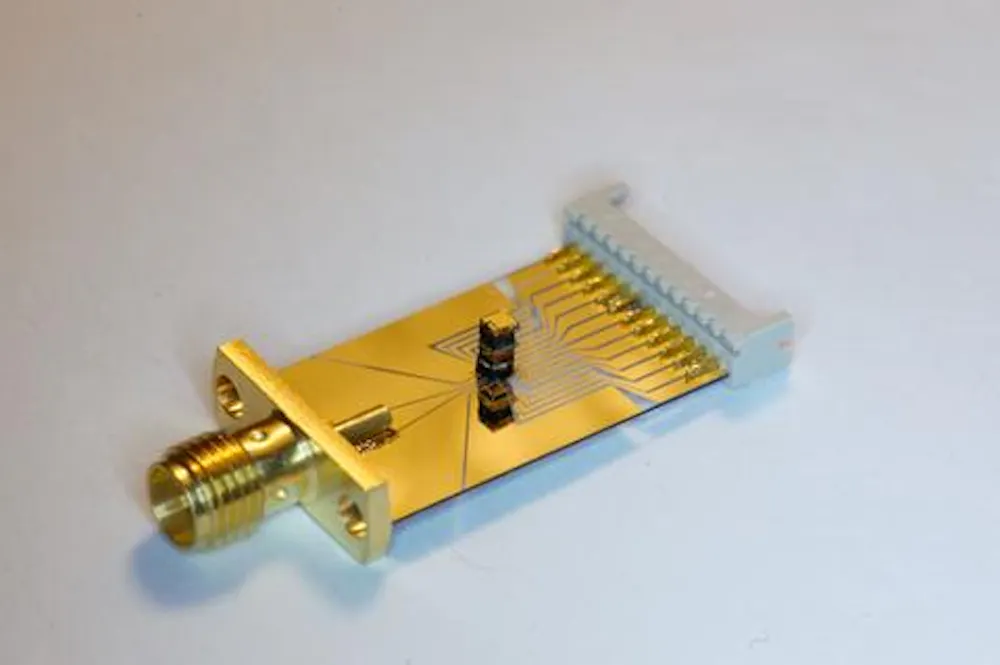
a small piece of electronics
Atomic magnetometers are a type of sensor that use atoms in a vapor cell to measure faint magnetic fields. They can operate at room temperature. J. Kitching/NIST

The hard part is not building a record-setting sensor in a quiet lab, but rather making a device that works on a noisy bridge, near traffic, weather, steel and electrical interference. Quantum sensors will matter only where they beat cheaper classical tools in real inspection conditions.

The goal is not to make every bridge smart. The goal is to make damage harder to hide. Sensors give engineers more ways to see inside concrete, steel, soil and water, turning some surprise closures into repairs planned months earlier.

The public may never notice the best use of bridge sensors. That is the point: The safest infrastructure technology often works before a problem becomes visible from the road.

Alex Krasnok, Assistant Professor of Electrical & Computer Engineering, Florida International University

This article is republished from The Conversation under a Creative Commons license. Read the original article.

The Conversation