
惯性聚合 高效追踪和阅读你感兴趣的博客、新闻、科技资讯
阅读原文 在惯性聚合中打开

推荐订阅源

奇客Solidot–传递最新科技情报
奇客Solidot–传递最新科技情报
C
CXSECURITY Database RSS Feed - CXSecurity.com
D
Docker
有赞技术团队
有赞技术团队
WordPress大学
WordPress大学
Jina AI
Jina AI
小众软件
小众软件
Last Week in AI
Last Week in AI
Hugging Face - Blog
Hugging Face - Blog
博客园 - 三生石上(FineUI控件)
宝玉的分享
宝玉的分享
美团技术团队
爱范儿
爱范儿
V
V2EX
大猫的无限游戏
大猫的无限游戏
人人都是产品经理
人人都是产品经理
J
Java Code Geeks
博客园 - 司徒正美
博客园 - 叶小钗
S
SegmentFault 最新的问题
量子位
S
Secure Thoughts
月光博客
月光博客
让小产品的独立变现更简单 - ezindie.com
O
OpenAI News
L
LINUX DO - 最新话题
罗磊的独立博客
SecWiki News
SecWiki News
雷峰网
雷峰网
Recent Announcements
V2EX - 技术
V2EX - 技术
T
Tailwind CSS Blog
H
Hacker News: Front Page
Exploit-DB.com RSS Feed
云风的 BLOG
云风的 BLOG
Schneier on Security
T
The Blog of Author Tim Ferriss
IT之家
IT之家
博客园 - 聂微东
腾讯CDC
N
News | PayPal Newsroom
P
Proofpoint News Feed
CTFtime.org: upcoming CTF events
The GitHub Blog
The GitHub Blog
Hacker News: Ask HN
Hacker News: Ask HN
aimingoo的专栏
aimingoo的专栏
Webroot Blog
Webroot Blog
Application and Cybersecurity Blog
Google DeepMind News
K
Kaspersky official blog

Fortune | FORTUNE

One man can kill Bill Ackman’s $64 billion bid for Universal Music Group—and no one knows what he’ll do | Fortune Poppi’s cofounder pitched her startup on Shark Tank while 9 months pregnant and landed a $400,000 deal—now it's worth $2 billion | Fortune Teen boys are choosing AI girlfriends over real ones for 'maximum control, zero rejection'—experts say it could make them unemployable | Fortune A United American merger is by no means impossible given the president 'loves big deals' | Fortune Reed Hastings’s planned exit from $455 billion Netflix ‘had nothing to do with’ the failed deal for Warner Bros., says Ted Sarandos | Fortune Meet Joe McCann: The high-flying crypto trader held in Tanzania after sudden death of his influencer fiancée Ashly Robinson | Fortune Gen Z is carving a different path in the housing market by doing it alone | Fortune U.S. Catholic leaders criticize Trump for ‘disparaging words’ about the pope as Vatican clash risks alienating Catholic voters | Fortune China has ‘nearly erased’ America’s lead in AI—and the flow of tech experts moving to the U.S. is slowing to a trickle, Stanford report says | Fortune Self-made millionaire behind $5 billion Skims Emma Grede says it all began with a cold call to Kris Jenner: Emma Grede—the self-made millionaire behind the $5 billion Skims empire—says it all began with an audacious cold call to Kris Jenner: ‘The difference between me and someone else is, I made it happen’ | Fortune Americans have never been this gloomy about the economy. Wall Street has never cashed in harder | Fortune ‘The college grading system [is] almost meaningless’: People see the Ivy League as an easy A and with flawed admissions standards | Fortune The CEO of $8.5 billion Japanese car giant Nissan plays the drums in a band and hits the tennis courts to destress from the top job | Fortune New York governor's take on a millionaires tax: fancy pied-à-terre second apartments worth over $5 million | Fortune Pope Leo XIV: A ‘handful of tyrants’ are ravaging earth with war and exploitation | Fortune Trump has no plan to cut the $39 trillion national debt, but he does want to cut childcare. His budget director is scrambling to clarify | Fortune China's economy grows 5% in first quarter, surprising economists to the upside | Fortune Everyone was wondering what Trump wanted more: Warsh smoothly seated at the Fed, or for Powell to pay. We have our answer | Fortune Palantir exec: the biggest mistake retailers are making with AI? Trying to do it all with one agent | Fortune American YouTuber who calls himself a 'troll' sentenced to 6 months in Korean prison for literally dancing on wartime graves | Fortune BBC plans to cut up to 2,000 jobs to save 10% of annual budget | Fortune Canva debuts a new suite of agentic tools, as the design app quietly becomes one of the world’s most used AI services | Fortune Moody's CEO: AI has a trust problem – better models won’t fix it | Fortune Top New York surgeon: Americans have better data for choosing restaurants than surgeons. That has to change | Fortune The Iran war’s fertilizer shock is hammering American farmers, and 70% can’t afford what they need for this year’s growing season | Fortune Education experts to Mamdani: Why are you foisting AI on our kids? | Fortune This CEO pirated video games as a teen and became a hacker for the Air Force. Now he’s built a $3 billion cyber firm | Fortune Teacher, blame thyself: Yale report savages Ivy League schools for destroying American trust in higher education | Fortune Fed chair nominee Kevin Warsh is worth more than $100 million and has stakes in SpaceX and Polymarket | Fortune From wool sneakers to GPUs: Allbirds’ desperate AI pivot and 600% stock surge, explained | Fortune The Sam Altman attack is putting two anti-AI groups under scrutiny—but the story is more complicated | Fortune Elizabeth Warren on her proposal to bring back IRS Direct File: ‘For just one day of bombing Iran, we could pay for 20 years’ | Fortune ‘I am certain’: Harvard policy expert warns the true cost of the Iran war to U.S. taxpayers will exceed $1 trillion | Fortune The CEO of a $24 billion Dutch lender has sandwiches once a week with the staff to hear their views and get them on side with cost cuts | Fortune Why insurance giant Travelers' CTO is placing fewer, bigger bets on AI | Fortune Current price of oil as of April 15, 2026 | Fortune The dirty secret behind Big Tech’s AI arms race: Massive hardware investments that are obsolete in 3 years | Fortune Dow’s CEO handoff elevates an insider and seasoned operator | Fortune Anthropic faces user backlash over reported performance issues with its Claude AI chatbot | Fortune Stock futures sink while oil spikes as the U.S. Navy looks to squeeze Iran's economy and break its grip on the Strait of Hormuz | Fortune A major U.S. gasoline production hub is in such a severe drought that its refineries may be hobbled. 'We are actively praying for a hurricane' | Fortune U.K. won’t take part in Trump’s planned blockade of Hormuz strait | Fortune Hungarian voters oust Viktor Orbán, a close ally of Trump and Putin, despite late campaign push from JD Vance | Fortune Blazing hot IPOs, an AI agent craze, and a new word for ‘token’: Here’s what’s happening in the world of Chinese AI | Fortune Iran’s crumbling economy is the regime’s greatest weakness with prices up 40% since the war began while authorities worry about making payroll | Fortune Here’s how a U.S. naval blockade of the Strait of Hormuz could work. ‘This is a big task, and it’s a big gamble’ | Fortune Intuit was an AI pioneer. Why its stock became a SaaSpocalypse casualty | Fortune Artemis III will practice docking Orion with lunar landers in Earth orbit next year while Musk’s Starship and Bezos’ Blue Moon compete for Artemis IV | Fortune Oil tankers U-turn in Hormuz as U.S.-Iran talks break down Saudi Arabia says East-West pipeline restored to full capacity In 2011, Barack Obama said it was time to ‘pivot’ to Asia. But 15 years later, the U.S. is still at war in the Middle East Trump says U.S. Navy to impose Hormuz blockade after Iran ceasefire talks end with no deal. ‘No one who pays an illegal toll will have safe passage’ This TikTok sensation sold her startup for $2 billion. Now Pepsi is letting ‘Poppi be Poppi’ ‘Almost unmanageable’: Raising a child in the U.S. now costs more than $300,000 As Iran peace talks fail, Trump and Joe Rogan watch a hobbled fighter triumph in a brutal cage match Haiti stares down starvation as Iran War drives 200,000 into acute food emergency status ‘I just keep seeing a lot of different aspects of life getting more expensive’: New car prices are up 30% over 6 years America is not ready for its own longevity crisis — and 2026 is the wake-up call | Fortune JD Vance leaves Pakistan after marathon talks with Iran end without a deal as Tehran refuses U.S. demand not to develop nuclear weapons | Fortune Average price of new cars nears $50,000 as automakers focus on big pickups and SUVs while cheaper sedans get phased out | Fortune Navy tests Hormuz blockade as expert says U.S. military prepares for round 2 and could degrade Iran’s hold over the strait to a ‘manageable level’ | Fortune Pakistan sends military force to Saudi Arabia as part of pact | Fortune Three oil supertankers sail through the Strait of Hormuz | Fortune Trump downplays talks for ceasefire deal with Iran, claiming military victory. 'It doesn’t matter. From the standpoint of America, we win' | Fortune Boeing’s moon rocket faces uncertain future under Trump’s NASA | Fortune Appeals court says national security implications of halting White House ballroom construction must be weighed | Fortune Some of cheapest fuel can be found on Native American reservations as tribes are exempt from state gas taxes | Fortune JD Vance begins talks with Iran in Pakistan while Trump claims U.S. has begun 'clearing out' the Strait of Hormuz | Fortune 'This is the last warning.' Iran threatens U.S. warships after they throw down the gauntlet for winner-take-all Strait of Hormuz | Fortune U.S. Navy ships transit Hormuz ahead of mine-clearing mission | Fortune Over a third of Ireland's fuel stations are empty and truck and tractor drivers are protesting nationwide | Fortune Some communities are enduring unprecedented long waits on federal disaster requests, and Democrat-led states say they're being denied | Fortune These niche AI startups are trying to protect the Pentagon’s secrets | Fortune Former Tesla president reveals the ‘single most important thing’ you can do for your career—it’s a habit Elon Musk and Warren Buffett share too | Fortune Ingersoll Rand CEO: here's how employee ownership helped drive more than 8x enterprise value growth | Fortune The petrodollar faces increased risk, but a petroyuan is ‘far-fetched’ as fears of U.S. losing superpower status are overhyped, strategist says | Fortune Palantir CEO says AI ‘will destroy’ humanities jobs, but there will be ‘more than enough jobs’ for people with vocational training | Fortune Warren Buffett says 'accumulating great amounts of money' doesn’t achieve greatness—He still lives in a $31,500 Nebraska home and clipped coupons | Fortune Starbucks' game plan to roll out AI chatbots at cafes could serve as a 'litmus test' for the industry, analyst says | Fortune Data centers and gas demand make boring pipelines great again | Fortune The 'Tuscan Mom' aesthetic is taking over TikTok as Gen Z glamorize McMansions and reject millennial gray | Fortune Man's best friend may soon live a little longer thanks to a new pill promising to extend your pup's lifespan | Fortune Danantara CIO: Indonesia can anchor the AI and energy economy—if governance keeps pace | Fortune OpenAI’s TBPN deal shows how talent, media, and influence are collapsing into one | Fortune AI promises to free workers from grunt work, but psychologists say those mindless tasks are exactly what our brains need to recover | Fortune The 'affordability economy' has created a housing market nobody predicted: Prices collapsing in the Sun Belt, soaring in the Rust Belt | Fortune 'It’s 13 minutes of things that have to go right': Artemis II splashes down despite faulty heat shield | Fortune Fed seeks details on U.S. banks' exposure to private credit firms | Fortune The Navy confirmed an ‘abundant amount’ of Uncrustables when the Artemis II crew lands. Smucker’s just offered them a lifetime supply | Fortune Meet ‘trendslop,’ the new, AI-fueled scourge of workplace consultants everywhere | Fortune Amazon is still paying Jeff Bezos an $80,000 yearly salary—but $1.6 million for travel and security | Fortune Trump-backed World Liberty Financial crypto tokens reach all-time low on reports of insider loans | Fortune Iran is demanding tankers in the Strait of Hormuz pay tolls in crypto: What we know so far | Fortune First they went after medtech, then Kash Patel. Iranian hackers’ next target is likely ‘low-hanging fruit’ in water, energy, and tourism, experts say | Fortune The AI that found 27-year-old vulnerabilities no human ever caught before just forced an emergency meeting with every major Wall Street CEO | Fortune Inflation goes up by a whopping monthly rate of nearly 1%—and it’s hitting you at the grocery store and gas station | Fortune H&R Block is betting it can be more than a tax company | Fortune The real engine of innovation is trust | Fortune Huntington is powering digital growth—by opening a branch almost every 2 weeks, says CFO | Fortune How the 173-year-old glass-maker behind Edison's light bulb and iPhone screens became a Silicon Valley darling | Fortune
Nobel Laureate Daron Acemoglu on the 'brainless' AI discourse, the myth of capitalism and the Gen Z revolution risk | Fortune
Nick Lichtenberg · 2026-06-21 · via Fortune | FORTUNE

Daron Acemoglu has a number for everything. The MIT economist — who won the Nobel Memorial Prize in Economic Sciences in 2024 for his work on institutions and prosperity — estimates that roughly 0.55% in total factor productivity gains is what AI will actually deliver over the next decade, a fraction of Wall Street’s euphoric projections. He estimates only about 5% of tasks will be profitably automated in the near term, equivalent to a 1% or 1.5% increase in GDP.

And when asked how much of the current AI discourse he finds intellectually serious, he doesn’t hesitate: about 20%.

“I find all of this discussion of capitalism so brainless,” Acemoglu told Fortune, insisting that we should be focused on the “enormous increase” in corporate power and monopoly instead. “That’s what we should be talking about. What we should be talking about is the displacement and unequalizing roles of AI.” When asked how much of the discourse he finds, in his words “brainless,” he barely paused. “About 80%,” he said. He clarified that the thinking is rather speculative or close to fictional, not stupid per se.

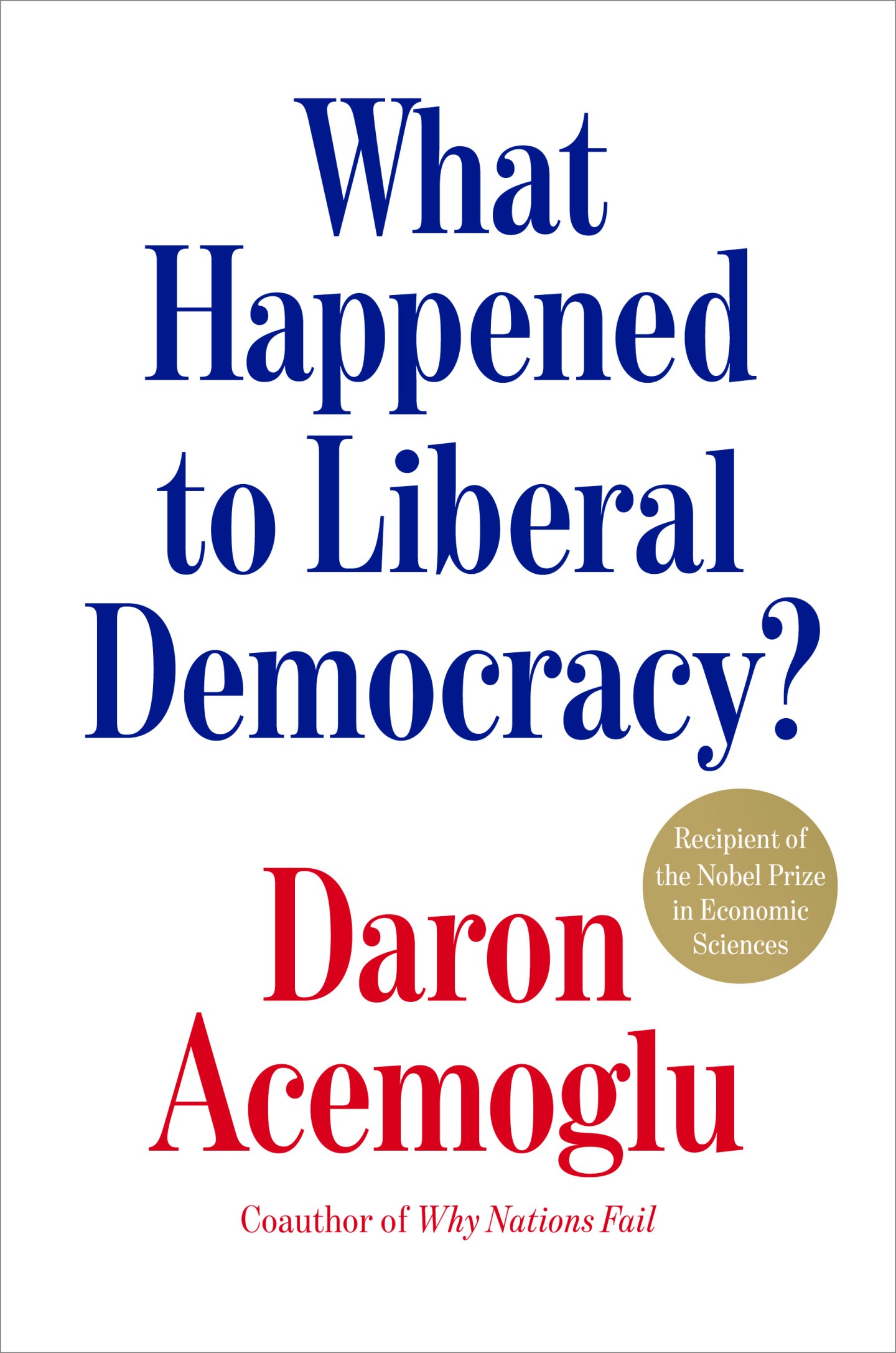
“Unfortunately, a lot of the left is a big contributor to that,” he added, stressing that it’s a central point of his forthcoming book What Happened to Liberal Democracy? “The success of liberal democracy was rooted in social democratic, center-left ideas, and governments playing a leading role. And that space cannot be filled by stupid ideas and by being completely unaware of, you know, what AI is doing, what are its capabilities, what are its implications, nor could it be filled by, Frankfurt School-influenced quasi-Marxist oppressed/oppressor dynamics applied to everything.”

He added acidly that he’s grown sick of the phrase “colonizing AI” as an example of unhelpful Marxist rhetoric, detached from a center-left lens that would actually be practical and helpful. It’s vintage Acemoglu, extending his decades-long argument that the health of economies and the health of democratic institutions are inseparable — and that AI is now stress-testing both simultaneously.
‘Capitalism is a completely useless word’

Ask Acemoglu where he stands on capitalism and he’ll redirect the question entirely.

“I don’t like the term capitalism,” he said. “It makes it sound like there is a uniform model that includes Sweden, Egypt, Argentina, Honduras, the United States, South Korea, Japan. There’s no overlap between these economies, how they are organized.” The only overlap he sees is that they have markets, “but so did the Soviet Union.”

His preferred frame, developed across Why Nations Fail and The Narrow Corridor with co-author James Robinson, is inclusive versus extractive institutions. The question isn’t whether a country has markets, but whether its economic and political rules broaden participation and reward innovation — or whether they concentrate power at the top and extract value from everyone else.

Seen through that lens, AI is not troublesome in its own right, but rather whether it is positioned as inclusive or extractive. Today’s AI hyperscalers, he argues, fit the extractive mold almost perfectly: concentrated ownership, regulatory capture, and a business model that extracts data and attention at scale.

Instead of reckoning with that, he said, we get all kinds of other talk about whether capitalism is mutating into technofeudalism, or whether AI will automate away every job in existence. “People are saying such stupid things. I can’t believe it.”

The productivity illusion

Acemoglu’s skepticism about AI’s economic upside isn’t contrarianism — it’s grounded in a framework he’s applied to every major wave of automation for decades.

Productivity gains from automation, he explained, only materialize if machines can do tasks significantly cheaper or better than humans. If the improvement is marginal, or if integration costs eat into gains, the math doesn’t add up — even if the automation is widespread. “It’s not that you cannot get big productivity gains from automation,” he said. “It is that it’s not as easy as sometimes it’s presumed.”

What would actually move the needle? True “human complementarity,” Acemoglu insisted, would be AI that enables workers to do things they simply couldn’t do before, expanding the range of tasks and services on offer, rather than just accelerating existing ones. He turned media critic briefly: “Podcasts massively expanded the demand for news,” he noted. If AI can do what he calls “new tasks” — versions that were not previously available — “that is the real pathway to true human complementarity, not just enabling you to do what you were doing before in a better way, or in a faster way.”

Acemoglu nodded when Fortune mentioned his finding that most research on AI productivity is overblown because it overwhelmingly focuses on easy, well-defined tasks where context is clear. These are not representative of the economy, which simply isn’t set up with so many of those, and AI is just not great for hard tasks yet. “You need new tools, sort of a tool that reliably understands and distills the best research, and is not swayed by the worst research in a particular field, and provides that to you in a context relevant and an accurate manner, and allows you to interrogate it.”

The sharpest version of his argument cuts even deeper: the productivity gains that AI bulls are penciling in don’t just require better models — they effectively require artificial general intelligence. For genuinely huge productivity gains from automation, “then we really, really need something close to AGI for that,” Acemoglu said, referring to the concept of artificial general intelligence. “So that’s why AGI is not just a theoretical issue — it’s really relevant for these productivity projections.” He’s skeptical we’re close. Current models, he argues, perform badly across too many dimensions of real-world work — they can’t read a room, they can’t connect non-obvious dots across domains, and they fail precisely where human judgment is most valuable. The gap between what LLMs do well in demos and what they do reliably in complex, high-stakes professional environments remains, in his view, far wider than the industry’s marketing suggests.

The revolution risk

Acemoglu added that the Fortune 500 should hope that he’s right, paradoxically, that AI won’t be that useful.

“If it were the case that 30%, 40% of new university graduates can’t find jobs,” he said, “what would that do to democracy and social peace? Wherever that has happened in the past, you’ve had revolutions.”

Revolutions, he added quickly, are inherently unpredictable, shaped by the interplay of repression, redistribution, and the ambient attitudes of a generation. Social media adds a new variable that history offers no reliable guide to. “In the past, youth did not have Instagram, TikTok, and Twitter,” he said. “Perhaps that changes things. I have no idea.”

But the direction of concern is clear. A generation of workers who trained and credentialed for an economy that AI has since restructured — and who feel economically stranded — is a constituency that has historically not stayed quiet. The grumbling at this spring’s commencement ceremonies, he suggested, may be an early signal.

What would fix it

Acemoglu’s critique comes with a prescription, though he’s frank about how far the current moment is from acting on it.

The U.S. needs to have a genuine conversation about what is socially desirable from AI — not just what is technically possible or financially profitable for a handful of hyperscalers. That conversation, he argues, has to center on wages, jobs, shared prosperity, and “meaningful, dignified lives for workers.” It also has to include serious global governance — including cooperation with China, which he says is ahead of the U.S. in integrating AI into manufacturing, robotics, and commerce, even as it lags on large language models.

“I think that [U.S.-China collaboration] would be so beneficial,” he said. “We need global governance for AI. We also need the ‘AI race’ not to get out of control. And we need the two sides to share best practices on things that are useful for humanity,” he said, mentioning disease control, productivity, shared best practices and global safety regulations. The current geopolitical climate, he acknowledged, makes that nearly impossible. “The only bipartisan issue in the United States right now is China bashing,” he said, adding that it was that way during the Biden era.

The intellectual failure, in his view, runs deeper than policy. It’s a failure of imagination — an inability to articulate what a genuinely human-centered AI future would look like, and the political will to demand it.

“We’re all so blindly taken in by what OpenAI, Anthropic, and a few other hyperscalers are offering,” he said, “because we haven’t articulated a reasonable alternative.” Squint and you hear the old phrase from the Paul Newman classic Cool Hand Luke: what we have here, gentleman, is a failure of imagination.