








Global markets were mixed this morning as investors woke up to the news that the Strait of Hormuz remains closed, conflict between the U.S. and Iran continues to involve live fire, and Iranian officials declined to confirm whether they would attend peace talks today. Oil is at $95 per barrel, up from a low of $86 three days ago. S&P 500 futures were down 0.46% this morning prior to the open in New York. The index closed up 1.2% in its last session at an all-time high of 7,126.
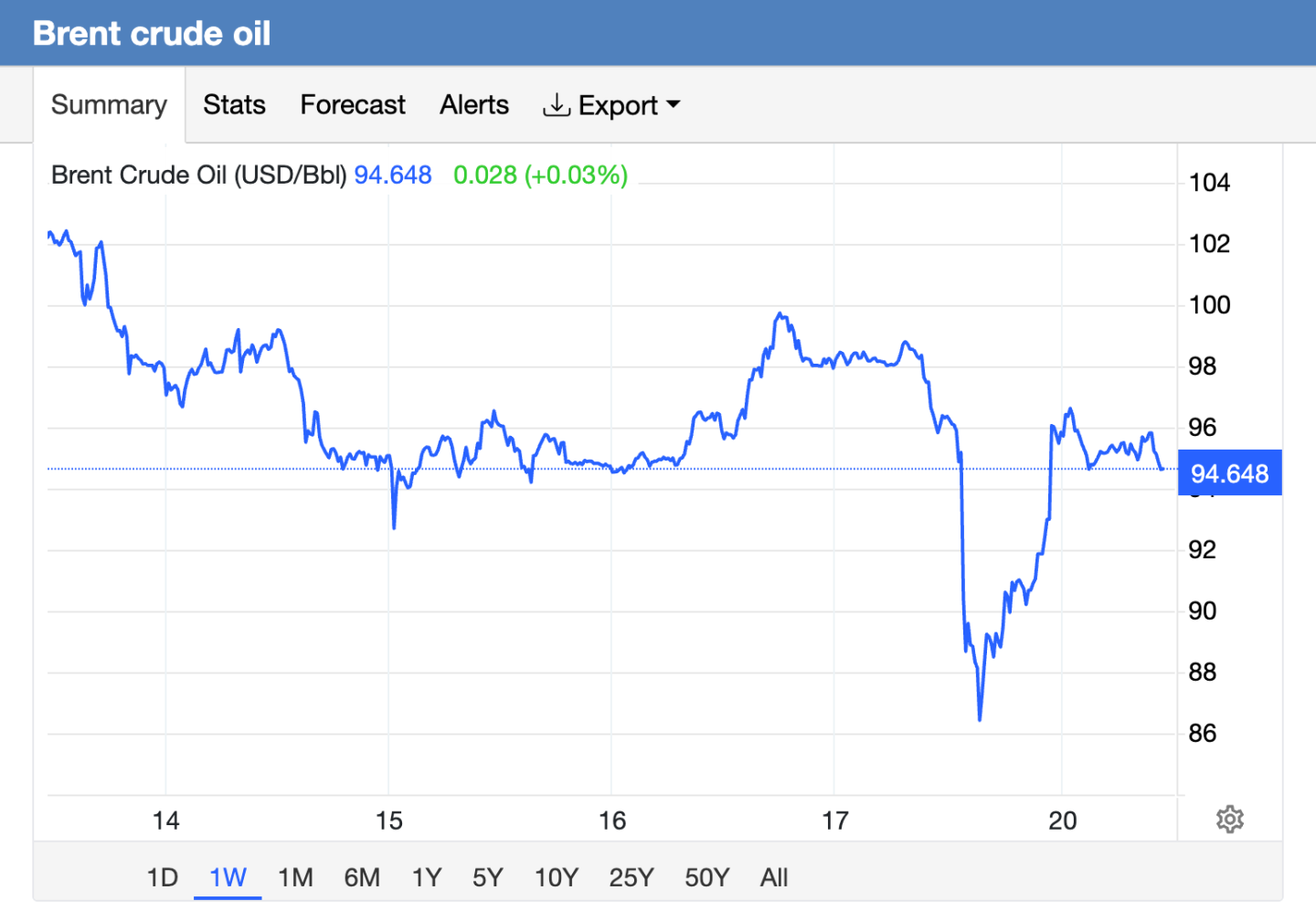
Chart via TradingEconomics.
Prediction markets Kalshi and Polymarket are massive sports betting platforms: Sports wagers account for over 85% of all bets on Kalshi. But the platforms have long claimed that they are not bookmakers but “events contracts” providers, which are classified as swaps under federal law. Kalshi, for instance, has a Designated Contracts Market license, which allows it to offer derivatives under the oversight of the Commodity Futures Trading Commission. State regulators aren’t buying that, and some have sued the companies claiming they operate unlicensed betting operations. Two federal appeals courts are poised to offer clashing rulings—teeing the cases up for the U.S. Supreme Court to seal their fate, Fortune’s Jeff John Roberts reports.
The two-week ceasefire between the U.S. and Iran is due to end Wednesday, and this morning hopes for peace dwindled following a U.S. attack on an Iranian cargo ship in the Strait of Hormuz. The ship was trying to evade the blockade and was disabled, boarded, and taken into “custody” by U.S. forces. The Strait remains blocked both by U.S. Navy patrols and Iranian forces. The Iranian state news agency said Tehran would not send negotiators to peace talks as long as the U.S. continued to interfere in the Strait.
Dr. Phillip Swagel is the director of the Congressional Budget Office, the nonpartisan agency that offers independent economic analysis to Congress, often in the form of gloomy reports about U.S. debt and the $1 trillion-a-year in interest payments required to sustain it. But Swagel is optimistic that a systemic crisis can be avoided. “[My optimism] is rooted in my experience,” Swagel told Fortune’s Eleanor Pringle. “First being at Treasury during the financial crisis and seeing very difficult times and the country coming together with an effective response—not saying it’s perfect, lots of controversy—but it was effective. … The policymakers that are thinking about these things are thoughtful and effective,” he said.
Elon Musk bans résumés and cover letters in hiring for his chip team. These are the 3 bullet points he’s looking for instead - Jake Angelo
Thousands of CEOs admit AI had no impact on employment or productivity—and it has economists resurrecting a paradox from 40 years ago - Sasha Rogelberg
Gen Z is ‘Chinamaxxing’—and it’s less a love letter to Beijing than an indictment of America - Nick Lichtenberg
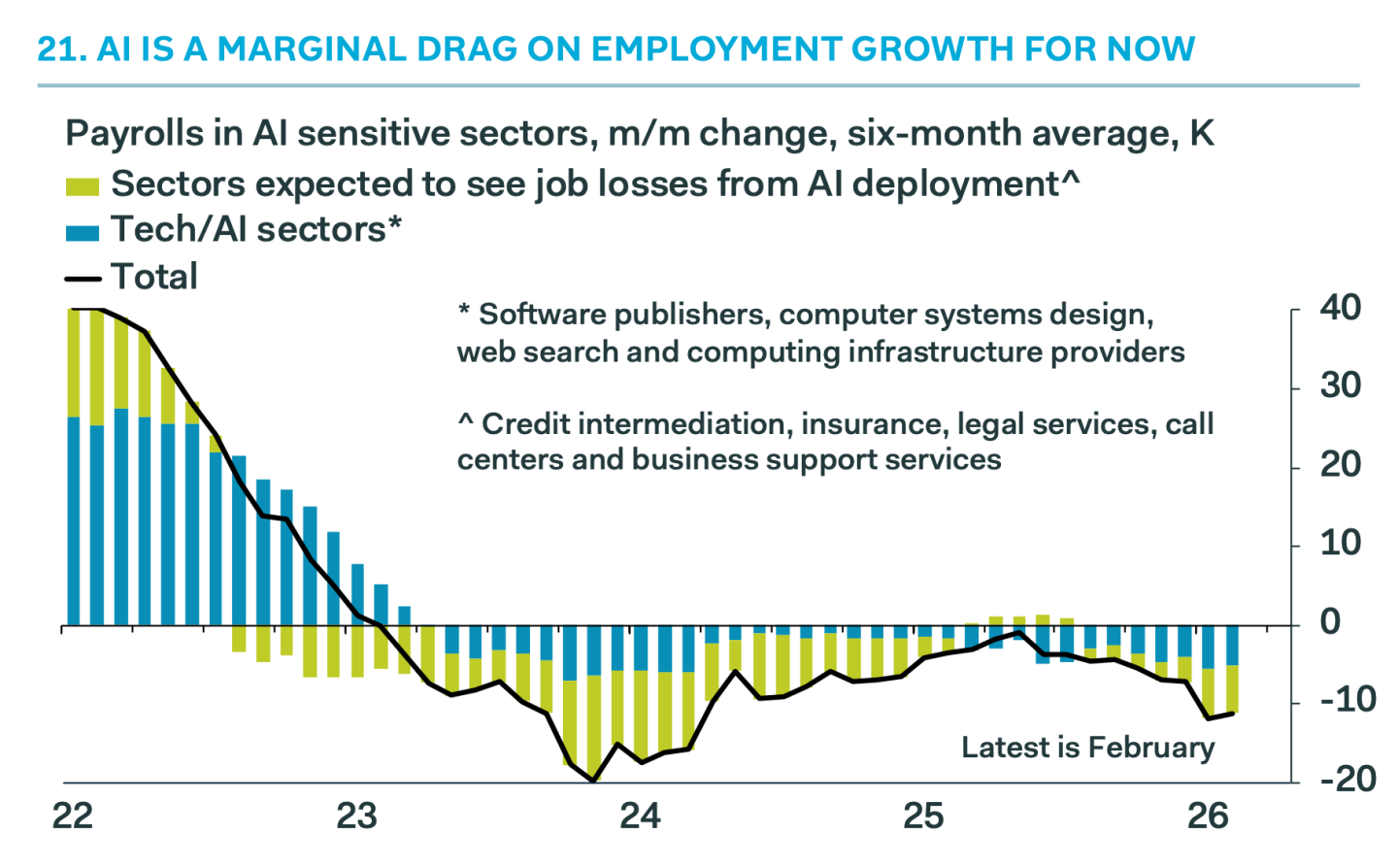
This chart is important because it shows, for the first time, that AI might actually be starting to destroy jobs in sectors sensitive to AI replacement, according to Pantheon Macroeconomics’ Samuel Tombs. Those sectors are in tech and admin. It comes from Pantheon’s April U.S. chartbook. The caption says, “AI is a marginal drag on employment growth for now.” The previous month it said, “AI is not replacing many people’s jobs yet.”
The size of the Fed’s balance sheet at its peak in 2022, equivalent to 35% of U.S. GDP. Since it topped out, the balance sheet has been reduced by a further $2 trillion or more. Incoming Fed chair Kevin Warsh wants it to drop further.
Can Tinder win back women? - FT
How private credit’s cracks are threatening to deepen private equity’s woes - CNBC
What to know about tariff refund site that launches Monday - Axios
U.A.E. Asks U.S. About a Wartime Financial Lifeline - WSJ
Hamas Officials Say Group Is Ready to Hand Over Some Weapons - NYT
Your delivery robot just became a guide for blind pedestrians
Coco Robotics, a Los Angeles-based startup operating roughly 10,000 delivery bots across the U.S. and Europe, continuously logs every obstacle its bots encounter—errant trash cans, fallen bicycles, construction work, and so on. Now the company will feed that data to BlindSquare, an app that gives blind people live audio warnings about junk littering the sidewalk. Fortune’s Catherina Gioino has the details.
In 2001, Fortune first convened “The Smartest People We Know,” bringing together CEOs and founders, builders and investors, thinkers and doers. Since then, Fortune Brainstorm Tech has been the place where bold ideas collide. From June 8–10, we will return to Aspen—where it all began—to mark 25 years of Brainstorm. Register now.
此内容由惯性聚合(RSS阅读器)自动聚合整理,仅供阅读参考。 原文来自 — 版权归原作者所有。