


惯性聚合 高效追踪和阅读你感兴趣的博客、新闻、科技资讯
阅读原文 在惯性聚合中打开

推荐订阅源

A
About on SuperTechFans
C
Cybersecurity and Infrastructure Security Agency CISA
N
News and Events Feed by Topic
C
Cisco Blogs
Cisco Talos Blog
Cisco Talos Blog
A
Arctic Wolf
Scott Helme
Scott Helme
P
Palo Alto Networks Blog
S
Schneier on Security
D
Darknet – Hacking Tools, Hacker News & Cyber Security
T
Tor Project blog
量子位
G
Google Developers Blog
H
Hackread – Cybersecurity News, Data Breaches, AI and More
B
Blog RSS Feed
NISL@THU
NISL@THU
Exploit-DB.com RSS Feed
AWS News Blog
AWS News Blog
爱范儿
爱范儿
Last Week in AI
Last Week in AI
Y
Y Combinator Blog
L
LINUX DO - 最新话题
Security Archives - TechRepublic
Threat Intelligence Blog | Flashpoint
S
Secure Thoughts
Cloudbric
Cloudbric
aimingoo的专栏
aimingoo的专栏
L
Lohrmann on Cybersecurity
TaoSecurity Blog
TaoSecurity Blog
Recent Commits to openclaw:main
Hacker News: Ask HN
Hacker News: Ask HN
freeCodeCamp Programming Tutorials: Python, JavaScript, Git & More
The GitHub Blog
The GitHub Blog
有赞技术团队
有赞技术团队
S
Security @ Cisco Blogs
cs.CL updates on arXiv.org
C
Cyber Attacks, Cyber Crime and Cyber Security
G
GRAHAM CLULEY
P
Proofpoint News Feed
V
V2EX
Martin Fowler
Martin Fowler
C
CERT Recently Published Vulnerability Notes
Attack and Defense Labs
C
CXSECURITY Database RSS Feed - CXSecurity.com
The Cloudflare Blog
SecWiki News
SecWiki News
罗磊的独立博客
CTFtime.org: upcoming CTF events
小众软件
小众软件
The Last Watchdog
The Last Watchdog

Power Technology

APAC dominates solar PV additions globally, forecasts GlobalData - Power Technology DEME secures offshore wind turbine installation contract in Japan SSE reports 4% drop in annual profit for March 2026 ContourGlobal launches Victor Jara hybrid plant in Chile Centre Manche seeks approval for 1.5GW offshore wind project Opening the UK grid to competition could cut bills and boost growth Bangladesh solar PV capacity to reach 8.5GW by 2035, forecasts GlobalData - Power Technology Client Challenge Qualitas Energy funds 211MW battery projects in Italy New episode: Glut or shortage - what lies ahead for LNG? - Power Technology RWE secures CIS Tender 7 for 1.1GW Theodore Wind Farm Egypt solar PV capacity to reach 34.3GW by 2035, forecasts GlobalData - Power Technology South Korea's nuclear power to reach 219.2TWh by 2035, forecasts GlobalData - Power Technology Nordex begins production at new rotor blade plant in Türkiye AirPlus Renewables prepares for UK launch of XEVA edge wind turbine - Power Technology AIKO wins modules contract for Nefer Benban solar project Spearmint Energy secures $450m for Red Egret BESS project Sungrow to supply 7.5GWh of storage for Masdar's RTC project Grenergy to deploy 1.5GWh of CATL batteries at Oviedo Escuderos Statkraft to reinvest Nkr80bn in Norwegian hydropower - Power Technology CIM unveils Permanent Power Company with $400m support Offshore Technology Conference: OTC 2026 in review - Power Technology ASL selects AGL, Enel X for 532MW of new NSW firming capacity Sunraycer secures $901m for Texas solar and storage projects UK grants development consent for offshore wind farms Iberdrola launches 195MW Tâmega Norte wind farm in Portugal South America reshapes its hydropower future amid climate, investment and AI pressures - Power Technology Cadeler installs inaugural commissioned monopile at Hornsea 3 IAEA leads Venezuela HEU removal - Power Technology Why gas engine power plants are crucial in the energy transition Matrix connects two new renewable projects to Spanish grid YEC inks PPA with Rio Tinto for Jinbi Solar Project FH Capital to buy 75.1% stake in JinkoSolar US subsidiary Neoenergia plans $10bn investment in Brazil by 2030 Axpo launches 200MWp Vilecha solar complex in Spain TWP submits consent application for Bowdun wind farm in Scotland Rezolv Energy launches 225MW solar project in Bulgaria ADB unveils $70bn plan for Asia’s energy and digital infrastructure Israel’s biggest solar power plant receives final approval Nexans concludes French cable pull-in for Celtic Interconnector CIP acquires Ørsted’s onshore business in Europe MARA agrees to acquire Long Ridge Energy for $1.5bn Northland inks 30-year CPPA with TSMC for Hai Long wind project Will China’s new airborne wind turbine succeed where predecessors failed? - Power Technology TotalEnergies, Nextnorth begin 440MWp solar project in Philippines Kirkland & Ellis leads power sector M&A legal advisory by value in Q1 2026 Oklo launches nuclear AI partnership - Power Technology US DoE moves to release $430m for hydropower upgrades - Power Technology Fugro wins geotechnical contract for FengMiao II wind farm Oil as an asset: Why lubrication strategy matters more than ever in wind energy - Power Technology Matrix finalises $332m funding for 500MW Scottish BESS project Tersis and Vivum pursue first UK modular waste‑to‑energy plant - Power Technology Adani forms nuclear subsidiary - Power Technology Citi leads power M&A advisory market by value in Q1 2026 US to redirect offshore wind funds to fossil fuel projects Blue Elephant concludes financing for 268MWp solar park Bavaria AI-enabled smart grid to accelerate power sector’s shift to clean energy - Power Technology Grenergy inks 12-year tolling agreement for Escuderos storage GenusPlus wins $78m contract for KLG project in Australia Wärtsilä wins 790MW off-grid power order for Texas data centre ONYX Insight unveils ecoBLADE to drive down wind farm O&M costs - Power Technology IQIP, EnBW and Vattenfall to deploy EQ-Piling at Dreekant project Ontario approves 230kV Red Lake transmission expansion Sonnedix, Copec EMOAC sign PPAs for Chilean BESS project Noveria Energy signs grid deal with TenneT Germany Kindle Energy starts construction on $1.2bn Wolf Summit Energy Fred. Olsen Seawind to take full control of Muir Mhòr wind project Wind power reaches 1.3TW as record 165GW installed in 2025 - Power Technology Kairos breaks ground on Hermes 2 - Power Technology US House passes Build More Hydro bill - Power Technology DeepOcean to install cables for Taiwan's TPC-II offshore wind farm Tesla Cybertruck to be a grid asset - Power Technology Garden River First Nation wins 20-year contract for Ontario’s largest solar farm - Power Technology ANDRITZ hydropower surge drives record €3.6bn order intake in Q1 2026 - Power Technology Vineyard Wind sues GE Vernova over $4.5bn offshore wind project IESO signs 20-year contracts for 14 renewable energy projects Envision Energy, BBVA sign $500m vendor financing agreement Client Challenge Client Challenge Client Challenge
How workforce training is shaping the future of offshore renewables - Power Technology
Staff Writer · 2026-04-27 · via Power Technology

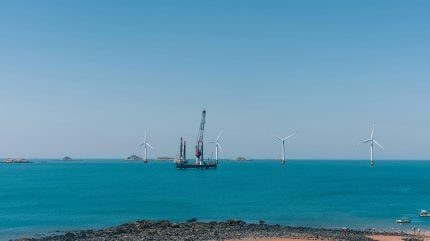
As the offshore wind sector continues to expand at a pace that few industries have seen before, the demand for skilled, safety-ready workers is growing just as fast. Although turbine technology and installation methods have advanced considerably over the past decade, the human element remains the most critical factor in keeping operations safe and efficient. Because every worker who steps onto an offshore platform carries responsibility not only for their own life but also for those of their colleagues, structured training programs have become the backbone of a reliable and future-proof renewable energy workforce.
The growing importance of standardized safety training

Before global safety standards were established for wind energy workers, training quality varied widely depending on the employer or country involved. However, the formation of the Global Wind Organization (GWO) brought together leading players in the wind industry to create a unified framework that applies equally to onshore and offshore environments. Since then, GWO courses have become the internationally recognized baseline for anyone working in and around wind installations, covering everything from fire awareness and manual handling to sea survival and working at heights. Because these modules have both classroom theory and real-world practical exercises, workers leave training with skills they can apply immediately on the job.

Moreover, with the introduction of WINDA which is the GWO’s digital registry, every certified worker’s training record is stored and accessible globally, which makes it easier for employers and safety officers to verify compliance before anyone sets foot on a platform. This level of transparency has raised the overall standard of the offshore workforce and reduced the risk of unqualified personnel entering high-risk environments.

Why hands-on training makes a measurable difference

One of the most important lessons the offshore renewables industry has learned is that reading about an emergency and physically responding to one are two very different experiences. While theoretical knowledge provides a necessary foundation, it is the practical component of safety training that builds genuine confidence and muscle memory. When workers practice deploying life rafts, operating fire extinguishers under simulated conditions, or administering first aid in a controlled environment, they develop the kind of instinctive response that can mean the difference between a near-miss and a fatality.

For this reason, providers that invest in realistic training facilities offer a significantly higher quality of preparation than those that rely solely on e-learning platforms. Consequently, companies that send their crews through rigorous, facility-based programs tend to report fewer workplace incidents and stronger safety cultures across their operations.

Certification as a career enabler

For many professionals entering the offshore renewables sector, obtaining GWO certification is often viewed as a regulatory hurdle to clear before starting work. In reality, however, it functions as a career-enabling credential that opens doors across the global wind industry. Because the GWO framework is recognized by operators and developers in Europe, Asia, North America, and beyond, a worker trained in the Netherlands can demonstrate the same verified competency as one trained in the United Kingdom or Denmark. This portability is particularly valuable in an industry where project locations change frequently and international mobility is often expected.

Furthermore, since all GWO-registered certificates carry a two-year validity period, regular refresher training keeps professionals up to date with the latest safety procedures and industry developments. Rather than viewing recertification as an inconvenience, forward-thinking workers and employers increasingly see it as an opportunity to reinforce good habits and incorporate lessons learned from incidents across the industry.

The role of specialist training providers in workforce readiness

Not all training providers are created equal, and the quality of instruction can vary considerably between institutions. Specialists like FMTC Safety, which deliver a full suite of wind industry courses across multiple professional sectors, play a vital role in ensuring that the offshore renewables workforce is not only certified but genuinely prepared for the conditions they will face at sea and at height. By offering modular programs that allow workers to complete individual units alongside the full basic safety package, experienced providers give professionals the flexibility to tailor their development to the roles they hold or aspire to.

Additionally, as the offshore wind sector scales up to meet ambitious renewable energy targets set by governments around the world, the pipeline of qualified workers must keep pace. Training institutions that maintain strong links with industry employers, invest in up-to-date equipment, and align their curricula with evolving GWO courses are therefore essential partners in building the workforce that the energy transition demands.

Looking ahead

The offshore renewables industry is at an inflection point where the pace of project development is outstripping the supply of ready workers in many regions. As a result, companies that treat safety training as a strategic investment rather than a regulatory cost are gaining a meaningful competitive advantage. By building teams of well-trained, certified professionals who can move between projects, adapt to new equipment, and respond effectively under pressure, these organizations are positioning themselves as trusted partners for developers and asset owners alike.

In conclusion, the future of offshore renewables will be shaped not only by the turbines that rise from the sea but also by the people who build, maintain, and operate them. Because a well-trained workforce reduces risk, lowers incident costs, and improves overall project performance, investment in high-quality safety education is among the smartest bets the industry can make as it scales toward a cleaner, more sustainable energy future.