







As the share of intermittent renewables grows, the key challenge shifts from producing enough energy to balancing supply and demand continuously. A white paper titled How Gas Engine Power Plants Can Close the Gap, Rolls-Royce explains that conventional plants offer greater resilience, helping to bridge the gaps when wind and solar output drops, demand spikes, or grid constraints prevent renewable electricity from reaching consumers.
May 14, 2026
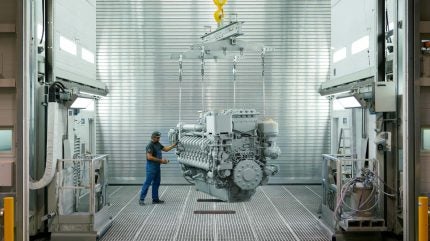
Energy generation is changing, as more renewable installations are built and connect to the grid – but this influx of intermittent resources comes with risks that must be addressed to enable greater resilience in the network. The challenges and solutions are outlined in a recent white paper.
Traditional energy systems were built around predictable demand, large-scale centralised power stations, and networks designed to deliver power from those plants to load centers. Dispatchable generation largely followed demand. High shares of renewables change that operating logic in three ways.
Firstly, generation becomes weather-dependent. Secondly, demand becomes larger and more volatile. Total consumption and peak loads are intensified by the electrification of heating and transport, as well as the rise of data centres, and industrial transformation.
Thirdly, the grid itself can become a bottleneck. Much renewable capacity is built where resources are abundant, while major demand is concentrated in cities and industrial regions. When transmission capacity is insufficient, renewables can be curtailed. Grid reinforcement takes years of planning, permitting, and construction, and public resistance can slow it further. For many developers, the grid connection itself is the main limiting factor.
Energy industry trends are pushing policymakers to prioritise new gas power stations to maintain reliability on the path to climate neutrality. Gas emits less CO₂ than coal and lignite and can potentially transition toward low or zero-carbon operation in the future using renewable fuels such as green hydrogen.
However, higher and more volatile gas prices, driven by geopolitical events, complicate the picture. Gas is harder to reroute and store than oil. While liquefied natural gas infrastructure is complex and slow to repair after disruption. When gas benchmarks jump sharply, it underlines the security and affordability risks of heavy import reliance. This can accelerate investment in alternatives that reduce fuel exposure such as renewables, electrification, and storage. Because once built, their operating costs are not so tied to geopolitical shocks.
At the same time, expensive gas can slow the addition of new gas-fired capacity, particularly in cost-sensitive markets that must choose between gas and cheaper, readily available fuels. In some regions, high gas prices can even prolong coal use for reliability reasons, especially where grids cannot yet integrate large volumes of variable renewables.
Gas engine power plants are built from multiple modular engine-generator sets, making them highly suited to the flexibility the transition demands. Instead of operating a single large machine inefficiently at partial load, an engine plant can switch off unneeded modules and keep the remaining engines near optimal efficiency. This matters in systems that need many small increments of power for short durations.
Engine plants can start and ramp-up quickly, providing rapid balancing when wind drops, clouds reduce solar output, or demand surges. As the grid becomes defined more by ramps than steady output, responsiveness becomes a core aspect of resilience.
In the white paper’s simplified 15-year total cost of ownership comparison, a combined-cycle gas turbine can be cost-advantaged in high-runtime conditions. But as operating profiles become more variable, internal combustion engine solutions become more cost-effective.
A key challenge of the energy transition is that renewables, grid upgrades, and demand growth do not move in unison. Rolls-Royce has demonstrated that modular gas engine systems can be deployed quickly on an industrial scale. Containerised, prefabricated modules can shorten construction schedules and, crucially, be relocated.
This mobility turns capacity into an adaptable asset. Plants can be deployed to relieve local grid constraints or reinforce supply in high-load regions, then moved as transmission upgrades arrive or as long-duration storage and other low-carbon flexibility options mature. Modularity also supports resilience. Redundancy can be added by installing additional units, reducing dependence on a small number of large components where a single outage has an outsized impact.
A renewables-led energy system is achievable, but it must be built for reliability and consider real constraints such as intermittency, shifting demand, and grid bottlenecks. Rolls-Royce highlights that flexible gas engine power plants are not a step backward, but are in fact an enabling technology that provides dispatchable, fast, efficient capacity to help integrate more wind and solar without compromising the security of supply.
For stakeholders facing tight timelines and rising flexibility needs, the energy transition is not only about adding renewables, but also concerns strengthening the backbone that keeps the system stable. Rolls-Royce’s modular gas engine solutions show how that backbone can be deployed rapidly, operated efficiently under variable profiles, and adapted over time to help close the gap on the path to a more resilient grid with lower carbon emissions.
To learn more about the importance of gas power plants in the energy transition, download the document below.
此内容由惯性聚合(RSS阅读器)自动聚合整理,仅供阅读参考。 原文来自 — 版权归原作者所有。