






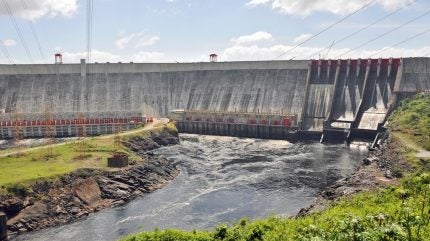
Hydropower has been called the backbone of the South American energy system and is vital for the region’s energy mix. Due to its natural Andean-Amazon resources, it has vast potential for generation, and even with only 30% of the region’s hydropower currently exploited, the International Hydropower Association (IHA) says this is still satisfying 45% of the continent’s electricity demand.
According to the IHA’s 2025 World Hydropower Outlook, with a total installed capacity of 183GW, South America generated 725TW-hours of hydropower in 2024. Although 306MW of capacity was added during this period, the IHA admits the overall rate of hydropower development in South America “has plateaued”. It cites various problems such as falling investor confidence in Colombia due to a clash between the government and hydropower companies over alleged pricing and profit concerns, while in Argentina, Peru and Chile, political volatility and policy shifts have created uncertainty.

Discover B2B Marketing That Performs
Combine business intelligence and editorial excellence to reach engaged professionals across 36 leading media platforms.
Climate change is also posing major risks. El Nino-intensified droughts impacted hydropower generation during 2024–25 and governments across the region are now seeking to diversify energy sources and improve water management.
As Avila-Diaz et al acknowledge in the International Journal of Climatology, South America is particularly vulnerable to climate-related challenges. These not only include extreme rainfall events and droughts but also glacier melting, rising sea levels and heatwaves – all of which threaten key sectors such as agriculture and hydropower production. Studying 27 hydrological basins across South America, they claim their research offers critical insights into water resource management, agriculture and energy planning across the region.
The highest concentration of hydroelectric dams in South America are located in the north-east, south-east and southern Brazil, as well as western Chile, Peru, Ecuador, Colombia and northern Venezuela. Intensification of extreme rainfall events projected for several of these basins could increase hydrological variability and infrastructure vulnerability, requiring adaptive management strategies to balance generation efficiency and risk reduction. In contrast, areas such as the west coast of South America and southern Brazil may face challenges due to less stable moisture transport, potentially affecting hydroelectric power generation capacity and long-term water resource reliability.
As the authors conclude, high model agreement across different scenarios enhances the reliability of their projections, making the study a valuable resource for developing climate adaptation strategies, particularly in possible high-impact regions like northern Argentina, the La Plata Basin and eastern Brazil.
Bolivian insights
The impacts of climate change on the hydropower potential of a multi-purpose storage system in the Bolivian Andes have also been the focal point of a recent study, this time in the Journal of Hydrology.
Over the past decade, Bolivia has expanded its hydropower capacity to meet domestic demand and explore export potential to neighbouring countries. According to the IHA, the Bolivian hydropower sector is “growing significantly” and Bolivia was listed as one of the top ten countries ranked by total installed hydropower capacity across South America, with 759MW, in 2024.
As Flores et al discuss in their research, Bolivia faces many challenges from climate change in water resources management and energy production. This study assessed climate-related impacts on river flows in the Rio Grande basin and the hydropower potential of the Rositas multi-purpose project’s proposed 600MW dam.
Considered a key project in the Bolivian National Agenda towards sustainability, the Rositas hydropower dam also aims to expand agricultural land and mitigate downstream flooding in the Rio Grande basin. With the Rio Grande basin exhibiting “complex hydrological processes linked to mountain climate dynamics”, the authors evaluated the climate resilience of the project by analysing changes in its hydropower potential.
By providing robust climate impact analysis, Flores et al believe their study will support key water and energy stakeholders in developing adaptation strategies to address projected hydrological changes.
Using regional climate models from the Coordinated Regional Climate Downscaling Experiment for the near (2040–2069) and far (2070–2099) future, river flow impacts were analysed under three future scenarios. Clustering was applied to 101 stations with similar climatic features to perform statistical downscaling at the catchment scale. The hydrological models SWAT+ and HEC-HMS were used to estimate changes in water availability and hydropower potential.
Projections indicate that river discharges will increase in the wet season and decrease in the dry season, exacerbating the severity of droughts. While annual hydropower potential increases by up to 11% in the near future and 9% for the far future, seasonal variations are significant. Energy potential decreases by up to 30% in June–September but increases by up to 25% in November–February. The authors say these results highlight climate risks faced by the Rositas project and the need for adaptative water management strategies to mitigate potential water conflicts.
“Key implications include the need for revised reservoir management strategies to address dry season energy shortfalls, as storage limitations may limit the full use of wet season inflows despite higher annual averages. These changes, coupled with increasing evapotranspiration, threaten water security,” Flores et al warn, “and require adaptive reservoir management to balance energy production with competing agricultural and flood control needs. Hence, the Rositas project needs to incorporate climate-resilient designs to mitigate water scarcity and flood risks and ensure reliable energy and water supply for users.”
Providing a template for assessing climate risk in Andean hydropower projects, the authors believe their study highlights the need for seasonally adaptative infrastructure design. The projected hydrological shifts can be used to revise water allocation frameworks, while energy planners can explore complementary renewable energy such as solar to offset dry season deficits.
Integrating solar power
A proposal to mitigate the intermittency of renewable energy generation and address the limitations of water resources in the reservoirs of Andean regions has studied integrating hydropower plants with solar and battery storage. The focal point of this study was five hydroelectric power plants on the Limay River in Argentina, which collectively produce 12,830GW-hours (GWh) annually, with an installed capacity of 3970MW and an overall capacity factor of 37%.
As Dr Luis Juanico and Martin Ducos explain, these Andean hydroelectric dams were designed to operate continuously, but their effective generation capacity is significantly constrained by the highly variable availability of water resources. This means there is significant idling capacity – ranging from 50–75%, or 12–18 hours daily – in both the power transformation system and the National Interconnected System transmission line, with generation further influenced by seasonal and climatic variations. For example, a recent 35% reduction in generation at Piedra del Águila was driven by a sharp 55% decrease in the flow of the Collón Curá River, a tributary of the Limay.
The authors’ first proposal doubles the installed capacity by adding solar photovoltaic (PV) power equivalent to the hydroelectric capacity. This increases energy production to 23.71TW-hours (TWh) with an investment of $1.93bn. The second proposal aims for a higher capacity factor by doubling the PV capacity and adding a four-hour battery storage system, resulting in a 92% capacity factor, increasing energy production to 31.9TWh, and requiring an investment of $4.43bn. This proposal aims to meet the demand for an AI data centre.
The authors say their proposal is scalable and could be replicated in other Andean basins in Argentina, where sites share key characteristics such as abundant solar resources, rivers with irregular and limited summer flows, operational electrical systems and low-cost land availability. Potential also lies in the reservoirs of the Mendoza province (Los Reyunos, El Tigre, Agua del Toro, Nihuil I, II and III, and Potrerillos); San Juan (Ullum, Caracoles, Punta Negra and La Olla); and Salta (Cabra Corral), amongst others. Indeed, the model could also be replicated in other Latin American countries, many of which have hydroelectric plants at the foothills of the Andes in locations with significant solar resources.
Investment in Argentina
In December 2025, the International Finance Corporation announced a $300m financing package to acquire shares in Argentina’s 1.44GW Piedra del Águila hydropower plant, as part of the privatisation process of the Limay River hydropower plants.
This strategic investment in Central Puerto, an Argentinian electricity generation company, will help increase the reliability and flexibility of the national power system, enable greater integration of renewable energy and enhance the country’s energy competitiveness.
The financing also includes the installation of the 150MW Nuevo Puerto battery energy storage system – the largest utility-scale energy storage contract awarded to date in Argentina. This project will optimise power system operations by helping smooth demand curves and reduce system risks, particularly during summer and winter peak periods in the Greater Buenos Aires area.
“This financing represents a strong endorsement of Central Puerto’s long-term strategy and our commitment to the development of Argentina’s power system. It will allow us to consolidate critical assets and incorporate innovative solutions, strengthening grid reliability and supporting the integration of renewable energy,” says Fernando Bonnet, CEO of Central Puerto.
Sustainable standards
As 2025 drew to a close, Colombia’s 275kW Electropalmor Hydropower Project in Magdalena, Colombia, was certified under the Hydropower Sustainability Standard (HSS) in recognition of its achievement in meeting internationally recognised environmental, social and governance practices.
The world’s first small-scale, community-led hydropower initiative assessed under the HSS, it provides reliable, low-cost electricity to the town of Palmor while operating with minimal environmental impact. Electricity from the plant supports coffee processing and other local enterprises, while reducing reliance on firewood.
The assessment report for the project, which is run by local energy cooperative Electropalmor ESP, shows that the project delivers substantial social benefits, maintains organisational resilience and safeguards the Cherua River watershed.
“Electropalmor shows how a small, community-led hydropower project can have a big impact on people’s everyday lives,” says Joao Costa, executive director of the Hydropower Sustainability Alliance.
Adding that the certification process is empowering community members to take ownership of their cooperative, Costa said this example shows that the HSS can help improve even the smallest projects, and he hopes it will become an inspiration for other small – and larger projects – around the world.
Achieving HSS certification is not only a milestone for the community, adds Sol Viviana Zapata Alfonso, executive director of Electropalmor, it is also recognition of the hard work involved, showing that small-scale hydropower can support local development while protecting the watershed.
Going for gold
In January 2026, after addressing gaps identified by an earlier assessment, Brazil’s Santo Antônio Hydropower Project was awarded gold under the Hydropower Sustainability Standard. Located on the Madeira River in Rondônia State, the 3.57GW project is owned by Santo Antônio Energia and Axia Energia, and as one of the largest hydropower plants in Latin America, it plays a critical role in Brazil’s energy mix.
An earlier assessment of the project (in 2014) identified sustainability performance gaps related to indigenous peoples and resettlement. Santo Antônio Energia has since taken action to close these gaps and the new assessment highlights how the project has:
• provided fair compensation and benefits to affected communities• ensured safe and equitable working conditions• invested in biodiversity conservation programmes.
In addition, monitoring data shows water quality and sediment levels have remained stable and cultural heritage sites have been preserved.
Genuine sustainability is a long-term commitment, and achieving gold certification is a testament to years of persistent effort around Santo Antônio, the Hydropower Sustainability Alliance’s Joao Costa comments.
Co-owner of the project, Axia Energia views the certification as a landmark achievement that will catalyse its legacy of operating large-scale projects aligned with social and environmental objectives. It says a key lesson from this process was the importance of sustained dialogue and continuous presence in the territories affected by the project. Strengthening relationships with indigenous peoples, local communities and public authorities requires patience, listening and adaptability, as well as respect for different perspectives and expectations. Social management is an ongoing commitment, the company says.
Santo Antônio is the third hydropower project in Brazil to achieve certification under the HSS. Axia Energia believes its experiences here can help inform broader discussions in South America about how hydropower projects can seek continuous improvement and responsible operation over time, while acknowledging this depends on continuous effort and collaboration.
A unique case
Collaboration has also been at the forefront of the Itaipu Binacional Hydroelectric Plant on the Parana River, which is jointly governed by Brazil and Paraguay. As Julia Souza Luiz and Marina Rodrigues Mesquita discuss in Development Policy Review, the scheme “offers a unique case for examining how shared governance can transform potential conflict into coordinated development in South America”.
Given the magnitude of the Parana River basin, which runs through Brazil, Paraguay and Argentina and is second in size only to the Amazon, a wide array of academic studies have already examined the basin from ecological, political and institutional perspectives. However, this new piece of research has focused specifically on the historical negotiations surrounding the construction of the plant. It also analyses how cooperation can transform rivalry into a pathway for regional cooperation and sustainable development, focusing on its shared governance. Indeed, for this cooperation to materialise, deep-seated rivalries and historical conflicts had to be overcome to enable the joint use of shared water resources for energy generation.
As the authors state, Brazil and Paraguay created a framework that balanced their mutual interests relating to energy security, economic growth and environmental sustainability by skilfully negotiating political and legal challenges.
However, the Itaipu case also draws attention to the complexities and inconsistencies that come with development initiatives of this magnitude. Luiz and Mesquita say communities were displaced, cultural landmarks submerged and ecosystems altered alongside the substantial economic and energy benefits of the hydroelectric dam. They add that the unequal distribution of the dam’s effects is highlighted by the significant cultural and territorial losses suffered by the Guarani people, which have still not been effectively addressed. Despite “persistent concerns” regarding the social, environmental and economic impacts of the project, the overall outcome – particularly in terms of energy integration and regional diplomacy – has been largely positive for Brazil and Paraguay, the authors conclude. It has also demonstrated how shared governance can open the door for regional collaboration and promote growth across neighbouring countries.
Furthermore, they believe future infrastructure projects should incorporate inclusive governance models, equitable benefit-sharing mechanisms and robust environmental safeguards. Institutional innovation, transparency and participatory frameworks are essential to ensure that regional cooperation is effective and just.
Itaipu provides around 90% of the electricity consumed in Paraguay and 10% in Brazil. Since it started operating in 1984, the plant has generated more than 3.1 billion megawatt-hours of hydropower.

Powering Paraguay
Last year, hydropower in Paraguay featured in discussions between US Senator John Curtis and Secretary of State Marco Rubio, when they spoke about the US’ global energy strategy, the growing impact of AI and a possible role for hydropower.
As Rubio believes, AI development is going to put a strain on the amount of energy required to produce AI and AI-driven innovations, offering enormous opportunities for countries that can deliver cost-efficient energy in sufficient volume, and enabling them to become leaders in the AI space. The US needs to help invest or partner with countries that have such a supply of energy, he added.
Rubio gave the example of Paraguay, which has a surplus of hydroelectricity. “So someone, if smart, is going down to Paraguay to open up an AI facility,” he said.
Indeed, Gabriela Cibils, a partner at global technology and investment company Cibersons, which is headquartered in Paraguay’s capital Asunción, says she is on a mission to help turn Paraguay into the ‘Silicon Valley of South America’. As BBC News recently reported, she is now leading efforts to build a large and successful sector and attract some of the global tech giants to her home country.
It is Paraguay’s abundance of cheap power that is giving it a distinct advantage – thanks to almost 100% of generation now coming from hydropower dams such as Itaipu.
As Paraguayan software development entrepreneur Sebastian Ortiz-Chamorro said, if companies want to invest in AI data centres, they should keep in mind that hydroelectric power is “both renewable and steady”.
Paraguayan President Santiago Peña has previously spoken with companies like Google and OpenAI to encourage them to invest in his country. In more recent developments, Paraguay’s unused hydropower looks set to be turned into a new revenue stream for the country by powering AI development and data centres.
Paraguay’s state-owned Administración Nacional de Electricidad has signed a memorandum of understanding with Morphware, setting the stage for a government-led Bitcoin mining programme as a national-level opportunity. Morphware will act as a technical and advisory partner for regulated Bitcoin mining in Paraguay, which has previously witnessed illegal operations countrywide.
References
Projections of Atmospheric Moisture Transport Over South America in a Changing Climate by Alvaro Avila-Diaz, Paola A. Arias, Roger Rodrigues Torres, Benjamin Quesada, Laís Rosa Oliveira, Alejandro Uribe, Murilo Ruv Lemes, Cristian Felipe Zuluaga, Wilmar L Ceron. International Journal of Climatology, 2025; 0:e70207 https://doi.org/10.1002/joc.70207
Impacts of climate change on the hydropower potential of a multipurpose storage system project in Bolivian Andes by Ivan Alexis Chavez Flores, Santiago Mendoza Paz, Mauricio Florencio Villazon Gomez, Patrick Willems, Anne Gobin. Journal of Hydrology: Regional Studies 62 (2025) 102903. https://doi.org/10.1016/j.ejrh.2025.102903
Enhancing Latin-American Hydroelectric Plants with Solar and Battery Integration by Luis Eduardo Juanicó and Martin Ducos. (November 01, 2024). http://dx.doi.org/10.2139/ssrn.5130397
Shared governance as a pathway to regional cooperation and development through the ItaipuCorpus. Júlia Souza Luiz, Marina Rodrigues Mesquita. Dev Policy Rev. 2025;43:e70040. https://doi.org/10.1111/dpr.70040
Lessons from the ITAIPU Binational Power Plant in South America: A Negotiation Framework for Transboundary Hydropower Governance. Ortigoza, E.; Oxilia, V.; Ríos, R.; Valdez, D.; Riveros, E.; Llamosas, C. Water 2025, 17, 1947. https://doi.org/10.3390/ w17131947