


US transportation regulator NTSB pulled its accident reports after the audio recreations were uploaded online.
Mason Brighton/Shutterstock
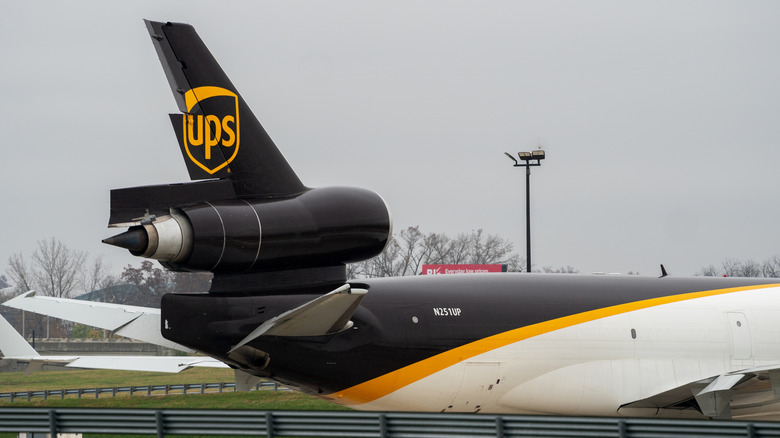
The National Transportation Safety Board (NTSB) has pulled its docket system offline after people used information uploaded to it to recreate the voices of pilots killed in a plane crash with AI. As CNN reports, the agency recently uploaded files filled with details about the November 4, 2025 crash involving UPS flight 2976. One of the plane's engines separated from the wing during takeoff from Louisville, Kentucky, killing three crew members and 12 people on the ground.
While the NTSB uploads accident reports that the public can access, it is not allowed by federal law to release cockpit audio recordings "due to the highly sensitive nature of verbal communications inside the cockpit." The NTSB's uploads for the UPS crash included thousands of pages of reports and a video showing the engine's separation. They also included a transcript of the black box recordings and a PDF file with a spectrogram, which shows a graphic representation of the recorded audio in the cockpit. It's through that spectrogram that people were able recreate the last 30 seconds of the flight, while the pilots were struggling to disable the plane, using artificial intelligence.
"The NTSB is aware that advances in image recognition and computational methods have enabled individuals to reconstruct approximations of cockpit voice recorder audio from sound spectrum imagery released as part of NTSB investigations, including the ongoing investigation of the crash last year of UPS flight 2976 in Louisville, Kentucky," the board said in its announcement. "The NTSB docket system is temporarily unavailable as we examine the scope of the issue and evaluate solutions."
While technology to turn spectrograms back into audio has existed for a while now, AI has made it easier to do so by anybody who has access to it. As Ars Technica reports, one user on X said it took them 10 minutes using OpenAI's Codex to reconstruct audio from the spectrogram the NTSB released. It's not quite clear what the board means by saying that it will "examine the scope of the issue and evaluate solutions," but we wouldn't be surprised if it stops uploading graphic representations of audio in the future.