





The Fitbit Air has entered the chat.
Will Shanklin / Engadget
Fitness tracker pricing can be, well, a bit misleading. For example, say the $399 Oura Ring 5 seems to be within your budget at first glance. But to make it remotely useful, you'll need to pay an extra $6 per month or $70 per year. Your total cost jumps up to around $550 after only two years. (And if you hang onto it for five years, you're looking at at least $750.)
Oura isn't even the most egregious subscription-based offender in this space. Whoop, the popular screenless fitness tracking band, requires a membership starting at $199 per year. Granted, that includes the device itself, unlike others. But you don't need to be a math whiz to realize how quickly its cost can add up over the long term, too.
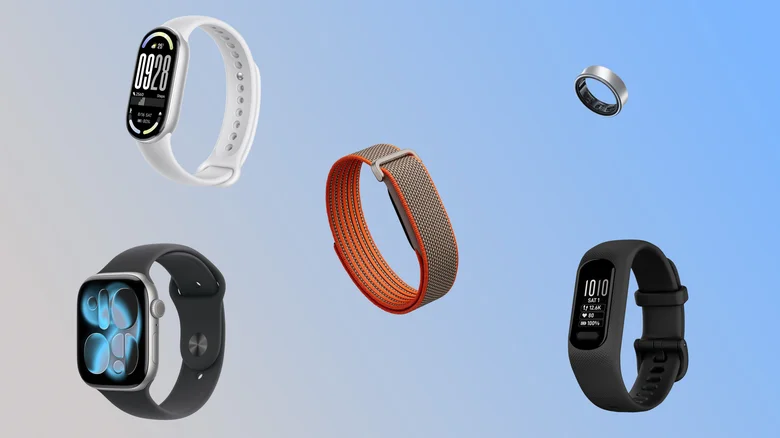
That's why Google's recently released Fitbit Air is so interesting. It's basically a Whoop, with a one-time cost of $100. You can use most of its features without an additional subscription. What a concept! Let's take a closer look at the landscape following the Fitbit Air's entry, to see where you can cut through the paywall noise.
Fitbit Air
Cherlynn Low for Engadget
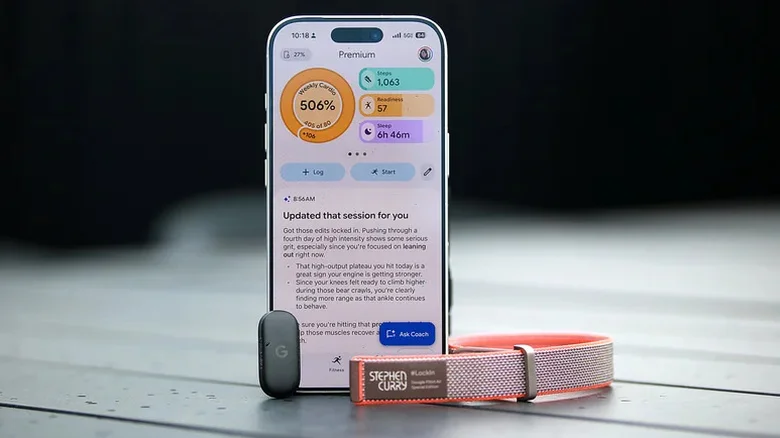
The Fitbit Air, starting at only $100, is the company's direct rival to Whoop. Crucially, Google's screenless band gives you all of its core features without a monthly fee. Only the Gemini-powered Al Coach and other perks (like workout videos) require a Google Health Premium subscription. If you do opt for that, you'll pay $10 per month or $100 per year. But again, it's more of an add-on than a necessity.
The device's battery life is about seven days, half the Whoop's 14-day uptime. But the Fitbit Air does charge quickly, so it shouldn't be a huge deal. For example, our review unit went from 36 percent to 58 percent in just five minutes.
The Fitbit Air works with both Android and iOS phones. However, it requires the Google Health app and won't sync natively with Apple Health.
Garmin vívosmart 5
Garmin
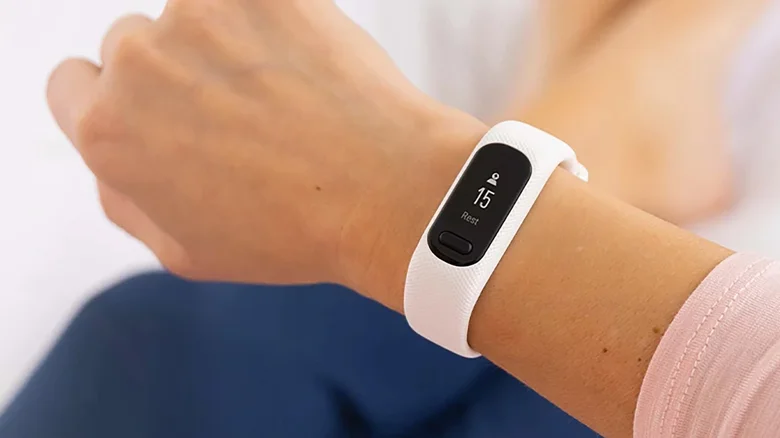
Unlike the Fitbit Air and Whoop, the vívosmart 5 has a narrow, monochrome OLED display. That, combined with its slim profile, makes it a solid way to split the difference between a full-on fitness watch and a screenless tracking band.
The device logs your heart rhythm, sleep, steps and workouts. And Garmin's Body Battery score estimates how long to wait before your next intense workout. Like the Fitbit Air and Whoop, the vívosmart 5 lacks built-in GPS and instead uses connected GPS via your paired phone.
Best of all, there's no monthly fee whatsoever, so your $150 upfront investment unlocks everything the device can do.
The Garmin vívosmart 5 is compatible with Android and iOS. Its companion Garmin Connect app can sync with Apple Health and Google Health.
Samsung Galaxy Ring
Sam Rutherford for Engadget
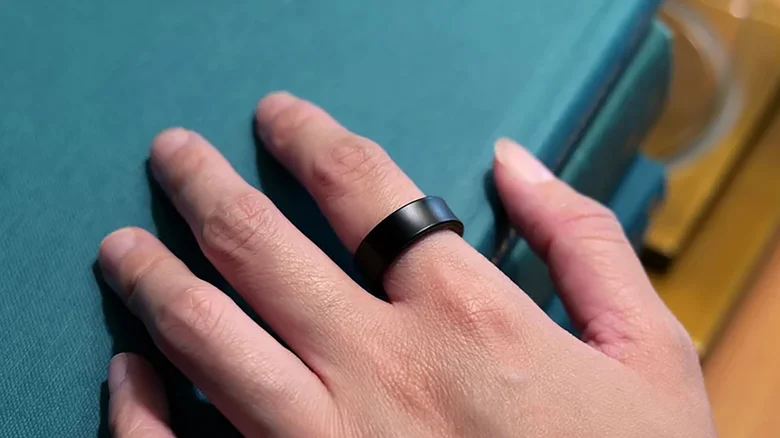
Although it has its limitations, the $400 Samsung Galaxy Ring also functions 100 percent without a monthly fee. It tracks sleep (duration, stages, and skin temperature) and activity. It can automatically detect walking and running and provide detailed metrics for both. It can last at least six days on a charge.
Unfortunately, the Galaxy Ring doesn't work with iPhones. And while it works just fine with Android phones from other manufacturers, a Samsung device is required for Galaxy AI features and its double-pinch gesture controls.
Apple Watch Series 11
Cherlynn Low for Engadget
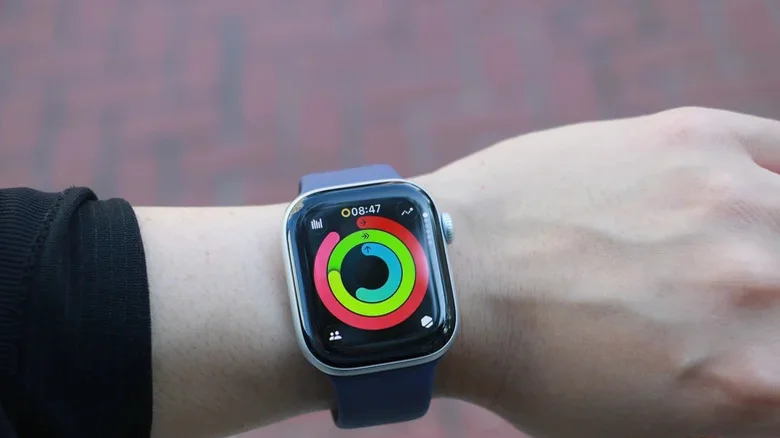
Okay, maybe we're cheating a bit here by including a full-fledged smartwatch. But the Apple Watch Series 11 has loads of health-tracking features without a monthly fee.
This latest model has longer battery life than the previous generation: up to 24 hours with regular use. On the health front, this model adds hypertension alerts. The watch can monitor your heart rate and blood oxygen levels, track your sleep (including a sleep score), and log a long list of workouts.
On the downside, the Apple Watch Series 11 starts at a hefty $400. It's also iOS-only, so folks with Android phones are left out.
Xiaomi Smart Band 10

Xiaomi
On the opposite end of the pricing spectrum is the Xiaomi Smart Band 10. The budget fitness tracker costs around $50 and has no subscription fees. Hard to beat that.
The device has a bigger, brighter and sharper display than its predecessor, with an improved screen-to-body ratio. It covers the basics, including heart rate monitoring and sleep tracking. It can last up to 21 days on a single charge. As a quirky bonus, you can even wear it as a necklace or attach it to your shoe.
What's compromised at this ridiculously low price? First, the Xiaomi Smart Band 10 lacks built-in GPS. Its suite of sensors is also limited: It can't sense ECG, blood pressure, skin temperature, barometer, altimeter, or HRV. Its sleep tracking also gets mixed feedback. This isn't the device to get if you want premium health monitoring; it's more about keeping the cost down.
The Xiaomi Smart Band 10 pairs with the Mi Fitness app, which is available on iOS and Android.