





From events to wildlife photography, it can handle nearly anything.

Steve Dent for Engadget
RATING : 9.2 / 10
- Outstanding image quality
- Reduced distortion
- Fast burst speeds
- Reliable autofocus
- Improved stabilization
- No RAW video
- 4K video is soft compared to rivals
- CFexpress Type A cards are too slow
With its full-frame A7 mirrorless cameras, Sony has always offered buyers a choice: You can have speed (A7 or A7S) or resolution (A7R), but not both. The A7R VI is now here to flip that script. With an all-new, stacked 67-megapixel sensor, it can shoot at a rapid 30 fps while still delivering more detail than any other full-frame camera.
The new sensor and new processor offer other benefits as well. The A7R VI is Sony's first camera with dual gain processing to boost dynamic range. It also promises faster autofocus, updated video capabilities and improved shake reduction.
There are a few "buts" though. At $4,500, the A7R VI is $600 more than the A7R V was at launch. And Sony doesn't offer RAW video on the new model, putting it at a disadvantage to rivals like the Nikon Z8. Still, with its blend of speed and image detail, the A7R VI is one impressive camera.
Performance

Steve Dent for Engadget
The A7R VI's new 67MP sensor is different from previous Sony stacked sensors, as it's designed for image quality as much as speed. With an 18 millisecond sensor readout time, it's 5.6 times faster than the A7R V, though still much slower than Sony's 4-millisecond speed monster, the A1 II.
With a new Bionz XR2 processor as well, the A7R VI can shoot bursts at up to 30 fps in electronic shutter mode with no blackout and using continuous autofocus — three times faster than before. Shooting speeds with the mechanical shutter remain at 10 fps, so it's just as fast as the 33MP A7 V, but has double the resolution. Beware, however, that the enormous RAW and JPEG photos will rapidly fill up your memory cards.
Autofocus has improved too. While shooting birds at London's Greenwich sanctuary, I captured 30 fps bursts with only a few out of focus shots. And while taking street photos, I could lift my camera and fire, knowing the A7R VI would nail focus. The A7R VI's AF only lagged occasionally when I shot back-to-back bursts and filled the buffer.
The A7R VI supports eye, face, head and body detection for humans and can now handle smaller sizes in frame for animal, bird, vehicle and insect detection. The difference seemed small to me for real-world shooting, but it's a nice improvement considering how much you can blow up a subject that looks very small when you're taking the picture.
Despite the extra performance, the A7R VI still isn't quite a sports camera. It's not as snappy as the A1 II, and rolling shutter still haunts it in some situations, particularly during fast pans. Sony also boosted in-body stabilization from 7.5 to 8.5 stops with supported lenses, matching Canon's R5 II and the Panasonic S1R II. The extra stop helped me create nice blur effects at shutter speeds as low as a second , while keeping the primary subject sharp (cars and people).
Image quality

Steve Dent for Engadget
Some cameras with stacked sensors have compromised image quality — take Nikon's Z6 III for instance. Not the A7R VI, though. Sony installed special processors on the sensor so the camera can fuse high and low ISO outputs in real time (dual gain processing) to boost image quality and speed.
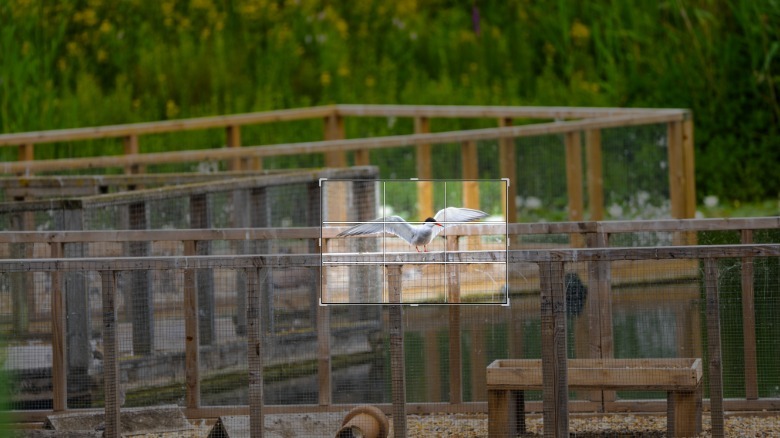
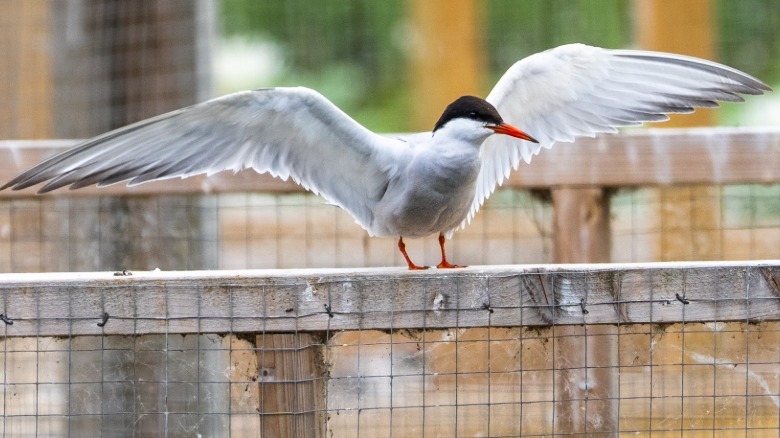
With that tech, the A7R VI shoots incredibly detailed images with accurate colors and high dynamic range. The resolution is so high that I was able to zoom into photos by 3x and still have 22MP shots. This was especially handy for bird photography when my 400mm zoom lens didn't provide quite enough reach.
Sony claims 15 stops of dynamic range for the A7R VI and up to 16 stops with dual gain enabled — the highest of any mirrorless camera. DXOMark's tests and my own observations confirm that. It excelled in high-contrast situations when I shot birds against a bright sky or on water. In those cases, I was able to extract detail from highlights or boost shadows without introducing excessive noise. In another tricky scenario, I shot West End Live theater in Trafalgar Square on a sunny day, and was able to tease out extra detail in the actors' clothes and skin.
 Steve Dent for Engadget
 Steve Dent for Engadget
If you prefer to shoot JPEGs, a setting called Dynamic Range Optimizer (DRO) now boosts shadows by up to eight levels rather than five as before. That allowed me to capture night JPEG shots around the London Eye with extra detail.
Sony improved automatic white balance as well. Colors always seemed too cool (blue) in shadow regions on previous Sony models to me, but I found that the A7R VI better matched the tones I saw with my own eyes. Overall, color accuracy is much improved on this camera, though I still occasionally saw inaccurate blueish-green hues, an issue that's not present with Nikon or Panasonic models.
The A7R VI excels in low light like few other cameras, high-res or otherwise. Its dual native ISO system allows shockingly clean shadows all the way up to ISO 12,800. At that setting, I saw only minor, pleasing film-grain-like noise, even when pushing the exposure up by three stops or more.
Design and handling

Steve Dent for Engadget
The A7R VI's body and design is largely similar to its predecessor except for a few key changes. One of those that's highly welcome is a slightly softer body material that boosts comfort during extended usage times, something that was a problem with past models. The grip is deeper too, even though the camera is relatively small, so people with big hands may still get their fingers stuck between the grip and the lens.
There are four control dials, along with a joystick and a dozen programmable buttons, making shutter speed, ISO and other settings easy to change on the fly. However, the A7R VI has no button on the top left like the A1 II, which I'd love to have to switch between single frame and burst shooting.
The A7R VI has the previous model's incredibly sharp 9.44-million-dot OLED viewfinder, but it's now twice as bright as before. That provided a detailed view of my subjects, and is far superior to any other camera's EVF (except the A1 II, which has the same one). The sharp rear display not only flips around but also extends from the body and tilts, making it equally great for vloggers and photographers. I did find it a touch dim in very bright sunlight, though.
Sony keeps choosing CFexpress Type A cards that no other camera maker uses. Their relatively slow speeds (800 MB/s max) may be one reason Sony doesn't offer RAW video capture. As with all recent models, the A7R VI also supports SD UHS II cards via the dual-slot system.
Finally, Sony introduced a new battery for the A7R VI, the first time it has changed that in 10 years. The NP-SA100 cell is a bit bigger and offers new capabilities like higher capacity and a battery health indicator. You won't be able to use it in any other Sony camera, though.
Video
Video still isn't a good reason to buy this camera, but it's no longer a sore point either. As before, the A7R VI offers up to 8K 30 fps video and 4K at 120 fps. You can shoot 10-bit S-Log3 video for extra dynamic range at up to 4:2:2 using Sony's XAVC codec (up to 520 Mbps in All-I mode). However, unlike Canon's EOS R5 II and the Panasonic S5R II, the A7R VI doesn't offer any 12-bit RAW video capture. It's also strictly limited to a 16:9 aspect ratio, with no "open gate" mode that uses the entire sensor.
If that's not an issue, the good news is that even at 8K, rolling shutter distortion is well under control for this camera. It can still show up if you pan the camera quickly or jolt it, but it's usually not a problem. The extra stop of optical stabilization is also welcome, providing tripod-like video for handheld work. It can even smooth out walking with the electronic stabilization mode, at the cost of some cropping.
The sharpest video mode is 8K subsampled from an 8.2K region of the sensor, with a 1.22x crop that slightly reduces the sensor area. All 4K modes are derived from the full sensor width, but are subsampled from a 5K portion of it, so the camera is binning half the pixels. That results in 4K footage that's noticeably softer than you get with the Canon R5 II and Panasonic S1R II.
With dual gain mode enabled (4K video only) and 10-bit S-Log3 turned on, the A7R VI delivers an outstanding 14+ stops of dynamic range. That allowed me to get fine detail in dark and light parts of the image. Low light video is excellent too, with noise well controlled up to ISO 12,800. As with photos, colors in shadow areas are more accurate than before. However, compression artifacts are noticeable in detailed shots like grass. RAW video would solve this problem, but as I mentioned, it's nowhere to be seen here.
Wrap-up

Steve Dent for Engadget
The A7R VI is Sony's most impressive camera in years, offering ultra-high resolution images and impressive speed. It's still primarily a portrait and landscape camera, but might tempt action photographers who would love the extra megapixels to crop in on distant subjects.
At $4,500, it is $600 more than its predecessor. Some of that increase can be chalked up to inflation and tariffs that have plagued tech lately, along with the new stacked sensor that likely costs more to build. That said, it's around the same retail price as Canon's R5 II and the Nikon Z8. It offers better image quality than both of those cameras, far more resolution and similar shooting speeds. However, Canon and Nikon's models have superior video capabilities. Panasonic's S1R II is a budget option, but lacks a stacked sensor.
After having all that extra resolution, I'll miss it at my next photo session. If that kind of quality is important for you, along with some extra speed and decent video features, I highly recommend the A7R VI.