






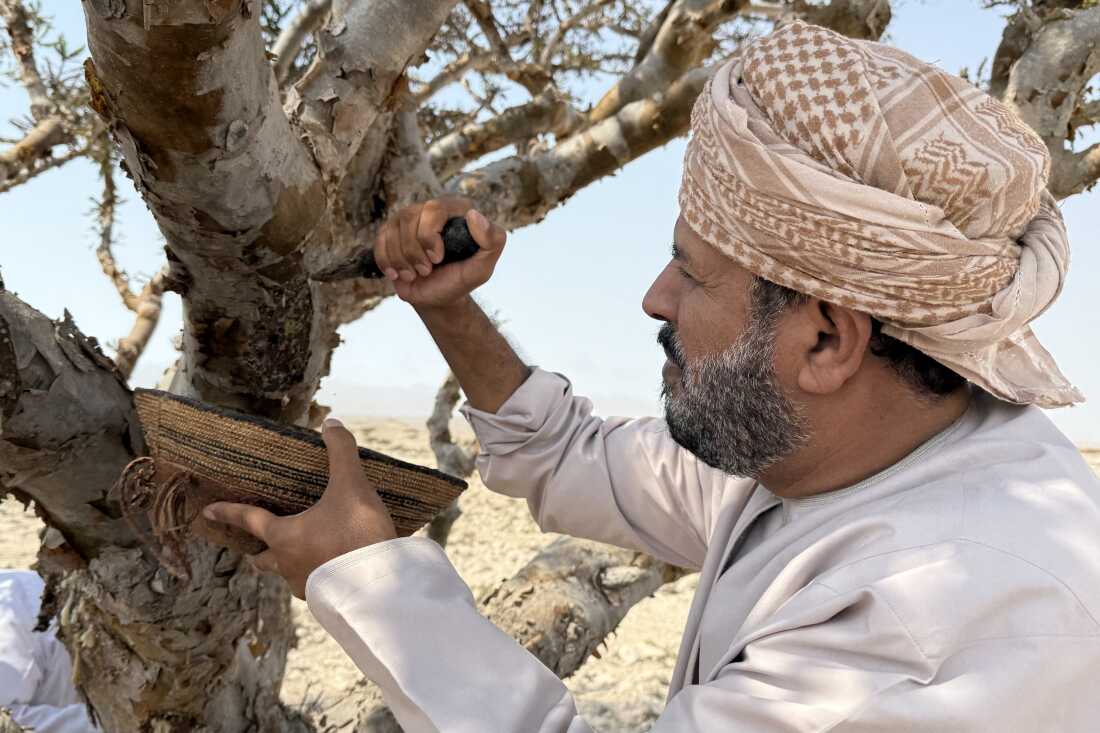
Frankincense is harvested from Boswellia trees on the Arabian peninsula. It's helped define trade routes for thousands of years, but shipments have been disrupted by the U.S. war with Iran. Maha Loubaris/AFP hide caption
toggle caption
Maha Loubaris/AFP
Frankincense was buried with King Tut. Gifted by wise men to the baby Jesus — and burned as incense in churches and temples around the world.
Now this prized product that helped to define ancient trading routes is tangled in a modern military conflict, just like all the other goods stuck in traffic around the Strait of Hormuz.
Frankincense is an aromatic resin harvested from Boswellia trees in northern Africa and the Arabian peninsula. And it's been a leading export from that region much longer than crude oil.
"The trade of frankincense is something that's well over 6,000 years old," says Anjanette DeCarlo, an adjunct professor at the University of Vermont. "Traded on the Silk Route into China and also, of course, brought into Europe, so widely used across the ancient world, right up till today."
Frankincense is now used mainly as a health supplement, anti-aging creme or in perfume. Thousands of tons are exported every year from Oman, Yemen and the nearby Horn of Africa. Those exports are now facing the same wartime blockade as oil tankers in the Middle East.
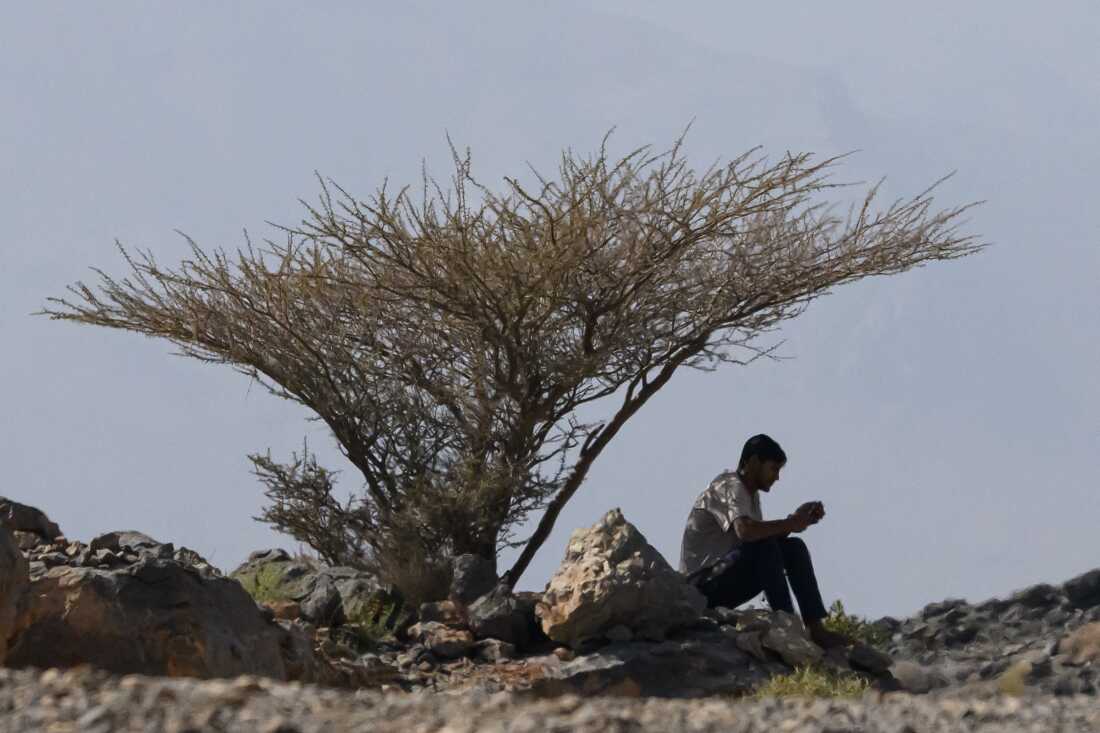
The Boswellia trees from which Frankincense is harvested grow mainly on the Arabian peninsula and in the Horn of Africa. A few are cultivated, but most are tapped in the wild. Loic Venance/AFP via Getty Images hide caption
toggle caption
Loic Venance/AFP via Getty Images
That came to light this week in a report from the Institute for Supply Management, which conducts regular surveys of businesses around the U.S. and publishes a sampling of their responses.
"The U.S.-Israel military operations against Iran have created significant uncertainty for our Omani frankincense imports," wrote an unidentified wholesaler. "Threats to close the Strait of Hormuz and rising war-risk surcharges are pressuring regional logistics costs, even for air freight."
Steve Miller, who oversees the ISM survey, says that comment is symbolic of the war's many unintended consequences.
"When you look deep in supply chains, there are things that you don't expect," Miller says. "This one was interesting in that it was a significant impact to this company."
Like many businesses, the frankincense importer quoted in the ISM report was already facing higher costs because of President Trump's trade war. Those tariff complaints have now been eclipsed by supply challenges tied to the real war.
"Certainly, oil is the top of mind of everyone," Miller says. "But there are many other impacts to the variety of companies that are doing business over there. And it isn't just, 'Go look somewhere else.' This is really the sole region where they can import those products from."
War is not the only threat facing the frankincense supply. While some of the trees that produce the resin are cultivated, the vast majority grow in the wild. That makes them vulnerable to deforestation and over-harvesting.
"I do often compare it to maple syrup production," says DeCarlo. "You can only tap maple trees at a certain time of year in certain conditions so the trees stay healthy, and the same is true of frankincense."
DeCarlo is the founder of the Save Frankincense Initiative, which works with churches and companies that use the resin to promote sustainable harvesting techniques. She says the war has once again highlighted how fragile some global supply chains can be.
"We really need people to be aware of frankincense and how long it's been something that humanity has adored, loved, revered," DeCarlo says. "There's been multitudes of disruptions of this trade and human beings have found a way to continue the trade of this resin because it is so important to us."
此内容由惯性聚合(RSS阅读器)自动聚合整理,仅供阅读参考。 原文来自 — 版权归原作者所有。