惯性聚合 高效追踪和阅读你感兴趣的博客、新闻、科技资讯
阅读原文 在惯性聚合中打开

推荐订阅源

The GitHub Blog
The GitHub Blog
云风的 BLOG
云风的 BLOG
T
Threatpost
WordPress大学
WordPress大学
CTFtime.org: upcoming CTF events
PCI Perspectives
PCI Perspectives
T
The Exploit Database - CXSecurity.com
Y
Y Combinator Blog
雷峰网
雷峰网
爱范儿
爱范儿
The Hacker News
The Hacker News
Last Week in AI
Last Week in AI
Simon Willison's Weblog
T
Tor Project blog
S
Securelist
宝玉的分享
宝玉的分享
L
LangChain Blog
O
OpenAI News
AI
AI
P
Privacy International News Feed
L
LINUX DO - 最新话题
D
DataBreaches.Net
Exploit-DB.com RSS Feed
Attack and Defense Labs
罗磊的独立博客
M
MIT News - Artificial intelligence
Security Archives - TechRepublic
月光博客
月光博客
博客园 - 【当耐特】
T
Tailwind CSS Blog
C
Cybersecurity and Infrastructure Security Agency CISA
H
Help Net Security
freeCodeCamp Programming Tutorials: Python, JavaScript, Git & More
博客园_首页
K
KPMG report finds enterprise disconnect between AI and its ROI | CIO
Hacker News - Newest:
Hacker News - Newest: "LLM"
腾讯CDC
Jina AI
Jina AI
The Last Watchdog
The Last Watchdog
K
Kaspersky official blog
Webroot Blog
Webroot Blog
奇客Solidot–传递最新科技情报
奇客Solidot–传递最新科技情报
Blog — PlanetScale
Blog — PlanetScale
MyScale Blog
MyScale Blog
MongoDB | Blog
MongoDB | Blog
P
Proofpoint News Feed
Recorded Future
Recorded Future
Threat Intelligence Blog | Flashpoint
博客园 - 三生石上(FineUI控件)
The Cloudflare Blog

mafeifan 的编程技术分享

mafengwo-mp3-downloader | mafeifan 的编程技术分享 示例页面 | mafeifan 的编程技术分享 mafeifan 的编程技术分享 mafeifan 的编程技术分享 mafeifan 的编程技术分享 mafeifan 的编程技术分享 mafeifan 的编程技术分享 mafeifan 的编程技术分享 mafeifan 的编程技术分享 mafeifan 的编程技术分享 mafeifan 的编程技术分享 查看 default namespace 下的 default service account名称 mafeifan 的编程技术分享 检查日志 | mafeifan 的编程技术分享 bridge fdb show dev flannel.1 mafeifan 的编程技术分享 mafeifan 的编程技术分享 mafeifan 的编程技术分享 mafeifan 的编程技术分享 mafeifan 的编程技术分享 mafeifan 的编程技术分享 mafeifan 的编程技术分享 mafeifan 的编程技术分享 mafeifan 的编程技术分享 mafeifan 的编程技术分享 mafeifan 的编程技术分享 mafeifan 的编程技术分享 mafeifan 的编程技术分享 mafeifan 的编程技术分享 mafeifan 的编程技术分享 数据收集原理分析 | mafeifan 的编程技术分享 mafeifan 的编程技术分享 mafeifan 的编程技术分享 mafeifan 的编程技术分享 mafeifan 的编程技术分享 mafeifan 的编程技术分享 mafeifan 的编程技术分享 mafeifan 的编程技术分享 mafeifan 的编程技术分享 mafeifan 的编程技术分享 mafeifan 的编程技术分享 mafeifan 的编程技术分享 mafeifan 的编程技术分享 mafeifan 的编程技术分享 mafeifan 的编程技术分享 几种方法 | mafeifan 的编程技术分享 mafeifan 的编程技术分享 mafeifan 的编程技术分享 mafeifan 的编程技术分享 mafeifan 的编程技术分享 mafeifan 的编程技术分享 mafeifan 的编程技术分享 mafeifan 的编程技术分享 mafeifan 的编程技术分享 mafeifan 的编程技术分享 mafeifan 的编程技术分享 mafeifan 的编程技术分享 mafeifan 的编程技术分享 mafeifan 的编程技术分享 mafeifan 的编程技术分享 mafeifan 的编程技术分享 mafeifan 的编程技术分享 mafeifan 的编程技术分享 mafeifan 的编程技术分享 mafeifan 的编程技术分享 mafeifan 的编程技术分享 mafeifan 的编程技术分享 mafeifan 的编程技术分享 mafeifan 的编程技术分享 mafeifan 的编程技术分享 mafeifan 的编程技术分享 mafeifan 的编程技术分享 mafeifan 的编程技术分享 mafeifan 的编程技术分享 mafeifan 的编程技术分享 mafeifan 的编程技术分享 mafeifan 的编程技术分享 mafeifan 的编程技术分享 mafeifan 的编程技术分享 mafeifan 的编程技术分享 mafeifan 的编程技术分享 mafeifan 的编程技术分享 mafeifan 的编程技术分享 mafeifan 的编程技术分享 mafeifan 的编程技术分享 mafeifan 的编程技术分享 mafeifan 的编程技术分享 mafeifan 的编程技术分享 mafeifan 的编程技术分享 mafeifan 的编程技术分享 mafeifan 的编程技术分享 mafeifan 的编程技术分享 mafeifan 的编程技术分享 check the export on the very top of this document so we can use $do mafeifan 的编程技术分享 mafeifan 的编程技术分享 mafeifan 的编程技术分享 mafeifan 的编程技术分享 延伸 -- 关于前端路由 xdebug 3 和 2 的区别
mafeifan 的编程技术分享
2026-01-16 · via mafeifan 的编程技术分享

前言 ​

共享订阅是 MQTT 5.0 协议引入的新特性,相当于是订阅端的负载均衡功能。

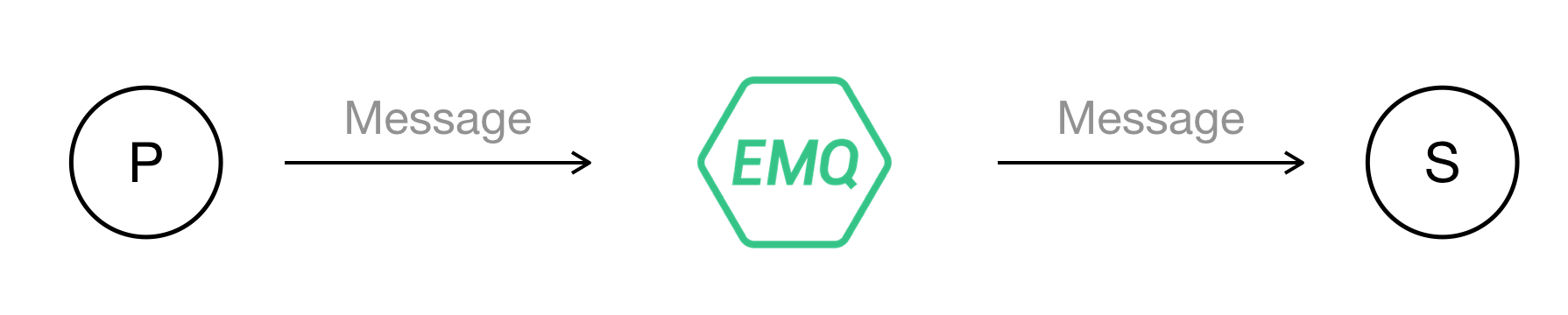
我们知道一般的非共享订阅的消息发布流程是这样的:
WechatIMG316.png

在这种结构下,如果订阅节点发生故障,就会导致发布者的消息丢失(QoS 0)或者堆积在 Server 中(QoS 1, 2)。一般情况下,解决这个问题的办法都是直接增加订阅节点,但这样又产生了大量的重复消息,不仅浪费性能,在某些业务场景下,订阅节点还需要自行去重,进一步增加了业务的复杂度。

其次,当发布者的生产能力较强时,可能会出现订阅者的消费能力无法及时跟上的情况,此时只能由订阅者自行实现负载均衡来解决,又一次增加了用户的开发成本。

协议规范 ​

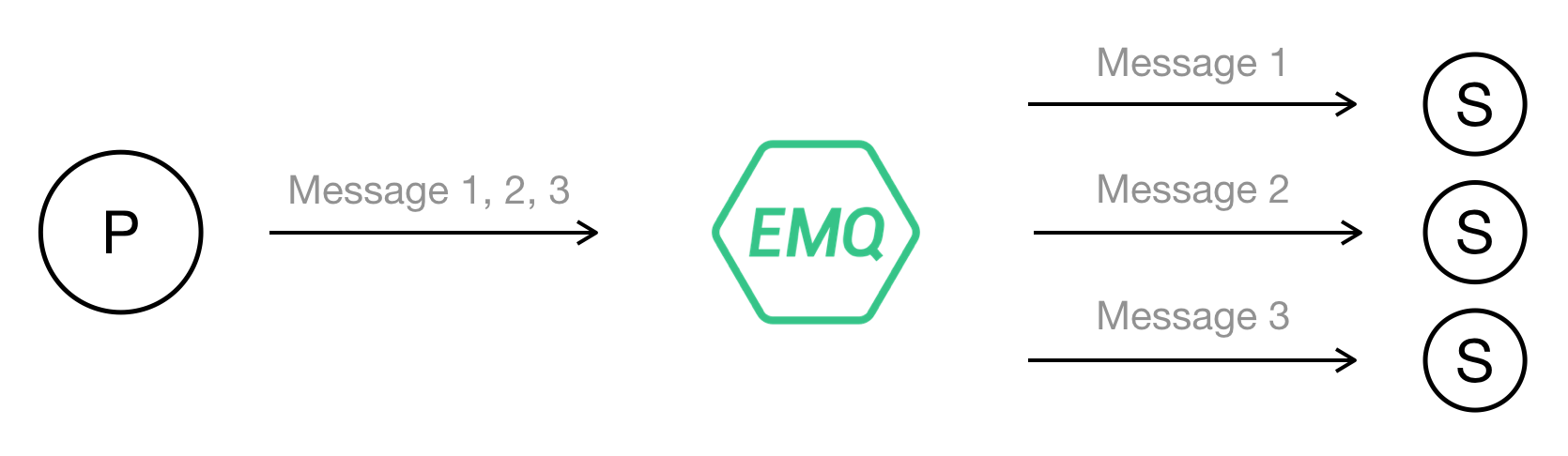
现在,在 MQTT 5.0 协议中,你可以通过共享订阅特性解决上面提到的问题。当你使用共享订阅时,消息的流向就会变为:
WechatIMG317.png

同非共享订阅一样,共享订阅包含一个主题过滤器和订阅选项,唯一的区别在于共享订阅的主题过滤器格式必须是 $share/{ShareName}/{filter} 这种形式。这几个的字段的含义分别是:

  • $share 前缀表明这将是一个共享订阅
  • {ShareName} 是一个不包含 "/", "+" 以及 "#" 的字符串。订阅会话通过使用相同的 {ShareName} 表示共享同一个订阅,匹配该订阅的消息每次只会发布给其中一个会话
  • {filter} 即非共享订阅中的主题过滤器

需要注意的是,如果服务端正在向其选中的订阅端发送 QoS 2 消息,并且在分发完成之前网络中断,服务端会在订阅端重新连接时继续完成该消息的分发。如果订阅端的会话在其重连之前终止,服务!端将丢弃该消息而不尝试发送给其他订阅端。如果是 QoS 1 消息,服务端可以等订阅端重新连接之后继续完成分发,也可以在订阅端断开连接时就立即尝试将消息分发给其他订阅端,MQTT 协议没有强制规定,因此需要视服务器的具体实现而定。但如果在等待订阅端重连期间其会话终止,服务端则会将消息尝试发送给其他订阅端。

共享策略 ​

虽然共享订阅使得订阅端能够负载均衡地消费消息,但 MQTT 协议并没有规定 Server 应当使用什么负载均衡策略。作为参考,EMQ X 提供了 random, round_robin, sticky, hash 四种策略供用户自行选择。

  • random: 在所有共享订阅会话中随机选择一个发送消息
  • round_robin: 按照订阅顺序轮流选择
  • sticky: 使用 random 策略随机选择一个订阅会话,持续使用至该会话取消订阅或断开连接再重复这一流程
  • hash: 对发送者的 ClientID 进行 hash 操作,根据 hash 结果选择订阅会话

效果演示 ​

最后,我们通过一个综合性的示例来演示共享订阅的效果。

服务端使用 emqx-v3.2.4,客户端使用 emqtt,emqx 的共享订阅分发策略为默认的 random:

broker.shared_subscription_strategy = random

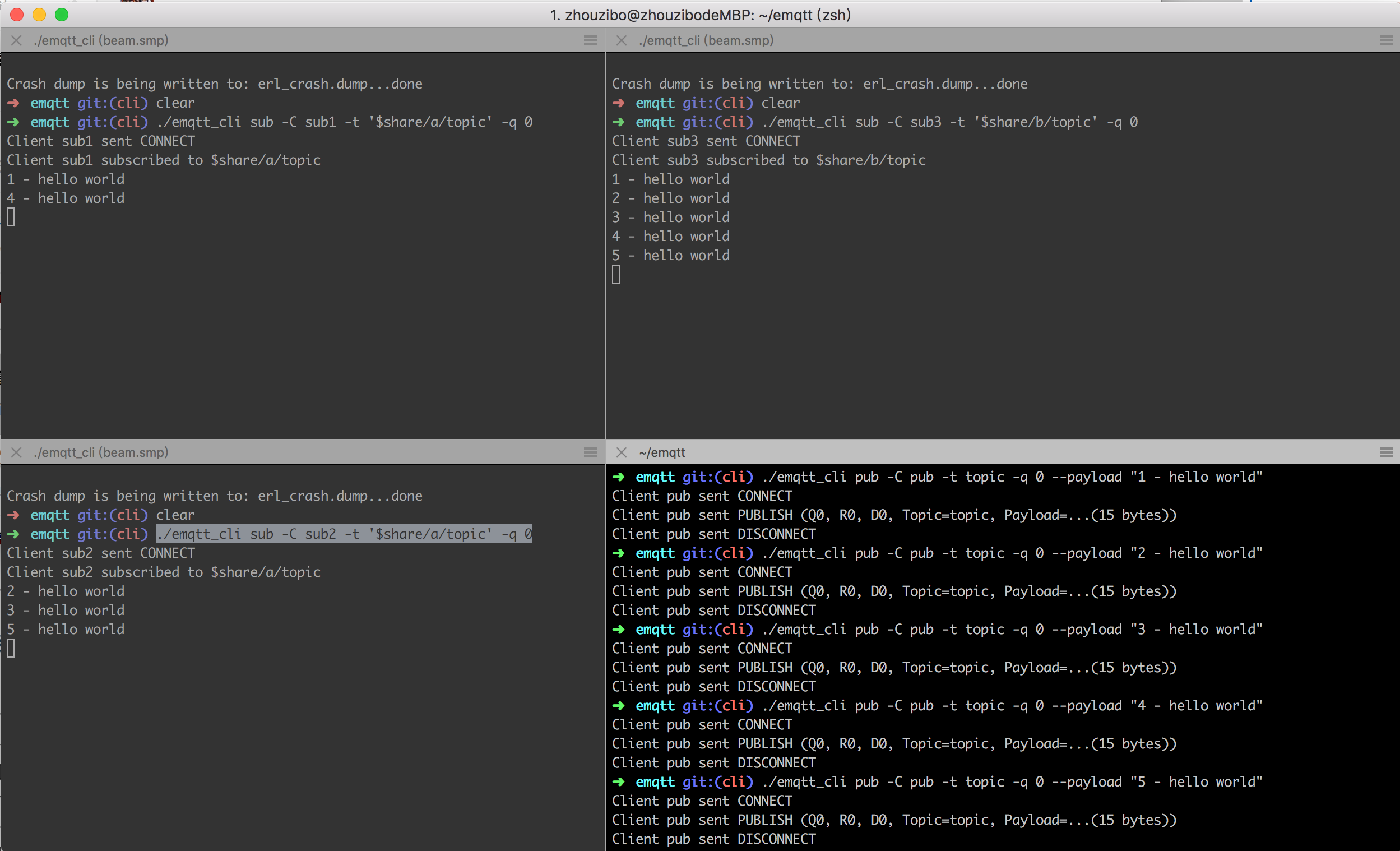
使用 ./emqx start 启动 emqx,然后使用 emqtt 启动三个订阅客户端,分别订阅 $share/a/topic, $share/a/topic, $share/b/topic
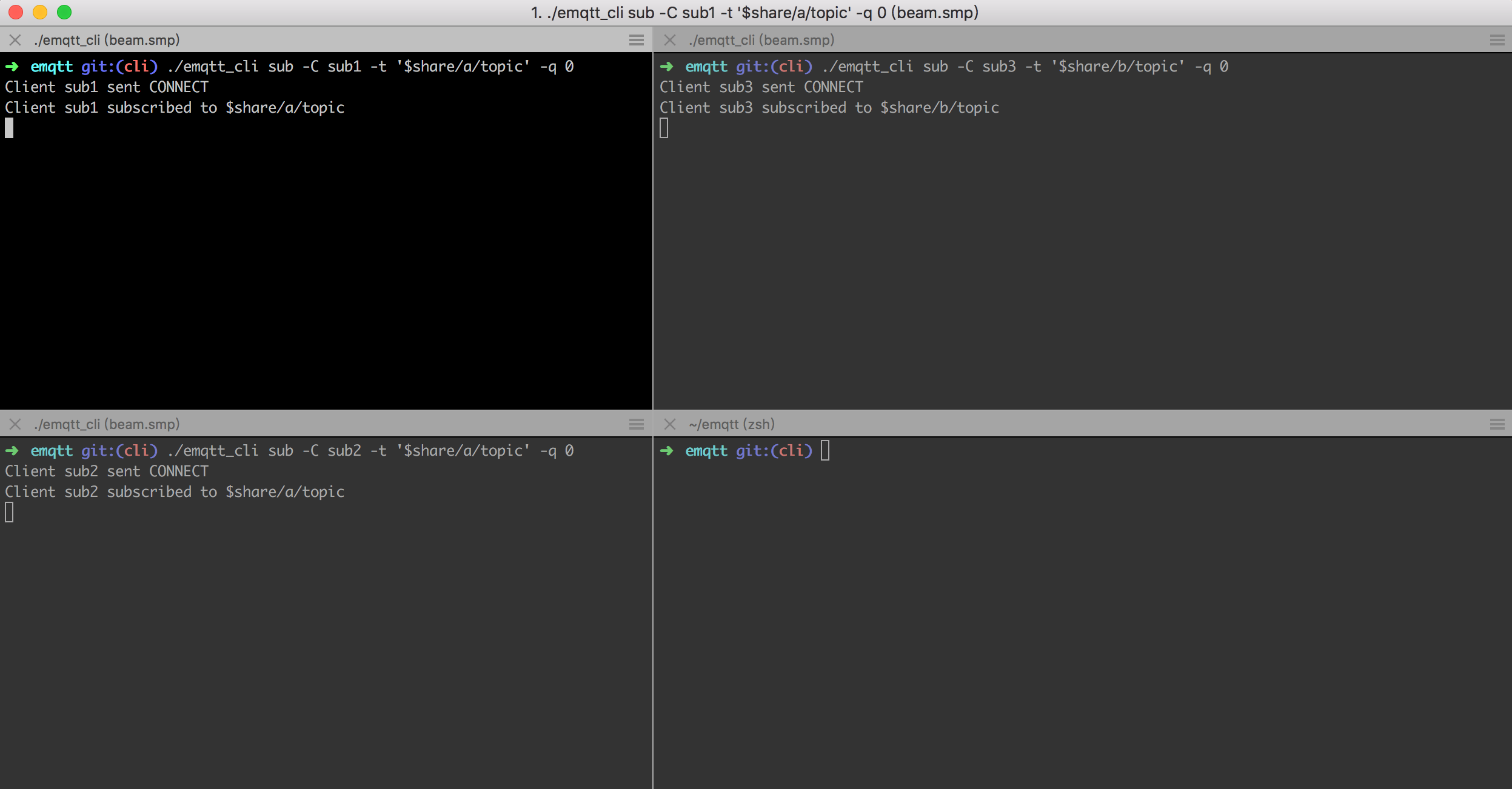
image20191111142037391.png

启动一个发布客户端,向 topic 主题发布消息。

image20191111144814890.png

$share/a/topic$share/b/topic 属于不同的会话组,非共享订阅主题 topic 会在所有的会话组中进行负载均衡。客户端 sub3 因为组内只有自己一个会话,所以收到了所有消息,而客户端 sub1sub2 则是遵循我们配置的 random 策略随机接收消息。