


惯性聚合 高效追踪和阅读你感兴趣的博客、新闻、科技资讯
阅读原文 在惯性聚合中打开

推荐订阅源

雷峰网
雷峰网
T
The Blog of Author Tim Ferriss
WordPress大学
WordPress大学
V
V2EX
Jina AI
Jina AI
S
Schneier on Security
Cyberwarzone
Cyberwarzone
cs.CV updates on arXiv.org
PCI Perspectives
PCI Perspectives
美团技术团队
小众软件
小众软件
L
LangChain Blog
N
Netflix TechBlog - Medium
大猫的无限游戏
大猫的无限游戏
T
Threatpost
T
Tor Project blog
K
Kaspersky official blog
Microsoft Security Blog
Security Archives - TechRepublic
Security Latest
Security Latest
H
Heimdal Security Blog
N
News and Events Feed by Topic
T
Threat Research - Cisco Blogs
J
Java Code Geeks
H
Hackread – Cybersecurity News, Data Breaches, AI and More
T
Tailwind CSS Blog
C
CXSECURITY Database RSS Feed - CXSecurity.com
钛媒体:引领未来商业与生活新知
钛媒体:引领未来商业与生活新知
M
MIT News - Artificial intelligence
Apple Machine Learning Research
N
News | PayPal Newsroom
I
Intezer
博客园 - 聂微东
U
Unit 42
Cisco Talos Blog
Cisco Talos Blog
量子位
T
The Exploit Database - CXSecurity.com
Last Week in AI
Last Week in AI
博客园_首页
月光博客
月光博客
Webroot Blog
Webroot Blog
I
InfoQ
The Cloudflare Blog
Attack and Defense Labs
人人都是产品经理
人人都是产品经理
Project Zero
Project Zero
Hacker News: Ask HN
Hacker News: Ask HN
IT之家
IT之家
Google DeepMind News
C
Cisco Blogs

Posts on WKLKEN THINKING

apisix 中的 lrucache apisix 中的服务发现机制 apisix 中的负载均衡 apisix etcd机制 聊聊框架 关于 k8s 的 zero downtime deployment 一些建议 apisix 遇到的一些问题 关于在除夕前一天换了一个洗衣机的故事 Django DRF 性能优化 DRF 的一些实践 Part1: Serializer DRF继承关系图 Better Code: 关于接口的灵活性 新的仓库: wklken/naming 缓存使用的一些经验 Better Code: 抽象: 可扩展性与可维护性的抉择 Better Code: 异常时, 该提示用户哪些信息? Better Code: 更好的异常日志打印 Go: some libs Go: go-redis/cache升级的坑 Go: logrus性能提升 Go: gin validation 远程办公的一点总结 Go: 开发过程中的一些bug 项目管理实践: 风险驱动开发 Go: 一种error wrap调用链处理方式 漫谈技术选型 Go: 基于 apitest 做handler层单元测试 Go: go-sql-driver interpolateparams参数优化 [分享]深度工作 你需要更多的思考时间 Django项目重构小结 工作七年小结: 学习,生活及其他 [分享]bash日常: bash-utils 极客时间推广海报 2017总结: 予时光以意义 k8s APIServer源码: api注册详细细节 k8s APIServer源码: api注册主体流程 k8s APIServer源码: 服务启动 k8s APIServer源码: go-restful框架 重构 - 读书笔记(Python示例) 写给新人的沟通建议 vim 杂谈 - 关于快速编辑 vim 杂谈 - 关于移动 读书笔记-重构: 章11 处理概括关系 读书笔记-重构: 章10 简化函数调用 读书笔记-重构: 章9 简化表达式 读书笔记-重构: 章8 重新组织数据 读书笔记-重构: 章7 在对象之间搬移特性 读书笔记-重构: 章6 重新组织函数 Python 代码规范小结 [分享]关于vim ElasticSearch集群部署文档 Logstash+ElasticSearch处理mysql慢查询日志 [分享]关于代码调试DE那些事 Logstash+ElasticSearch+Kibana- 实现相对通用的数据收集分析 ELK维护的一些点(二) [分享]Python源码剖析-数据结构 一些Centos Python生产环境的部署命令 摘录<<6个月学会任何一种外语>> ELK 维护的一些点 也许是一个新的开始 一些vim的个性化配置 读书笔记-调试九法 这段时间的一些想法 Python 源码阅读 - 垃圾回收机制 我为什么要写博客 APUE笔记-第一章 UNIX基础知识 Python源码阅读-闭包的实现 Python源码阅读-内存管理机制(二) Python源码阅读-内存管理机制(一) Python-基础-数据结构小结 '活动'设计的一些trick 一些简单的Python测试题 我的tmux配置及说明【k-tmux】 Review and Restart 工作四周年小结 vim插件: surround & repeat[成对符号编辑] vim插件: gundo[时光机] vim插件: expand-region[区域选中] vim插件: quickrun[快速执行] vim插件: trailing-whitespace[行尾空格处理] vim插件: closetag[成对标签补全] vim插件: ctrlp[文件搜索] vim插件: airline[状态栏增强] vim插件: theme[主题] vim插件: tagbar[大纲式导航] vim插件: nerdcommenter[快速注释] vim插件: rainbow_parentheses[括号高亮] vim插件: syntastic[语法检查] vim插件: delimitmate[符号自动补全] vim插件: matchit[成对标签跳转] vim插件: easy-align[快速对齐] vim插件: multiple-cursors[多光标操作] vim插件: vim-signature[快速标记跳转] vim插件: easymotion[快速跳转] vim插件: vundle[管理插件] Elasticsearch几个问题的解决 分享一份 Vim 简介PPT k-vim 更新9.0版本 关于知识管理工具的思考
[翻译]Python中staticmethod和classmethod的差异
2013-12-22 · via Posts on WKLKEN THINKING

原文地址 入口

很短,顺手一翻


Class vs static methods in Python

这篇文章试图解释:什么事staticmethod/classmethod,并且这两者之间的差异.

staticmethod和classmethod均被作为装饰器,用作定义一个函数为"staticmethod"还是"classmethod"

如果想要了解Python装饰器的基础,可以看 这篇文章

Simple, static and class methods

类中最常用到的方法是 实例方法(instance methods), 即,实例对象作为第一个参数传递给函数

例如,下面是一个基本的实例方法

:::python
class Kls(object):
    def __init__(self, data):
        self.data = data

    def printd(self):
        print(self.data)

ik1 = Kls('arun')
ik2 = Kls('seema')

ik1.printd()
ik2.printd()

得到的输出:

arun
seema

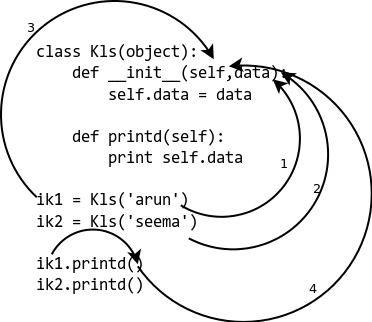
调用关系图:
translate1

查看代码和图解:

1/2 参数传递给函数
3   self参数指向实例本身 
4   我们不需要显式提供实例,解释器本身会处理

假如我们想仅实现类之间交互而不是通过实例?我们可以在类之外建立一个简单的函数来实现这个功能,但是将会使代码扩散到类之外,这个可能对未来代码维护带来问题。

例如:

def get_no_of_instances(cls_obj):
    return cls_obj.no_inst

class Kls(object):
    no_inst = 0

    def __init__(self):
        Kls.no_inst = Kls.no_inst + 1

ik1 = Kls()
ik2 = Kls()

print(get_no_of_instances(Kls))

结果:

2

The Python @classmethod

现在我们要做的是在类里创建一个函数,这个函数参数是类对象而不是实例对象.

在上面那个实现中,如果要实现不获取实例,需要修改如下:

def iget_no_of_instance(ins_obj):
    return ins_obj.__class__.no_inst

class Kls(object):
    no_inst = 0

    def __init__(self):
        Kls.no_inst = Kls.no_inst + 1

ik1 = Kls()
ik2 = Kls()
print iget_no_of_instance(ik1)

结果
2

可以使用Python2.2引入的新特性,使用@classmethod在类代码中创建一个函数

class Kls(object):
    no_inst = 0

    def __init__(self):
        Kls.no_inst = Kls.no_inst + 1

    @classmethod
    def get_no_of_instance(cls_obj):
        return cls_obj.no_inst

ik1 = Kls()
ik2 = Kls()

print ik1.get_no_of_instance()
print Kls.get_no_of_instance()

We get the following output:

2
2

The Python @staticmethod

通常,有很多情况下一些函数与类相关,但不需要任何类或实例变量就可以实现一些功能.

比如设置环境变量,修改另一个类的属性等等.这种情况下,我们也可以使用一个函数,一样会将代码扩散到类之外(难以维护)

下面是一个例子:

IND = 'ON'

def checkind():
    return (IND == 'ON')

class Kls(object):
    def __init__(self,data):
        self.data = data

    def do_reset(self):
        if checkind():
            print('Reset done for:', self.data)

    def set_db(self):
        if checkind():
            self.db = 'new db connection'
            print('DB connection made for:',self.data)

ik1 = Kls(12)
ik1.do_reset()
ik1.set_db()

结果:

Reset done for: 12
DB connection made for: 12

现在我们使用@staticmethod, 我们可以将所有代码放到类中

IND = 'ON'

class Kls(object):
    def __init__(self, data):
        self.data = data

    @staticmethod
    def checkind():
        return (IND == 'ON')

    def do_reset(self):
        if self.checkind():
            print('Reset done for:', self.data)

    def set_db(self):
        if self.checkind():
            self.db = 'New db connection'
        print('DB connection made for: ', self.data)

ik1 = Kls(12)
ik1.do_reset()
ik1.set_db()

得到的结果:

Reset done for: 12
DB connection made for: 12

How @staticmethod and @classmethod are different

class Kls(object):
    def __init__(self, data):
        self.data = data

    def printd(self):
        print(self.data)

    @staticmethod
    def smethod(*arg):
        print('Static:', arg)

    @classmethod
    def cmethod(*arg):
        print('Class:', arg)

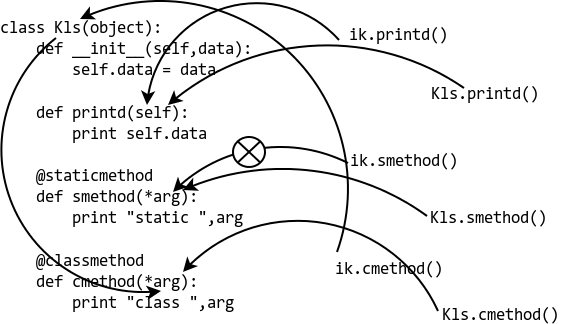
调用

>>> ik = Kls(23)
>>> ik.printd()
23
>>> ik.smethod()
Static: ()
>>> ik.cmethod()
Class: (<class '__main__.Kls'>,)
>>> Kls.printd()
TypeError: unbound method printd() must be called with Kls instance as first argument (got nothing instead)
>>> Kls.smethod()
Static: ()
>>> Kls.cmethod()
Class: (<class '__main__.Kls'>,)

图解
translate2