In an age of AI, Pope looks for “artisans of hope.”
Pope Leo XIV presents Magnifica Humanitas at the Vatican. Credit: Getty Images
With the co-founder of Anthropic at his side today in Rome, Pope Leo XIV released a major new encyclical—his first—called Magnifica Humanitas (Magnificent Humanity). It calls for AI to be “disarmed” in service of the common good.
“The word is strong,” Leo admits, but he chose the language of “disarmament” deliberately, “because this moment needs words capable of attracting attention, awakening consciences, and indicating paths forward for humanity.” AI today must be “freed from logics that turn it into an instrument of domination, exclusion, and death.”
The 40,000-word encyclical contains uncompromising critiques of AI-powered autonomous weapons, neo-colonial attitudes toward data collection, and the hoarding of “new forms of property, such as patents, algorithms, digital platforms, technological infrastructure, and data.”
But the letter goes far beyond critique, updating Catholic social teaching in a way that calls on everyone to “build”—a favorite term of the Silicon Valley elite. (See venture capitalist Marc Andreessen’s well-known 2020 essay, “It’s Time to Build.”)
In Leo’s vision, though, this “building” extends beyond code or startups or factories or housing. He calls for nothing less than the creation of a “civilization of love” in which everyone works for the common good within their own sphere of life and in which technology does not dominate, exclude, or bypass humanity, but instead serves and augments it.
That is why, despite releasing it today, Leo actually signed the encyclical on May 15, the anniversary of a famous 1891 encyclical called Rerum Novarum (New Things). That older document set out Catholic social teaching during an era of capitalist upheaval, largely taking the side of workers and labor unions. Today, Leo updates the church’s social teaching for the age of AI, which he sees as the “res novae of our time.”
That new thing
As his predecessor did 135 years ago, Leo warns that individual humans and humanity itself must not be left behind by technological advancements or by new forms of power. He is clear-eyed about the sway that technological elites hold today, comparing them to colonial conquerors.
Entire regions, especially those marked by structural fragility and limited geopolitical relevance, are currently subjected to a new mindset of extraction: that of health data, epidemiological profiles, genetic maps and demographic information. These have become the new “rare earths” of power: vital data which, once aggregated and analyzed, can be used to train predictive models, guide investment strategies, anticipate crises and, above all, determine who and what is deemed to matter.
Those who control the health data of entire peoples—often collected under the pretext of aid, research or innovation—possess a structural leverage over the future, for they can shape needs and markets. They can also decide, before others, to whom medicines, investments and protections will be allocated. Here lies one of the most urgent moral challenges of our time: to ensure that shared knowledge becomes a true common good rather than an instrument of dominance.
If we don’t figure this out, Leo says, “the digital age will not be post-colonial, but colonial in another form.”
Still, the Vatican is not opposed to AI as a tool. Indeed, this spring it rolled out an AI-powered system that will translate services at St. Peter’s into 60 languages on people’s smartphones.
But Magnifica Humanitas argues that AI must be kept in perspective, since “these systems merely imitate certain functions of human intelligence.” While they may be faster thinkers, AI tools “do not undergo experiences, do not possess a body, do not feel joy or pain, do not mature through relationships, and do not know from within what love, work, friendship, or responsibility mean. Nor do they have a moral conscience.”
That is why, Leo argues, we should not be led astray by AI’s focus on “intelligence.” Elevating one quality of the human person in this way can overshadow “other essential dimensions of life, such as affection, the will, commitment, and relationships.” If you give humans mere technical power apart from wisdom, emotion, and relationships, Leo says, it “does not make us more capable; it makes us more isolated and more vulnerable to being dominated and excluded.”
Because of this reality, AI must be “disarmed,” Leo concludes, freeing it “from monopolistic control and opening it to discussion and debate, therefore making it human-friendly and restoring it to the plurality of human cultures and ways of life.” Mere regulation is “insufficient.”
The disarmament thus takes place as an ecological project, one that situates AI within the broad sweep of human culture and that orients it toward human flourishing, not toward warfare, monopolistic power, or new inequalities. It calls upon us simultaneously to resist technological domination and to build through “small and steadfast acts of fidelity that serve as a bulwark against dehumanization.”
To adopt the mindset needed to build this new “civilization of love,” Leo suggests five pathways that individuals and institutions can each embrace: the need to disarm words, building peace through justice, adopting the perspective of victims, cultivating a healthy realism, and reviving dialogue and multilateralism.
Paging Gandalf
In sounding this call to both disarm and to build, Leo turns to “twentieth-century Catholic author” JRR Tolkien. Though he can’t quite bring himself to say that he’s quoting Gandalf from Lord of the Rings, that’s exactly what’s happening.
(The encyclical says only that the quote comes from “the words of a protagonist in one of [Tolkien’s] novels.” Though Pope Francis previously spoke of Tolkien’s work, this appears to be the first time that Tolkien has ever been quoted in the highest levels of the church’s official doctrinal publications.)
Gandalf says, in what is very much a theme of the entire Lord of the Rings:
It is not our part to master all the tides of the world, but to do what is in us for the succour of those years wherein we are set, uprooting the evil in the fields that we know, so that those who live after may have clean earth to till.
The moral and local action envisioned here, along with Tolkien’s suspicion of the dehumanizing effects of technology, clearly appealed to Leo.
Still, the Church knows its place, Leo says, and does not wish to dictate. Religion does not possess “technical answers, nor do we seek to displace those with expertise,” he writes. “But we bring a wisdom concerning the human that our present time desperately needs: every person is unique and irreplaceable, a free and intelligent subject with a conscience, capable of seeking God, serving one another, caring for our common home.”
Leo asks everyone who reads the document to make a commitment to “stay awake and, as ‘artisans of hope,’ to keep on building the worksite of our time.”
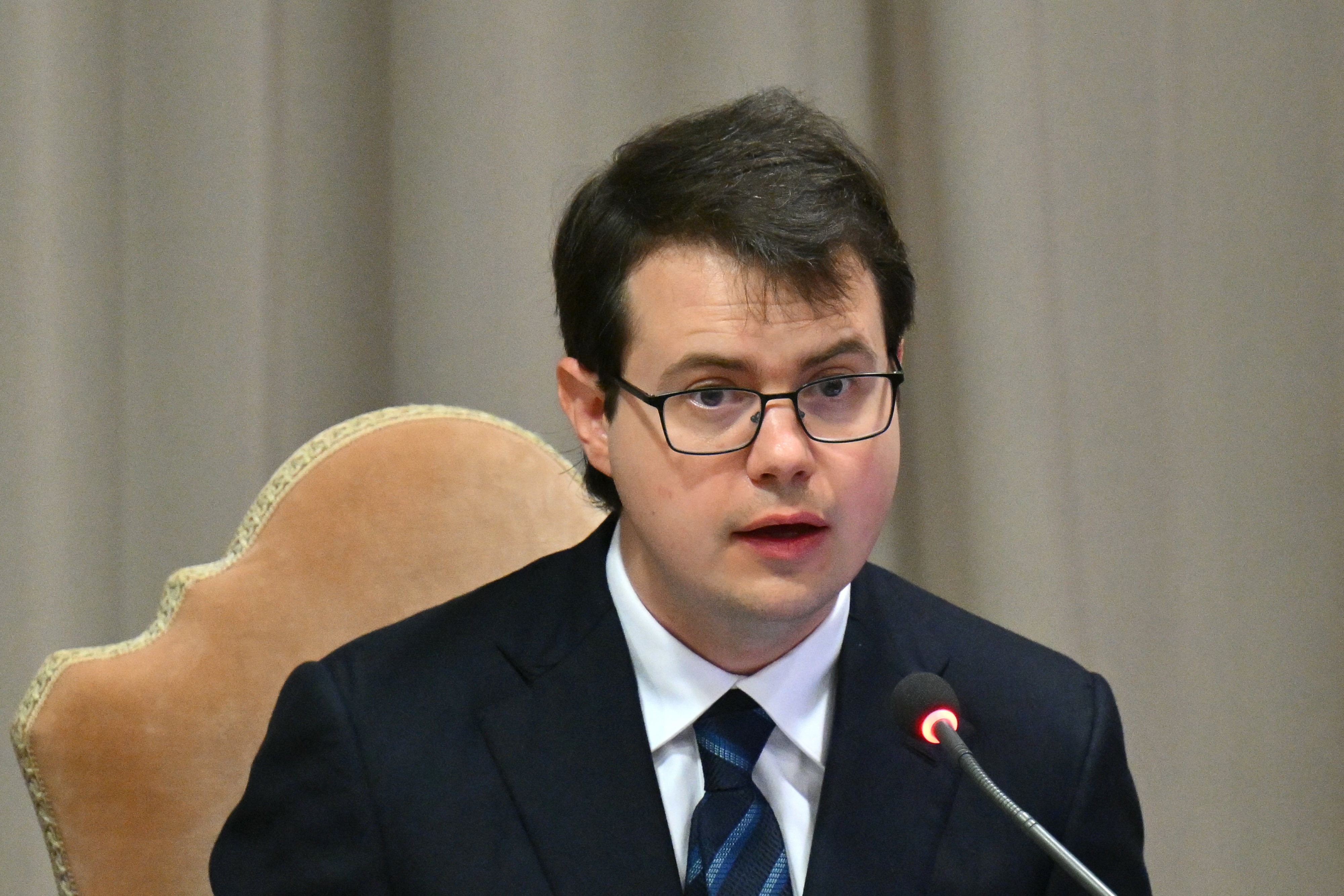
Anthropic co-founder Christopher Olah speaking at the Vatican.
Credit: Getty Images
Anthropic co-founder Christopher Olah speaking at the Vatican. Credit: Getty Images
Walking together
Anthropic co-founder Chris Olah called the document “timely,” pointing to three questions that he most wants religious and moral leaders to help the AI industry think through.
The first is our duty to the global poor. There is a real possibility that AI will displace human labor at very large scale. If that happens, supporting those displaced will be a moral imperative of historic proportions. This task will be difficult enough, but I worry most dialogue misses an even harder challenge. AI development is concentrated in a handful of wealthy nations. How can we ensure the gains of AI are shared globally? We do not have a mechanism for this. It is an unsolved problem, and it is the kind of problem the Church has historically refused to let the world ignore.
The second is the need for moral imagination and ambition regarding human flourishing. If AI models are going to be widespread, what does it look like for humans, families, and the world to flourish?…
The third is the need for discernment on the nature of AI models. I am a scientist. I lead a research team that studies the internal structure of these models—what is actually happening inside them. And I will be honest: we keep finding things that are mysterious, even unsettling. We find structures that mirror results from human neuroscience. We find evidence of introspection. We find internal states that functionally mirror joy, satisfaction, fear, grief, and unease. I don’t know what that means, but I think it warrants ongoing discernment.
When releasing Magnifica Humanitas today, Pope Leo thanked Olah for attending and added that they would keep in touch.
“I accept your invitation to walk together,” the Pope said, “to listen and to speak and together to find the way for humanity in this time of artificial intelligence.”