robots ahoy!
Woven City is a privacy nightmare but could be helpful to an OEM desperate to be more.
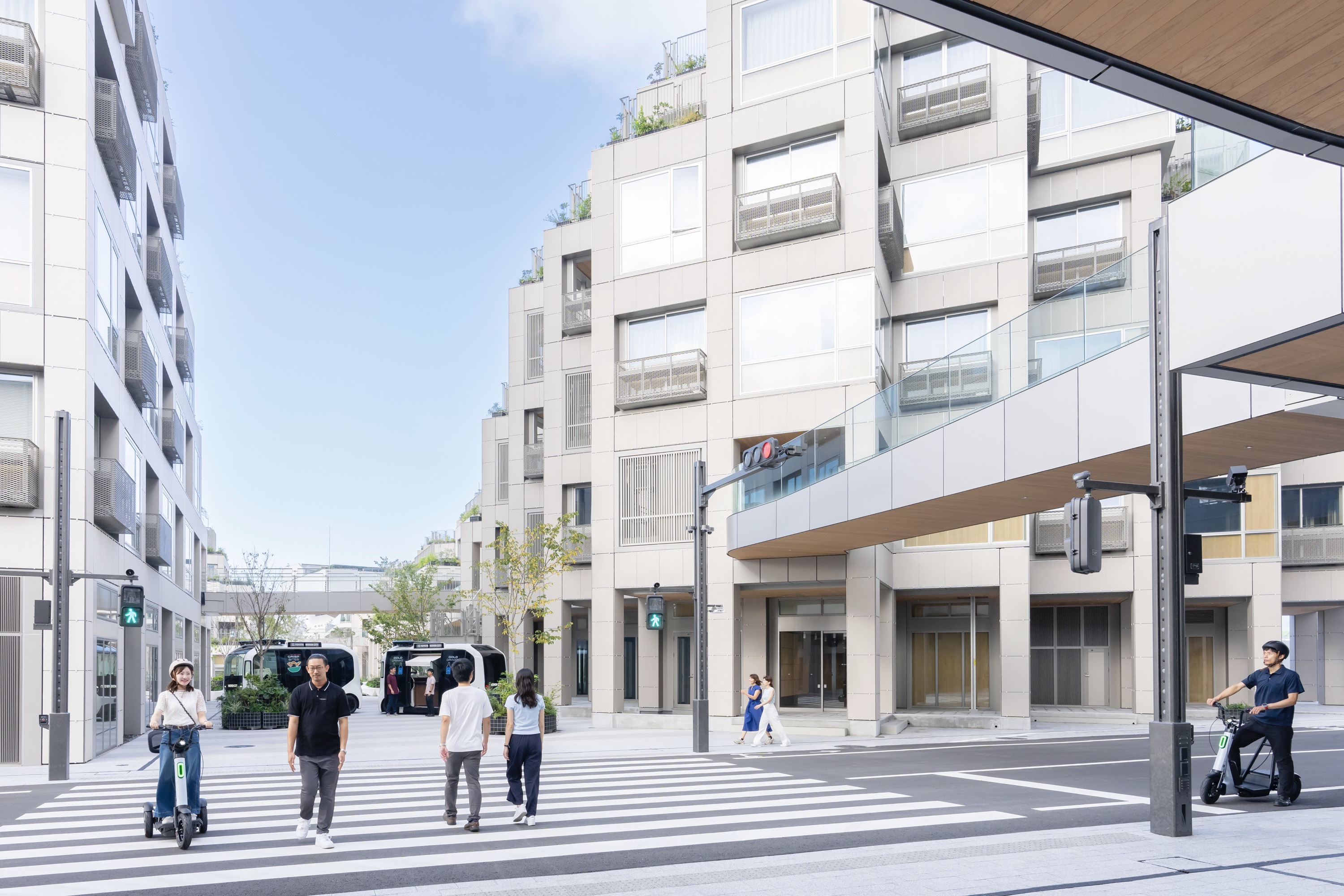
Residents of Toyota's Woven City can ride around the place on three-wheeled "Swakes" or take the e-Palatte buses. Or walk, since it's quite compact right now. Credit: Toyota
Residents of Toyota's Woven City can ride around the place on three-wheeled "Swakes" or take the e-Palatte buses. Or walk, since it's quite compact right now. Credit: Toyota
At the Consumer Electronics Show in 2020, Toyota CEO Akio Toyoda pledged to build a city of the future, a place where researchers, engineers, and scientists could live and work together. It was framed as the start of a transformation for the world’s largest car company, moving it toward becoming a fully fledged mobility company.
Six months ago, after Toyota spent an estimated $10 billion to build an urban paradise atop a disused factory, the first residents moved in. One-hundred handpicked “Weavers,” residents chosen to boost the tech cred of the sensor-laden mini-metropolis, began settling in.
Last week, I got a chance to check it out. Here’s what I learned while wandering the streets of Toyota’s vision of the future.
The future is safe
As part of its transformation into a true mobility company, Toyota is aiming to become the world’s safest carmaker. The company says it wants to create a “society with zero accidents”—a tall order given the sheer number of Toyotas currently on the road.
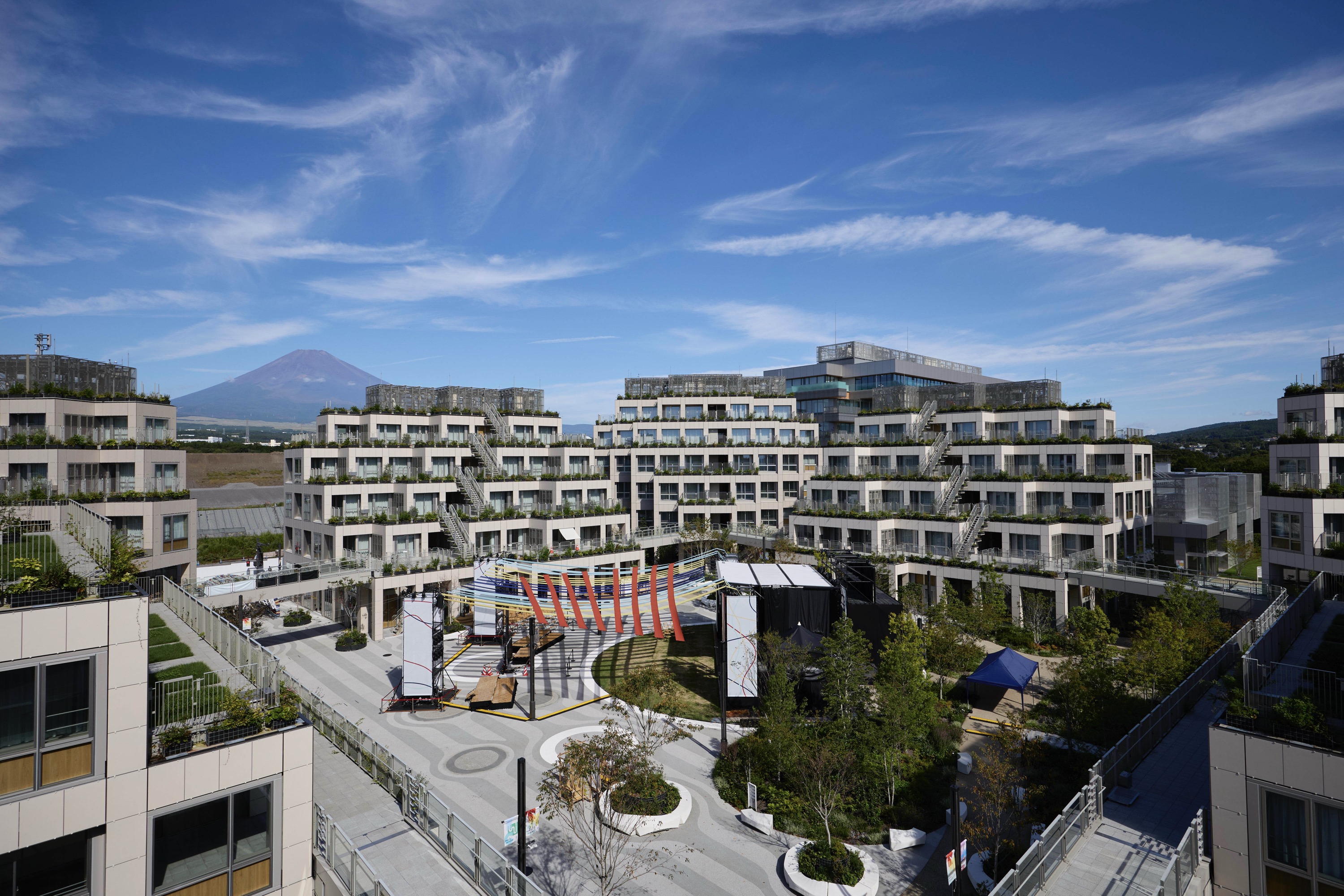
Woven City on a sunny day.
Credit: Toyota
Woven City on a sunny day. Credit: Toyota
“Statistically, the set of autonomous vehicles out there is nowhere close to the magnitude of vehicles that Toyota has in the world,” John Absmeier, Woven City’s CTO, told me. While companies like Waymo are fielding tens of thousands of vehicles, Toyota’s eventual autonomous fleet will need to operate at a much higher standard, he said.
To get there, Absmeier said Toyota’s cars will need far more awareness than onboard systems can provide, even with the most advanced lidar, radar, and imaging sensors on the planet. For instance, the only way to spot a kid darting out from behind a truck, he said, is with cameras on every street watching for hazards, paired with warning systems for oncoming traffic.
This is part of the age-old promise of vehicle-to-everything communications, and at Woven City, Toyota is trying to put that idea into practice.
The future is a privacy nightmare
But if the idea of ubiquitous cameras watching everyone gives you pause, you’re not alone—it certainly seemed startling to me. I counted eight separate cameras at a single intersection in Woven City, plus many more mounted on the ceilings of the buildings I toured. Even the small on-site coffee shop had half a dozen hanging overhead.
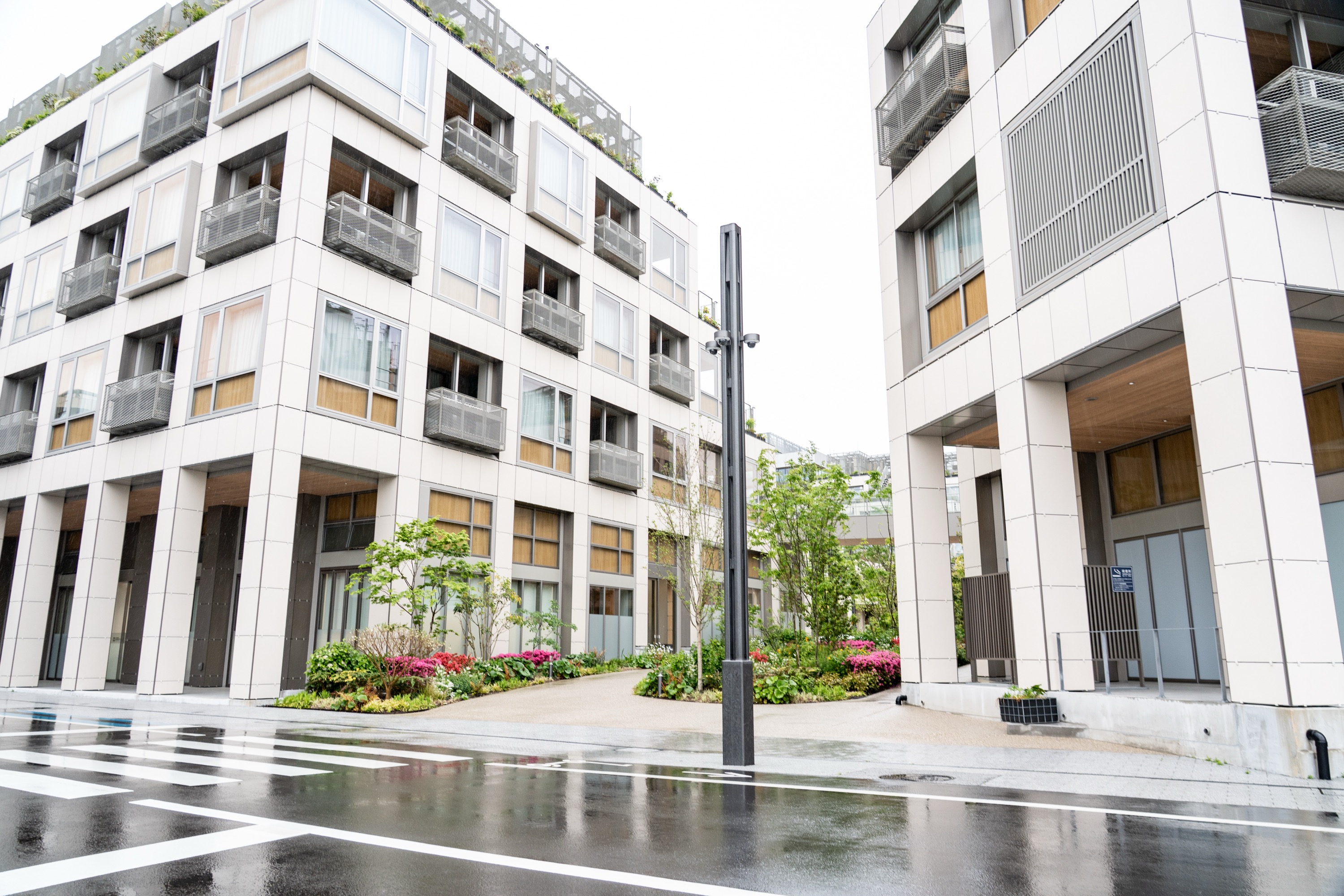
In the rain, Woven City felt even more like a ghost town.
Credit: Tim Stevens
In the rain, Woven City felt even more like a ghost town. Credit: Tim Stevens
There are plenty of cameras in urban areas around the world, but I haven’t seen anything approaching this level of density. All of them feed into what Toyota calls the Woven City AI Vision Engine, an agentic system designed to monitor, catalog, and report activity.
A demo video showed how these cameras can be used in retail environments to spot shoplifters. While I was told the system doesn’t use facial recognition, it can still track people based on their clothing, following them as they move from one camera to another.
Kota Oishi, general manager at Woven City, said that Toyota has surveyed people around the world, including Americans and Europeans, about their views on privacy and data. While people in Southeast Asia tended to be fairly relaxed about privacy, Japanese respondents were far more cautious, he said.
“Japanese people are more on the European side. They are very concerned about that data,” he said. “They need to be convinced that the data is protected, and they want to know specifically what the data will be used for.”
Protecting that data across so many systems under development at Woven City is a complex challenge. To try to manage it, Toyota created a system called “Data Fabric.” Saipang Chan, an engineer on the project, told me that users can opt into or out of individual services.
“We have our own consent management to ensure that all the data being shared or being collected,” he said. “We act under the consent of the data provider.”
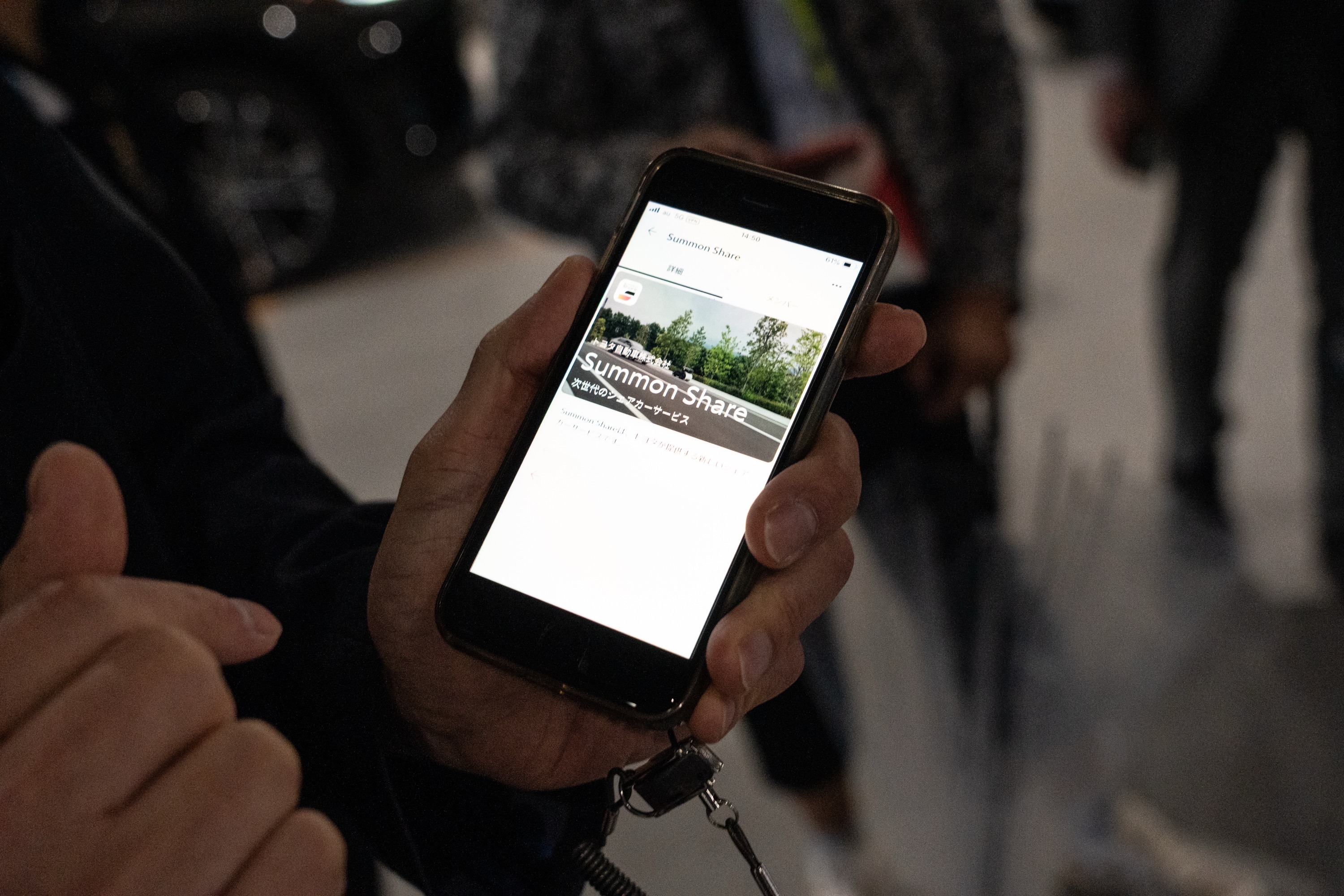
Weavers use the Woven app to order services from the city.
Credit: Tim Stevens
Weavers use the Woven app to order services from the city. Credit: Tim Stevens
Chan said that while user data can be exchanged among the various experiments within the Woven City’s walls, it’s not being sold. At least, not yet.
“We allow the Weavers to select what they want to share or not. So whether it’s nothing or whether it’s everything is up to the individual,” Absmeier told me. Oishi, the GM, said the vast majority of the Weavers have opted into the roughly 20 experiments currently underway. For example, 98 percent allow a robot with cameras to operate in their homes.
But these opt-in numbers come from a highly curated group of participants living in a controlled environment. The real world is a different place.
The future is one big creators’ hub
Daisuke Tanaka, a resident of Woven City, is something like an on-site digital matchmaker for Weavers. It’s not love they’re looking for, though; he connects creators and startups to spark collaborations every second Friday.
“Sometimes we’re talking about technologies and products, but sometimes they’re much more casual events,” he said. He cited a next-gen vending machine under development as an example of the sorts of new products coming from this collaboration. “They want to combine the photo-voltaics with the vending machine so it can run anywhere,” he said.
Expansive coworking spaces dot Woven City, designed to foster spontaneous brainstorming, with plenty of 3D printers scattered throughout for rapid prototyping. The stated goal is to spur creation, innovation, and successful startups.
Daisule Tanaka, a resident, shows off a package-delivery robot. Tim Stevens
Woven City residents act as alpha and beta testers for everything from an AI-powered karaoke machine that selects songs based on mood to a next-generation HVAC system designed to eliminate 95 percent of pollen in the home (roughly half of Japan’s population suffers from hay fever).
Residents also help test delivery robots and a device called the Swake, a three-wheeled scooter with a leaning backrest for cornering. I didn’t get to ride one, but with a top speed of 12 mph (20 km/h) and a range of 3.7 miles (6 km), the Swake could be a more stable and (and fun) alternative to the average Lime or Bird scooter.
The future is tiny
For something called a “city,” Toyota’s Woven City has a small footprint. Its largest structure is the former sheet-metal stamping facility at the factory that once anchored the site. Outside of that, only about 10 percent of Woven City’s eventual 175-acre (70.8-hectare) footprint is complete.
That’s roughly the size of three New York City blocks. You can walk from one end to the other in just a few minutes, which makes it a curious setting for a project meant to benchmark next-generation mobility.
The 20 prototype Swake machines also can’t leave the grounds, which limits the amount of real-world testing they’re getting.
The future must be financially sustainable
From an operational standpoint, Woven City is a business operating under Woven by Toyota, Inc. Its financials aren’t public (Toyota would not comment on total build costs or how much its residents pay to live there), but Absmeier said Woven City is expected to be profitable.
“Ultimately, we have to be a long-term sustainable business,” he said.
That’s why so much Toyota tech is being tested here, including efforts to refine systems like the AI Vision Engine before selling them to municipalities. Toyota has several closed test tracks around the world, but Woven City acts as a safe space to test a far broader suite of services and devices before they’re commercialized.
The future is full of robots that don’t do much yet
“Physical AI” was everywhere at Woven City: robots of all shapes and sizes that, for the most part, didn’t seem to do much.
There were robots for delivering packages to residents and others for carrying home groceries. A self-balancing, two-wheeled robot with one arm carried trays of food around apartments, and another had a single gripper designed to potentially help around the house someday. Most of them looked like design concepts without much practical use.
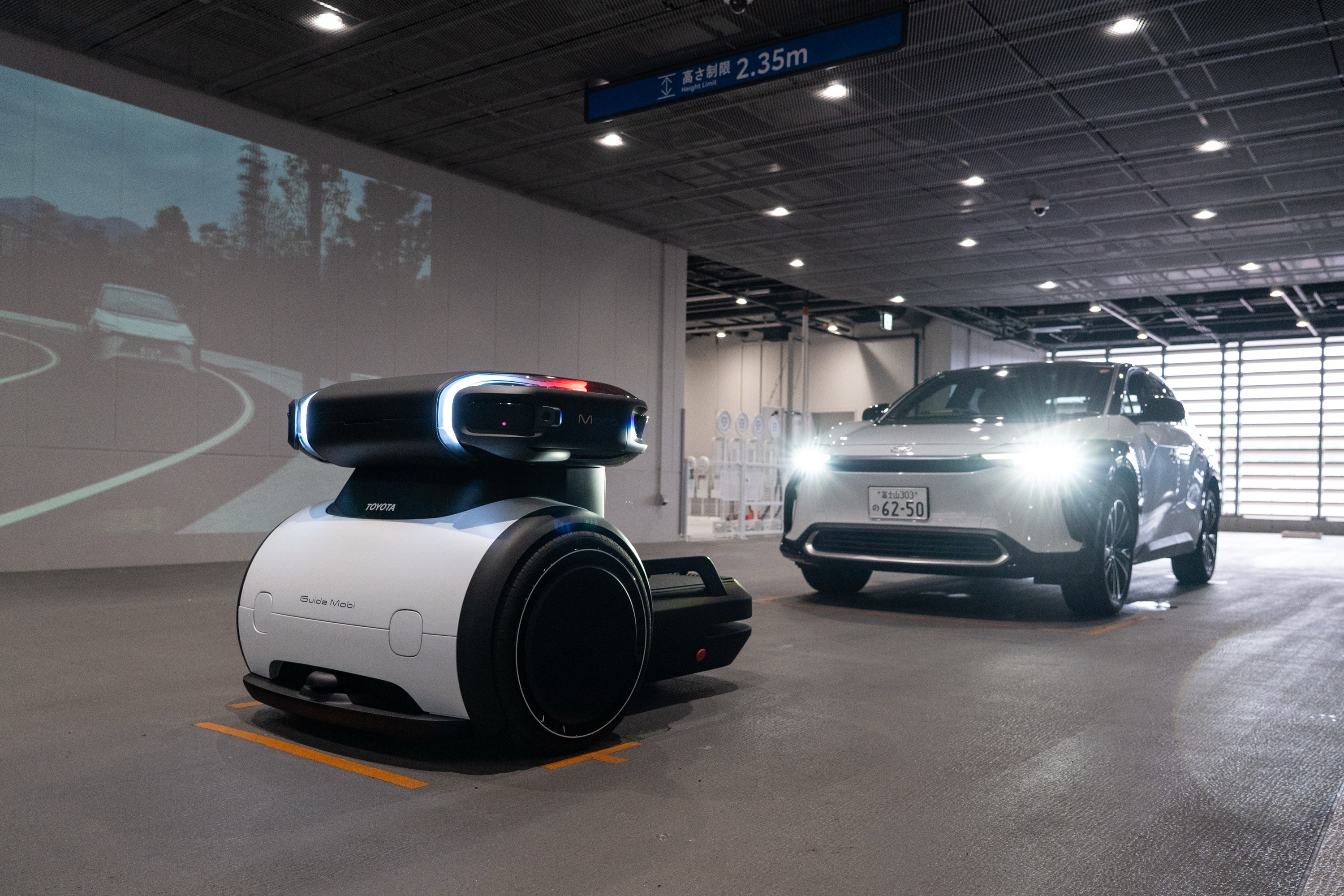
The Guide Mobi robot in front of a Toyota EV.
Credit: Tim Stevens
The Guide Mobi robot in front of a Toyota EV. Credit: Tim Stevens
The Guide Mobi, however, was more compelling. Like a tugboat guiding cargo ships in and out of port, it’s used in Woven City to autonomously move cars from the parking garage to a pickup area for residents. But where a tugboat provides thrust to keep boats moving, the Guide Mobi uses sensors to prevent the cars from going the wrong way.
The cars in question are Toyota bZ4X EVs, which lack the necessary sensor array to handle the task on their own. The Guide Mobi, equipped with a lidar array, imaging sensors, and other systems, effectively takes control of a single car, which autonomously follows its digital “tug.” The car is delivered to the curb outside, where the Woven City resident can hop in and drive off.
Why rely on such a complicated solution when modern Teslas can perform similar tasks using only onboard sensors? Toyota says it’s prioritizing safety, and Tesla’s Summon feature has hardly delivered on that front.
The future has a smart grid
Those bZ4X EVs don’t live in just any garage—they’re stored in a space Toyota calls a virtual power plant, or VPP. In addition to a roof full of solar cells to help charge the cars inside, the facility is chock-full of bidirectional chargers.
The cars inside can act as a collective battery pack, offsetting Woven City’s peak power demand by up to 10 percent. The plan is to offer the service to businesses with large EV fleets, reducing their overall power bills.
The catch is that those chargers have standard, human-operated plugs. Though the cars might be able to be delivered autonomously to drivers waiting outside, some poor soul still needs to unplug them before they’re sent out and plug them in when they return.
The future only works in the sun
It was miserable and rainy for much of the time I spent wandering Woven City, and the moisture was an unfortunate limiting factor for its operations.
While the Guide Mobi braved the rain for a test delivery, the Swake tricycles can’t run in such conditions. All the scooter-sharing stations were empty on that day, and many of the robots we’d been told to expect skittering around the streets had stayed home to keep their sensors dry.
The future is beautifully designed
There’s a bit of a prefab vibe to certain aspects of Woven City, particularly the brutalist residential buildings. It’s a space that’s stark, clean, and frequently beautiful.
Many of the shared spaces feature sweeping, flowing ridges of wood that run cleanly from outside to inside, creating a strong sense of visual continuity. The city’s pedestrian areas are lined with lush, attractive gardens that likely received a little extra attention before our visit.
Even the manhole covers, featuring a stylized Mt. Fuji, were cleverly designed. Woven City is certainly cold and corporate in places, but it also shows the level of polish that urban planning and design can reach when a single, well-funded corporate entity makes all the calls and foots the bill.
The future feels lonely
I spent most of my time in Woven City being shepherded from place to place by tour guides, but when I finally managed to escape and wander around on my own, it felt eerily empty.
It wasn’t quite Omega Man territory, but I didn’t see a single kid playing, dog out for a walk, or citizen running to one of the on-site convenience shops. The electric e-Palettes Toyota uses as buses were empty; they stopped at their stops, waited, and then left without picking up or dropping off anyone.
The curtains were drawn on all the apartments I could see, and there was no sign of laundry, bicycles, or other personal items on any apartment balcony.
I had to remind myself that this place is six months old, with only 100 Weavers so far—fewer residents than you’d find at your average Holiday Inn. It’s early days, and as the facility is built out and more folks move in, it will likely feel less sterile over time. But Toyota’s goal of building the world’s greatest creator hub will only start to take shape if outside companies find real ways to bootstrap their next products here.
Woven City is Toyota’s attempt to not only identify the next mobility zeitgeist but also to ensure it begins to take shape where the company can capitalize on it. It’s a big bet, but it’s backed by the world’s largest car company by volume and one of the few that has managed to consistently deliver products its customers want in a chaotic global market. As the broader Toyota Group turns 100 this year, it’s natural for it to focus on the next century.
It’s hoping Woven City will help define that future.