Back in business
“The work ahead is greater than the work behind us.”
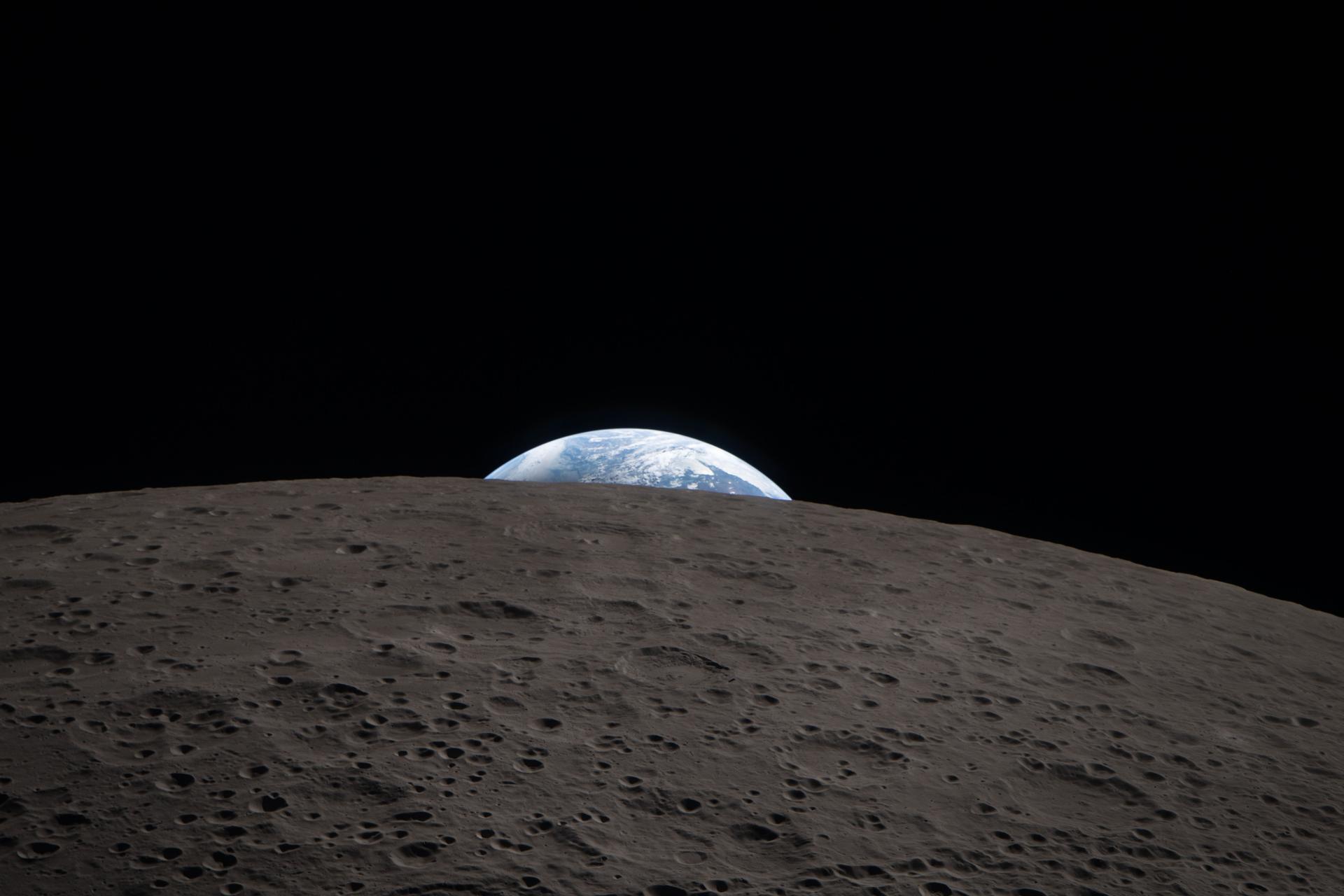
Artemis II brought us new perspectives on the Moon. Credit: NASA
Artemis II brought us new perspectives on the Moon. Credit: NASA
The Artemis era well and truly began Friday evening when a shiny spacecraft that had traveled 700,000 miles around the Moon, carrying four astronauts, splashed down in the Pacific Ocean off the coast of California.
For NASA, for its international partners, and for all of humanity the successful conclusion of the Artemis II mission marked a return to deep space by our species after more than half a century.
It was a spectacular achievement, and NASA deserves credit for making something what is very difficult look relatively easy. But it also raises an important question: What comes next?
NASA recently revised its mission plans for Artemis III and IV, to provide a stepping stone mission before undertaking the landing of humans on the Moon. Much, and more, work needs to be done to make those flights happen. And to be perfectly blunt, the Artemis II mission that concluded Friday was the lowest hanging fruit of the Artemis Program.
“The work ahead is greater than the work behind us,” said Amit Kshatriya, NASA’s associate administrator, after the landing on Friday night.
What comes next involves more complex operations, requiring multiple vehicles, and ultimately going down to another planetary body. To reach its objectives, NASA will have to take the training wheels off. Here, then, is the status of the major elements that must come together to land humans on the Moon.
Space Launch System
Multiple NASA officials have praised the performance of the Space Launch System rocket during the Artemis II launch on April 1, saying it nailed the target orbit for the mission with greater than 99 percent accuracy.
The core stage for the Artemis III mission is expected to leave the factory in Michoud, Louisiana, later this month for delivery to Kennedy Space Center, Florida. Other rocket elements have already arrived, or will soon.
Meanwhile, the Mobile Launch Tower sustained moderate damage, and it will soon be returned to the Vehicle Assembly Building in Florida for refurbishment and then stacking operations for the next mission.
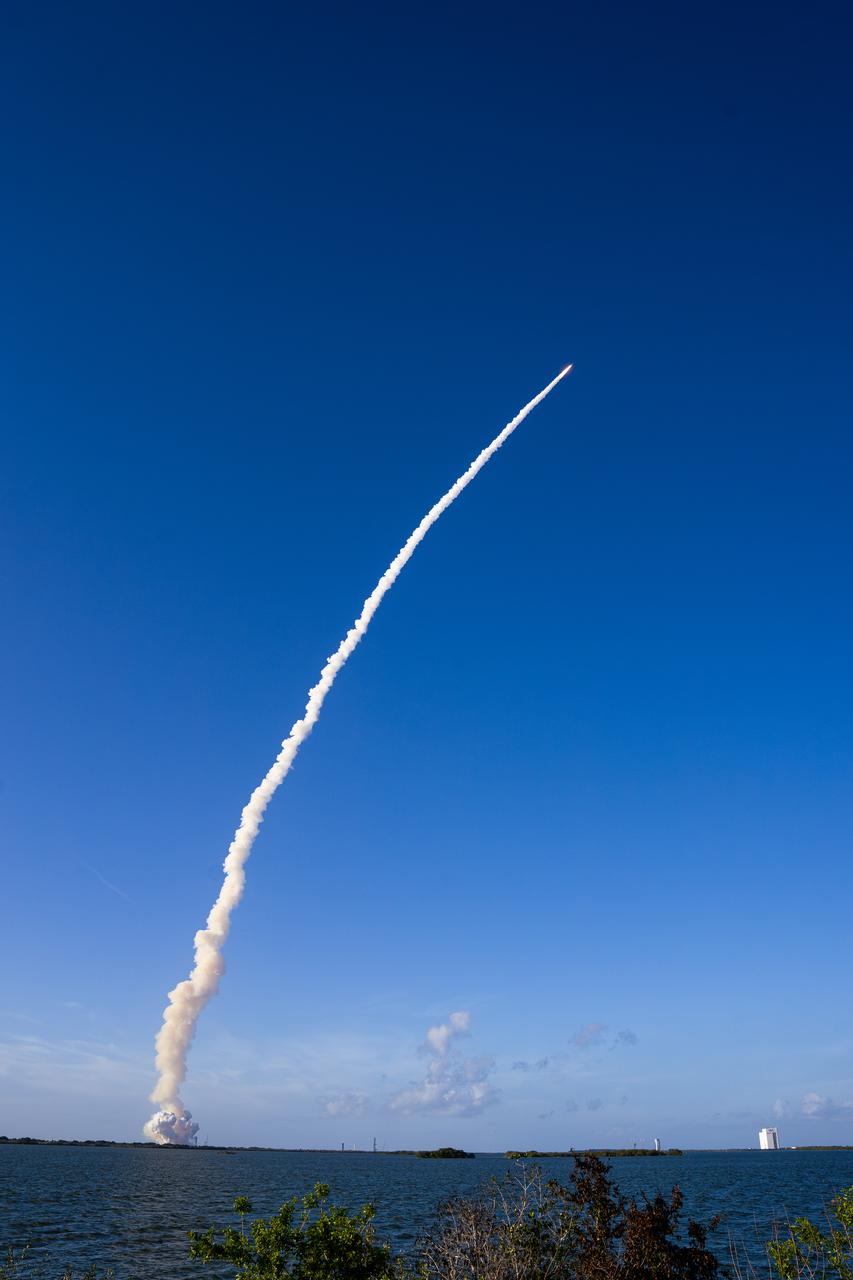
There’s no turning back now, Artemis II is on the way to the Moon.
Credit: NASA
There’s no turning back now, Artemis II is on the way to the Moon. Credit: NASA
Although development of the SLS rocket—which reused multiple major components from the Space Shuttle program—took far longer than expected, the program’s operational performance is improving.
If there are lingering questions about the rocket they involve its upper stage. NASA has one final Interim Cryogenic Propulsion Stage left, and it may (or may not) use this upper stage for the Artemis III mission in Earth orbit. Most probably they will save this final upper stage for Artemis IV, and introduce the new Centaur V upper stage for the Artemis V mission.
Orion
Despite its success on the Artemis II mission, questions remain about the Orion spacecraft for the next two flights.
As of a few months ago, production of the Artemis III Orion spacecraft was tracking toward an internal readiness date of January 2028. This was before NASA Administrator Jared Isaacman announced NASA was modifying the plans for Artemis III (now intended to launch in mid-2027) to fly an Earth-orbit rendezvous with a lunar lander. Artemis IV is now the lunar landing mission, with a target of 2028.
Accordingly NASA and Orion’s primary contractor, Lockheed Martin, need to increase the production rate of Orion.
NASA has already begun to assess the performance of Orion’s heat shield during Friday evening’s return, but there is only so much they can learn from this mission. That’s because, beginning with the next Orion vehicle, the space agency will use a more permeable heat shield that should improve its performance. The heat shield will be a lesser concern for Artemis III anyway, since it won’t be returning at lunar velocities (24,000 mph or higher).
A significant amount of work will need to be put into helium valves inside the propulsion system of Orion’s Service Module. Although a resolution of the helium leak observed during Artemis II is not necessary for an Earth orbit mission such as Artemis III, it absolutely must be fixed in time for Artemis IV when Orion is operating in lunar orbit.
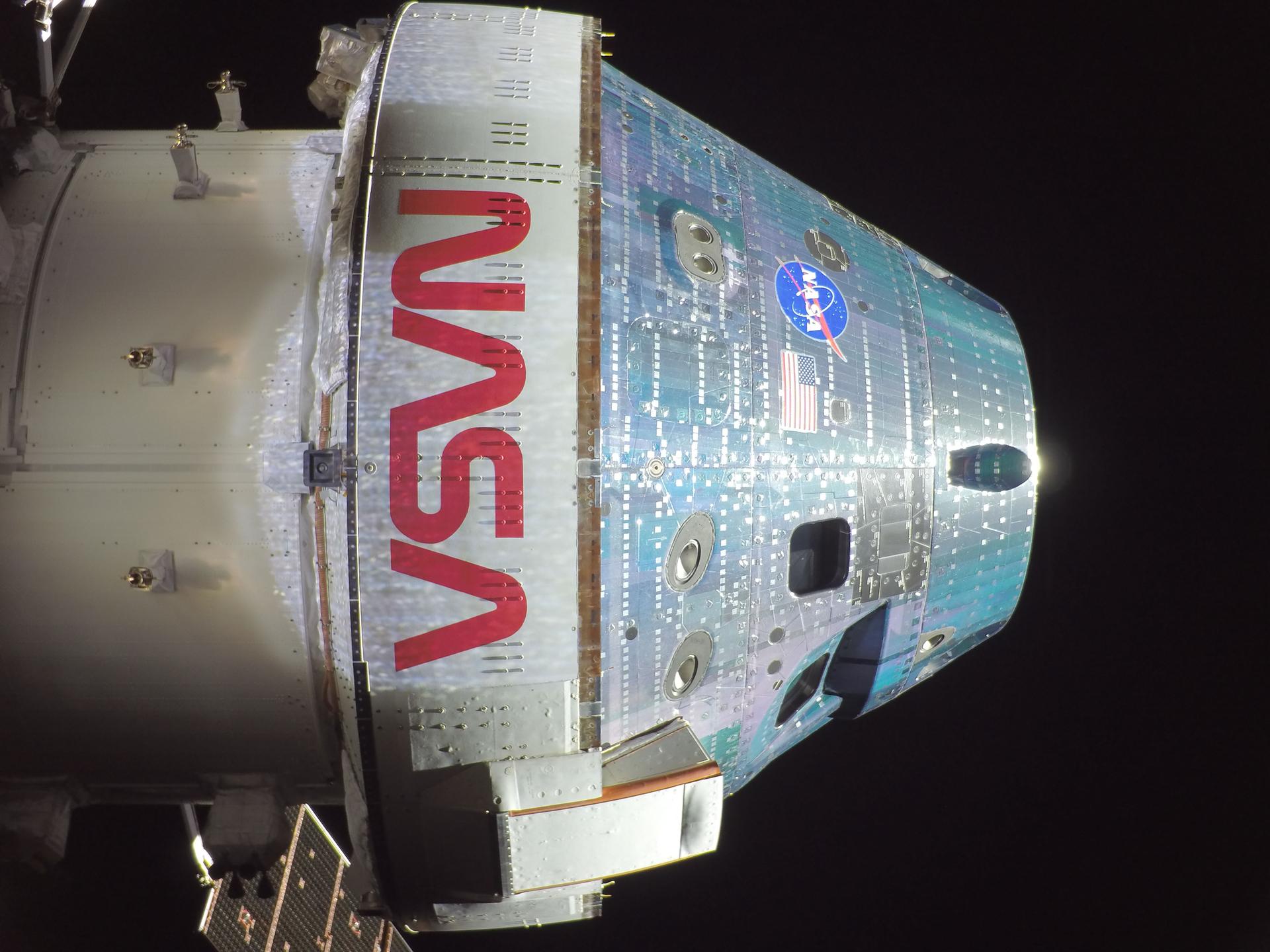
The Orion spacecraft performed well during the Artemis II mission.
Credit: NASA
The Orion spacecraft performed well during the Artemis II mission. Credit: NASA
“I’m pretty sure we’re going to need to, at a minimum, tweak the design to prevent the leak rate that we have, if not fundamentally change the way the valve works,” Kshatriya said Thursday.
This issue immediately becomes one of the long poles for the Artemis IV.
Human Landing System
The biggest questions for Artemis III and Artemis IV involve the development of lunar landers by SpaceX and Blue Origin.
Ars recently interviewed NASA’s chief of exploration, Lori Glaze, and she said both companies are making a “real commitment” toward meeting NASA’s needs. But both companies have a long way to go from the prototype hardware they’re currently testing to specialized landers capable of safely landing on (and taking off from) the Moon.
Even for Artemis III, a simpler mission closer to Earth, there are serious challenges. SpaceX and Blue Origin must go through NASA’s extensive “human rating” process for their Starship and Blue Moon vehicles, respectively, before they can approach and dock with Orion.
Also, it is non-trivial for SpaceX and Blue Origin to integrate with Orion, which has fairly strict limits for thermal management and other issues. Even ensuring roughly equivalent cabin pressures between two vehicles is a significant task. Completing all of this within the next 12 to 18 months will be a difficult hill to climb.
Then, for Artemis IV, there are even greater hurdles. For SpaceX, the company must test and then become efficient at refueling Starship in low-Earth orbit for a trip to the Moon, and back. And Blue Origin, which has very limited experience in spaceflight operations, must develop a more capable version of its Blue Moon Mk. 1 lander, which is itself untested.
Both companies must also learn to operate in lunar orbit, and master landing their vehicles on the Moon and then subsequently lifting them off from the lunar surface.
There is no question that lunar lander readiness is the longest pole for both Artemis III and Artemis IV.
Spacesuits
Axiom Space, at this point, is NASA’s sole provider for spacesuits that will allow astronauts to walk on the surface of the Moon.
Additionally, Isaacman has said he would like to fly at least one AxEMU suit on Artemis III, to test it out in microgravity.
The problem is we really do not have much insight into where Axiom is in the development curve of its suit, known as the Axiom Extravehicular Mobility Unit, or AxEMU. Occasionally we get updates, such as last August when the spacesuit successfully completed three crewed underwater tests.
NASA had initially selected two providers to develop a next-generation spacesuit, both for spacewalks outside the International Space Station as well as for walking on the Moon. However, in 2024, Collins Aerospace backed out citing difficulties with the program. So all the pressure is on Axiom.
Commercial Landers
Eight years ago NASA initiated a modest program to pay private companies to land small payloads, typically a few dozen to a few hundred kilograms, on the Moon. Since then three companies, under the auspices of this Commercial Lunar Payload Services (CLPS) program, have attempted to land on the Moon. Of these Astrobotic’s mission failed, Firefly’s succeeded, and Intuitive Machines had one largely successful mission and one largely failed mission. More companies will try in the coming years.
As many as four more of these CLPS missions could fly during the next 12 months. And NASA has big plans for these companies to scale up their capabilities from landing hundreds of kilogram to tons, as part of its initiative to develop a base on the lunar surface.
Isaacman announced the three-phases of this Moon base plan at his Ignition event in Washington D.C. a few weeks ago. While these lunar services companies are not essential to the first human landings on the Moon, they are vital for delivering the cargo needed for power, communications, and other elements essential to a sustained presence on the lunar surface.
For this Artemis Program to be successful, therefore, these companies will need to soon move from the “shots on goal” phase of their development to regularly hitting home runs.
Tonight NASA will celebrate this mission, likely with some pretty wild splashdown parties. Tomorrow, the hard work begins.

Eric Berger is the senior space editor at Ars Technica, covering everything from astronomy to private space to NASA policy, and author of two books: Liftoff, about the rise of SpaceX; and Reentry, on the development of the Falcon 9 rocket and Dragon. A certified meteorologist, Eric lives in Houston.