Closing the gap
“How in the hell do I get more science into space? That is my goal.”
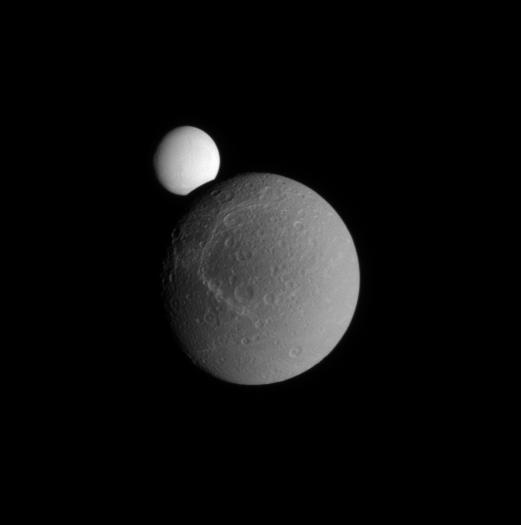
Saturn's moon Enceladus peeks over the limb of Dione during a partial occultation, as seen by NASA's Cassini spacecraft on September 13, 2008. Credit: NASA/JPL-Caltech/Space Science Institute
There are more opportunities to access space than ever, thanks to a bevy of commercial rockets, some with reusable boosters, led by SpaceX’s workhorse Falcon 9. So why is NASA launching fewer telescopes and planetary science missions than it did a quarter-century ago?
The answer is complex. It is not necessarily the money. The space agency’s science budget this year is $7.25 billion, roughly the same as it was in 2000, adjusted for inflation. This is despite attempts by the Trump administration to drastically reduce NASA science funding.
In the early months of his tenure, NASA Administrator Jared Isaacman’s focus has been on human spaceflight and the Moon. This isn’t terribly surprising given NASA’s wildly successful Artemis II mission carrying four astronauts around the Moon last month. Since taking office in December, Isaacman has announced an overhaul of the Artemis program, canceling a space station to be built in orbit around the Moon in favor of construction of a base on the lunar surface.
On the robotic front, Isaacman is pushing for NASA to launch a first-of-its-kind nuclear-powered spacecraft in 2028 to deliver a trio of drone rotorcraft to explore Mars. Isaacman has not said as much about concrete changes to NASA’s science program. He has defended the Trump administration’s proposed cuts to NASA’s science budget—as would be expected of him as a Trump political appointee—but the budget proposals come from the White House, not from NASA headquarters.
“Mr. Isaacman is very keen on us doing things quicker and for less,” said Nicky Fox, associate administrator for NASA’s science mission directorate. “More shots on goal is one of his favorite phrases. And I think, for us, it’s looking at the right-sized mission for the problem. Not everything has to be $1 billion or more. There are ways you can do fantastic science. His challenge is he wants 10 $100 million missions to be flying.”
How to get there?
A future with numerous robotic probes spread throughout the Solar System sounds thrilling to space scientists and space enthusiasts, but you can’t get there with flat budgets and billion-dollar missions that take a decade to get off the ground. Many of NASA’s robotic science missions use purpose-built satellites and instruments, usually manufactured by large contractors like Lockheed Martin, Northrop Grumman, university labs, or NASA itself. Unlike SpaceX’s hangars full of reusable rockets, there’s no building with cameras, spectrometers, telescopes, and spacecraft buses—the core chassis of a satellite platform—lying around waiting to launch.
“Instead of having a bespoke bus that does absolutely everything, and makes the tea and brings you toast, what can you do with an off-the-shelf bus?” Fox told Ars. “And maybe you have to change a few things. Maybe you fly fewer instruments, but maybe you fly three [spacecraft] together. How do we really pick up the pace? Because it is difficult when you have long gaps between the missions. It’s certainly not what anyone wants to see.”
One way to make this future real is with mass-produced, high-power satellites. Small CubeSats, just the size of a suitcase, are great for missions close to home, but they won’t cut it for missions to more distant destinations, such as another planet or a unique orbit far from Earth. NASA is making use of other ways to collect scientific data in space, such as placing instruments on the International Space Station or on commercial communications satellites.
But those solutions won’t work if you want to travel to another world. Sometimes it just costs a lot of money to do the near-impossible.
“For $100 million, you can’t buy a bus from somewhere and put four instruments on it and send it to flight to Enceladus to look under the ice there,” Fox said. “No, that’s a big, ambitious mission. We want to fly an interstellar-type probe. As the Voyagers are getting older, we want to study interstellar space. These things are hard, and they’re tough, and it will take a lot of effort to do that. We also talked about actually flying a mission to Uranus.”
But what about spacecraft flying on more well-trodden paths to the Moon, Mars, Venus, or the asteroid belt? “What can we do with these commercial off-the-shelf buses? I would love to walk in and say, ‘I’ll buy 10 of those,’” Fox said.
NASA is looking at “block buys” for the next series of commercial missions to the Moon. These privately owned landers and orbiters, part of the Commercial Lunar Payload Services (CLPS) program, carry NASA-owned payloads. They are precursors for future human exploration. After the Moon, Mars is the next destination that could use the CLPS model.
“Mars is sort of an obvious next one,” Fox said. “Why can’t I do that with a mission going somewhere else, and say, ‘Hey, who wants to take these instruments here?’ I’m actually really excited about the possibilities that the commercial sector open up to us.”
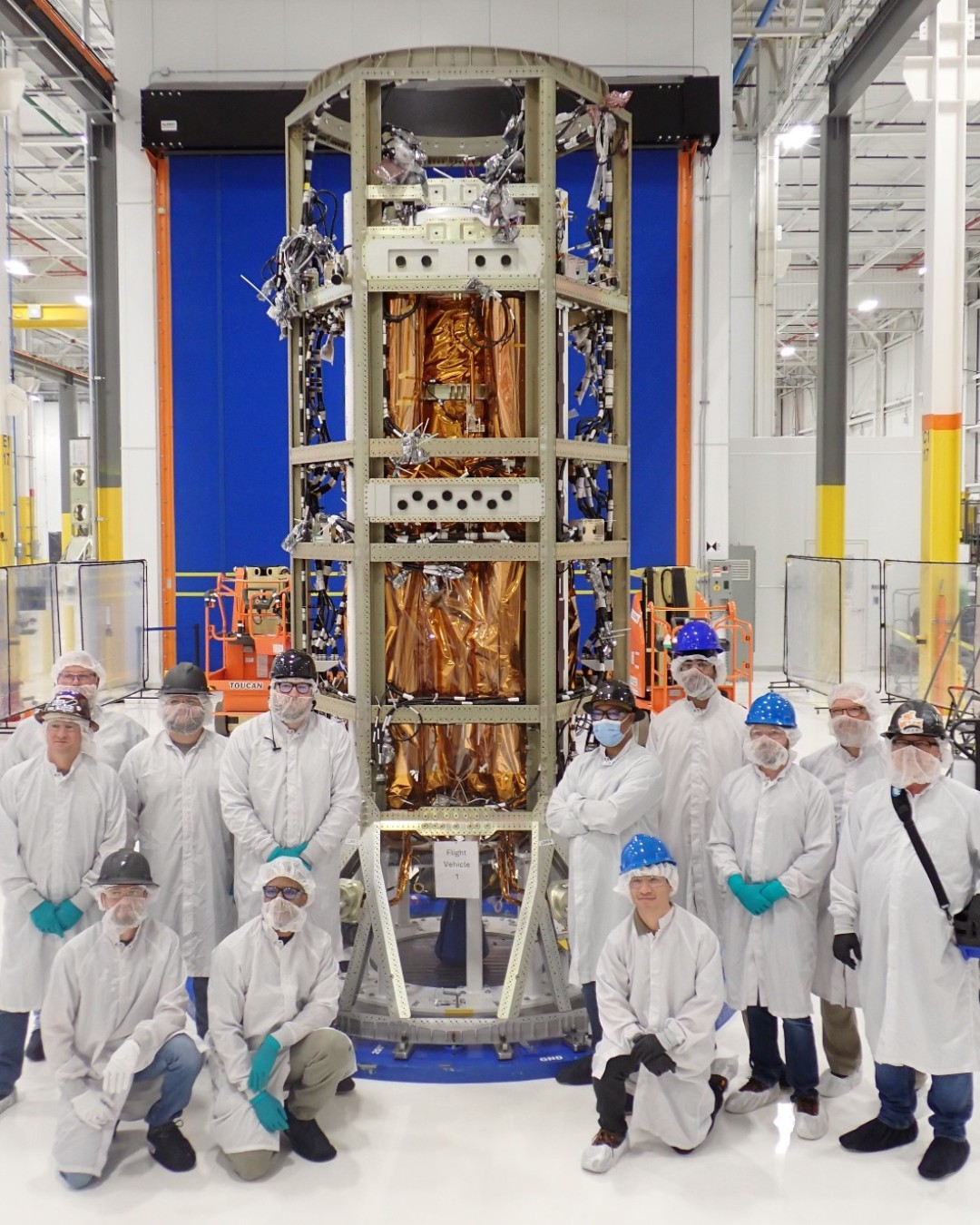
Blue Origin is assembling and testing its first Blue Ring spacecraft.
Credit: Blue Origin
Blue Origin is assembling and testing its first Blue Ring spacecraft. Credit: Blue Origin
NASA’s roster of CLPS lander companies includes Firefly Aerospace, Intuitive Machines, Astrobotic, and Jeff Bezos’ Blue Origin, which is also working on a larger human-rated lunar lander for NASA, along with SpaceX. Some of the same companies, along with K2 Space, Rocket Lab, Apex Space, Blue Canyon, Millennium Space Systems, and now Vast, are working on mass-produced satellite platforms for use in Earth orbit or deep space. The manufacturers see their primary demand signals in the US military and commercial markets, but NASA could benefit from the same designs.
Blue Origin bills its Blue Ring design, now preparing for its first test flight, as an “all-in-one, high-powered hybrid solar electric and chemical propelled spacecraft” that can maneuver, host, and deploy payloads in and around Earth orbits, the Moon, Mars, other planets, and near-Earth asteroids at “dramatically lower profile costs.”
One idea supported by Steve Squyres, Blue Origin’s chief scientist, is using a Blue Ring to deploy multiple small satellites to prospect for resources around asteroids. Blue Origin was one of several companies to win NASA study contracts last year to look at novel ways of delivering scientific payloads to difficult-to-reach destinations.
“How in the hell do I get more science into space? That is my goal,” Fox said.
Launch costs aren’t everything
Although it is cheaper today to launch a kilogram of payload into orbit than it was 25 years ago, those lower prices are most apparent on rideshare missions, where numerous satellites share the same ride to space. Many NASA missions, especially those exploring the Solar System, are not suited for rideshare launches, most of which release their payloads into low-Earth orbit.
Some companies are designing tugs that could boost missions from their drop-off orbits to higher altitudes, potentially even to the Moon or beyond the Solar System. These propulsive rocket stages, when combined with a rocket like SpaceX’s massive Starship, could dispatch heavy spacecraft to faraway targets.
Today, for example, if NASA wants to launch a science probe to Mars or Venus, the agency must book a dedicated ride on a commercial rocket. SpaceX charges commercial customers $74 million for a dedicated Falcon 9 launch, although NASA typically pays more for additional oversight, schedule priority, and other government requirements. That’s still a lot of money, but it is far less than the cost of a custom spacecraft bus and a package of science instruments.
There are also questions about how NASA selects what missions to fly. The agency selects most of the science missions for flight through competitions. Research teams can propose their concepts for a new space telescope or a probe to a comet or an asteroid, for example, when NASA puts out a call for proposals. A few of NASA’s most expensive flagship-class missions, such as the James Webb Space Telescope or the Europa Clipper spacecraft, are developed from the top down through government direction.
NASA could set up future competitions to review proposals and select winners more quickly. In the past, NASA has selected a handful of concepts for study contracts, then chosen one or two proposals to proceed into development. For future competitions, NASA might go straight to a final selection. The space agency is also looking at rebalancing its science portfolio to spend less money on operating science missions, many of which have been in space for decades, to free up funding for new development.
“We spend hundreds of millions of dollars operating legacy missions, and we’ve wanted for a while to look at what could AI give us?” Fox said. “How can you combine operations for a couple of missions, and how do we do it for less? I don’t want to turn them off because they’re still doing great science, but we have to find a way to operate them for less.”
NASA’s associate administrator for science, Nicky Fox, speaks at NASA headquarters in 2024.
Credit: NASA/Bill Ingalls
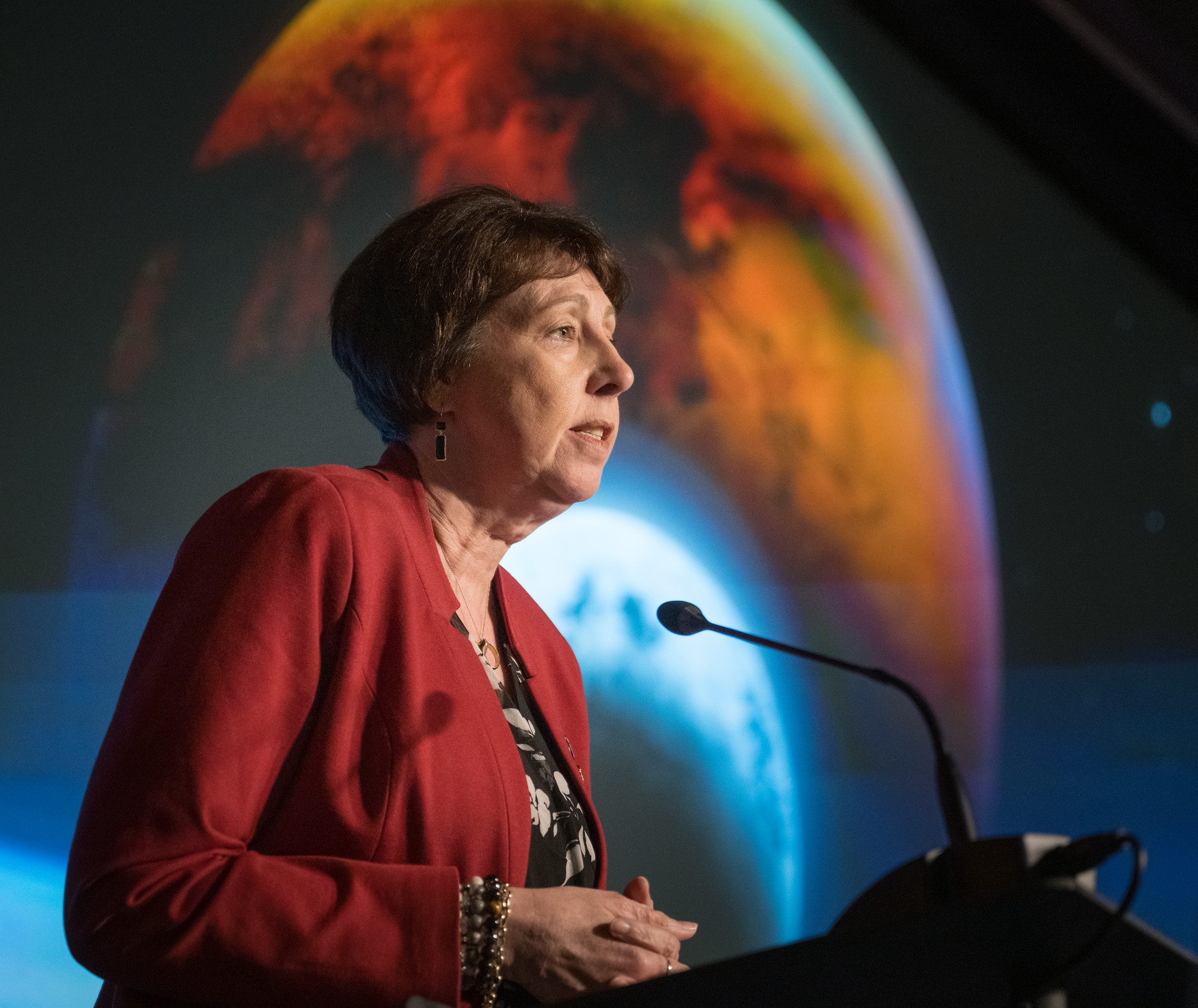
NASA’s associate administrator for science, Nicky Fox, speaks at NASA headquarters in 2024. Credit: NASA/Bill Ingalls
In planetary science, NASA divides its missions into small, medium, and large categories. The smallest planetary science missions, with budgets of less than $100 million, have a lousy track record.
The next step up is the Discovery program, with development budgets of about a half-billion dollars under today’s economic conditions. NASA launched 11 Discovery-class planetary science missions in the first 15 years of the program, from 1996 through 2011. NASA has launched just three Discovery missions since 2011, and the next two projects—the DAVINCI and VERITAS missions to Venus—were selected by NASA in 2021 but won’t launch until the early 2030s. DAVINCI appears to be the first priority among the two.
NASA’s larger New Frontiers missions are supposed to cost about $1 billion. The agency launched three New Frontiers missions from 2006 through 2016 to Pluto, Jupiter, and a near-Earth asteroid. The next one is Dragonfly, an ambitiously exciting but overbudget $3.35 billion mission to Saturn’s moon Titan. It is scheduled for launch in 2028, 12 years after the previous New Frontiers mission. NASA is nowhere close to selecting the next mission after Dragonfly.
“There was a decision made to select two Discovery missions together, and that does put stress on a portfolio when you have two large missions together,” Fox said. “Dragonfly still chugging along … [It’s] moving along very well towards a launch in 2028. Obviously, that had some challenges, got delayed several times, but it seems to be going at a good pace.”
Next year, NASA aims to launch NEO Surveyor, a telescope specially designed to detect and track asteroids that might threaten Earth. It is not part of NASA’s Discovery or New Frontiers programs.
“We have then DAVINCI sort of waiting, and then VERITAS, and we still have Europa Clipper [on the way to Jupiter]. That is a pretty challenging mission to operate,” Fox said. “We’ve got the two rovers down on the surface of Mars. So there are some pretty big endeavors in planetary, and I think when we can get some of these launched, it will open up the [funding] wedge that we need to open up to be able to [do more missions].
“Unpopular though it may be, it is sometimes better to wait and put out the call [for proposals] when you really know that you have secure funding,” Fox said. “It’s just we’ve got a lot of stuff in planetary that needs to be launched. So putting focus on keeping Dragonfly on track for that 2028 launch, keeping NEO Surveyor on track for the 2027 launch, that will really help. And then looking at ways to actually pull in DAVINCI and launch it earlier than we planned. The earlier we launch it, the quicker I open up a wedge for another mission.”

Stephen Clark is a space reporter at Ars Technica, covering private space companies and the world’s space agencies. Stephen writes about the nexus of technology, science, policy, and business on and off the planet.