competition heating up
Op-ed: Valve has made a dent in Windows’ gaming share, but can it keep going?

Valve's Steam Deck OLED. Credit: Valve
Valve's Steam Deck OLED. Credit: Valve
Valve and its SteamOS operating system have already done what a bunch of companies (including Apple) have been trying to do for decades: make a dent in Windows’ dominance in PC gaming.
I mean, sure, according to Valve’s own statistics, Microsoft remains dominant. Over 92 percent of PCs in the Steam Hardware Survey run some version of Windows. But five years ago, this number was just over 96 percent. Ten years ago, it was just under 96 percent. Fifteen years ago? It was 96 percent. Go back any further than that and Steam only runs on Windows in the first place, itself a testament to Microsoft’s ubiquity.
Between April 2021 and now, Linux’s share has climbed from under 1 percent to over 5 percent. This is a small number, and it’s not all SteamOS (Valve’s OS isn’t broken out, but Arch, the base distribution for SteamOS, accounts for about 0.33 of that just-over-5-percent). But it’s also more than these numbers have ever moved. By making Windows games run on Linux, rather than trying to push game developers to make Linux-native ports, Valve has done via organic word-of-mouth success what the company utterly failed to do in the early 2010s when it tried to take on Windows directly.
A year ago, Valve seemed poised to build on that success. SteamOS picked up official support for some third-party gaming handhelds and other hardware besides, and some manufacturers were beginning to ship models with SteamOS rather than Windows pre-installed. Games were being tested not just for Steam Deck compatibility, but general SteamOS compatibility. Late in 2025, Valve announced the Steam Machine, an effort to compete with game consoles and lower-end gaming PCs.
And Microsoft seemed unable to respond. Windows handhelds usually relied on clunky third-party software to replicate the Deck’s handheld-optimized interface, and Microsoft’s first imperfect stab at a competing interface launched years after the Steam Deck on just two Xbox-branded systems. Valve’s timing also coincided with a tenuous time for Windows, when Microsoft was asking users to move from Windows 10 to Windows 11, an OS with a reputation for being irritating and having higher system requirements. If people are already being asked to switch to new software or upgrade their hardware, there’s always a chance that the software they switch to won’t be a newer version of the same thing.
Evaporated Steam
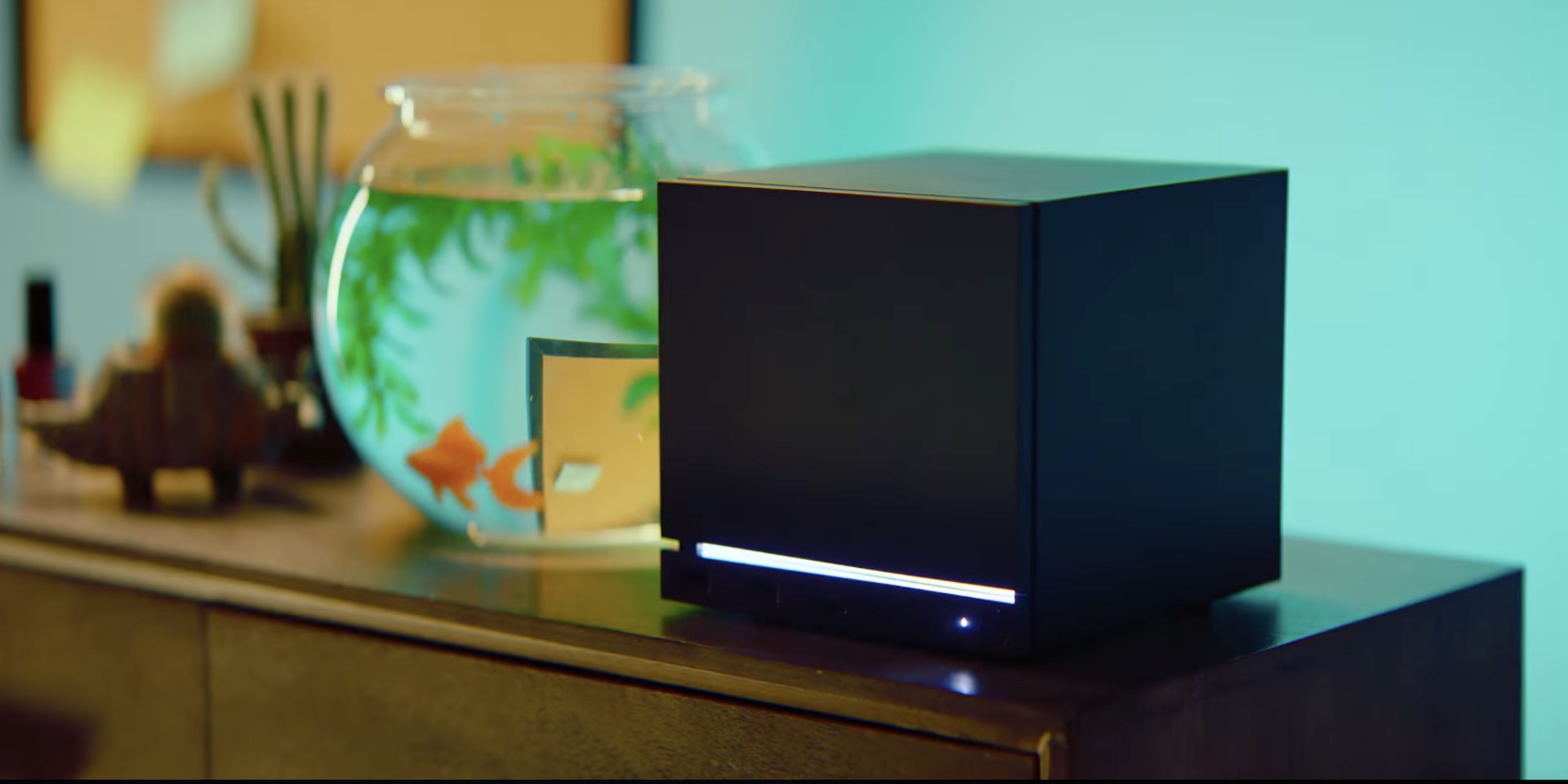
Valve’s Steam Machine was poised to expand on the Steam Deck’s success, but it’s currently in limbo, and the Deck is, too.
Credit: Valve
Valve’s Steam Machine was poised to expand on the Steam Deck’s success, but it’s currently in limbo, and the Deck is, too. Credit: Valve
But Valve’s push to compete directly with Microsoft and PC hardware makers has hit a wall, at least for now: huge cost increases and supply increases for all kinds of PC components, particularly memory and storage chips.
Problems that started to affect the market for PC components in late 2025 are now being felt across the entire consumer tech industry. Chip manufacturers are all chasing the generative AI gold rush, which has an all-consuming need for memory, storage, GPUs, and (increasingly) even CPUs. This means less manufacturing capacity for the components that go into consumer-grade hardware, and more fighting over the supply that’s left. Prices that were already being pushed upward by the Trump administration’s now-illegal tariffs are now being pushed upward by shortages instead.
This has been particularly rough for anybody trying to make inexpensive or low-margin hardware. Game console price cuts, already a thing of the past thanks to the death of Moore’s Law, have given way to price hikes instead. Companies like Raspberry Pi and Framework have raised prices multiple times this year; even Apple, which has historically been able to secure favorable prices for component purchases thanks to its sheer size, has been having problems.
For Valve, these problems have not only indefinitely delayed the Steam Machine (“the first half of the year” is still the plan, giving Valve two months to figure it out), but have also rendered the 4-year-old Steam Deck largely unpurchasable. Third-party handheld makers have raised prices and indefinitely delayed products, taking away another potential source of first-time SteamOS users.
It was always sort of hard to see how the Steam Machine would compete with consoles on price, and that’s still probably true even though consoles now cost a fair amount more than they did a couple of years ago. Even if it does launch, and even if Valve can keep it in stock, it may not be available at a price that most people are actually willing to pay.
The only hardware Valve has actually been able to ship this year has been the new Steam Controller, and executives were up front about why: The controller “doesn’t have RAM in it.”
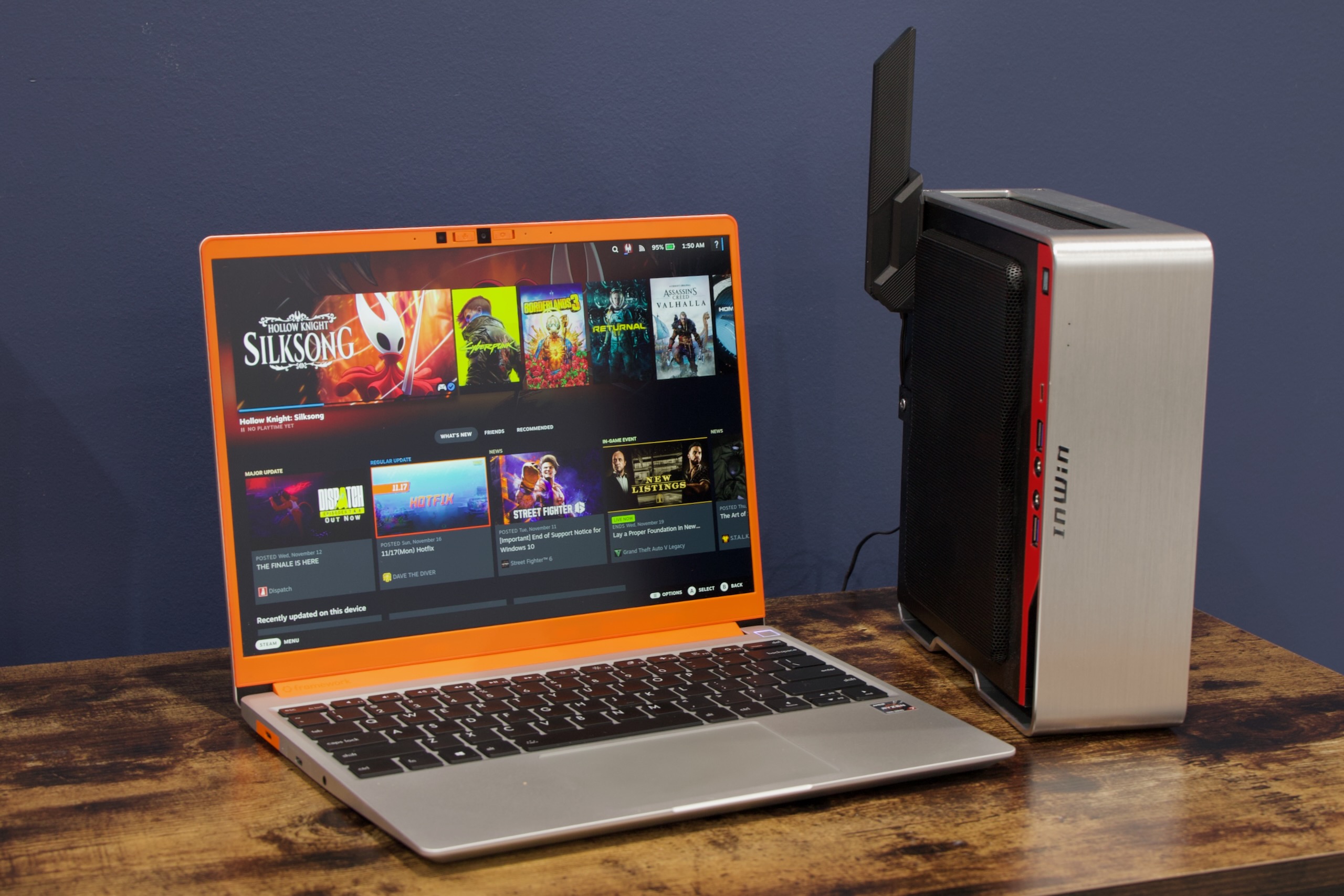
Linux can run on anything, and Valve’s work on SteamOS continues. But its hardware push has temporarily stalled.
Credit: Andrew Cunningham
Linux can run on anything, and Valve’s work on SteamOS continues. But its hardware push has temporarily stalled. Credit: Andrew Cunningham
Obviously, Valve and SteamOS are just a small piece of the Linux gaming pie, and most Windows PCs can be turned into Linux systems with a USB stick and some elbow grease. Progress on the software side hasn’t stopped. Within the past month, for example, Valve has apparently made significant progress toward improving performance on GPUs with 8GB (or even less) of memory.
But it does seem as though Valve was ready to execute a strategy that has now been disrupted, giving Microsoft some time to get back on its feet at a potentially vulnerable moment.
Microsoft is trying (or trying to try)
There’s plenty to grumble about in modern Windows: the ads, the long list of pre-installed apps, the updates that occasionally break things, the all-encompassing generative AI push. Grumbling about these and other issues has gotten bad enough that Microsoft has publicly committed to making things better, though it remains to be seen whether it accomplishes this goal.
According to reporting from Windows Central, this turnaround effort is known internally as “Windows K2.” This reportedly isn’t a replacement for Windows 11, but a wide-reaching initiative for improving the operating system’s reliability, performance, and security, while also shifting the pace of development to emphasize stability and software quality over the rapid-fire introduction of new features.
The report says that gaming performance is a specific priority of Microsoft’s. Testing from Ars and other outlets has shown a small but consistent performance lead for SteamOS when running the same games at the same settings, particularly on systems like the Steam Deck that rely on integrated graphics and shared memory. Microsoft is reportedly using SteamOS’ performance as a target to aim for and is planning “foundational changes” to close the gap between Windows and Valve’s OS.
Microsoft is also working to reduce the frequency of Windows Update restarts; improve the performance of core features like the File Explorer and Start menu; to remove ads; and generally to reduce the operating system’s memory usage and performance on low-end systems. Collectively, this effort to spit-shine Windows and buff its reputation could just make Windows 10 upgraders happier and cut down on some Linux curiosity among enthusiasts.
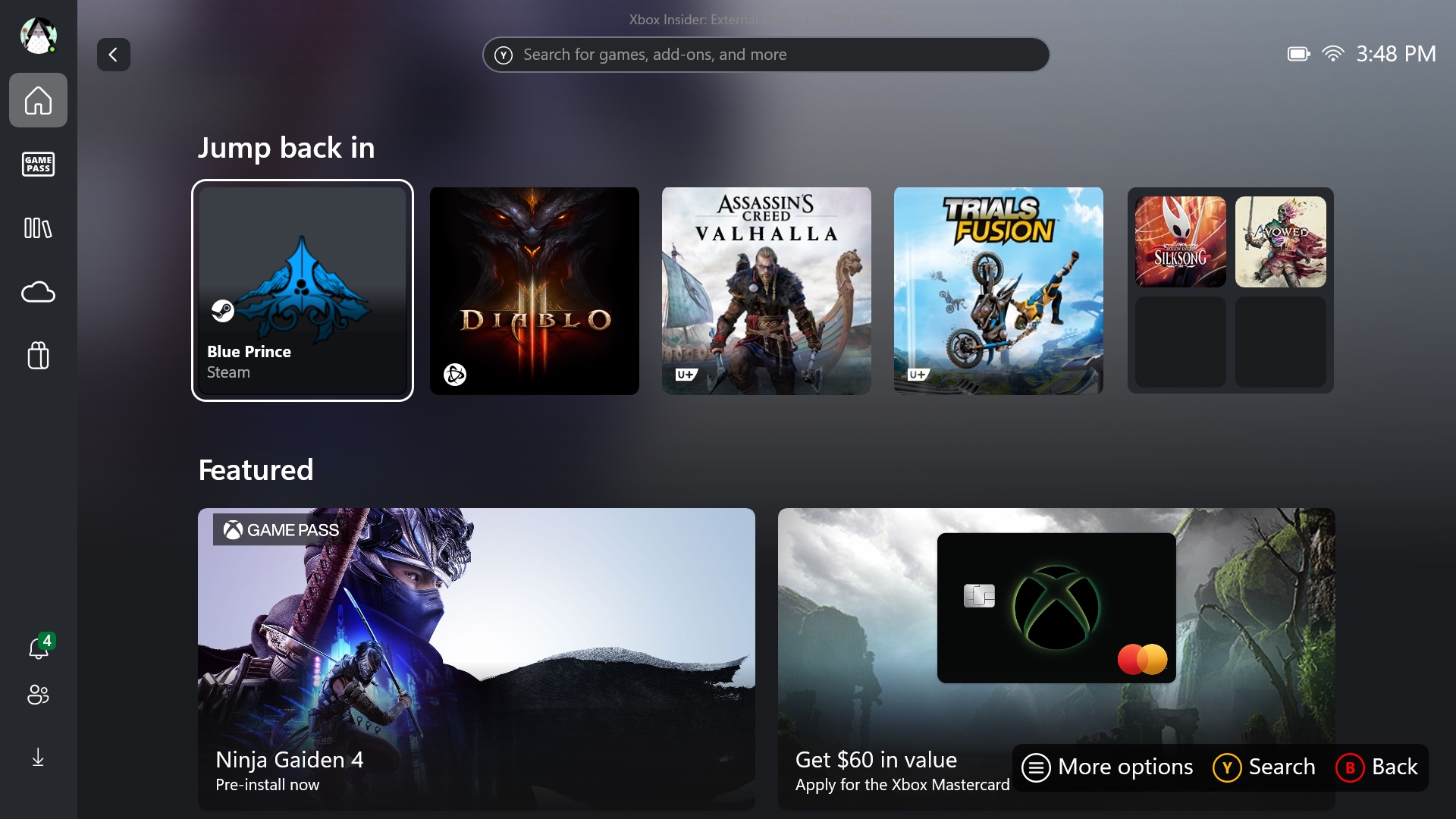
Microsoft’s Xbox Mode (pictured here in October 2025) is starting to roll out to all Windows PCs.
Credit: Kyle Orland
Microsoft’s Xbox Mode (pictured here in October 2025) is starting to roll out to all Windows PCs. Credit: Kyle Orland
Microsoft’s streamlined, controller-centric Xbox Mode is also just beginning to roll out to all Windows 11 users, rather than being confined to Asus’ Xbox-branded handhelds. In Xbox Mode, the standard Windows UI doesn’t load at all, freeing up additional memory and other system resources for games. This is definitely a plus at a time when the best advice for upgrading your PC is “don’t.”
Our experience with the initial release of Xbox Mode is that it wasn’t as streamlined-feeling as SteamOS; games often needed additional configuration at first launch, and the interface actually wasn’t always very good at its stated goal of listing all of your installed games from across all of your installed game stores. At some point after the public release, we’ll need to revisit it to see which (if any) of these problems have been fixed.
But the point is that Valve’s problems do give Microsoft more time to get things right, time that Microsoft arguably wasted over the first few years of the Steam Deck’s existence. If you’re thinking of running Linux but you’re used to Windows, then an improved version of Windows gives you one fewer reason to switch. If you’re thinking of buying a Steam Deck or a Steam Machine and you literally can’t, maybe you spend that money on something that’s running Windows instead.
Whatever happens, keep an eye on those Steam Hardware Survey stats over the next couple of years. Maybe Windows will continue to be installed on over 90 percent of the ecosystem’s gaming PCs, insulated by its familiarity and Microsoft’s various improvements. Or maybe Valve’s current hardware troubles are just a blip, and its work on Proton and other technologies is putting a more permanent dent in Microsoft’s PC gaming monopoly.

Andrew is a Senior Technology Reporter at Ars Technica, with a focus on consumer tech including computer hardware and in-depth reviews of operating systems like Windows and macOS. Andrew lives in Philadelphia and co-hosts a weekly book podcast called Overdue.