



惯性聚合 高效追踪和阅读你感兴趣的博客、新闻、科技资讯
阅读原文 在惯性聚合中打开

推荐订阅源

WordPress大学
WordPress大学
Microsoft Azure Blog
MongoDB | Blog
MongoDB | Blog
小众软件
小众软件
Apple Machine Learning Research
O
OpenAI News
酷 壳 – CoolShell
酷 壳 – CoolShell
The GitHub Blog
The GitHub Blog
CTFtime.org: upcoming CTF events
Exploit-DB.com RSS Feed
博客园 - 聂微东
Engineering at Meta
Engineering at Meta
W
WeLiveSecurity
Hacker News: Ask HN
Hacker News: Ask HN
大猫的无限游戏
大猫的无限游戏
Vercel News
Vercel News
D
Docker
F
Full Disclosure
AI
AI
罗磊的独立博客
博客园 - 【当耐特】
U
Unit 42
S
SegmentFault 最新的问题
Stack Overflow Blog
Stack Overflow Blog
cs.AI updates on arXiv.org
P
Palo Alto Networks Blog
博客园_首页
H
Help Net Security
量子位
月光博客
月光博客
Threat Intelligence Blog | Flashpoint
K
KPMG report finds enterprise disconnect between AI and its ROI | CIO
博客园 - 司徒正美
F
Fortinet All Blogs
D
DataBreaches.Net
B
Blog RSS Feed
Webroot Blog
Webroot Blog
TaoSecurity Blog
TaoSecurity Blog
S
Secure Thoughts
爱范儿
爱范儿
I
InfoQ
钛媒体:引领未来商业与生活新知
钛媒体:引领未来商业与生活新知
www.infosecurity-magazine.com
Attack and Defense Labs
Application and Cybersecurity Blog
C
CERT Recently Published Vulnerability Notes
Martin Fowler
Martin Fowler
Blog — PlanetScale
Blog — PlanetScale
让小产品的独立变现更简单 - ezindie.com
S
Securelist

Ars Technica

Microsoft issues emergency update for macOS and Linux ASP.NET threat Anthropic tested removing Claude Code from the Pro plan Coyote vs. Acme is finally getting released—with a killer trailer Google unveils two new TPUs designed for the "agentic era" Tabloid reports linking 10 missing and dead scientists spur FBI probe Physicists think they've solved the muon mystery New court ruling blocks many of the government's anti-renewable policies Indian med student rakes in thousands with AI-generated MAGA hottie As EV batteries improve, ChargePoint debuts 600 kW fast charger Our favorite gear at Sea Otter Classic wasn't the bikes—it was the accessories Investors lost billions on Trump’s memecoin. Another gala won’t fix that. Pentagon wants $54B for drones, more than most nations’ military budgets Mozilla: Anthropic's Mythos found 271 security vulnerabilities in Firefox 150 Supreme Court arguments make it clear that FCC fines are "nonbinding" Silo S3 teaser hints at the wasteland's origins Framework's CEO on the RAM crisis and creating a "MacBook Pro for Linux users" Florida probes ChatGPT role in mass shooting. OpenAI says bot "not responsible." Report: Meta will train AI agents by tracking employees' mouse, keyboard use Microsoft removes Call of Duty from Game Pass, lowers subscription pricing Framework Laptop 13 Pro is a major overhaul for the modular, upgradeable laptop Framework Laptop 16 upgrades make it look less like an unfinished prototype Internal emails show how Amazon raises prices across the Internet, lawsuit says Anthropic gets $5B investment from Amazon, will use it to buy Amazon chips CATL's new LFP battery can charge from 10 to 98% in less than 7 minutes AMD Ryzen 9 9950X3D2 Dual Edition review: Tons of cache for tons of dollars What's the deal with spacesuits for the Moon? Will they be ready in time? Loneliness in older adults can often lead to memory impairment Contrary to popular superstition, AES 128 is just fine in a post-quantum world Pentagon pulls the plug on one of the military's most troubled space programs John Ternus will replace Tim Cook as Apple CEO Blue Origin's rocket reuse achievement marred by upper stage failure I’ve fired one of America’s most powerful lasers—here’s what a shot day looks like Great white sharks are overheating US-sanctioned currency exchange says $15 million heist done by "unfriendly states" Man with @ihackedthegovernment Instagram account tells judge, “I made a mistake" Trump picks qualified, normal health leader to head CDC; experts still cautious $25,000 buys plenty of used EVs: Here are some options Satellite and drone images reveal big delays in US data center construction Amazon won’t release Fire Sticks that support sideloading anymore Ridley Scott's post-apocalyptic The Dog Stars drops first trailer Artemis II pilot talks about what it was really like to fly and land in Orion Meta's AI spending spree is helping make its Quest headsets more expensive Rocket Report: Starship V3 test-fired; ESA's tentative step toward crew launch Recent advances push Big Tech closer to the Q-Day danger zone After a saga of broken promises, a European rover finally has a ride to Mars Lucasfilm drops The Mandalorian and Grogu final trailer at CinemaCon Intel refreshes non-Ultra Core CPUs with new silicon for the first time OpenAI starts offering a biology-tuned LLM As they got close to the Moon, Artemis II astronauts were eager to land Mozilla launches Thunderbolt AI client with focus on self-hosted infrastructure Ad firms settle with Trump FTC over claims they boycotted conservative media New Codex features include the ability to use your computer in the background The Ukraine war's deep impact on Metro 2039’s development, story New undersea cable cutter risks Internet’s backbone Microsoft and Stellantis want to use AI to help car owners Gemini can now create personalized AI images by digging around in Google Photos RFK Jr. forces FDA to reconsider 12 unproven peptides after 2023 ban First look: Also's upcoming e-bike disconnects the pedals and wheels Meet the Quantum Kid The race to Shackleton Crater is on—will Jeff Bezos or China get there first? Florida surgeon charged with killing man after removing liver instead of spleen Jury finds Live Nation/Ticketmaster is illegal monopoly that overcharged fans "TotalRecall Reloaded" tool finds a side entrance to Windows 11's Recall database Google releases new apps for Windows and MacOS Boston Dynamics’ robot dog now reads gauges and thermometers with Google's AI Prime Video shows “technical difficulties” sign instead of NBA game in overtime New teaser gives us first look at Godzilla Minus Zero Vulcan woes will "absolutely" be a factor in Pentagon's next rocket competition Adobe takes Creative Cloud into Claude Code-esque territory Good Omens S3 trailer sets up a blessed conclusion Bubble watch: Fashion brand Allbirds pivots hard to become AI services company New 3D map of Universe could solve dark energy mystery What’s the deal with Alzheimer’s disease and amyloid? Blue Origin has a new employee stock plan, but not everyone is happy It's Tax Day, and no one knows how to file for prediction market winnings Ukraine’s military robot surge aims to offset drone risks to humans Sony killing features for antenna, set-top box users of Bravia smart TVs in May Americans ask AI for health care. Hospitals think the answer is more chatbots. Shock from Iran war has Trump's vision for US energy dominance flailing The Artemis II mission has ended. Where does NASA go from here? AI models are terrible at betting on soccer—especially xAI Grok Four astronauts are back home after a daring ride around the Moon Californians sue over AI tool that records doctor visits New paper argues history, not mantle plume, powers Yellowstone F1 moves a step closer to fixing its 2026 hybrid problem Report: US demands Reddit unmask ICE critic, summons firm to grand jury Microsoft's "commitment to Windows quality" starts with overhaul of beta program "Oobleck" still holds some surprises YouTube increases Premium price again, says 90-second unskippable ads are a bug Oldest octopus fossil found to not be an octopus What leaked "SteamGPT" files could mean for the PC gaming platform's use of AI Here's what to expect from the fiery, 14-minute return of Artemis II Pro-Iran Explosive Media trolls Trump with AI-generated Lego cartoons Dad stuck in support nightmare after teen lied about age on Discord Rocket Report: Chinese version of Falcon 9 fails; Artemis depends on rapid heavy lift Orion helium leak no threat to Artemis II reentry but will require redesign RFK Jr. rewrites CDC panel's charter, opening door to anti-vaccine quacks AI on the couch: Anthropic gives Claude 20 hours of psychiatry Clinical trial shows gene editing works for β-Thalassaemia, too “Negative” views of Broadcom driving thousands of VMware migrations, rival says
Huge landslide created a 500-meter-high tsunami in a major tourist area
Jacek Krywko · 2026-05-10 · via Ars Technica

Dodging a bullet

Fortunately, it happened early in the morning, so nobody was around.
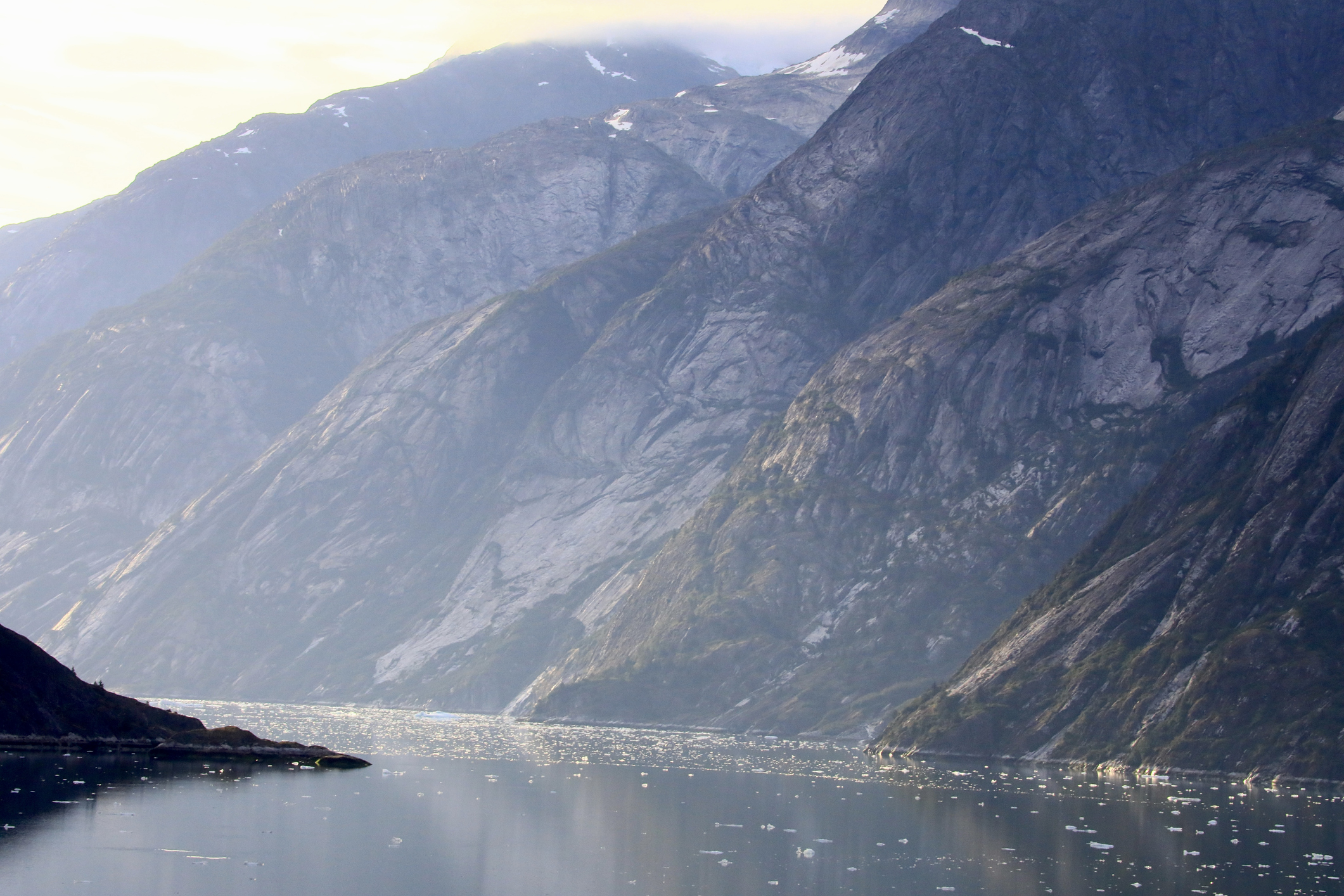
Image of a narrow strait surrounded by tall mountains.

The narrow confines of the fjord led to a massive tsunami. Credit: Douglas Sacha

The narrow confines of the fjord led to a massive tsunami. Credit: Douglas Sacha

At 5:26 am local time on August 10, 2025, a massive wedge of rock with a volume of at least 63.5 million cubic meters detached from a mountain above Alaska’s Tracy Arm fjord. The falling rock plummeted into the deep waters at the terminus of the South Sawyer Glacier and caused an initial 100-meter-high breaking wave that tore across the fjord at speeds exceeding 70 meters a second. When this wave hit the opposite shoreline, it surged up the steep rocks to a height of 481 meters above sea level.

“It was the second highest tsunami ever recorded on Earth,” says Aram Fathian, a researcher at the University of Calgary and co-author of a recent Science study that reconstructed this event in detail. “But until now, almost nobody heard about it because it was a near-miss event,” he adds. There were no injuries or fatalities reported following the Tracy Arm fjord tsunami, mostly because it happened early in the morning. But we might not be so lucky next time.

Landslide megatsunamis

Earthquake-generated tsunamis usually reach runup heights of a few tens of meters when they strike land. Landslide tsunamis, like the one that happened in Tracy Arm, are often more localized but also way more violent. When millions of tons of rock suddenly fall into a confined body of water like a narrow fjord, the variation in water depth and the direct displacement of the water column produce extremely high waves. Since 1925, scientists have documented 27 such events with runups exceeding 50 meters. The highest was the 1958 Lituya Bay tsunami, which reached 530 meters.

The source of the 2025 Tracy Arm tsunami was a steep rock wedge on the northern side of the fjord. Its headscarp, the uppermost boundary of a landslide or rockfall, sat roughly 1,025 meters above sea level. For centuries, the structural integrity of this slope was maintained by a massive wall of ice known as the South Sawyer Glacier. But South Sawyer, like many other glaciers in the Stikine Icefield, has been in a state of retreat due to the warming climate.

Climate-driven disaster

“We studied the event from several aspects, from different lenses,” Fathian says. The team used high-resolution satellite images taken before and after the event to reconstruct the shape and geometry of the slide, as well as its axis and direction. Satellite images were also used to evaluate glacial thinning in the area, which, the team concluded, was the root cause of the Tracy Arms event.

The collapse, according to the study, was made more likely by the industrial-era warming of the planet. Researchers calculating the regional temperature trends found a 1.1° C increase in summertime temperatures since around 1875, driving up snowline elevations by roughly 169 meters. The local ice also got significantly thinner. Between 2013 and 2022 alone, the glacier ice bracing the failure site thinned by 100 to 130 meters.

Without millions of tons of ice pressing against the rock, the slopes were left too steep to support their own weight. In July 2025, just weeks before the event, glacial retreat exposed the very base of the slope that would soon fail. The icy straitjacket that kept the rocks from collapsing was no longer there. But there were other signs of an impending disaster.

Cracks in the rock

Retrospective analysis of optical and radar satellite imagery from the weeks preceding the slide showed no visible tension cracks or major deformational scarring on the slope. From the outside, it looked perfectly sound. But deep within the rock, surfaces were already grinding. Regional seismometers registered localized repeating earthquakes beginning as early as August 5. By August 9, these mini earthquakes were happening once every hour. In the six hours leading up to the main failure, the gaps between these seismic signals shrank to between 30 to 60 seconds.

The cause of this uptick in microseismicity was the small patches of rock and ice snapping as a huge part of the cliff began to inch its way downward. About an hour before the landslide, the signals merged into a continuous, grinding slip. And then, the rock fell.

The impact of 63.5 million cubic meters of rock hitting the fjord released forces large enough to be registered globally. The seismic waves that cascaded across the planet were recorded by sensor stations worldwide and were equivalent in energy to a magnitude 5.4 earthquake. The sloshing water within the fjord established a 66-second long-period seiche, a standing wave, that reverberated back and forth for 36 hours.

“It could easily turn into a catastrophic disaster,” Fathian says. It could, because Tracy Arm is a highly frequented tourist destination.

A close call

During the summer, more than 20 boats navigate the Tracy and Endicott arms every day, including up to six large cruise ships. Had the landslide occurred a few hours later, in the middle of the tourist day, the outcome could have been tragic. But even at 5:26 in the morning, the tsunami was enough to terrify the few people present in the vicinity.

About 55 kilometers away on Harbor Island, a group of kayakers saw the water flowing past their tents 20 minutes after the landslide. The surging tide took away some of their gear and one of the kayaks. Nearby in No Name Bay, observers on a motor vessel reported a 2-2.5-meter cresting wave coming along the beach from the direction of Tracy Arm, followed by a secondary 1-meter wave.

Farther away, 85 kilometers from the source, the crew of the small cruise boat anchored in Fords Terror saw a surge of water pouring over a nearby sandbar; it then physically lifted their vessel three meters despite a falling tide. The surge, they reported, lasted until 11 am, only to leave their small skiff stranded on dry land a few minutes later as the water receded.

At the mouth of the fjord, a National Geographic Venture cruise ship carrying around 150 people was anchored in dense fog. The captain noted currents, white water, and a significant amount of ice and debris near the edges of the fjord. Because the jagged, shallow seabed near the fjord’s mouth acted like a speed bump that sapped the wave’s energy, people onboard the cruise ship came out of the event unscathed. “It was a miraculous kind of luck we had that nobody got hurt,” Fathian claims.

But that luck may not last. With the warming climate, the team is convinced we’re going to have more Tracy Arms in the future.

Early-warning system

As climate change accelerates the retreat of tidewater glaciers and thaws the permafrost holding Arctic mountains together, the structural integrity of these landscapes is failing. “These conditions exist in many locations worldwide: Canada, Alaska, New Zealand, Greenland, Norway, and many other places,” Fathian claims. “And a similar event could happen in these areas.”

At the same time, our exposure to these hazards is on the rise. The number of cruise ship passengers visiting Alaska has increased from roughly 1 million in 2016 to 1.6 million in 2025. “Some of these cruise ships carry up to 6,000 passengers. This is literally a floating city,” Fathian says. “Imagine one of these ships getting hit by a mega tsunami wave.”

The researchers hope their study will provide scientific tools we could use to predict such events in advance. “Tracy Arm was not on the radar—it was not on anyone’s hazard or risk map,” Fathian explains. The goal for the team now is a better understanding of precursory warning signals they could detect with seismological techniques like mini earthquakes recorded around Tracy Arm a few days prior to the tsunami.

“These signals could be promising for developing early warning systems in similar conditions or areas,” Fathian says. “Hopefully this kind of data ends up on desks of policymakers and regulators to come up with practical and appropriate measures.”

Science, 2026.  DOI: http://dx.doi.org/10.1126/science.aec3187
Photo of Jacek Krywko

Jacek Krywko is a freelance science and technology writer who covers space exploration, artificial intelligence research, computer science, and all sorts of engineering wizardry.
1 Comments