Crushing soda cans for science, why dolphins swim so fast, how urine helps mushrooms communicate, and more.
It’s a regrettable reality that there is never enough time to cover all the interesting scientific stories we come across. So every month, we highlight a handful of the best stories that nearly slipped through the cracks. April’s list includes tracking Roman ship repairs, the discovery that mushrooms can detect human urine, crushing soda cans for science, and the physics of why dolphins can swim so fast.
Physics of why dolphins swim so fast
Dolphins are very good swimmers, but the exact mechanisms by which they achieve their impressive speed and agility in water have remained murky. Japanese scientists from the University of Osaka ran multiple supercomputer simulations to learn more about how dolphins optimize their propulsion and found it has to do with the vortices, or eddies, produced by dolphin kicks, according to a paper published in the journal Physical Review Fluids.
Per the authors, when dolphins flap their tails up and down, the kicking motion pushes water backward and produces swirling currents of varying sizes. The computer simulations enabled the team to break down those different sizes, revealing that the initial tail oscillations produce large vortex rings that generate thrust, and those larger ones then produce many more smaller vortices. However, the smaller ones don’t contribute to the forward motion.
In short, “Our results show that the hierarchy of vortices in turbulence is crucial for understanding dolphin swimming,” said co-author Susumu Goto. “The largest vortices are responsible for most of the propulsion, while the smaller ones are mainly byproducts of turbulent flow.” The team hopes to apply these insights into the mechanics of underwater propulsion to the design of faster and more efficient underwater robots.
DOI: Physics of Fluids, 2026. 10.1103/tnxb-ckr5 (About DOIs).
Tracking Roman shipwreck repairs
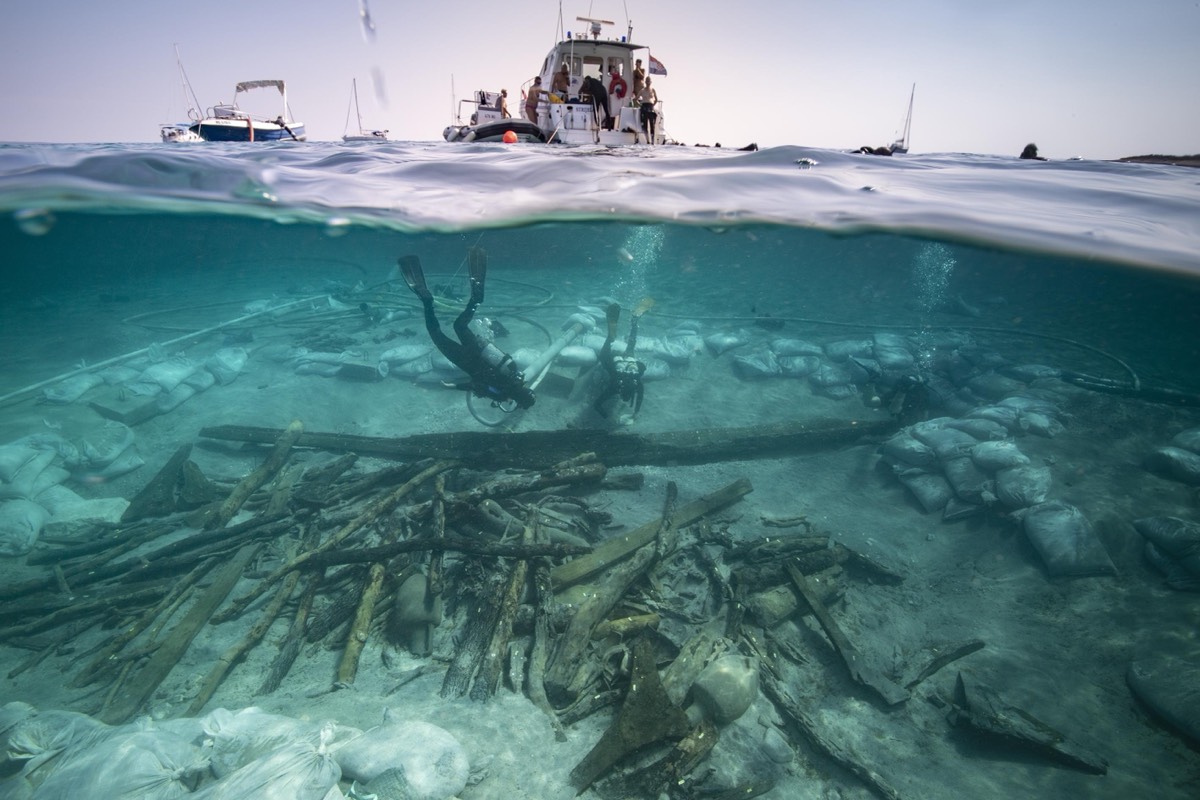
Credit: Adriboats © L. Damelet, CNRS/CCJ
Credit: Adriboats © L. Damelet, CNRS/CCJ
Back in 2016, archaeologists discovered a shipwreck from the Roman Republic, the Ilovik–Paržine 1. The wreck has been the subject of much study of the actual ship, enabling scientists to determine it was constructed in what is now Brindisi on Italy’s southeastern coast. Most recently, analysis of pollen trapped in the ship’s waterproofing layers have yielded insight into repairs made successively in other locations throughout the Adriatic Sea, according to a paper published in the journal Frontiers in Materials.
Per the authors, prior research had largely ignored studying non-wooden materials like seawater-resistant coatings, so they used mass spectrometry and similar methods to examine the molecular makeup of 10 coating samples. The results showed that pine tree resin or tar (pitch) was the main component. But one sample was a combination of beeswax and tar, a mixture known as zopissa that is unique to Greek shipbuilders. The combination makes the coating easier to apply when heated and also makes the pitch adhesive more flexible.
Because pitch’s adhesive nature easily traps and preserve pollen, the researchers were also able to identify which plants had been present when the coating was applied, so they could in turn identify the regions where the pitch had been produced. They found pollen from a wide range of environments, such as forests of holly oak, pine, and matorral, all typical of the Mediterranean and Adriatic coastal regions. Other samples contained alder and ash, more common to rivers, as well as fir and beech, more typical of the mountain regions of Istria and Dalmatia. This provides concrete proof of mid-voyage repairs to the ship.
DOI: Frontiers in Materials, 2026. 10.3389/fmats.2026.1758862 (About DOIs).
Crushing soda cans for science
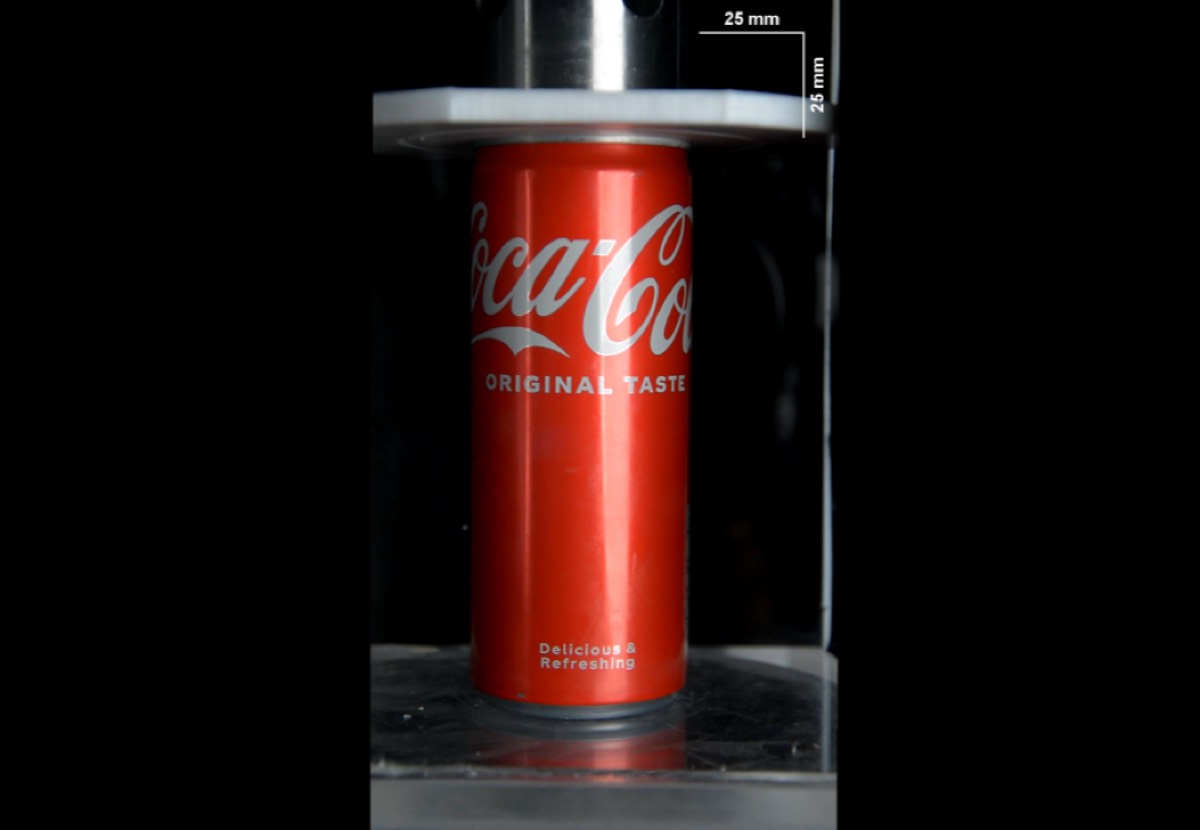
Credit: Finn Box
Credit: Finn Box
Who doesn’t love to watch those YouTube videos of people using hydraulics to crush a variety of objects? That includes physicists at the University of Manchester, who were intrigued by the difference between crushing an empty soda can versus one that is full of liquid. An empty can collapses immediately; a full can collapses gradually in a series of circular rings. The Manchester physicists wanted to know why a full can behaves this way. They investigated via a combination of mathematical modeling and laboratory crushing experiments, describing their findings in a paper published in the journal Communications Physics.
It turns out that how a full can buckles isn’t random and that the liquid inside actually alters how the can responds to force. The buckling may start in the middle, and minor variations in a given can’s shape and size might affect when the first ring emerges. But then, the authors say, the physics takes over in a highly predictable process. The rings arise because the metal softens as the can compresses, then stiffens, then compresses and stiffens again, repeating the pattern until the compression is complete—akin to something called homoclinic snaking.
This seems to be a fundamental property of liquid-filled cylinders, which are common in such industries as industrial storage transportation, construction, energy systems, and rocket parts. So this work could help engineers detect early signs of failure in such structures.
DOI: Communications Physics, 2026. 10.1038/s42005-026-02589-5 (About DOIs).
How Australia’s 12 Apostles formed

Credit: Mark Cuthell
Credit: Mark Cuthell
Australia is home to many natural wonders, and among the most striking is the “Twelve Apostles,” a clustering of limestone stacks off the shore of Campbell National Park in Victoria. But the same geological forces that formed the stacks may also be their undoing. Stacks collapsed in 2005 and 2009, so only seven remain. Scientists are keen to learn more about their formation in order to reconstruct all the changes in climate, ocean conditions, and sea levels and thus better understand contemporary coastal erosion. A team at the University of Melbourne described their latest findings in a paper published in the Australian Journal of Earth Sciences.
The authors describe the Twelve Apostles formation as “an environmental time capsule,” since its limestone layers can yield information about variations in temperatures and sea level over millions of years, much like tree rings. Thanks to microscopic fossils, the Melbourne researchers found that the formation is younger than previously thought: the oldest layers of limestone are about 14 million years old, and the youngest about 8.6 million. [corrected]
That’s when tectonic plates first pushed them out of the sea, but the shaping of the pillars via coastal erosion only occurred over the last few thousand years. And that tectonic movement didn’t push them straight up, but tilted them just a few degrees. There are also small fault lines in the layers, evidence of past earthquakes. The next step is to take a closer look at the individual rock layers.
DOI: Australian Journal of Earth Sciences, 2026. 10.1080/08120099.2026.2638817 (About DOIs).
“Gossipy” mushrooms can detect your urine
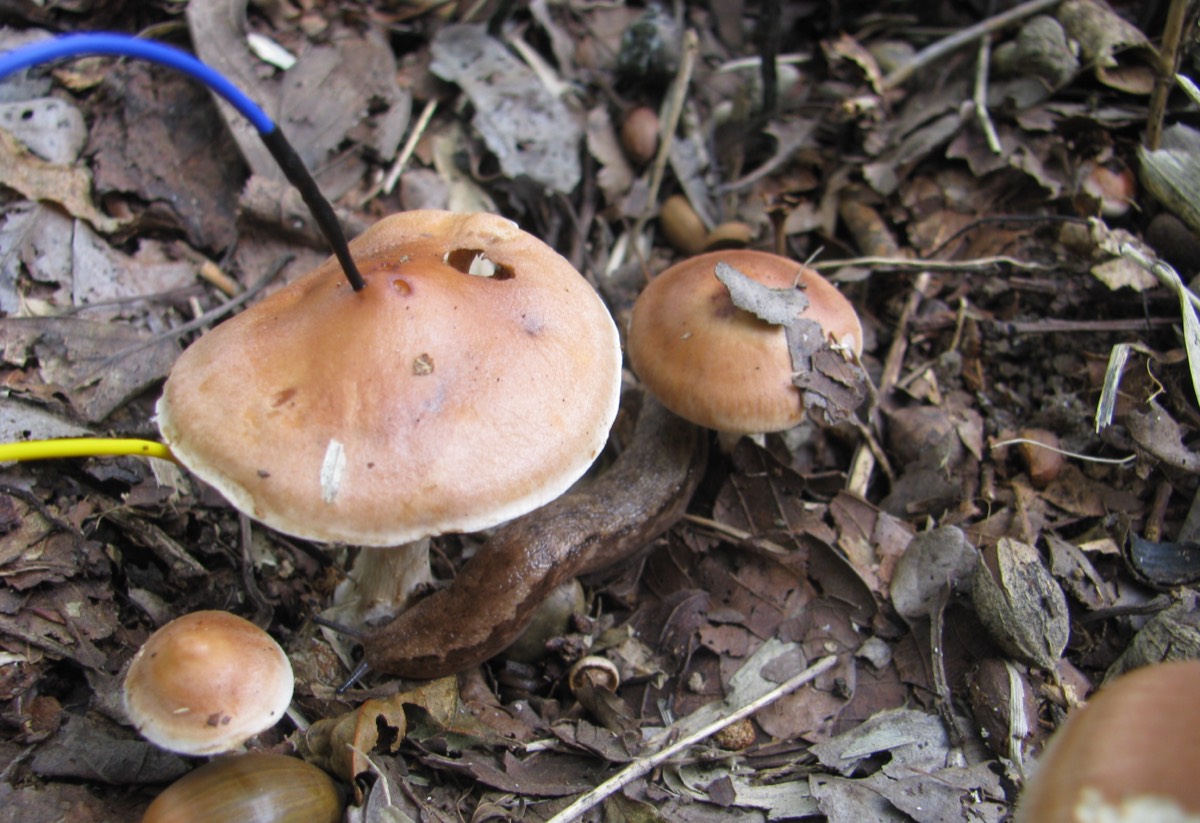
Credit: Yu Fukasawa et al., 2026
Credit: Yu Fukasawa et al., 2026
It’s well known that mushrooms have a vast, interconnected underground network by which they can communicate; it’s the main body of the mushroom, in fact, rather than what we see growing on the surface. But little is known about how, exactly, information spreads across these mycelial networks. Japanese researchers at Tohoku University found that electrical flow can either increase or decrease communication levels, depending on whether one applies water or urine, according to a paper published in the journal Scientific Reports.
The scientists attached electrodes to 37 locally grown mushrooms, specifically ectomycorrhizal fungi, which are sensitive to high concentrations of ammonia in the soil. Ammonia is a chemical byproduct of urine, so the team chose urine as a trigger for their experiments. They watered the mushrooms with either tap water or urine and measured the ‘shrooms’ electrical response.
The results: Applying water around one mushroom increased electrical activity (and hence the flow of information), while applying water across a larger area reduced electrical activity. Applying urine to just one mushroom also reduced information flow. The spatial distance and how closely the mushrooms are genetically related also seem to be factors. More research is needed to understand why the mushrooms vary their responses, but the authors hypothesize that when water is broadly applied, there is no need to share information since the network already knows.
DOI: Scientific Reports, 2026. 10.1038/s41598-026-42673-y (About DOIs).
Japanese poetry and space weather

Credit: National Archives of Japan/Public domain
Credit: National Archives of Japan/Public domain
Achieving a deeper understanding space weather is vital to all manner of space-based science, such as extreme solar activity known as solar proton events (SPEs), which hurl high-energy particles toward the Earth traveling as much as 90 percent of light speed. Should an SPE coincide with a manned space mission—as a string of SPEs nearly did in 1972, just missing the Apollo 16 and 17 missions—it could expose astronauts to lethal radiation. Learning more about past SPEs is key, but to date research has focused on rare, very powerful historical SPEs.
The standard method for identifying when an SPE occurred is measuring carbon-14, produced when high-energy photos penetrate the Earth’s magnetic field (usually near the poles) and collide with gases in the atmosphere. Those carbon-14 compounds then spread through the atmosphere around the globe and are eventually deposited into organic materials, like buried trees. But the method is time-consuming, and researchers would like to be able to identify the most likely places to focus their efforts. Japanese scientists have developed an interdisciplinary method for identifying less extreme SPEs, which are more frequent but harder to detect, according to a paper published in the Proceedings of the Japan Academy Series B.
They turned to medieval historical sources for help, looking for any mention of phenomena that might be evidence for an SPE. The first clue came from a diary of an influential Japanese courtier and poet, Fujiwara no Teika, who described seeing “red lights in the northern sky over Kyoto” in February 1204 CE—i.e., an aurora. So the team measured carbon-14 in asunaro wood in the region and discovered the telltale spikes of an SPE. An examination of tree rings confirmed that a red aurora had occurred in China between 1200 and 1201 CE. (SPEs don’t cause aurora, but they are associated with the space weather conditions that do.) The authors also found that there were shorter fluctuations in the solar cycles at that time: seven- to eight-year cycles, vs. the 11-year cycles we see today.
DOI: Proceedings of the Japan Academy Series B, 2026. 10.2183/pjab.102.011 (About DOIs).

Jennifer is a senior writer at Ars Technica with a particular focus on where science meets culture, covering everything from physics and related interdisciplinary topics to her favorite films and TV series. Jennifer lives in Baltimore with her spouse, physicist Sean M. Carroll, and their two cats, Ariel and Caliban.