cache-rich, cash-poor
There are some practical benefits to this $899 chip, but not many.
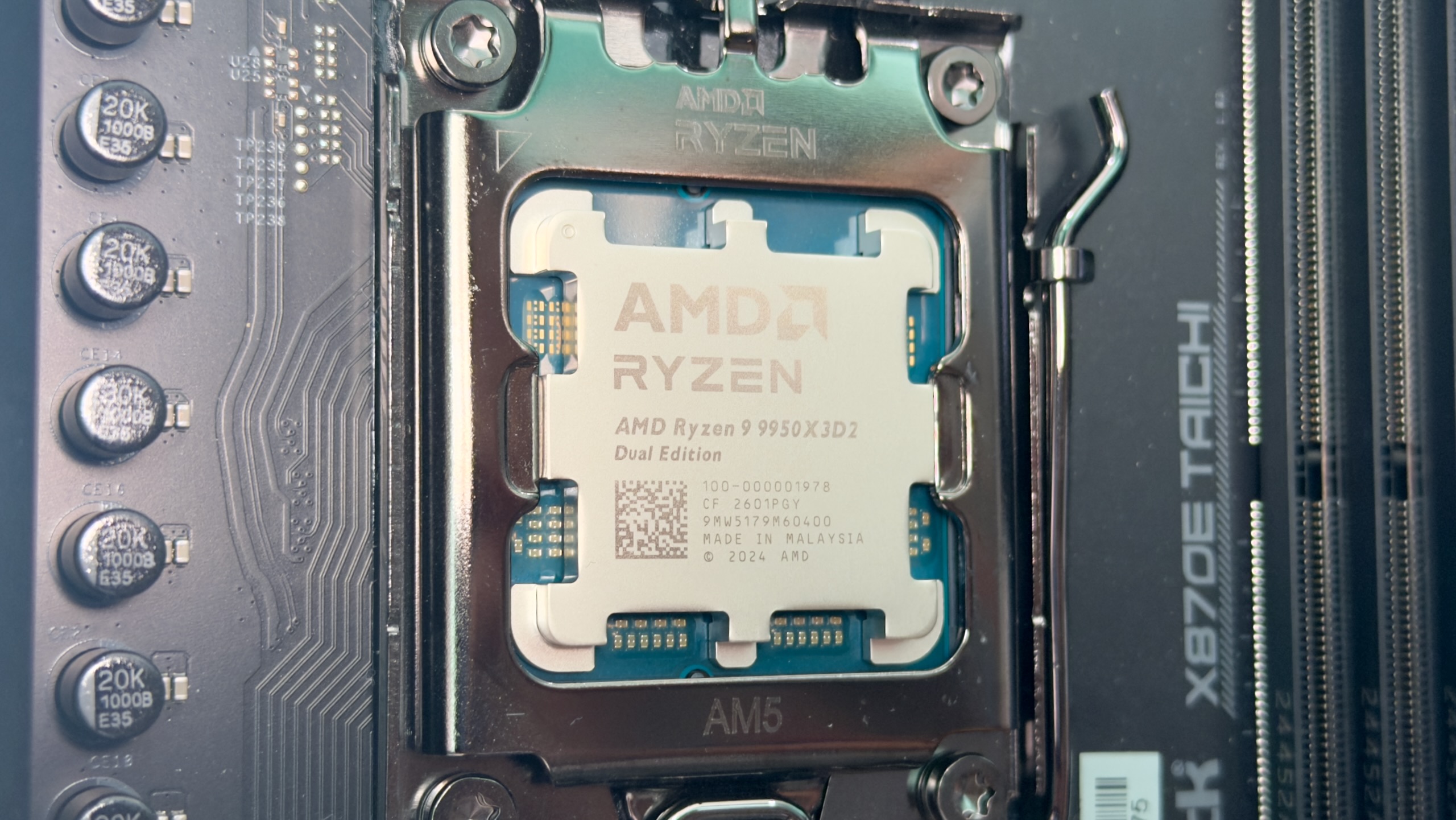
AMD's Ryzen 9 9950X3D2 Dual Edition. Credit: Andrew Cunningham
AMD's Ryzen 9 9950X3D2 Dual Edition. Credit: Andrew Cunningham
AMD is releasing its Ryzen 9 9950X3D2 Dual Edition processor on April 22. The processor will cost $899, though this could go up or down based on supply and demand.
To recap, it’s a version of the existing 16-core Ryzen 9 9950X3D (MSRP $699, street price around $660) where both of the processor’s 8-core Zen 5 CPU chiplets have 64MB of extra L3 cache stacked beneath them. Normally, one of the chiplets has extra cache and one does not. This gives the CPU a whopping 208MB of cache, a number that is very large. But you don’t need a large CPU review to understand the differences between this chip and the regular 9950X3D that we reviewed over a year ago.
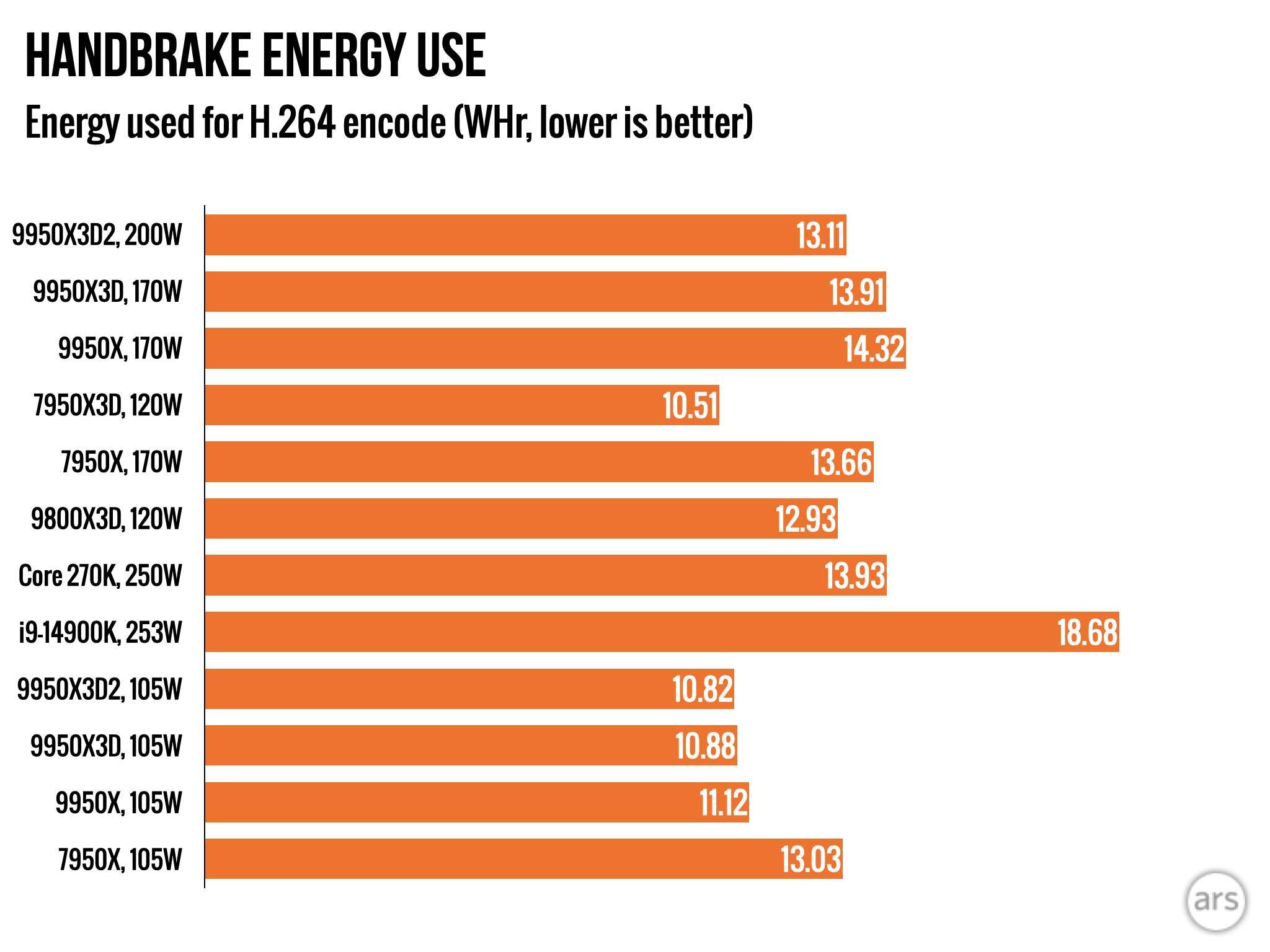
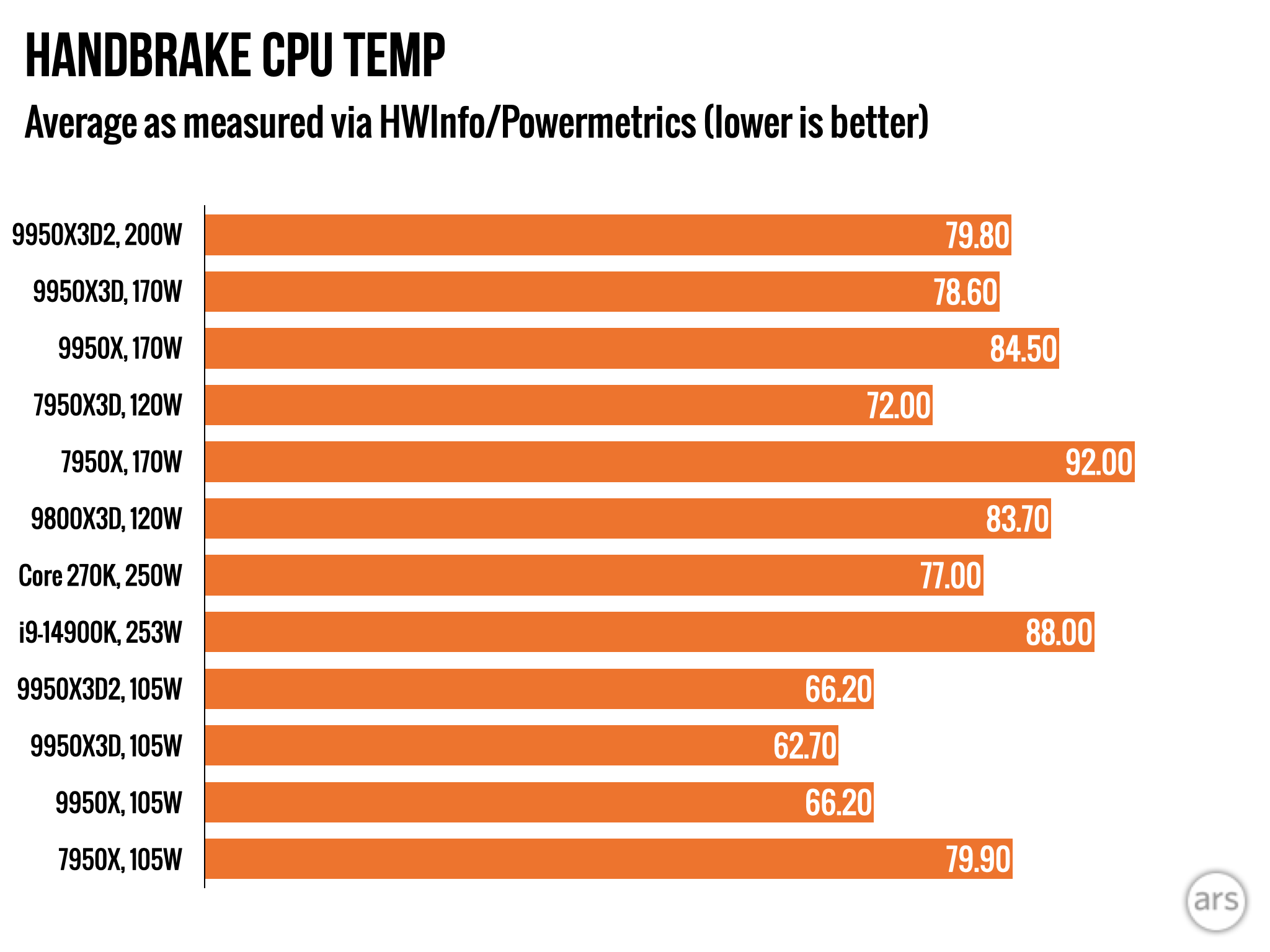
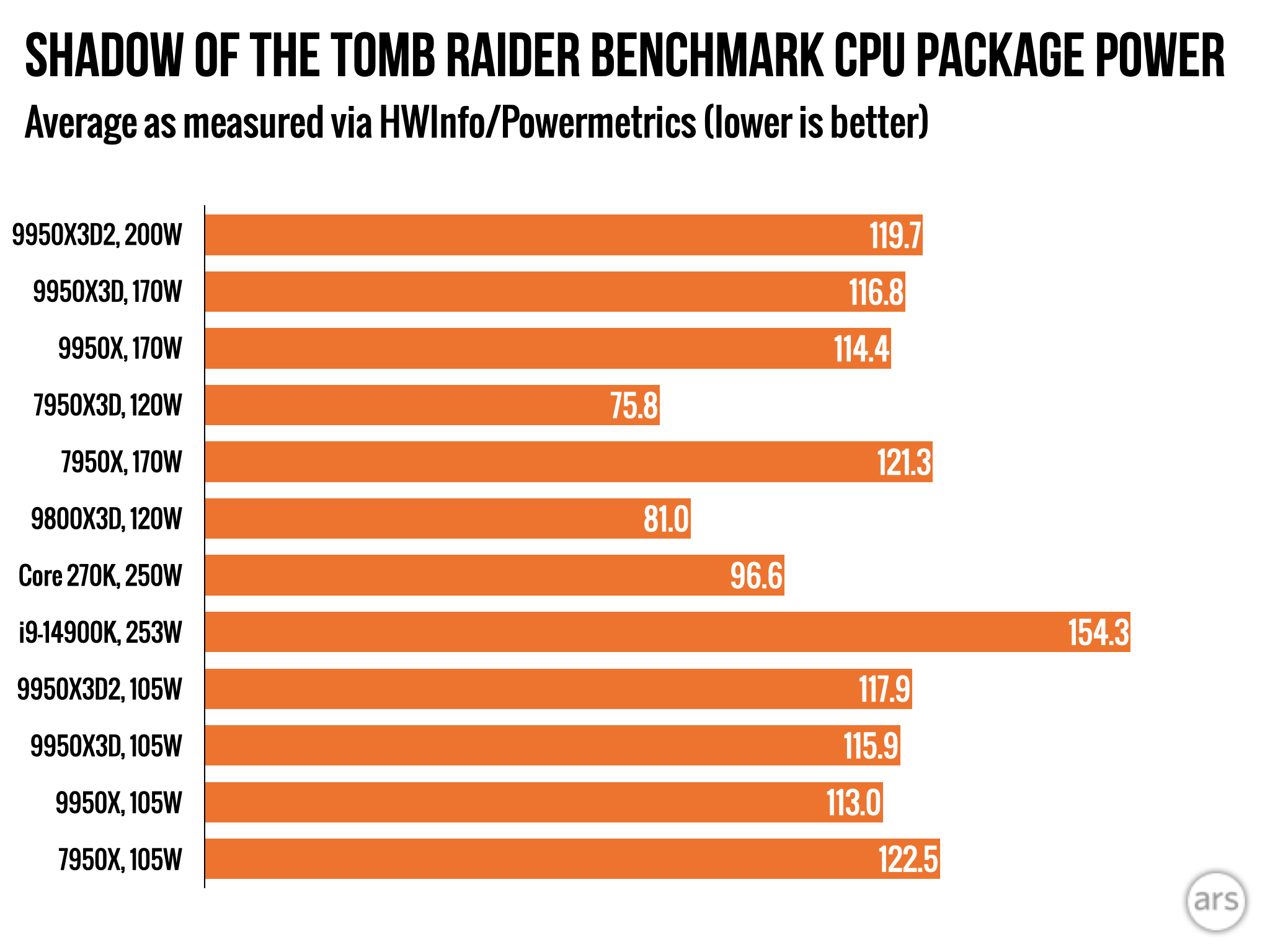
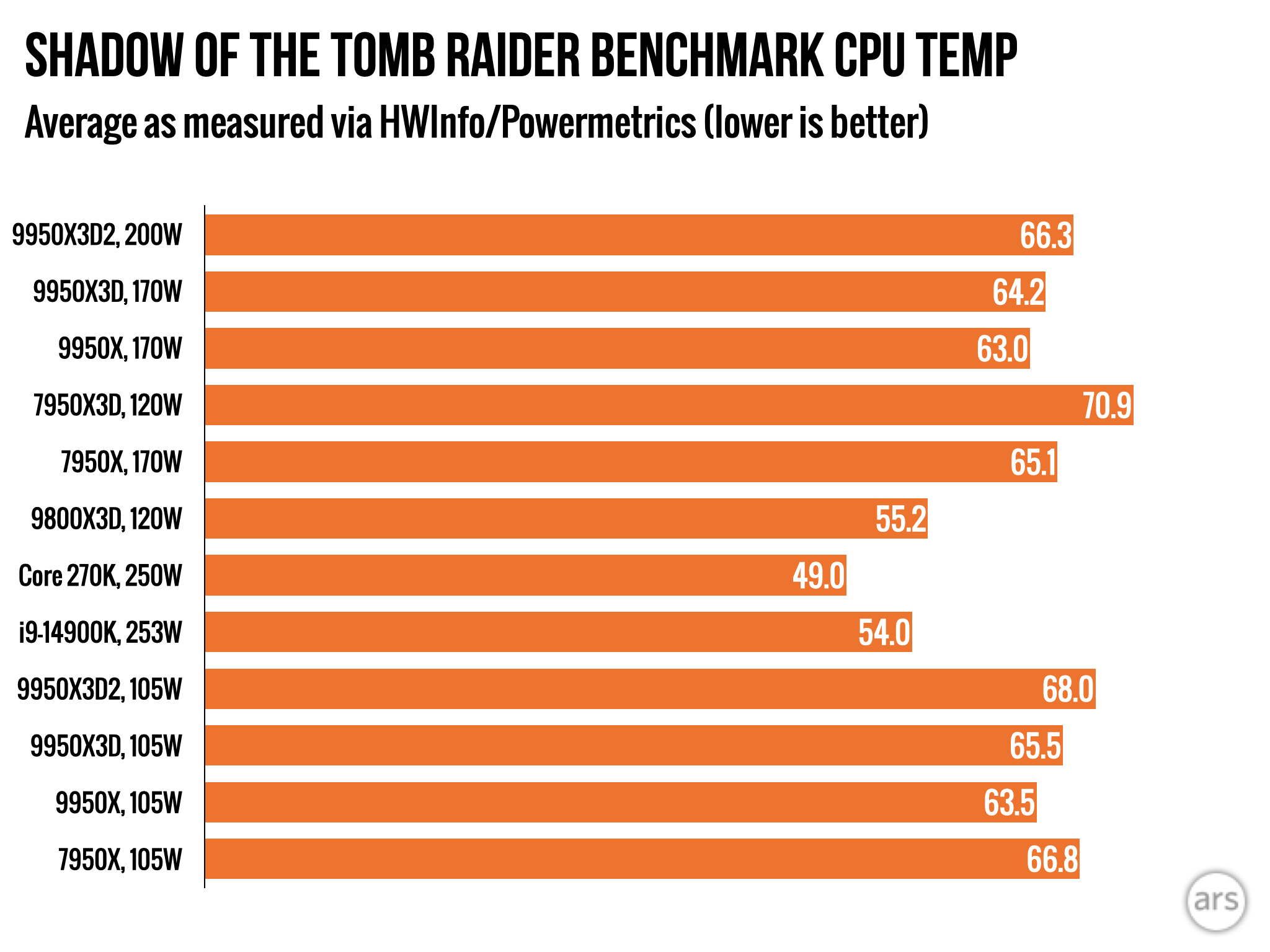
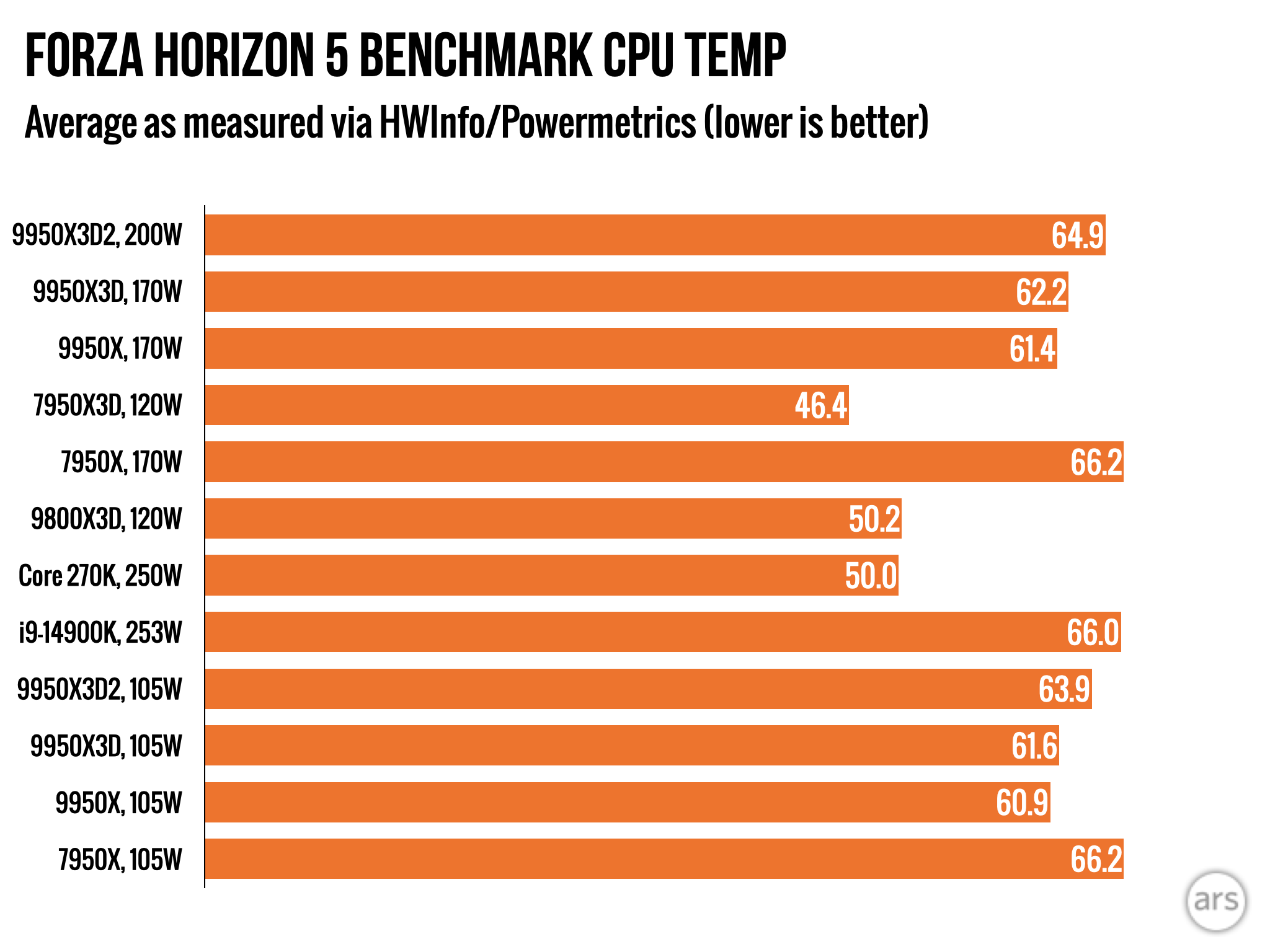
In our general-purpose CPU benchmarks, video encoding tests, and gaming tests, the 9950X3D2 is consistently just a smidge faster than the regular 9950X3D. Despite its 200 W default TDP—30 W higher than the regular 9950X3D’s 170 W—we also found the 9950X3D2 to consume around the same amount of power while gaming and slightly less power while encoding video. These are nice things. And that AMD has managed to improve performance a little without blowing the power budget is a testament to the work AMD has done to eliminate the downsides of 3D V-Cache since introducing the concept a few years ago.
But the reverse is also true. The regular 9950X3D is almost as fast as the 9950X3D2 for a little over two-thirds the price. As it turns out, AMD mixed-and-matched CPU cores with 3D V-Cache and CPU cores without it, because a lot of the time, a hybrid approach gets you nearly the same results.
Testbed and test results
| AMD AM5 | Intel LGA 1851 | Intel LGA 1700 | |
|---|---|---|---|
| CPUs | Ryzen 7000 and 9000 series | Core Ultra 200 series | 14th-generation Core |
| Motherboard | ASRock X870E Taichi or MSI MPG X870E Carbon Wifi (provided by AMD) | MSI MEG Z890 Unify-X (provided by Intel) | Gigabyte Z790 Aorus Master X (provided by Intel) |
| RAM config | 32GB G.Skill Trident Z5 Neo (provided by AMD), running at DDR5-6000 | 32GB G.Skill Trident Z5 Neo (provided by AMD), running at DDR5-6000
32GB G.Skill Trident Z5 (provided by Intel), running at DDR5-7200 |
32GB G.Skill Trident Z5 Neo (provided by AMD), running at DDR5-6000 |
All these CPUs have been tested in a Lian Li O11 Air Mini case with an EVGA-provided Supernova 850 P6 power supply and a 280 mm Corsair iCue H115i Elite Capellix AIO cooler. Gaming and graphics benchmarks are being run on an Nvidia GeForce RTX 4090, and all systems are running a fully patched version of Windows 11 24H2.
Both the 9950X3D2 and 9950X3D outperform Intel’s best desktop offering, the $350 Core Ultra 7 270K Plus, in gaming performance. But Intel keeps performance close to both Ryzen chips in multi-core productivity performance, albeit with slightly higher power consumption.
The Intel comparisons are worth making, but the people looking at this chip aren’t really interested in maximizing their performance per dollar. The main practical reason to consider the 9950X3D, to the extent that one exists, is that you’re having specific, enduring, unfixable problems with the software-based solution that AMD uses for the 9950X3D, 9900X3D, 7950X3D, and 7900X3D to make sure the right tasks are being run on the right cores. You’ve got to trust that the software will run games on the cores with 3D V-Cache first, and general productivity tasks that benefit from slightly higher clock speeds will be run on the cores without the extra cache first.
Generally, that software works pretty well, and for specific apps, AMD does provide some workarounds to force the issue. But the 9950X3D2 eliminates the possibility of error, since for the first time in a 12- or 16-core X3D chip, all the cores are the same. This could be worth the peace of mind, sometimes.
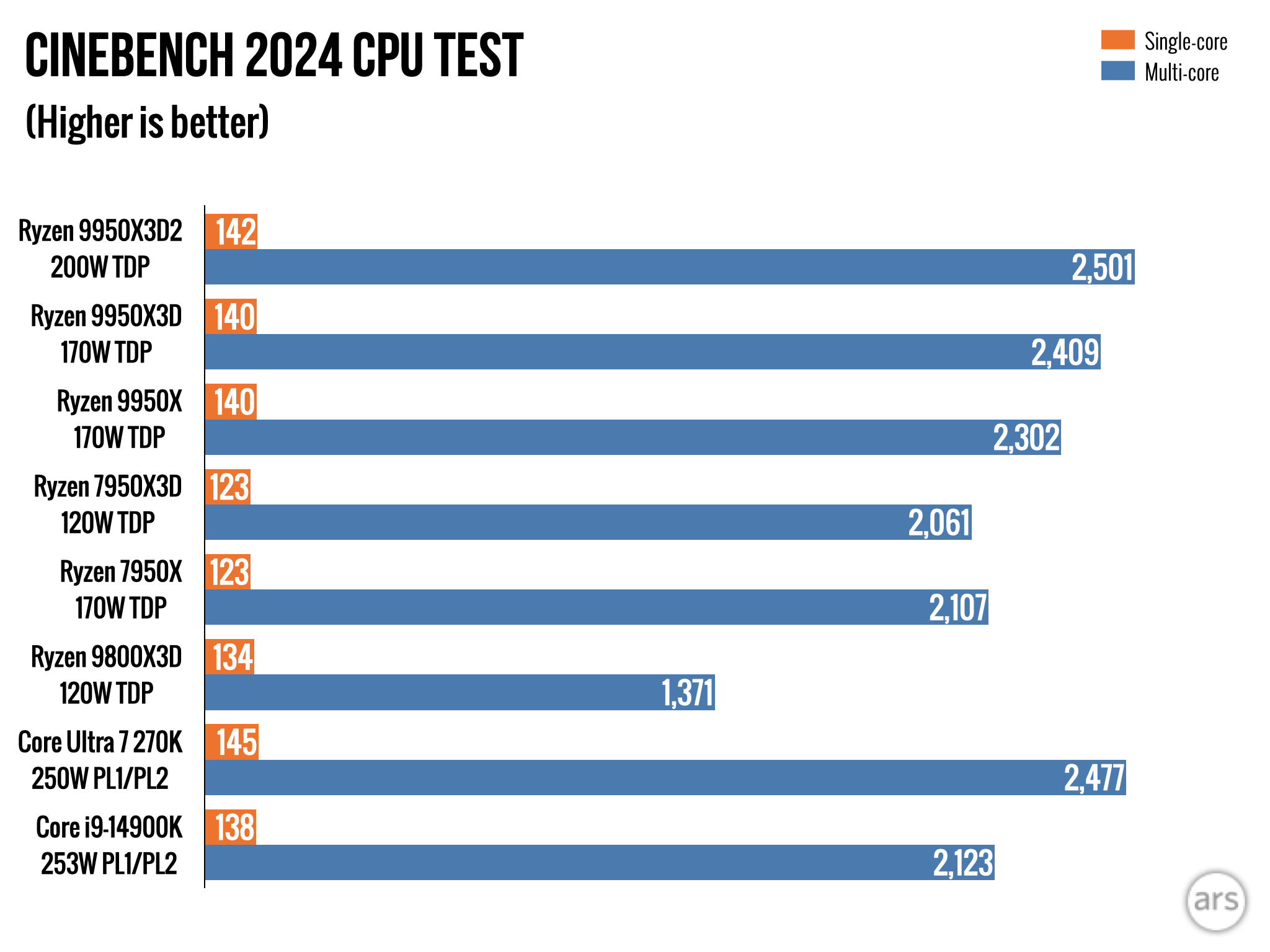
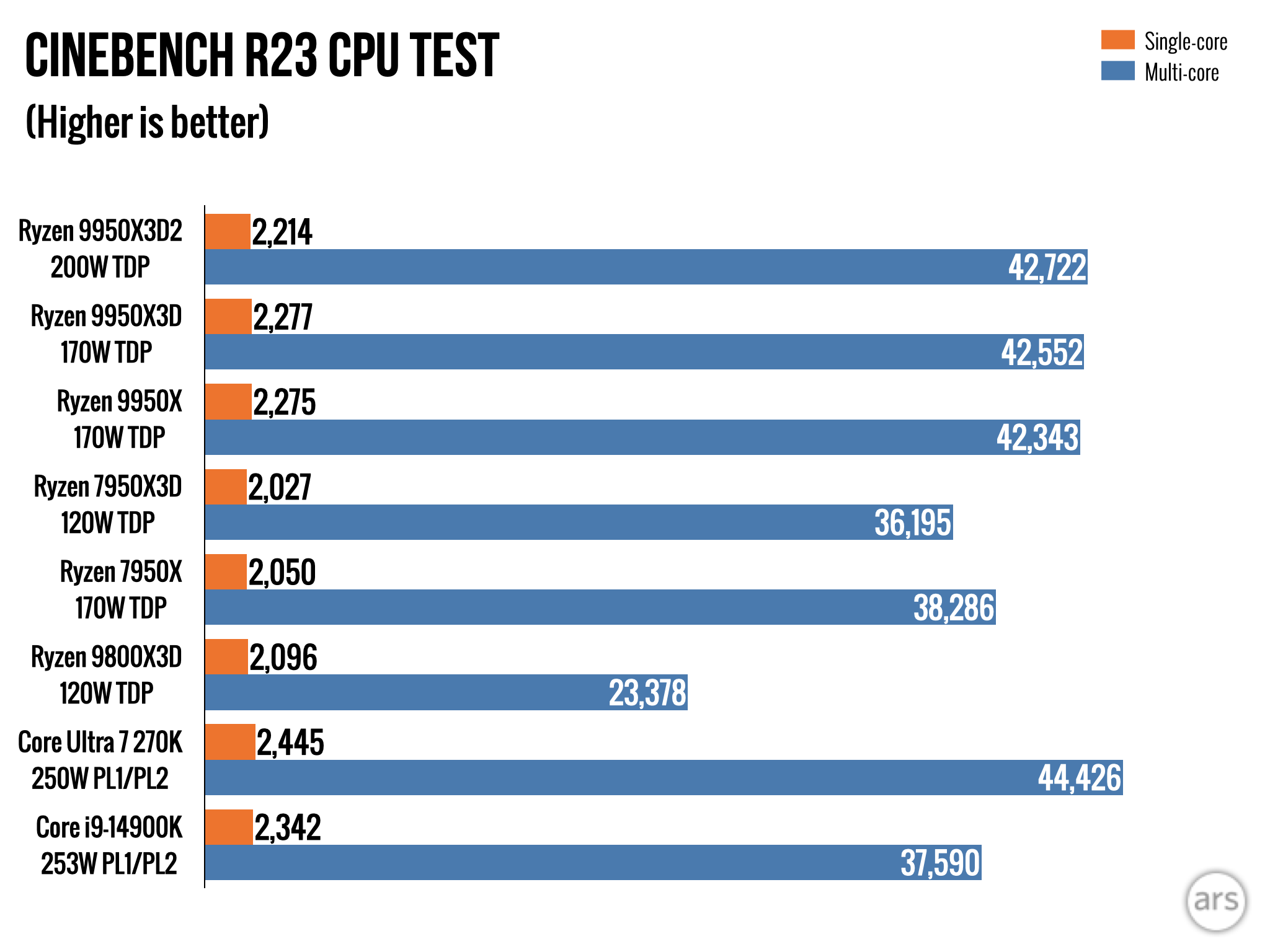
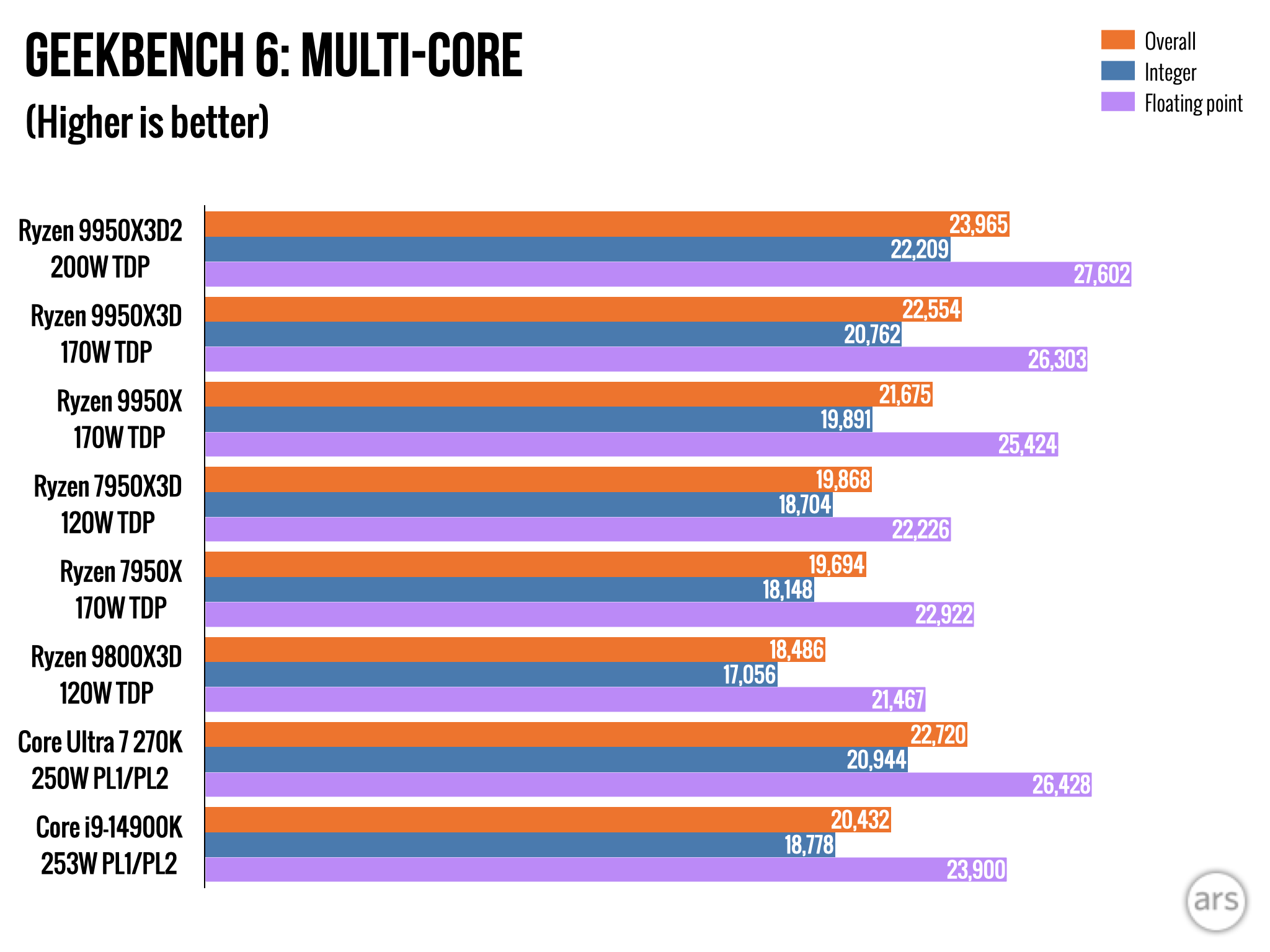
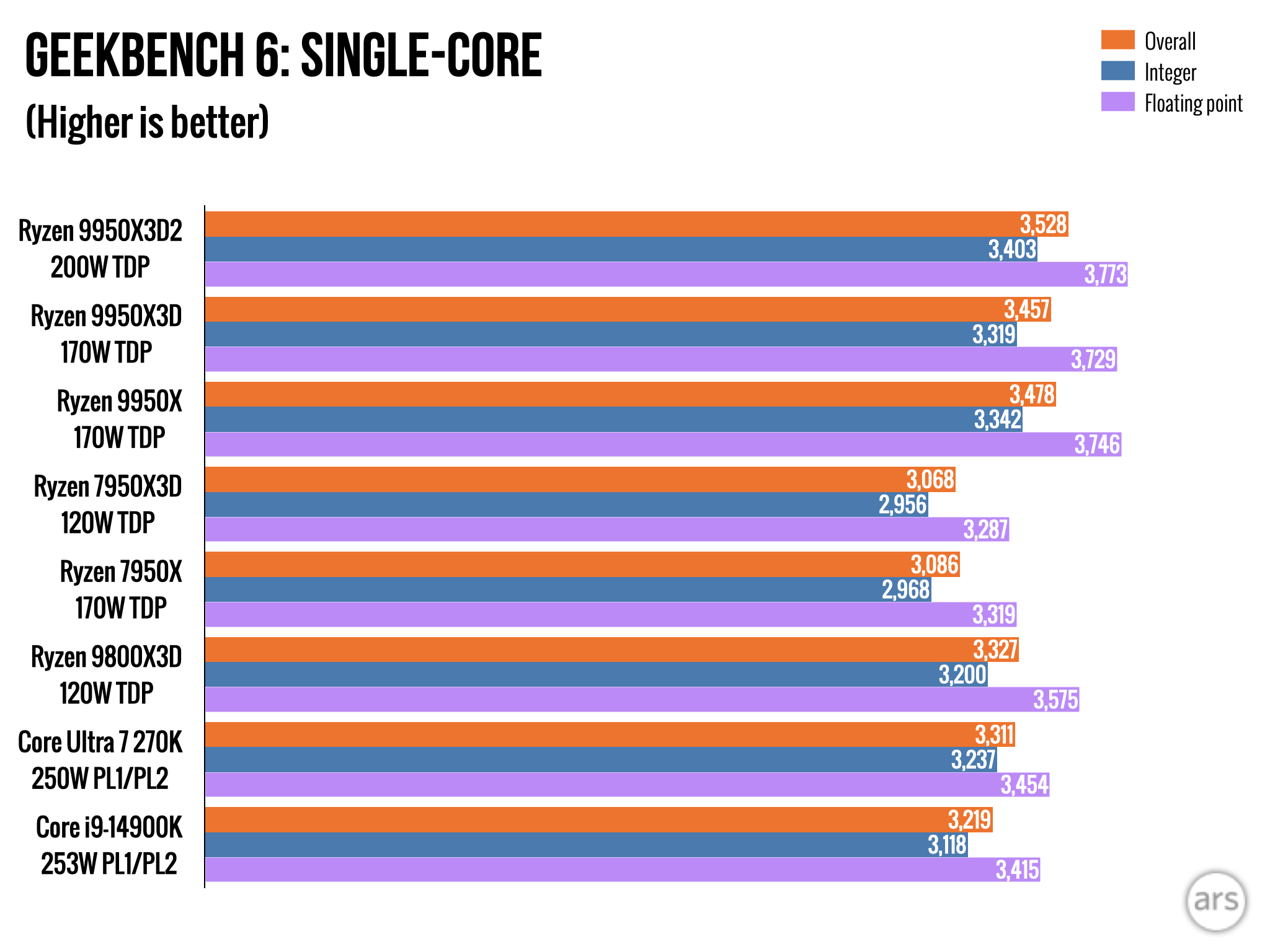
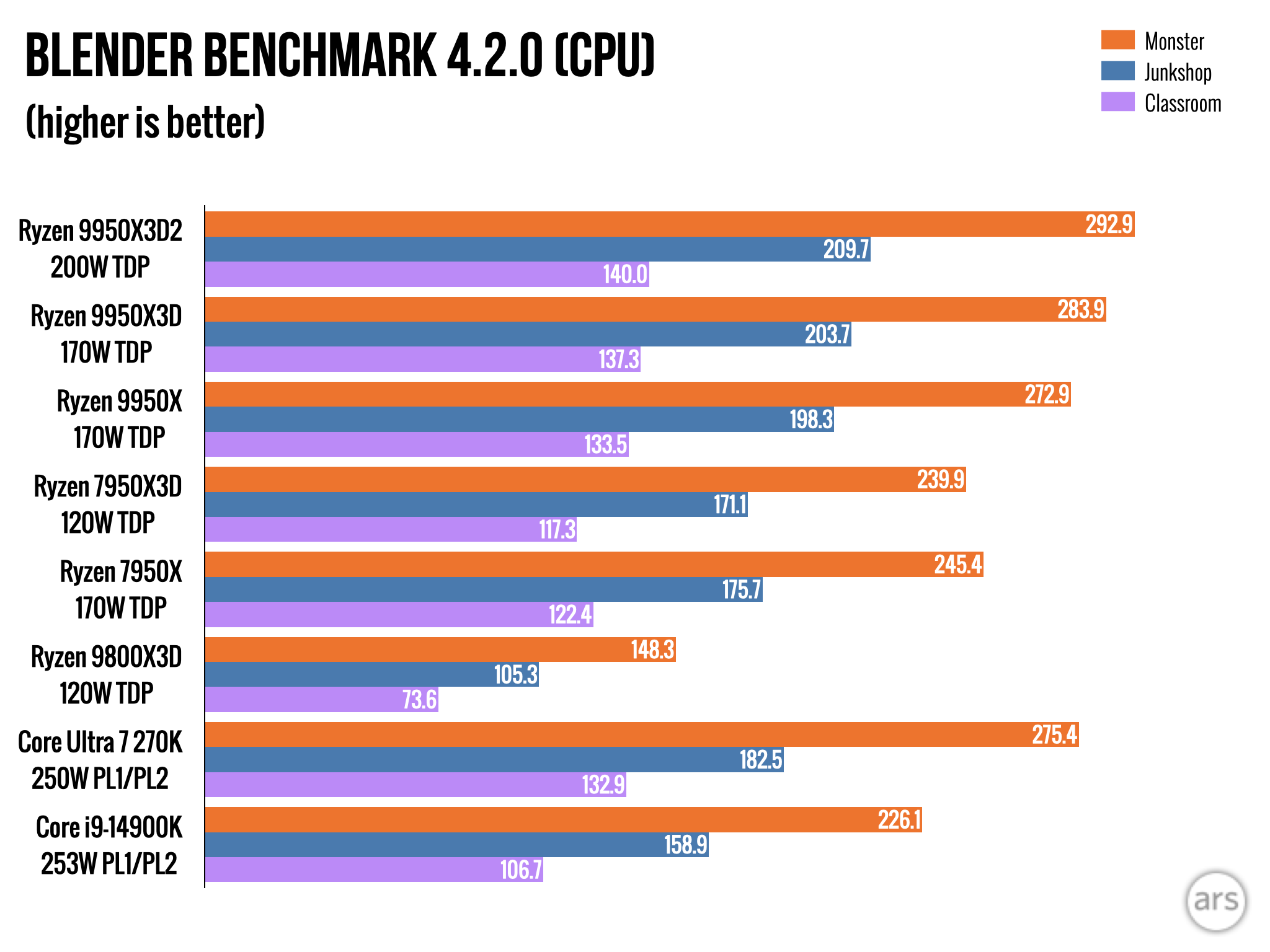
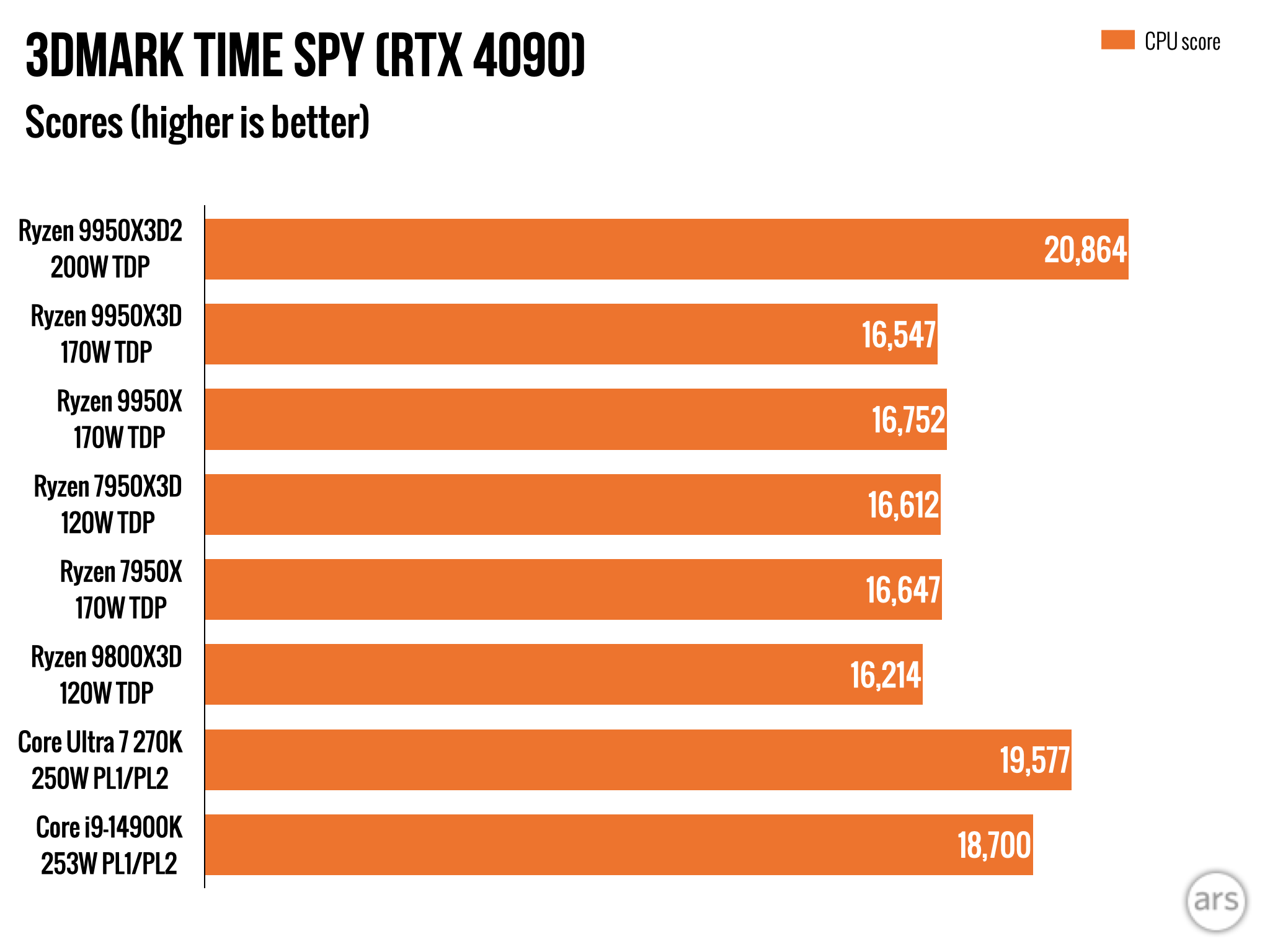
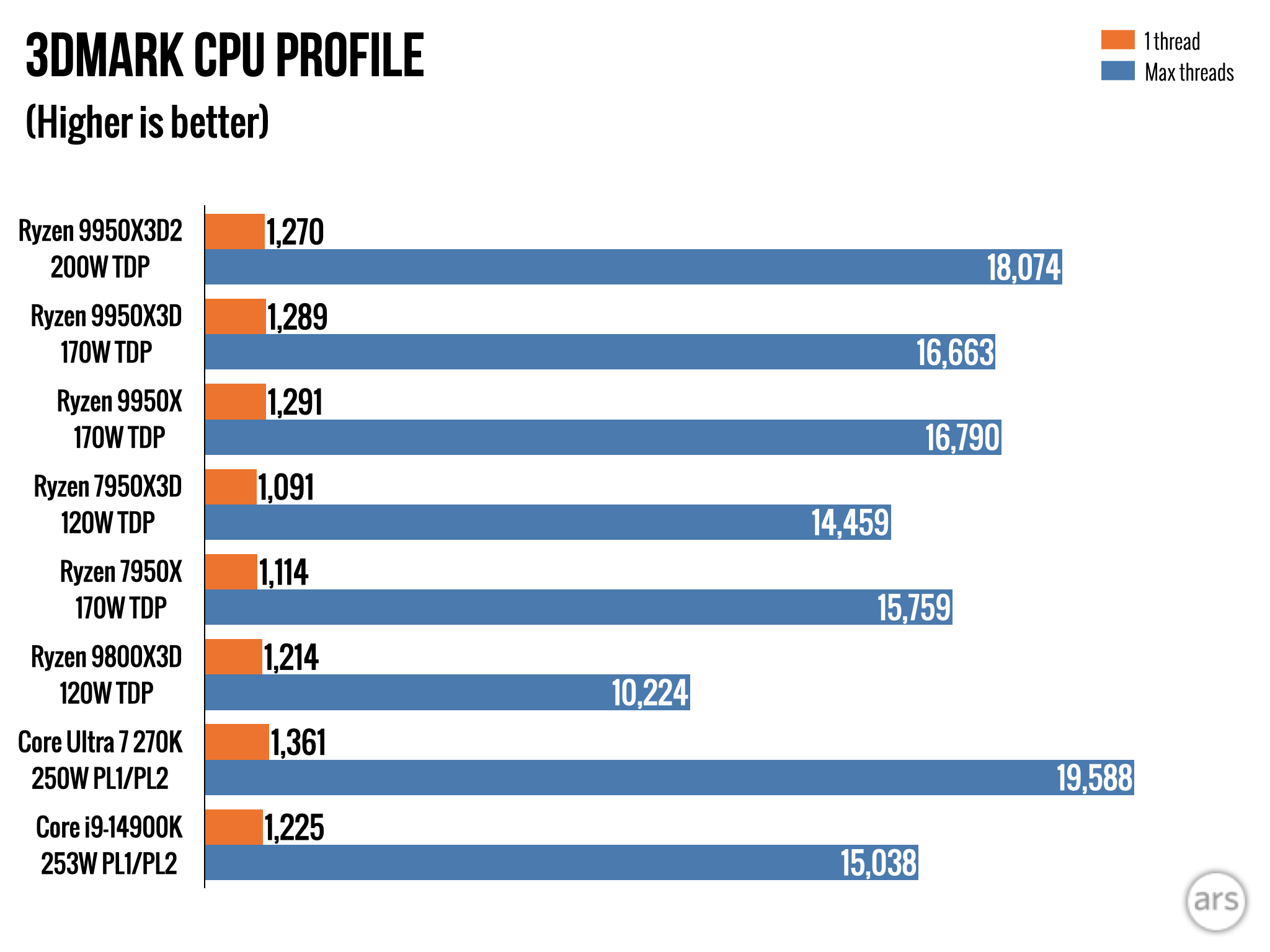
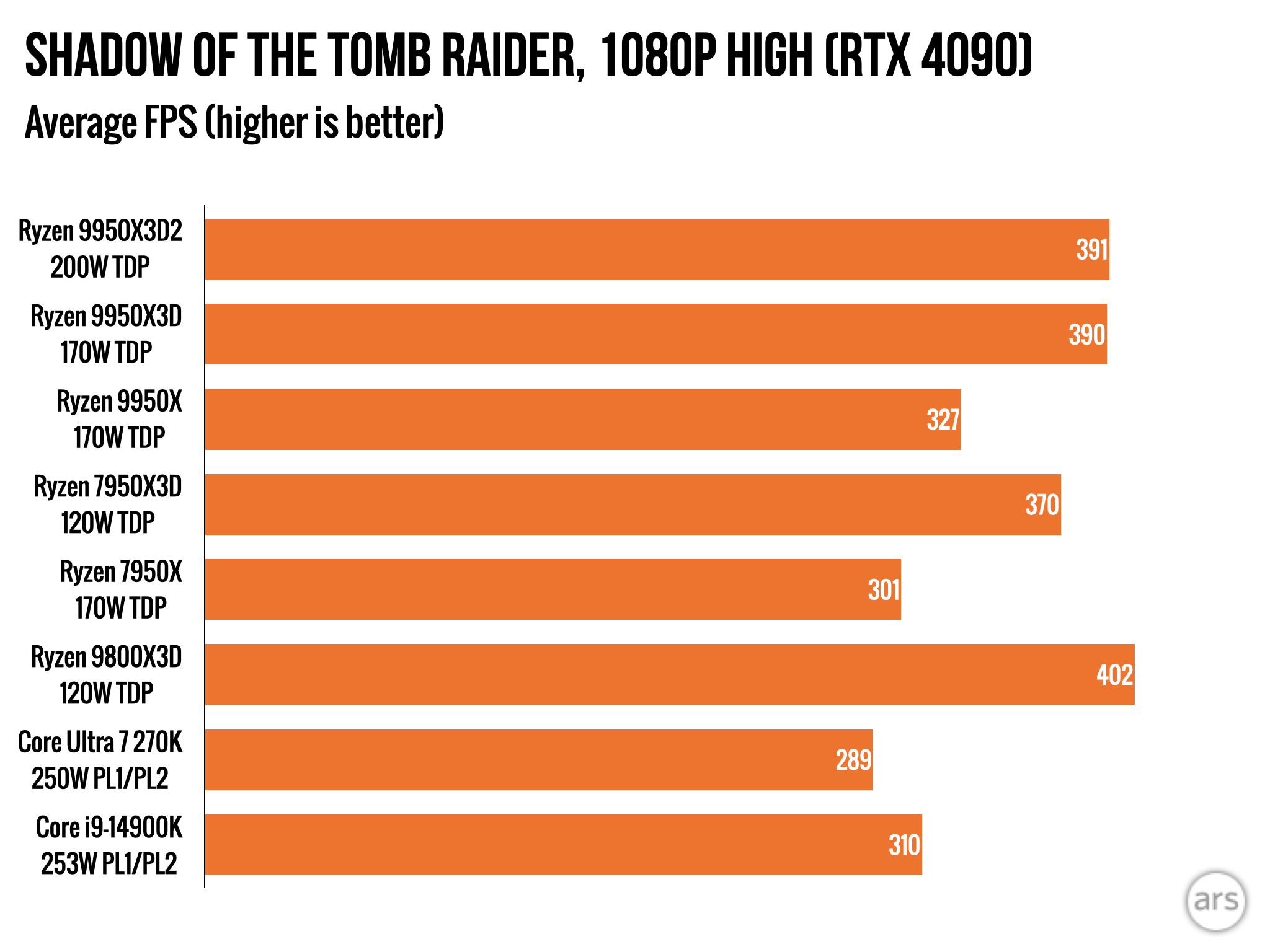
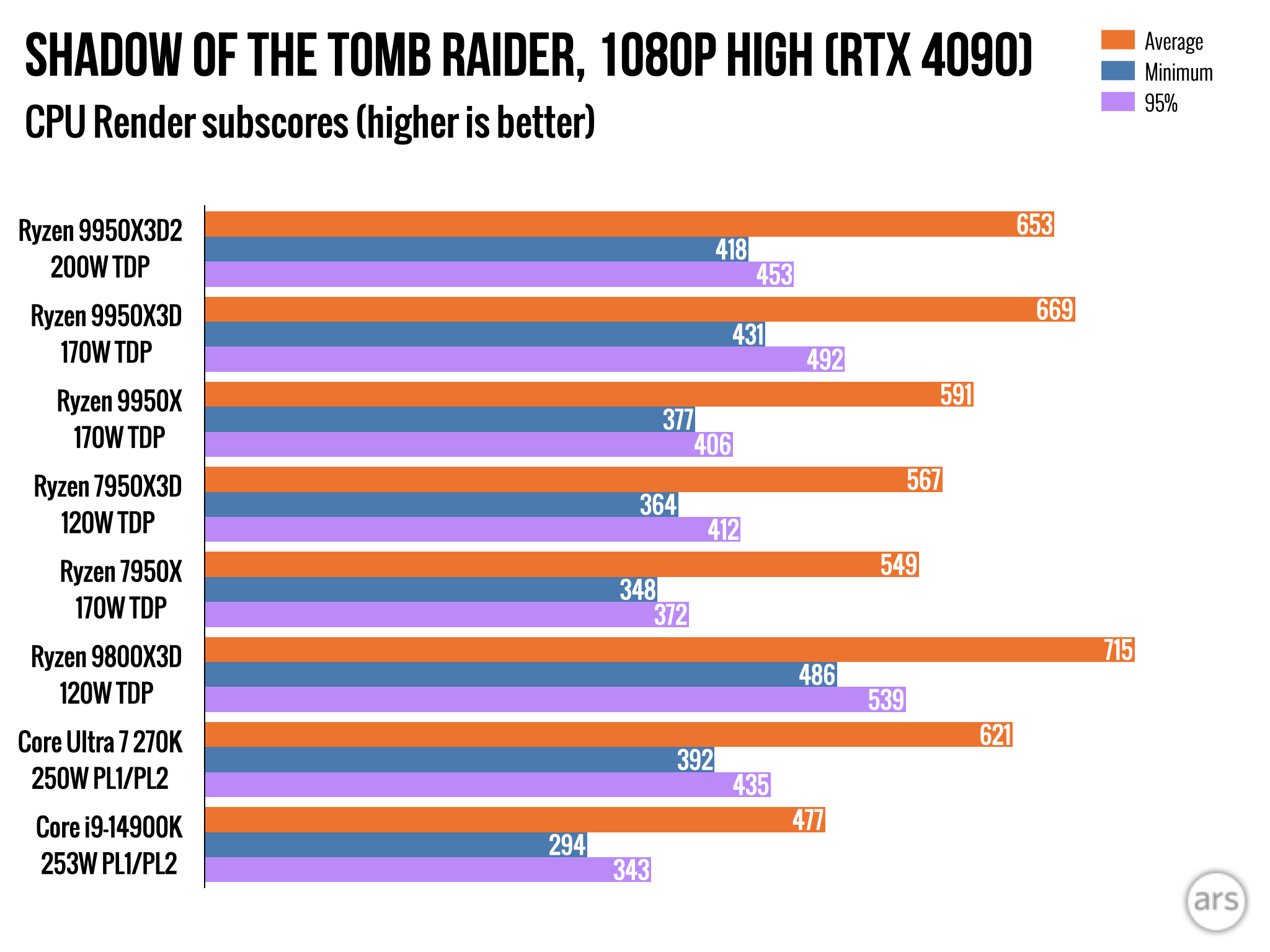
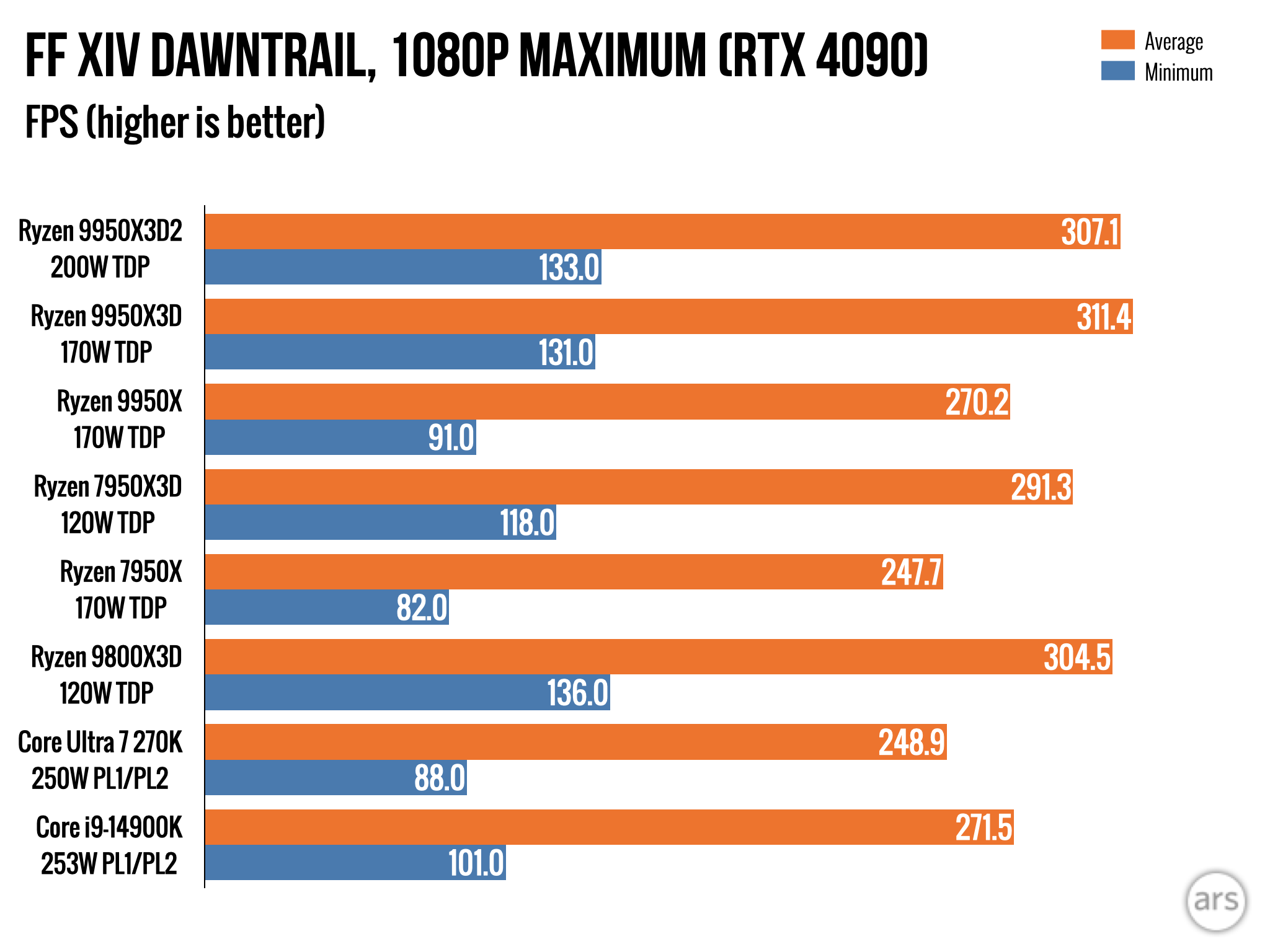
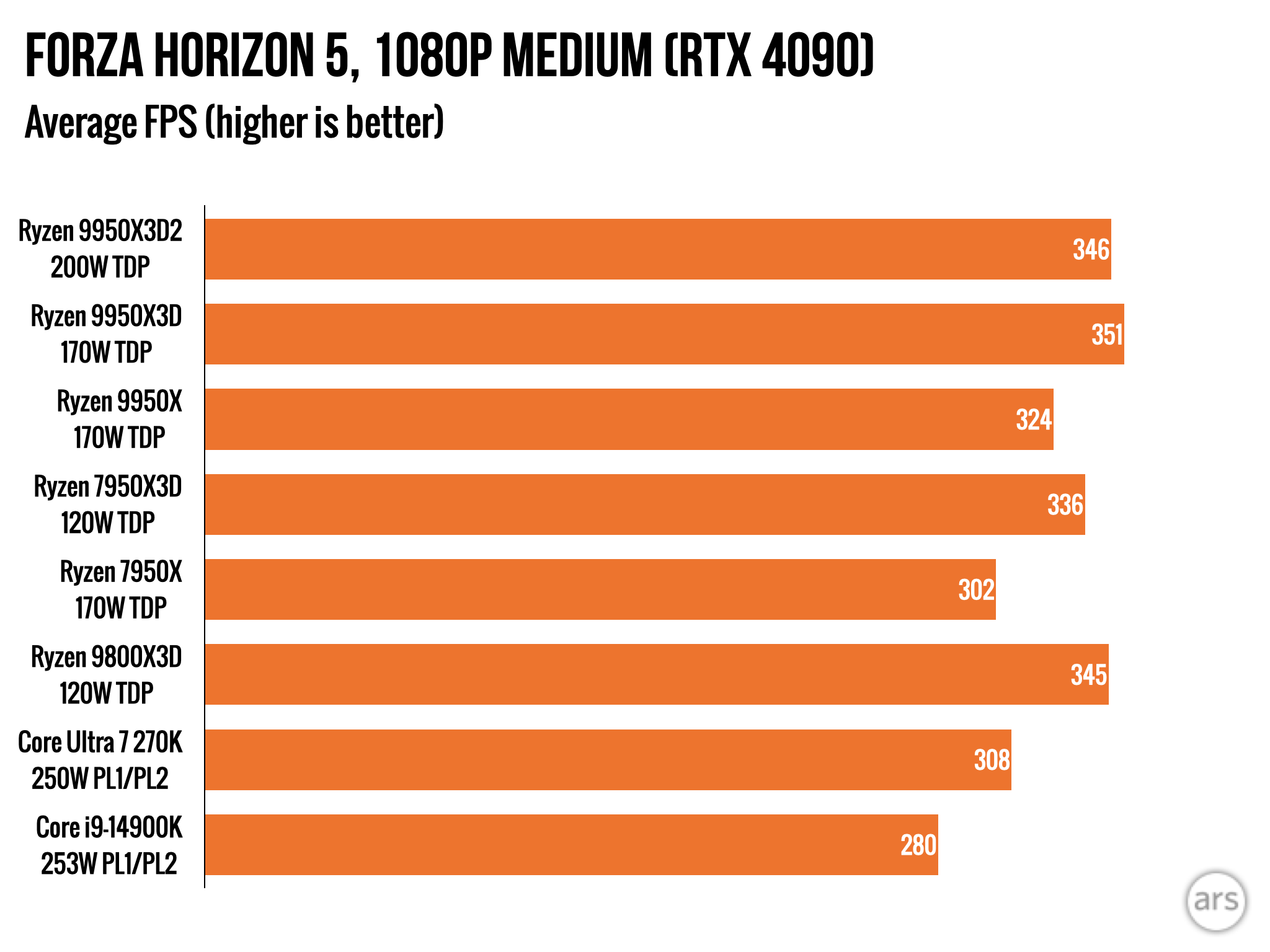
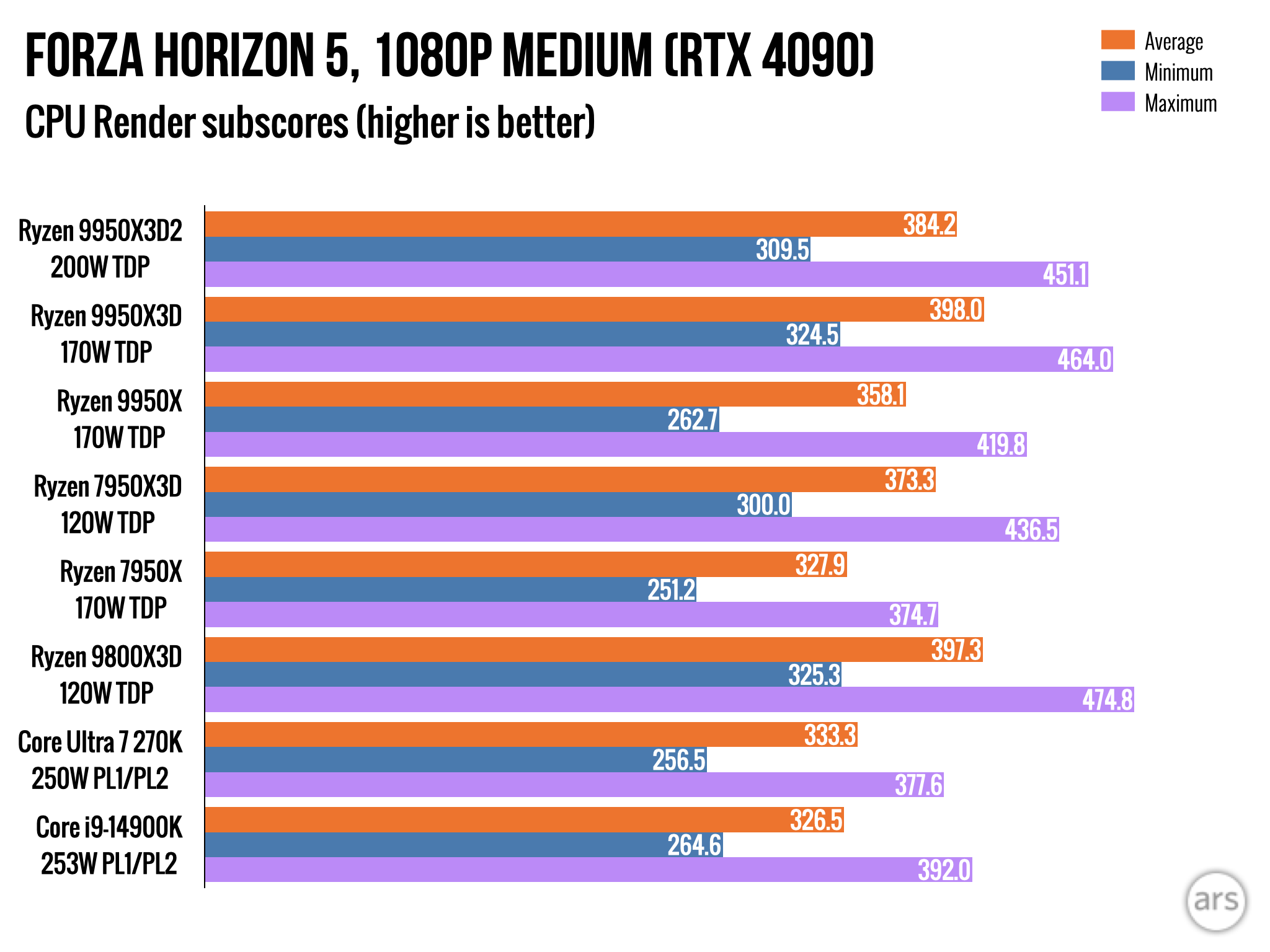
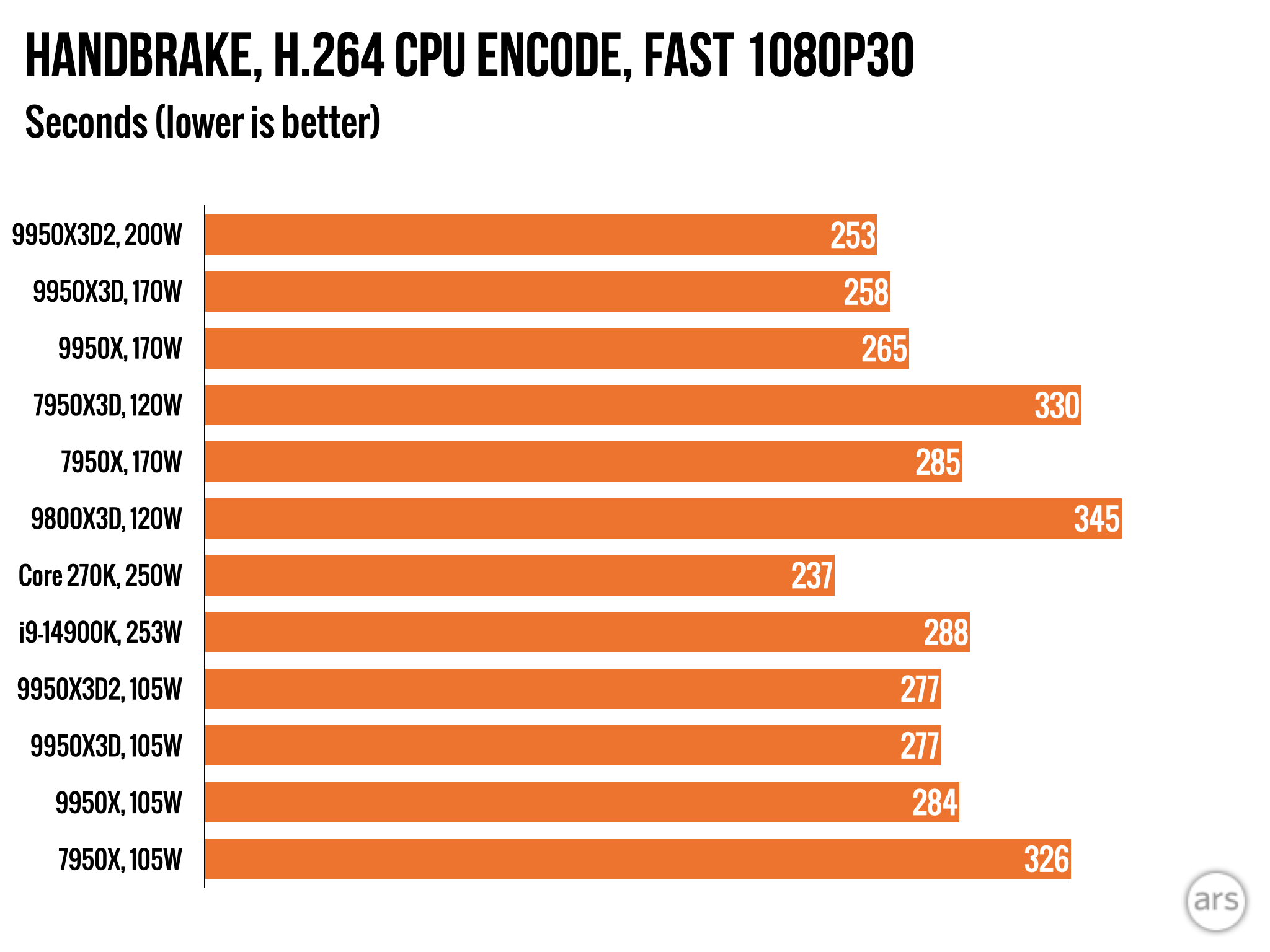
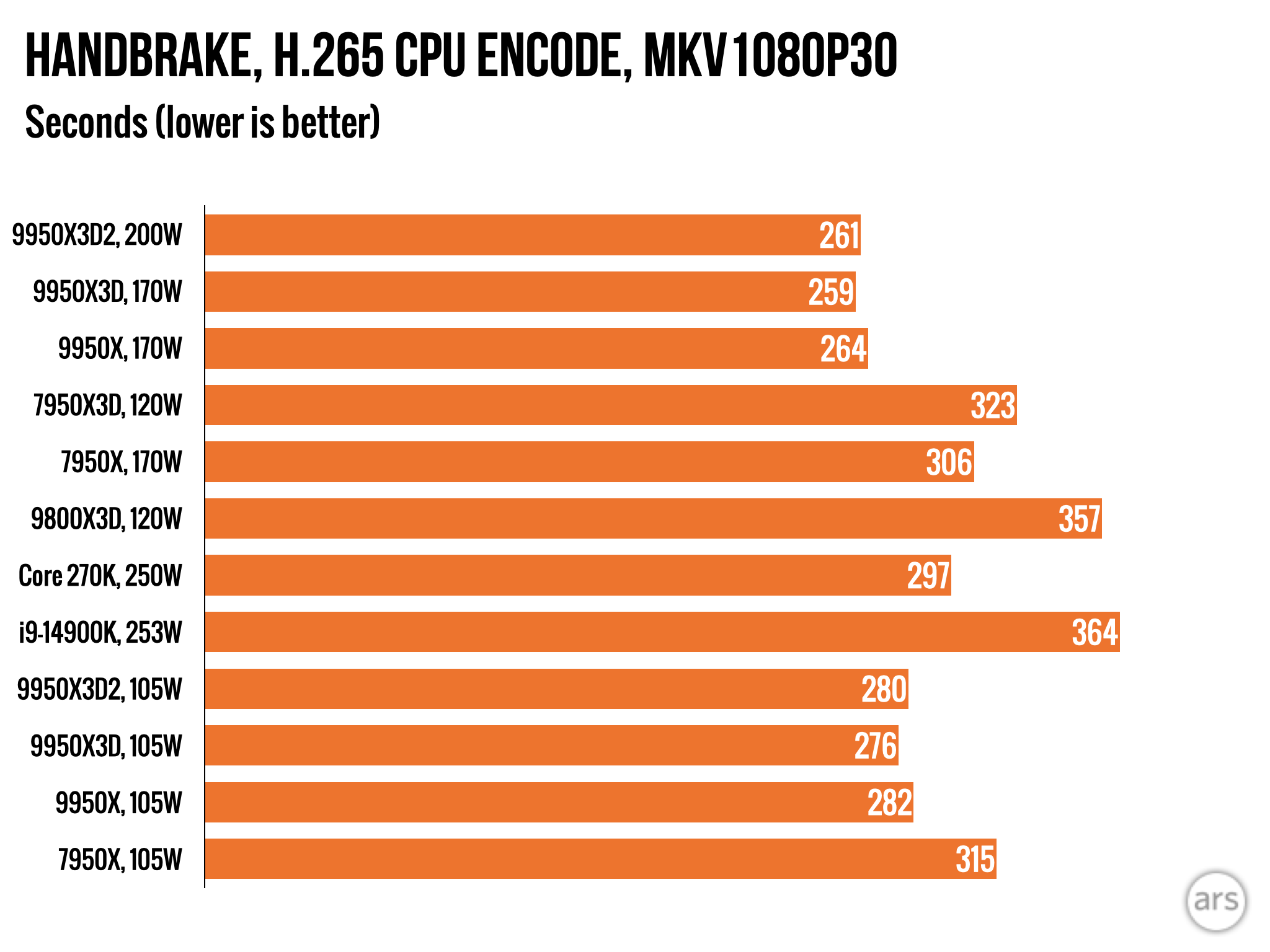
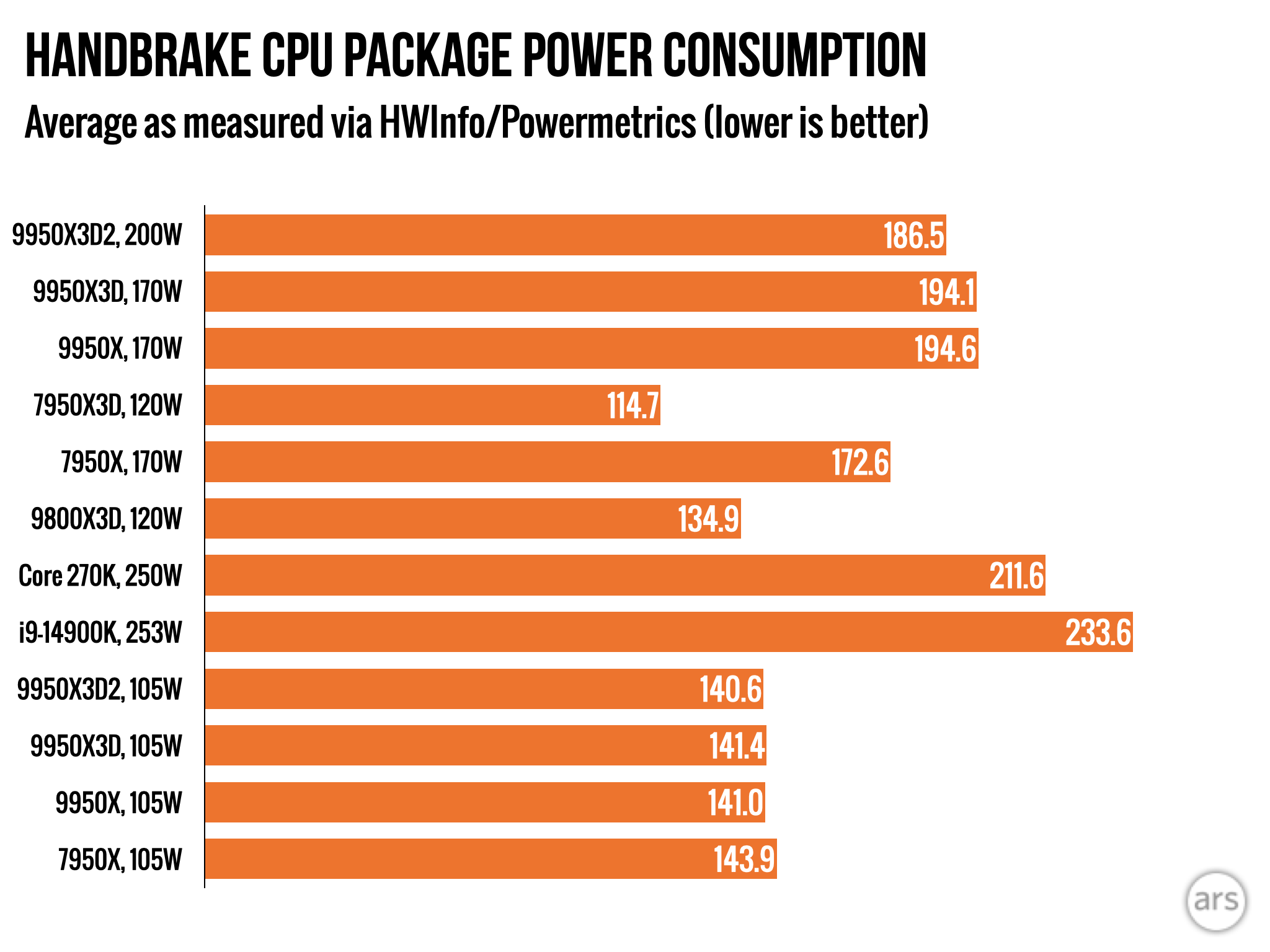
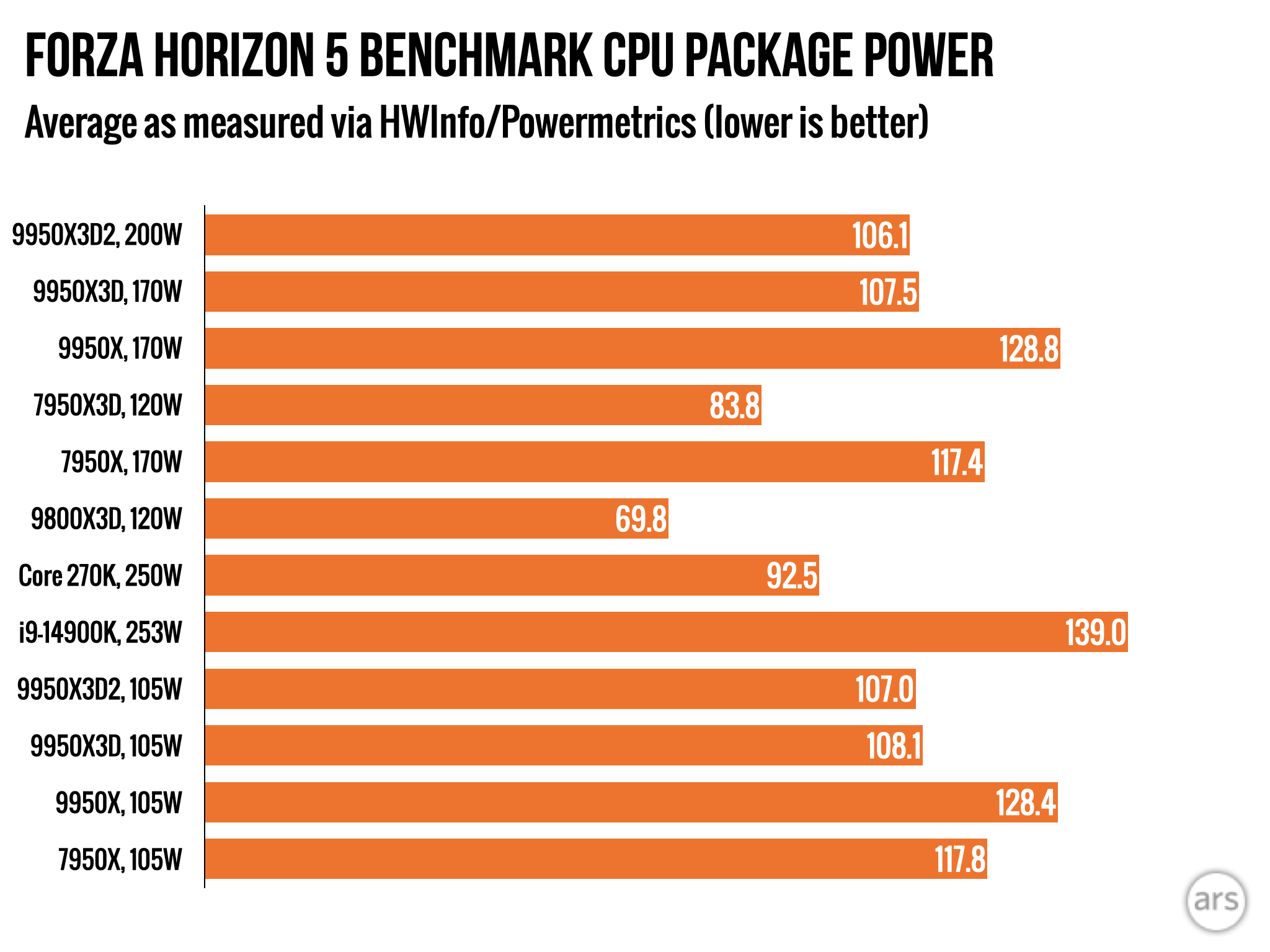
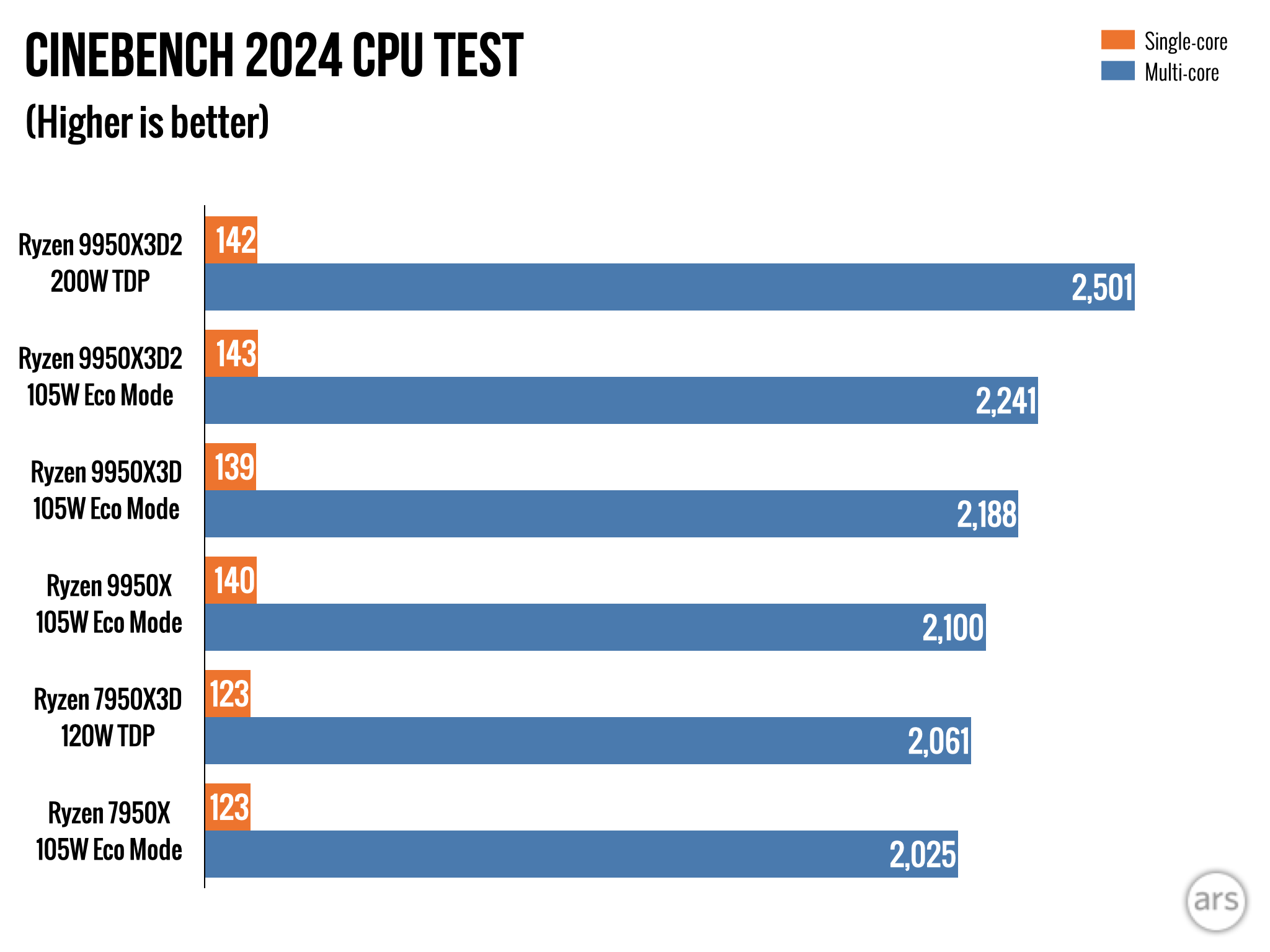
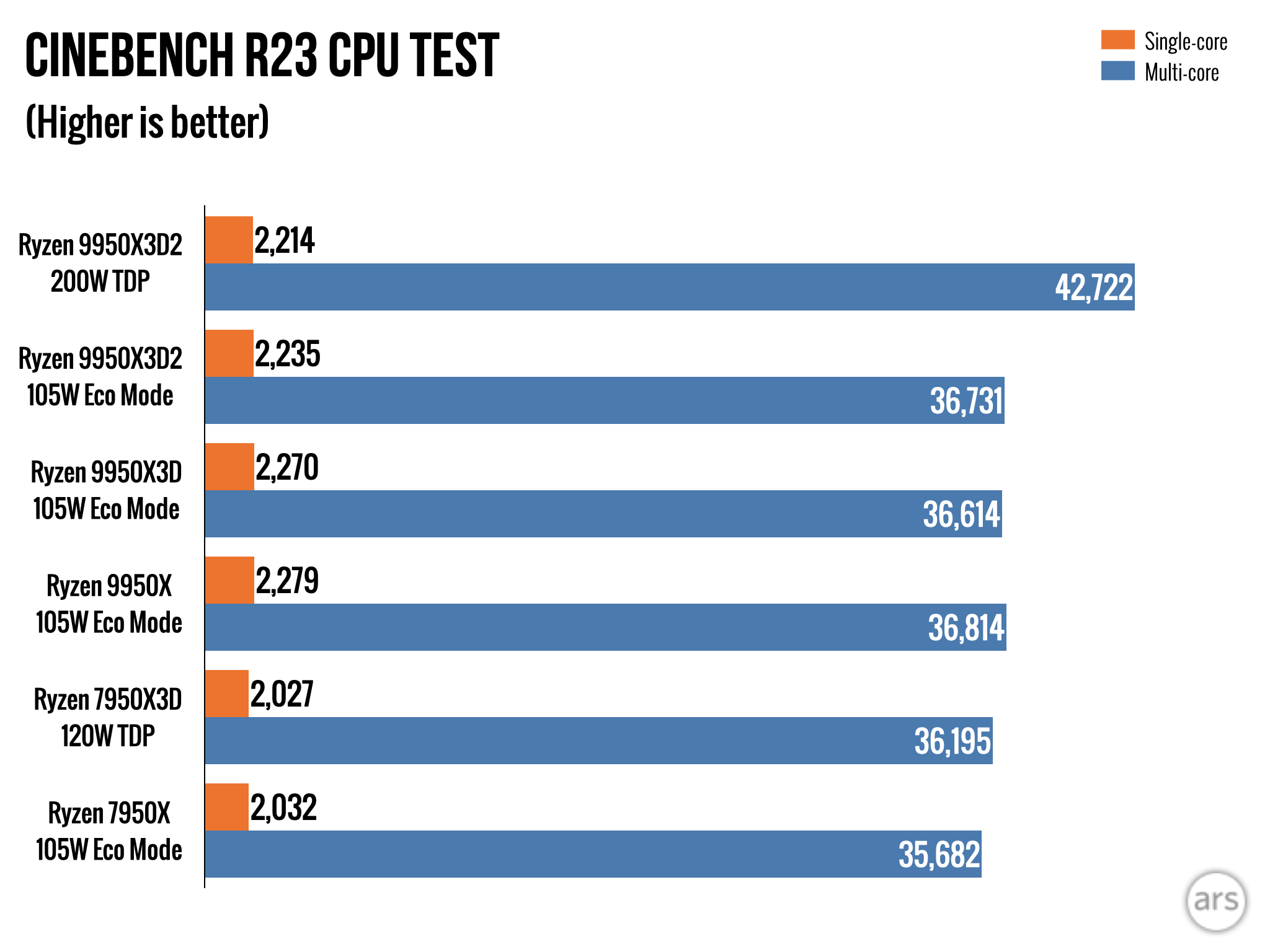
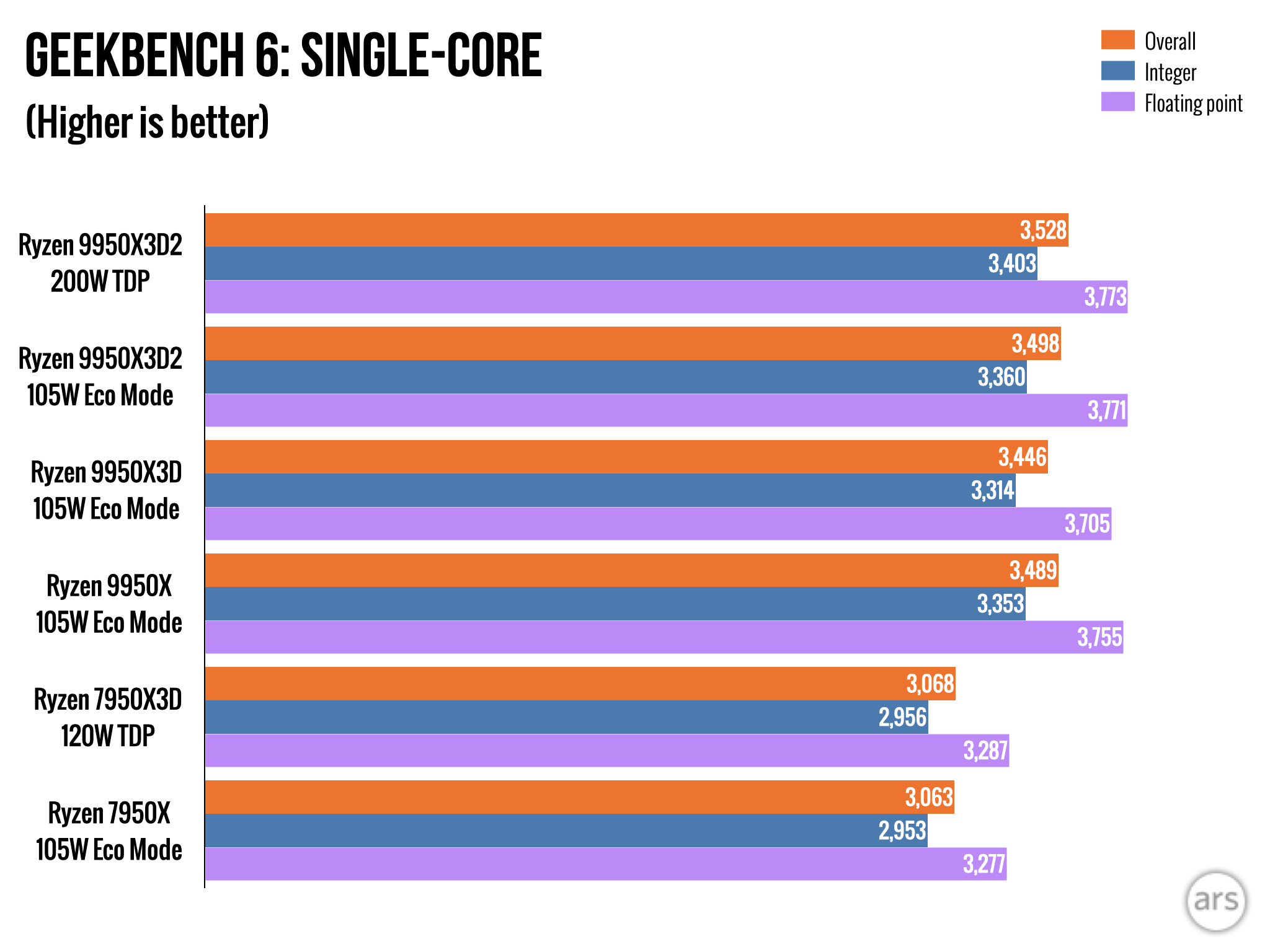
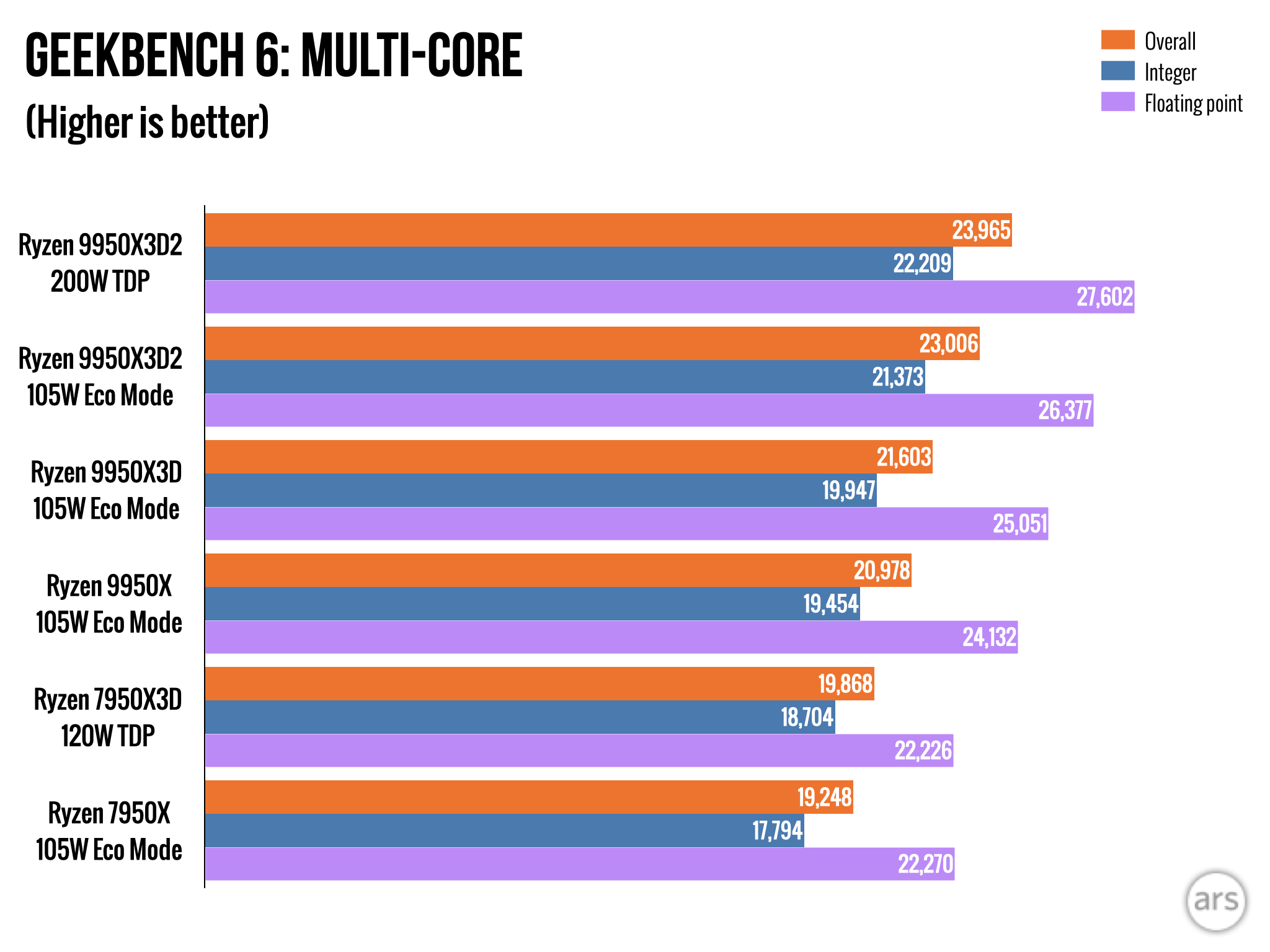
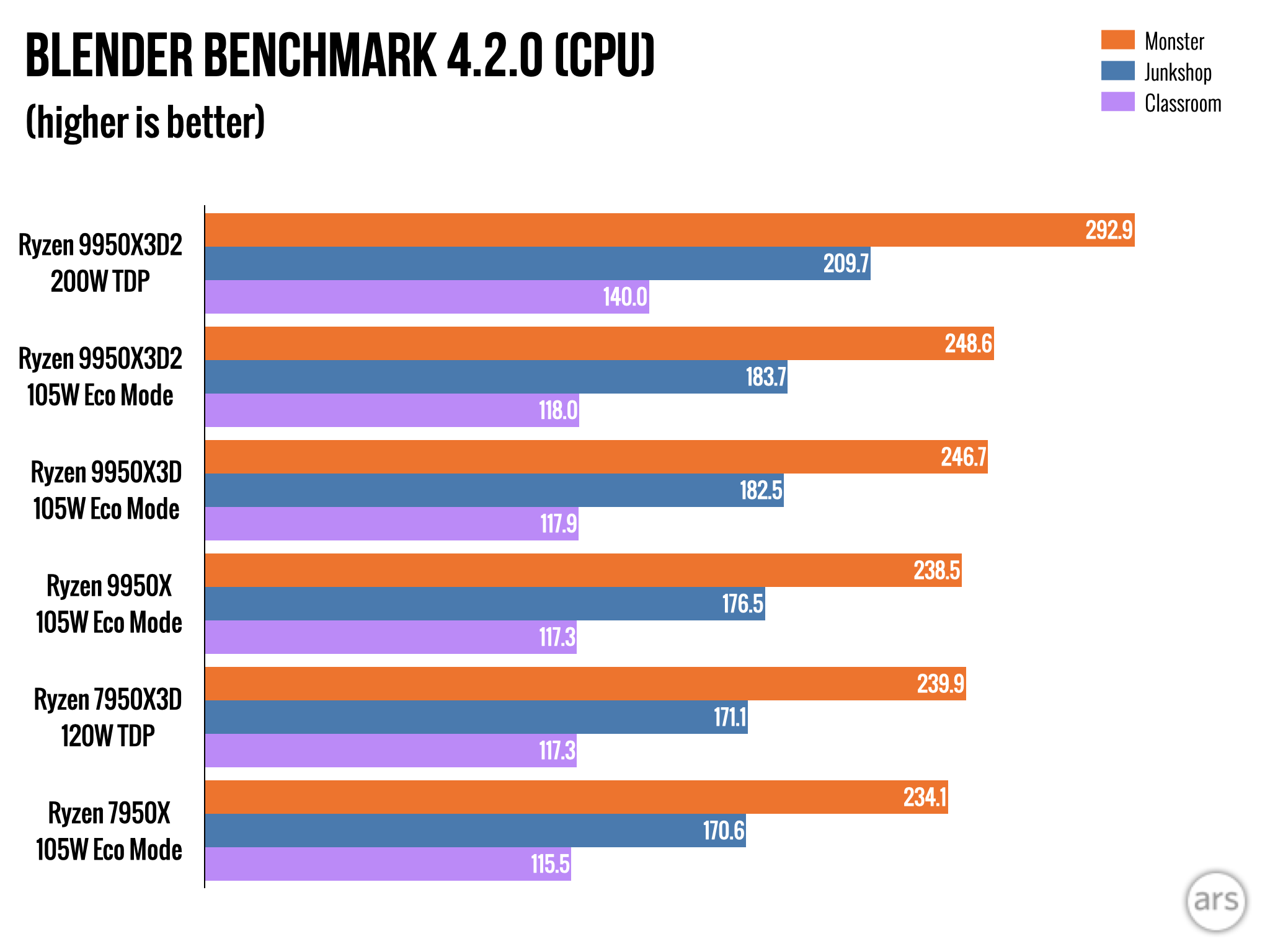
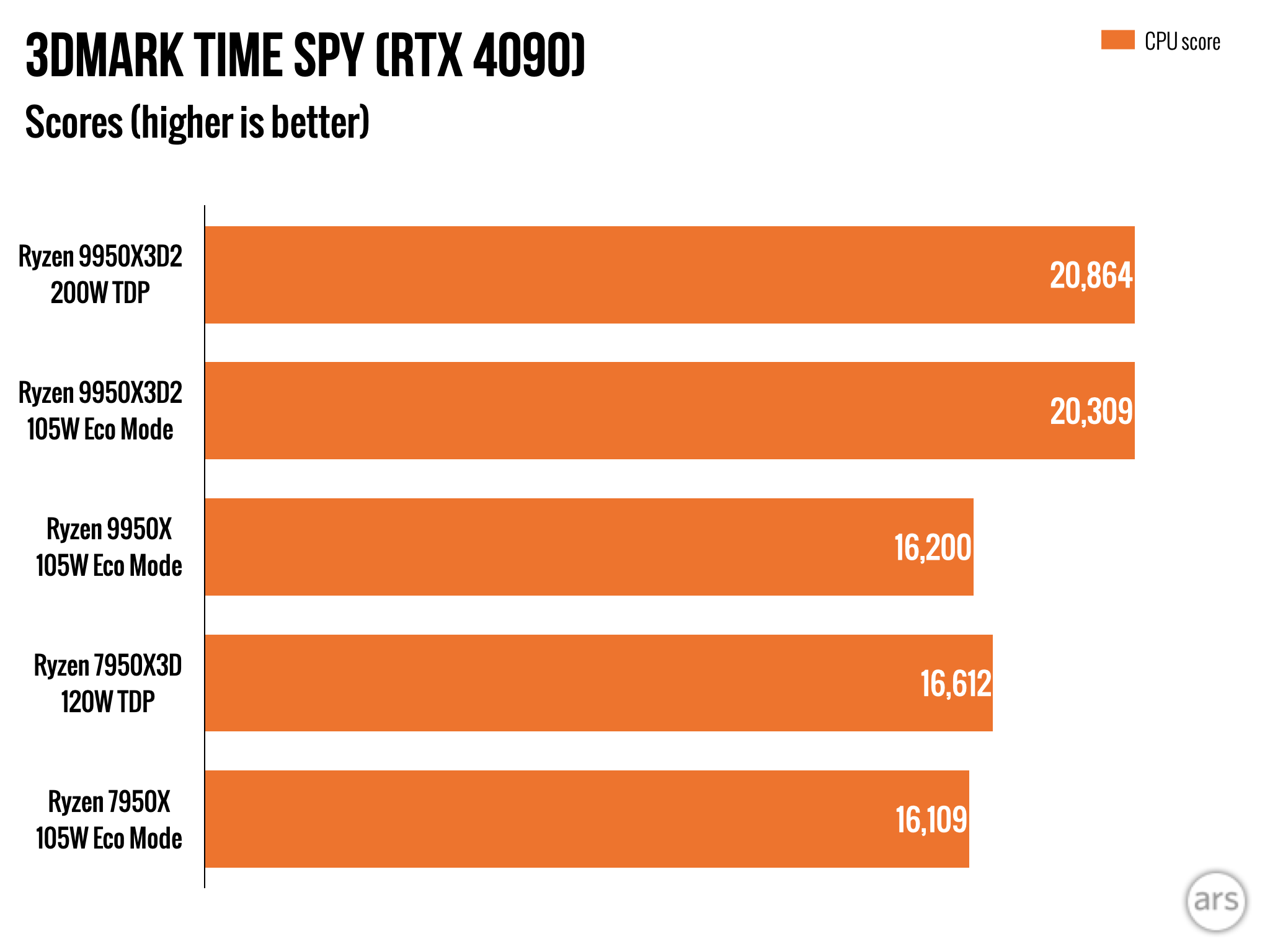
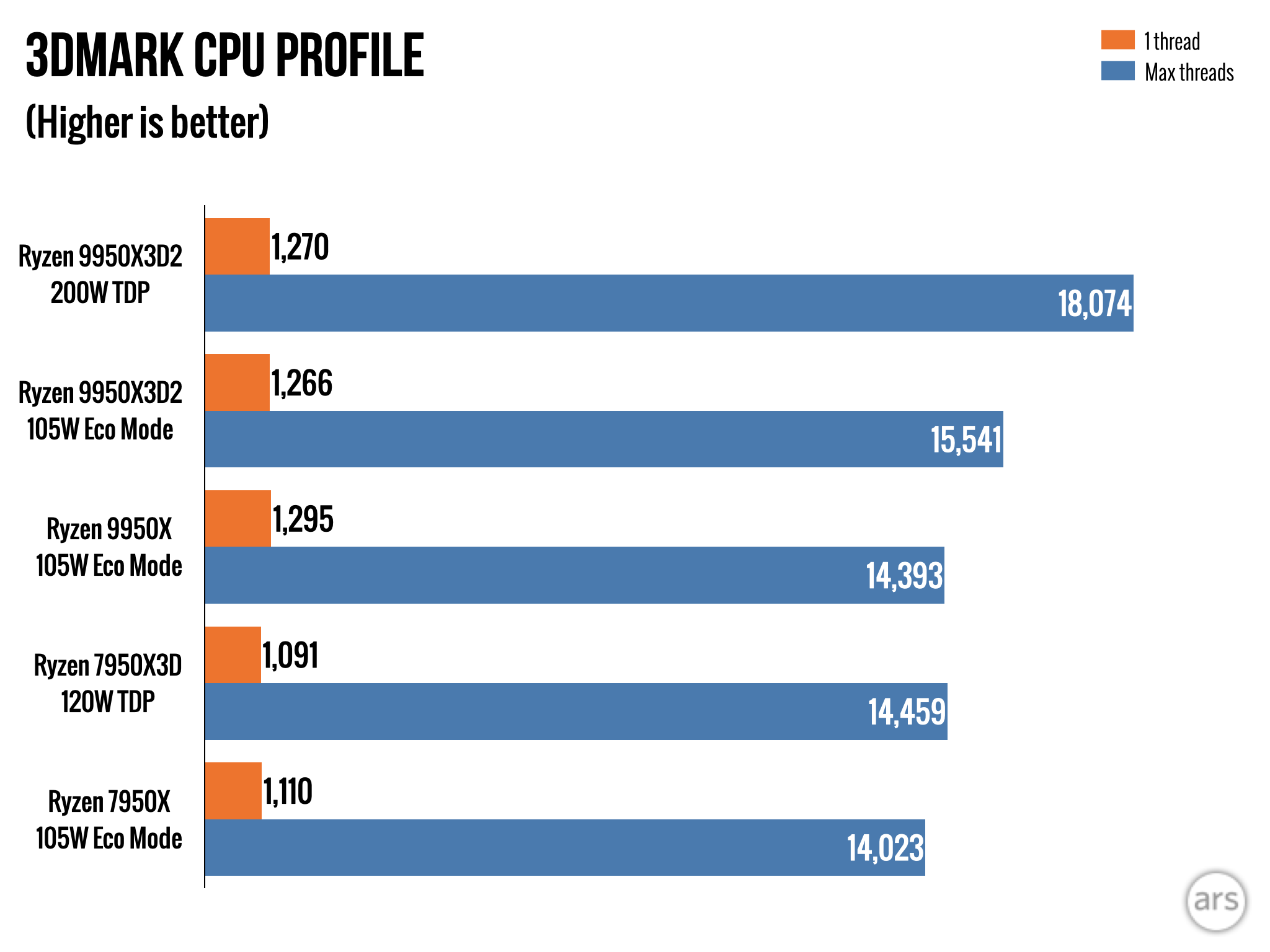
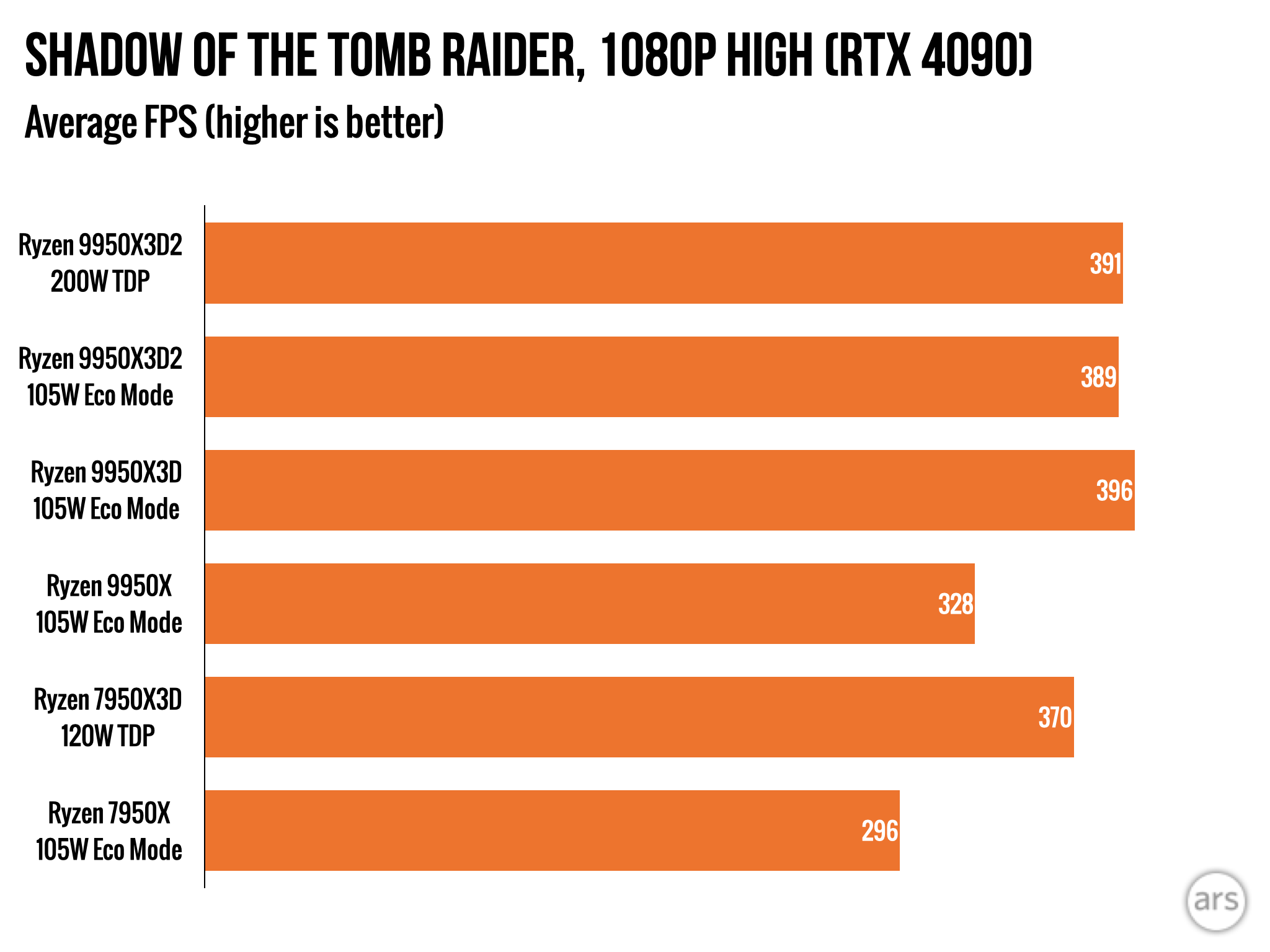
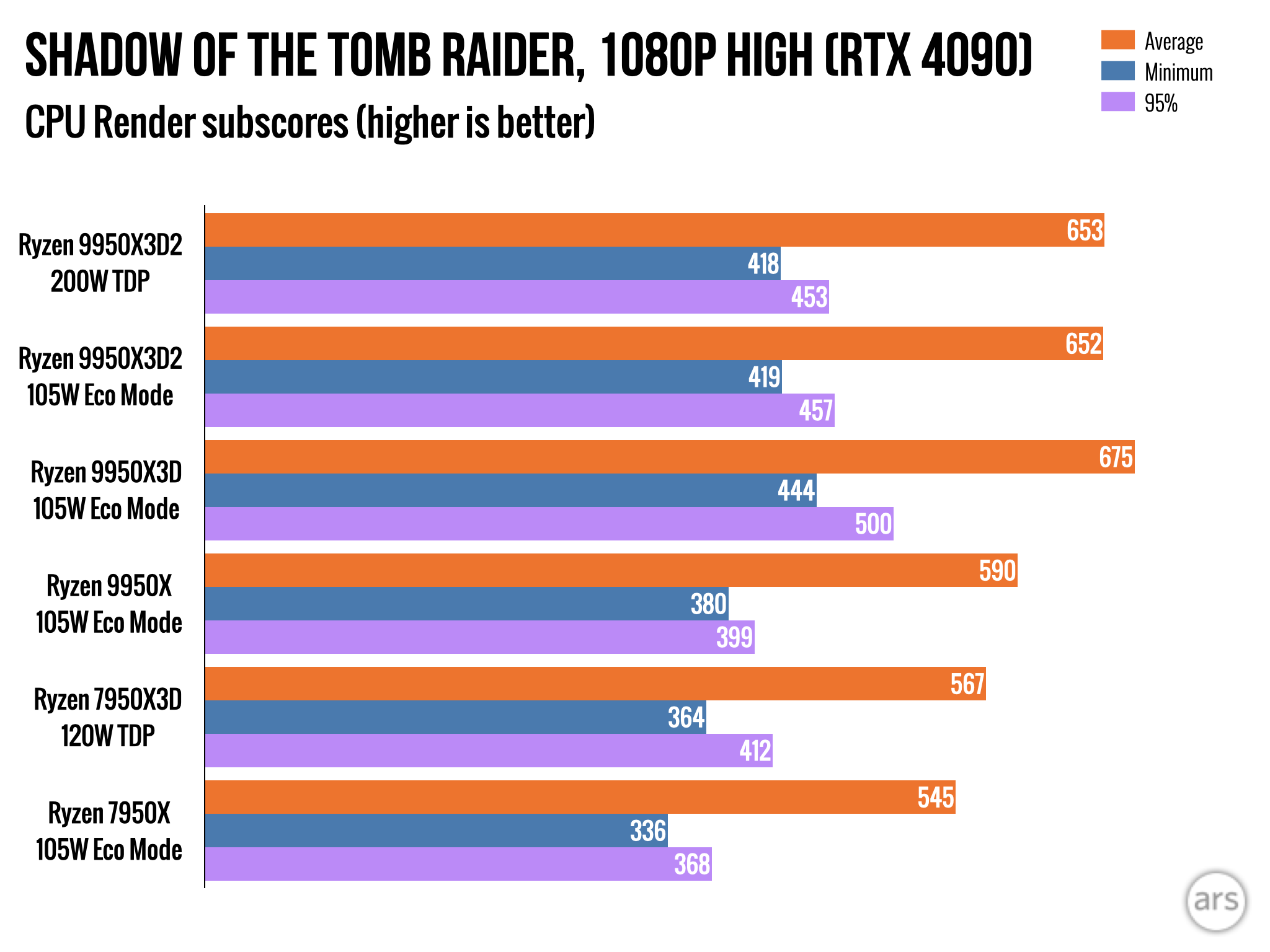
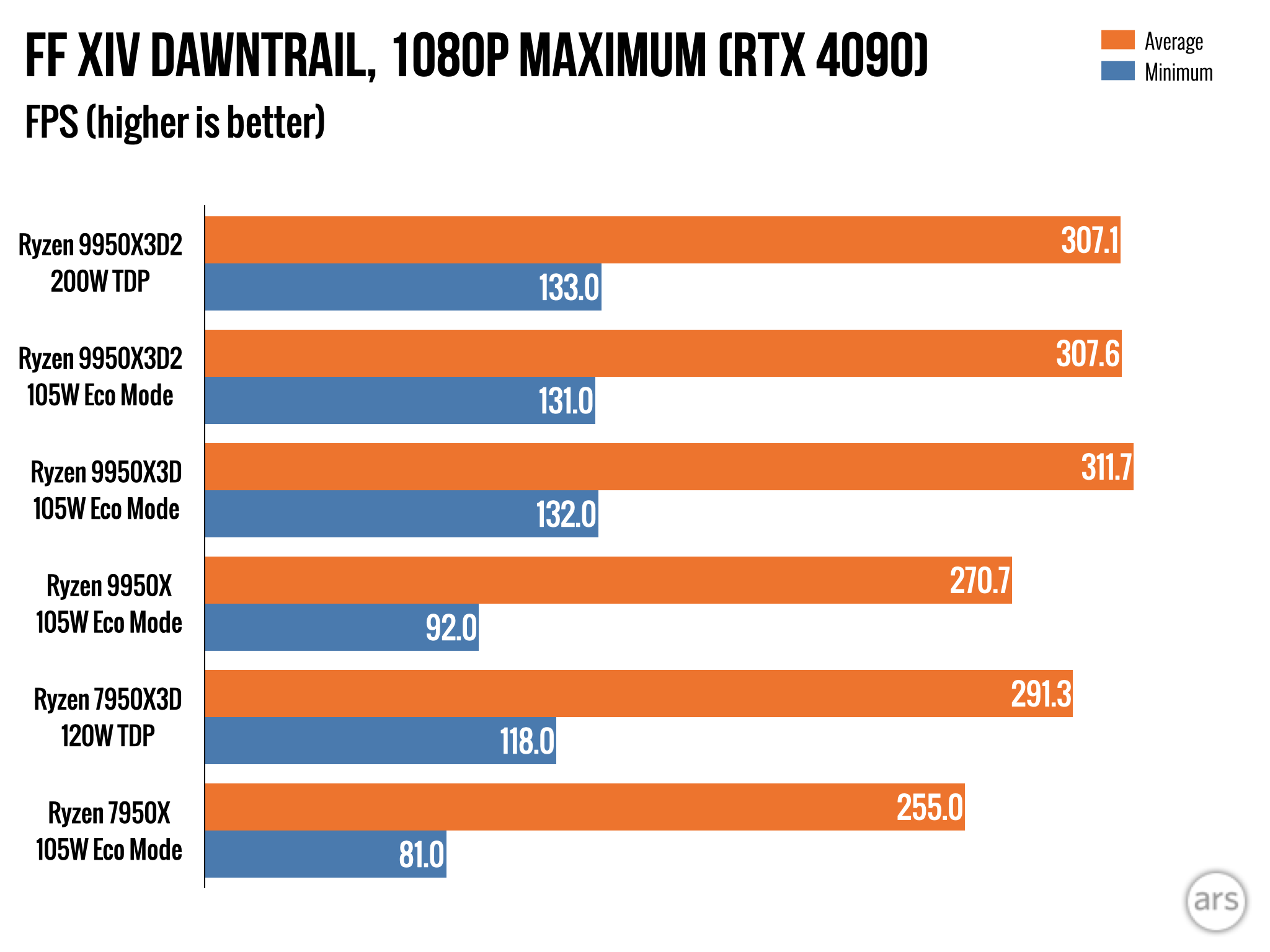
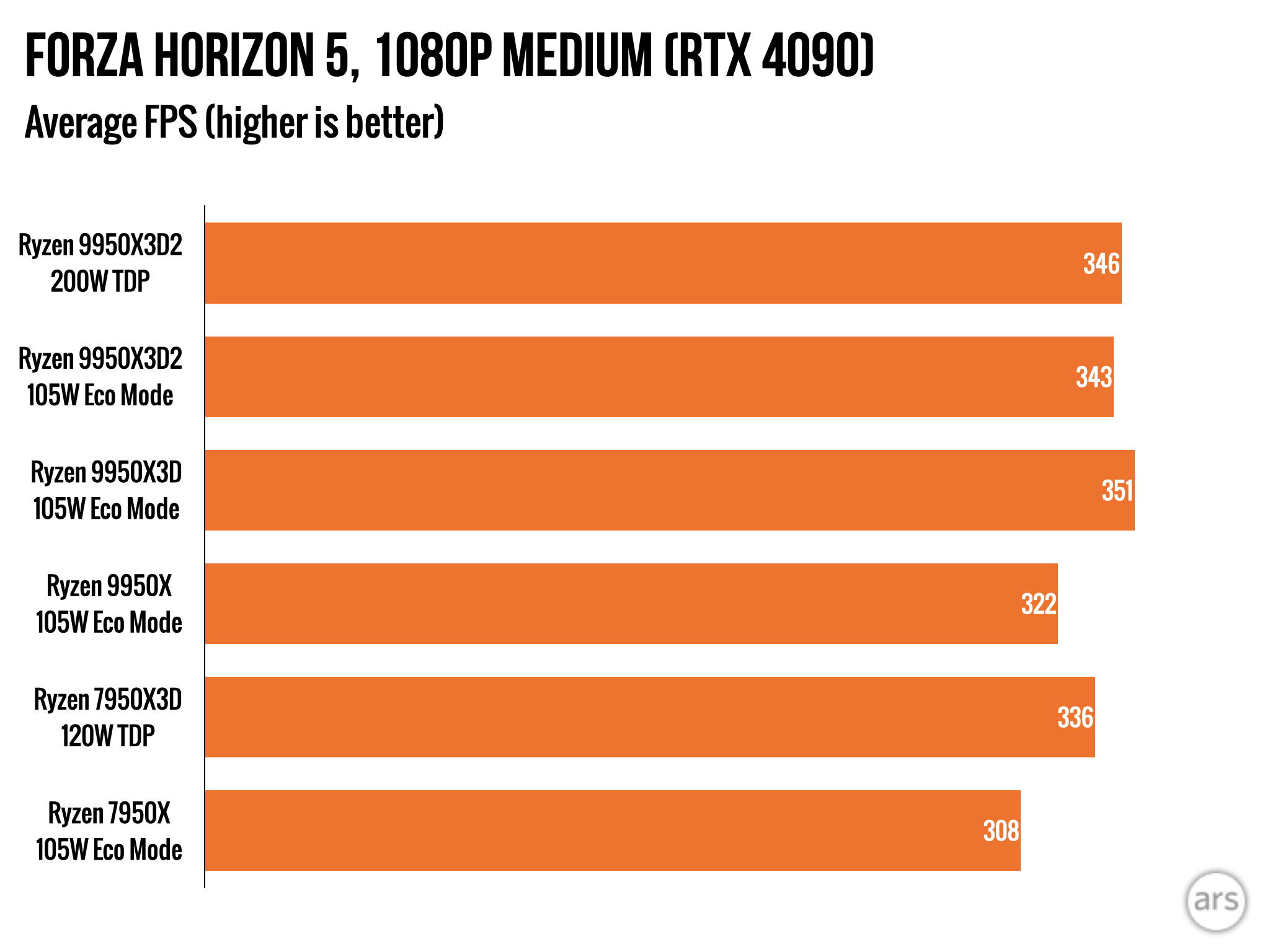
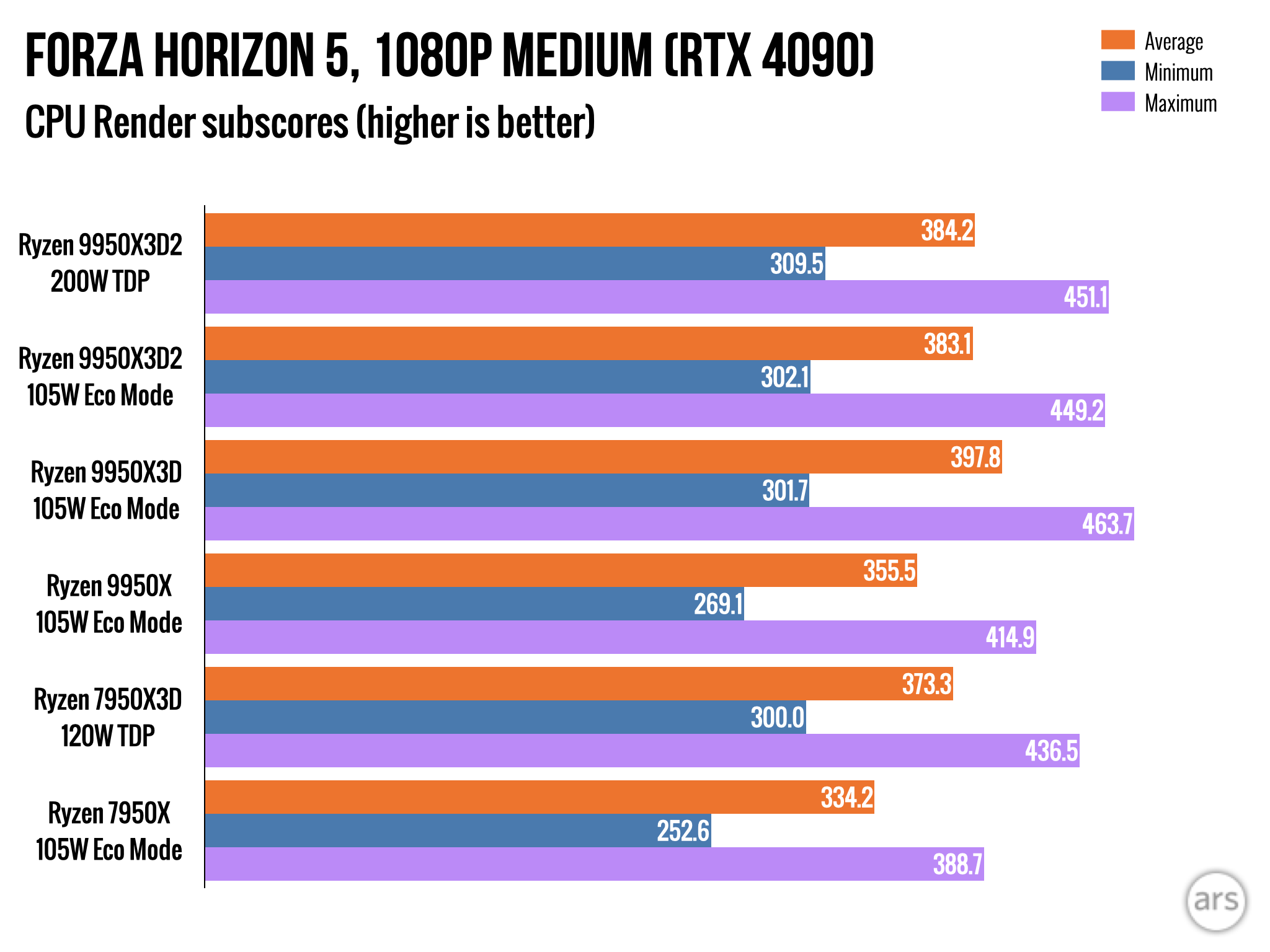
What we didn’t really find in our testing was evidence that the extra 64MB of L3 cache meaningfully improved performance beyond what the regular 9950X3D can already do. To see additional benefit, you’d need to be doing a task that wants to use all of the CPU cores at once and that is especially responsive to extra cache. Games are the most commonly cited use case for the X3D chips because they’re consumer apps that like extra cache, but they don’t need that many CPU cores under most circumstances; 8-core chips like the 9800X3D and 9850X3D run games just as well as the 16-core chips do.
Between people who do have highly specialized, cache-hungry workloads, people who don’t want to deal with the occasional fussiness of hybrid cores, and people who just like to buy fast, expensive things for bragging rights, I’m sure the 9950X3D2 has an audience. I’m not in that audience, and I don’t think most of you are either. If there’s an upside for more value-conscious shoppers, it’s that the 9950X3D2 highlights just how much performance you could already get out of chips like AMD’s $660 9950X3D or the $500ish 9950X, and Intel’s $350 Core Ultra 7 270K Plus.
The good
- Slightly better performance than the vanilla 9950X3D, with similar or slightly lower power consumption
- Doesn’t really run hotter than the 9950X3D
- All the CPU cores are the same, so you won’t need to rely on AMD’s software to pick the right type of core for your apps
The bad
- Expensive
- An $899 chip that isn’t that much faster than a $660 chip
- Gaming performance is the main selling point for the X3D chips, and games don’t really need 16 CPU cores
The ugly
- Costs a lot, without tons of tangible benefit

Andrew is a Senior Technology Reporter at Ars Technica, with a focus on consumer tech including computer hardware and in-depth reviews of operating systems like Windows and macOS. Andrew lives in Philadelphia and co-hosts a weekly book podcast called Overdue.