Prehistoric mining in the Pyrenees, a new species of tiny blue octopus, slapstick acoustics, and more.
Malachite fragments recovered during excavation of a cave in the Pyrenees. Credit: Maria D. Guillén / IPHES-CERCA
It’s a regrettable reality that there is never enough time to cover all the interesting scientific stories we come across. So every month, we highlight a handful of the best stories that nearly slipped through the cracks. May’s list includes the discovery of a possible prehistoric mining site in the Pyrenees; a new species of tiny blue octopus; why cats seem to prefer silver vine to catnip; and why political polarization might behave like a phase transition, among other noteworthy stories.
Prehistoric mining in the Pyrenees

Credit: IPHES-CERCA
Credit: IPHES-CERCA
High in the eastern Pyrenees is a prehistoric cave, excavated between 2021 and 2023. Based on analysis of artifacts uncovered at the site, a team of Spanish archaeologists believes this may have served as an ancient copper smelting spot, with far more frequent occupation by humans than previously thought. The researchers described these preliminary findings in a paper published in the journal Frontiers in Environmental Archaeology.
Of particular interest were 23 hearths found in the second and third layers of the excavation, filled with crushed green mineral fragments that had clearly been subject to burning; other materials found there showed no sign of thermal damage. The team is still conducting experiments to conclusively identify the green material, but the fragments strongly resemble malachite. That’s significant because malachite can be heated to produce copper. Most of the hearths are between 4,000 and 5,500 years old. The team also recovered two prehistoric pendants, a human finger bone, and a baby tooth belonging to a child about 11 years old. It’s possible there may be burials in deeper layers as excavations continue at the site.
Frontiers in Environmental Archaeology, 2026. DOI: 10. 3389/fearc.2026.1811493 (About DOIs).
Singing mice
Credit: NYU School of Medicine
Credit: NYU School of Medicine
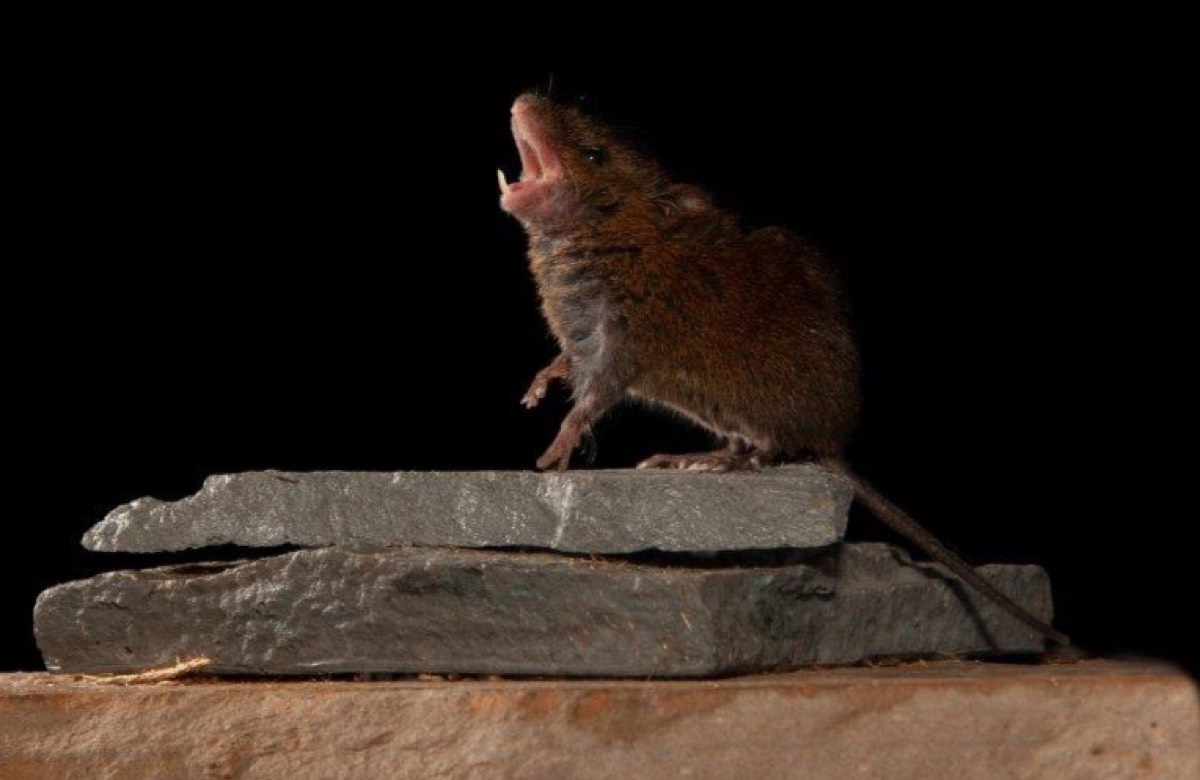
Singing mice live high in the cloud forests of Costa Rica, engaging in chirping call-and-response duets that can change slightly depending on responses received. In 2019, scientists pinpointed the precise brain circuit responsible for this behavior. Now, scientists at Cold Spring Harbor Laboratory (CSHL) have discovered that this ability doesn’t require any major evolutionary leap in brain complexity, just a couple of targeted changes to existing wiring patterns, according to a paper published in Nature.
The key to the discovery was a molecular barcoding technique developed by CSHL’s Anthony Zador, which enabled the team to map out the wiring of thousands of individual neurons in the brains of singing mice and other closely related species. This revealed that there were roughly triple the number of neurons connecting the mouth-movement control region with the cortex that controls hearing, and a midbrain structure that controls vocalizations. The authors suggest it might one day be possible to make an ordinary lab mouse “sing” by making similar neural wiring changes.
Nature, 2026. DOI: 10.1038/s41586-026-10458-y.
Tiny blue octopus
Credit: Courtesy of the Charles Darwin Foundation
Credit: Courtesy of the Charles Darwin Foundation
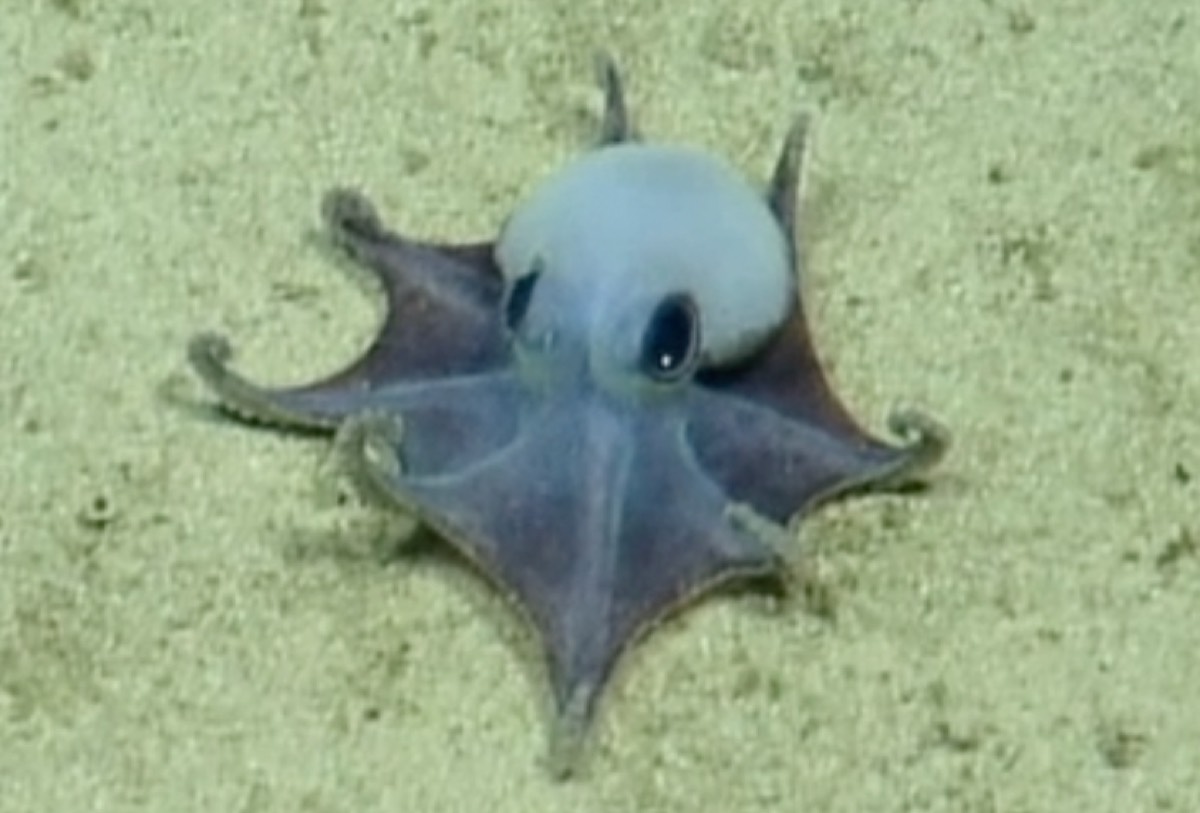
In 2015, scientists on a deep-sea expedition in the Galapagos Islands, aboard the E/V Nautilus, were looking at footage from the remotely operated vehicle (ROV). They spotted a tiny, distinctly blue octopus some 5,800 feet (1,773 meters) below the surface, and collected the creature for further analysis, along with other deep-sea specimens. Charles Darwin Foundation researchers have now concluded that the adorable creature, small enough to fit into the palm of one’s hand, is a new species, according to a paper published in the journal Zootaxis.
The little octopus has been preserved in storage since it was collected. Scientists were reluctant to cut the specimen open for a thorough analysis to determine the species, since it was one of a kind, and it was extremely unlikely that another would be collected. Instead, the team opted for mini-CT scans, enabling a 3D virtual dissection with clear imaging even of soft tissues. This revealed that the creature had short arms, few arm suckers, and no ink sac, as well as having very smooth skin and a large rachidian tooth. They’ve dubbed the new species Microeledone galapagensis.
Zootaxis, 2026. DOI: 10.11646/zootaxa.5814.4.
Not all “slapsticks” are created equal
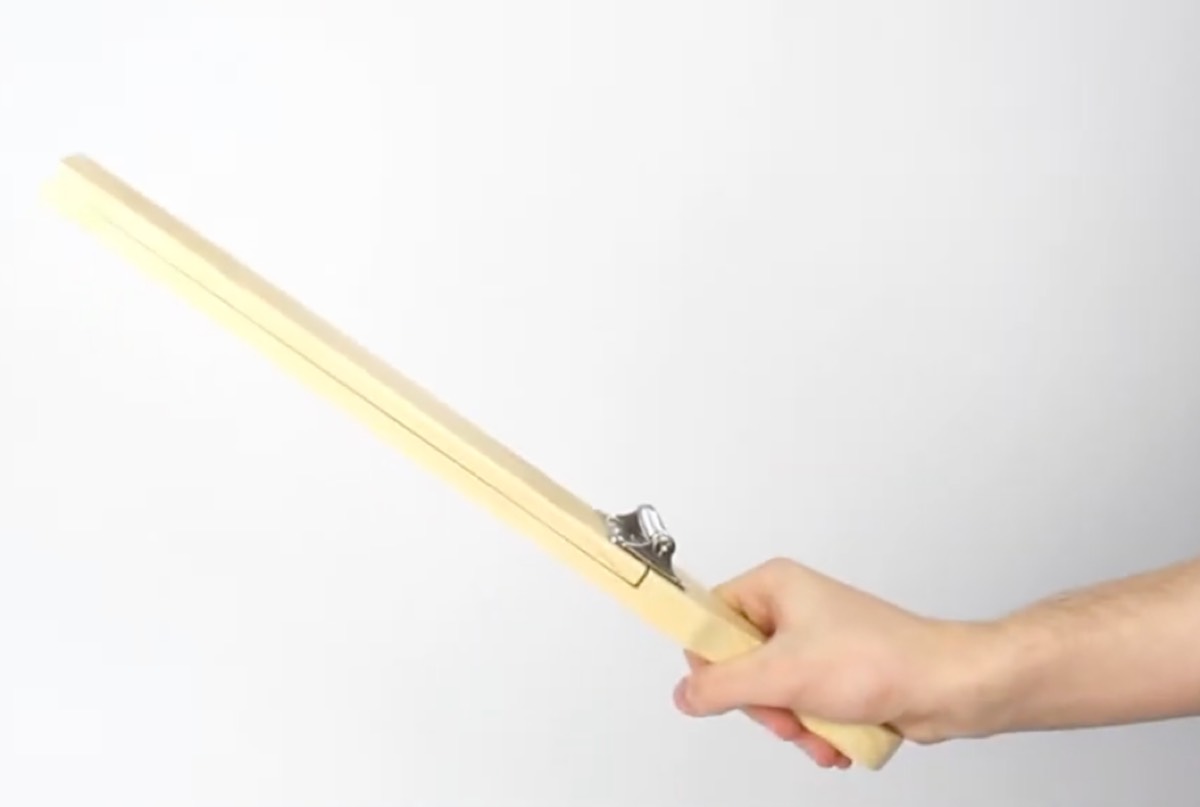
Foley artists have used so-called “slapsticks” to mimic the sound of the crack of the whip since at least the mid-20th century; it’s used in Leroy Anderson’s holiday classic “Sleigh Ride,” for example. But not all commercial slapsticks are created equal, according to Daniel Ludwigsen of Kettering University, who presented the results of his preliminary experiments comparing five versions at a meeting of the Acoustical Society of America in Philadelphia. Ludwigsen played each of the five commercial slapsticks five times in an anechoic environment, minimizing any acoustic room effects with absorbing wedges.
All shared a high-frequency roll-off and a broad peak between 1,000 and 3,000 Hz, with varying degrees of low-frequency roll-off. The two smallest could be played with one hand thanks to a spring hinge and performed best in the high-frequency range. By contrast, longer models like the “Sleighride Special” performed best in low-frequency ranges. The resulting sound’s tone is influenced by how hard one smacks the sticks together. And preliminary testing of the Pearl slapstick showed roughly uniform sound directionality regardless of frequency, although Ludwigsen emphasized that a more complete study is needed.
The hidden math of abstract art
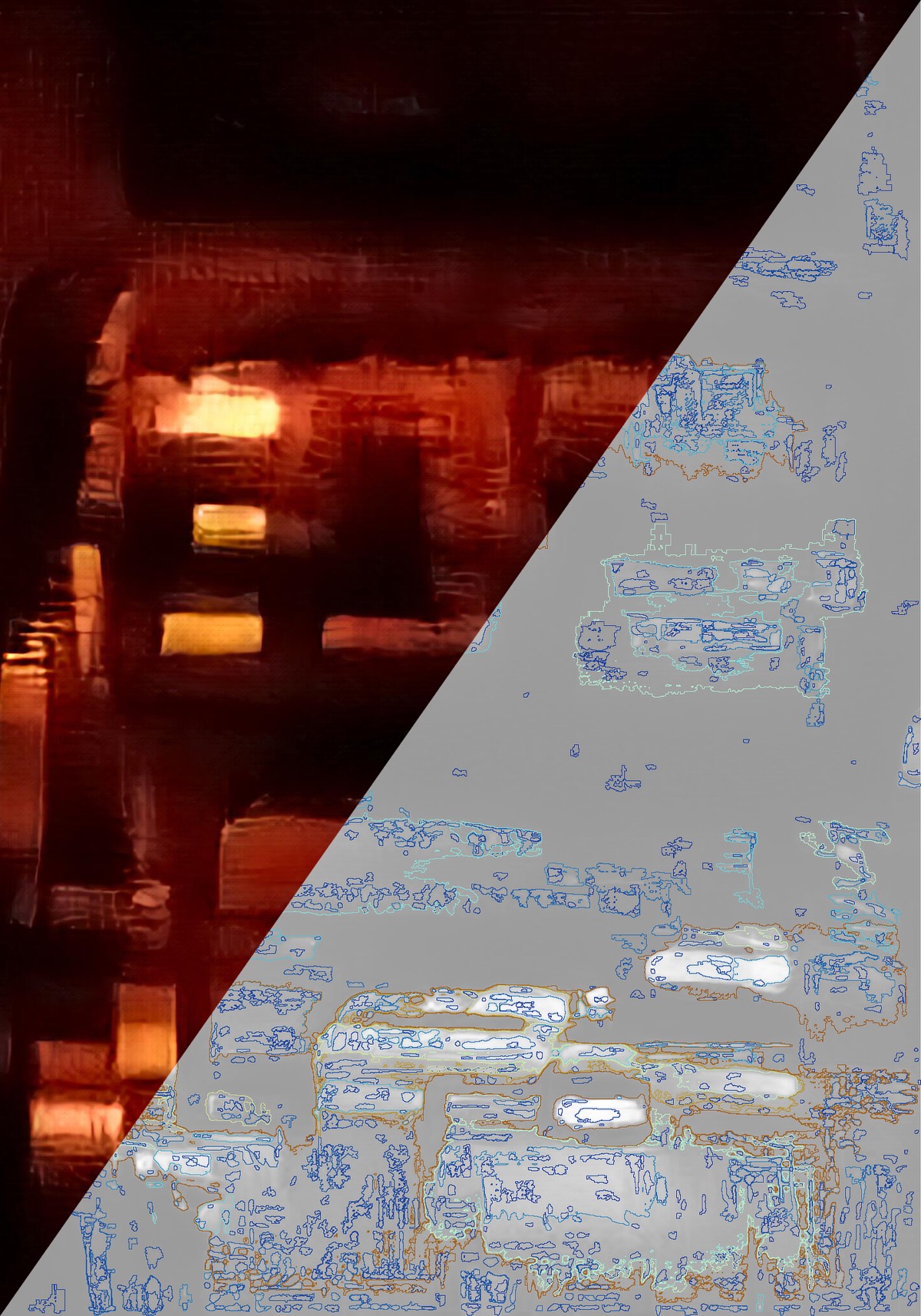
Taste in art is highly subjective, and understanding why some works resonate with the public more than others has long fascinated researchers. Mathematicians think they have identified a hidden “golden rule” of abstract art that might account for why we gravitate toward a Jackson Pollock while lesser works leave us cold, according to a paper published in the journal PLoS Computational Biology. The researchers developed a new analytical method for art, drawing on a computational topology technique that captures structure on multiple scales (“persistent homology”).
They applied this method to a set of abstract paintings by well-known artists and also to a second set of AI-generated “pseudo-art.” Their method could clearly distinguish between the two. Further analysis revealed that works by Pollock, Wassily Kandinsky, and Mark Rothko shared a similar balance of visual elements at the edges (specifically the Alexander duality).
They also conducted experiments that tracked people’s eye movements and recorded their brain activity as they viewed sets of images—both in the lab and in a gallery. There was more stable integrative brain processing when people looked at real art versus pseudo-art, and the eye movements mapped neatly onto the previously identified topological features, suggesting a link between topologically derived image features, eye movement, and aesthetic experience.
PLoS Computational Biology, 2026. DOI: 10.1371/journal.pcbi.1014156.
Political polarization is a phase transition
Credit: Complexity Science Hub (CSH)
Credit: Complexity Science Hub (CSH)
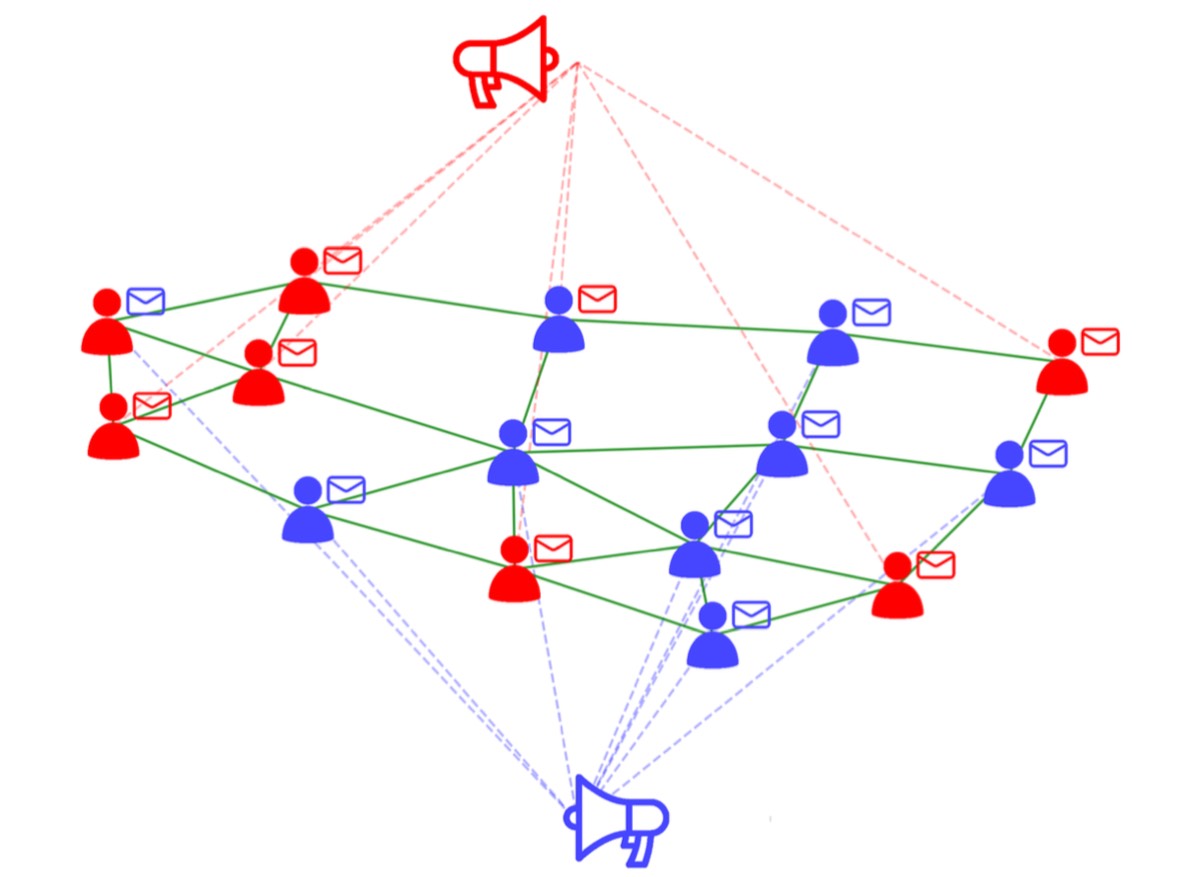
It’s usually assumed that the candidate who spends the most has an electoral advantage, but physics suggests the reality is more complex. Scientists at the Complexity Science Hub (CSH) have found that political polarization behaves like a phase transition, according to a paper published in Physical Review Letters, marked by a critical campaign spending threshold. Below that threshold, social dynamics shape the outcome; exceeding that threshold deepens polarization without significantly increasing the margin of victory.
The CSH team used a statistical physics model to examine bipartisan elections, specifically 6,357 House races (with just two main candidates) spanning 435 congressional districts and 21 election cycles (1980 to 2020). They found that the tipping point is $1.8 million at the district level. (Senate and presidential campaigns have higher absolute spending.) When both parties spend less than that, community interactions shape the outcome. If just one party spends more than that, the campaign gains a decisive edge, drowning out the influence of community interactions. But if both campaigns exceed the threshold, both social influence and high spending become negligible.
Spending more and more doesn’t change the outcome, which usually falls into the 50:50 range. But it does significantly increase polarization. The authors found that the incumbency advantage is also very real, at least in the intermediate spending range. Any challenger must spend about $140,000 to unseat an incumbent, even if said incumbent spends nothing, given the baseline advantage. The scientists hope to extend their analysis to multi-party systems in European democracies to learn more about these dynamics.
Physical Review Letters, 2026. DOI: 10.1103/9gjj-1df6.
Do cats prefer silver vine or catnip?
Credit: Reiko Uenoyama
Credit: Reiko Uenoyama
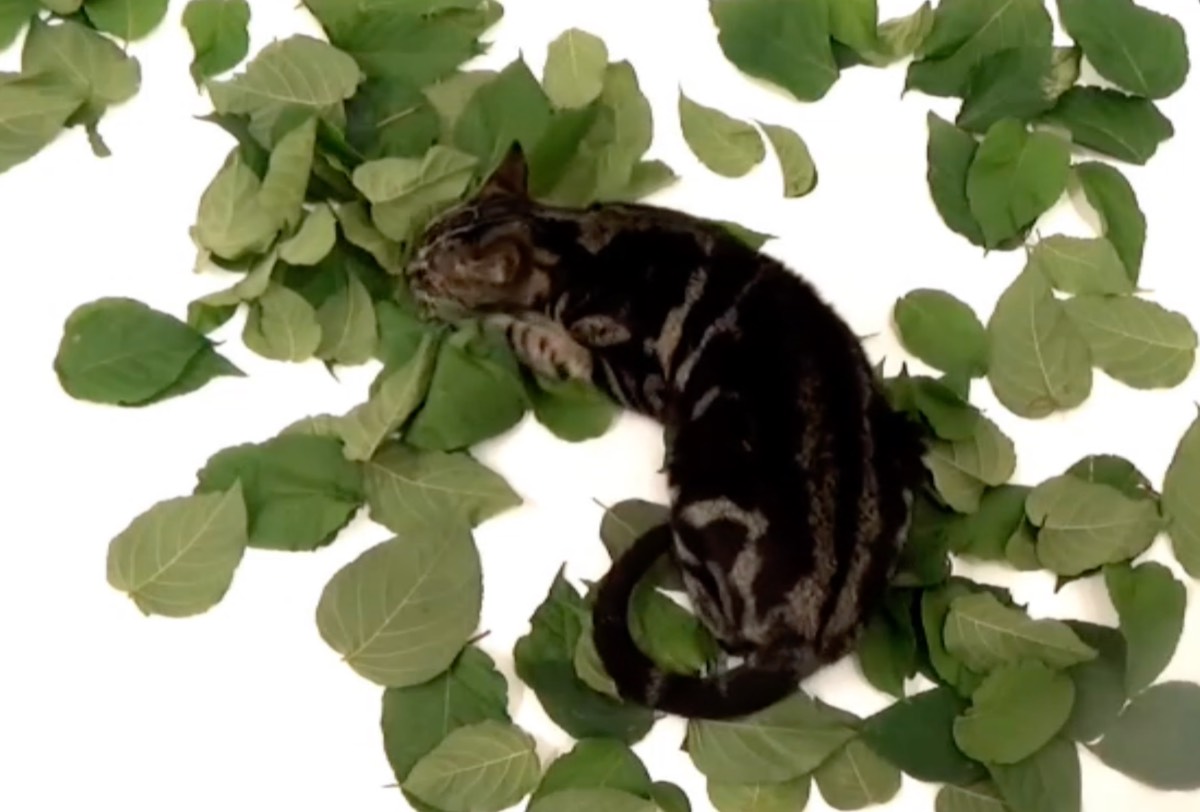
All domestic cats love catnip, right? Well, not necessarily. Japanese cat owners would likely say their cats prefer silver vine (matatabi), which is equally famous for triggering the usual strong kitty response: rubbing their faces and bodies all over it, rolling on the ground, or licking and chewing the leaves. Japanese researchers have conducted several studies and concluded that cats actually have a significant preference for silver vine even though catnip contains more active compounds, according to a paper published in the Journal of Chemical Ecology
First, the team placed fresh silver vine branches and leaves near living catnip plants in a garden and monitored six free-roaming cats over 10 nights. Five cats responded to the silver vine while none responded to the fresh catnip. Repeating the experiment with catnip and silver vine extracts produced similar results. The researchers then tested 22 captive purebred cats with the extracts and found that 15 chose the silver vine, three chose the catnip, one responded to both, and the remaining three cats weren’t interested in either.
There was a clear preference for silver vine even though the amount of bioactive compounds in the catnip extract was 170 times higher than in the silver vine, according to the authors. They suggest that the odors of living catnip might be too strong and intense, which might explain why commercial catnip is usually sold in a dry-leaf form. There is even some historical anecdotal evidence that this is the case: in 1768, botanist Philip Miller wrote in The Gardeners Dictionary that cats were fond of catnip “when it is withered,” but often ignored it when there was a lot of catnip growing in a cluster.
Journal of Chemical Ecology, 2026. DOI: 10.1007/s10886-026-01717-3.

Jennifer is a senior writer at Ars Technica with a particular focus on where science meets culture, covering everything from physics and related interdisciplinary topics to her favorite films and TV series. Jennifer lives in Baltimore with her spouse, physicist Sean M. Carroll, and their two cats, Ariel and Caliban.