


惯性聚合 高效追踪和阅读你感兴趣的博客、新闻、科技资讯
阅读原文 在惯性聚合中打开

推荐订阅源

C
Cisco Blogs
Cyberwarzone
Cyberwarzone
Exploit-DB.com RSS Feed
SecWiki News
SecWiki News
Martin Fowler
Martin Fowler
T
Tor Project blog
N
Netflix TechBlog - Medium
C
Cybersecurity and Infrastructure Security Agency CISA
V
Vulnerabilities – Threatpost
V
Visual Studio Blog
GbyAI
GbyAI
PCI Perspectives
PCI Perspectives
D
DataBreaches.Net
Jina AI
Jina AI
H
Heimdal Security Blog
云风的 BLOG
云风的 BLOG
P
Privacy International News Feed
A
About on SuperTechFans
J
Java Code Geeks
美团技术团队
H
Hackread – Cybersecurity News, Data Breaches, AI and More
N
News | PayPal Newsroom
有赞技术团队
有赞技术团队
MyScale Blog
MyScale Blog
博客园 - 司徒正美
C
Check Point Blog
T
Threat Research - Cisco Blogs
Attack and Defense Labs
宝玉的分享
宝玉的分享
AI
AI
Simon Willison's Weblog
C
Cyber Attacks, Cyber Crime and Cyber Security
I
Intezer
P
Proofpoint News Feed
Blog — PlanetScale
Blog — PlanetScale
Apple Machine Learning Research
Hugging Face - Blog
Hugging Face - Blog
The Last Watchdog
The Last Watchdog
freeCodeCamp Programming Tutorials: Python, JavaScript, Git & More
Vercel News
Vercel News
I
InfoQ
阮一峰的网络日志
阮一峰的网络日志
Cisco Talos Blog
Cisco Talos Blog
W
WeLiveSecurity
Hacker News: Ask HN
Hacker News: Ask HN
Recent Commits to openclaw:main
奇客Solidot–传递最新科技情报
奇客Solidot–传递最新科技情报
D
Docker
博客园 - Franky
Security Archives - TechRepublic

South China Morning Post

Singapore drama sparks Malaysian ire over scam hub depiction Time to act on stalled proposal toughening child abuse penalties, lawmakers say ‘Eager to explore’: Chinese migrants return to Venezuela after Maduro’s capture ‘We have no trust in the other side’: Iran blames US as talks end with no deal Opinion | Why securing Hong Kong’s economic future is a cultural question Hong Kong’s ministerial team spent HK$46.6 million on visits in past 3 years China family creates AI clone to comfort elderly mum after only son dies in crash Canada Olympic star Williams plans on ‘having a ‘blast’ at Hong Kong Sevens Singapore’s robotaxi drive revs up with help from Chinese AV leaders Editorial | Making Hong Kong desirable to overseas students must be a priority All 7 are dentists and hot. The Asian-American family blowing up social media Editorial | Ageing Hong Kong should welcome more open conversations around death My Take | Discovery Bay will never be the same if the restriction on taxi access is lifted Medical intern suspended after complaint over patient data in social media post Fish and vegetarianism major flashpoints in India’s West Bengal election Chinese crystal ‘paves way’ for GPS-free thorium clock navigation SCMP Best Bets: Endued can show his quality at Sha Tin Russia and Ukraine begin 32-hour ceasefire for Orthodox Easter Israeli spy firm Black Cube involved in Cyprus corruption probe ‘A big deal’: military drills show Tokyo’s growing focus on deterring China China targets middlemen in renewed crackdown on ‘hidden’ corruption Hong Kong-born gymnast leading quest to turn Singapore into elite hub Thais celebrate new year despite fuel price shocks delaying travel Harry Bentley tees up two good chances in Smart Golf and Elite Golf at Sha Tin Is this Kenyan rail project a model for Chinese and Western firms in Africa? Unearthing peace: ancient China gravesite reveals significance of broken weapons Meet Queen Elizabeth’s youngest grandchild, James, who was at Easter service Turtle found dead after apparent fall in Hong Kong’s Wong Tai Sin Landlords of 5,557 subdivided homes seek 3-year grace period to fix flats Trump critique pauses UK handover of Chagos Islands to Mauritius Hong Kong’s Cathay Pacific and HK Express cut some flights as jet fuel prices rise Calls grow for HKMA to go further on stablecoins after conservative first batch Nepal’s school fee crackdown upends South Asian private education norms DeepSeek ramps up hiring ahead of V4 launch as chip strategy questions swirl Hins Cheung to lead arrested 2019 Hong Kong protesters on mainland exchange trips Macroscope | Can World Bank and IMF leaders rescue a global economy on the brink? Hong Kong proposes mandatory renovation briefings to combat bid-rigging The winners from China’s growing intercity football rivalries may surprise you China warns university students about lucrative job offers from foreign spies Profile | Who is Byeon Woo-seok, IU’s co-star in romance K-drama Perfect Crown? Richard Kingscote hopes lightweight ride will be a Force again: ‘I’m happy to squeeze the lemon a bit for a horse like him’ Tighter civil service disciplinary rules risk becoming excessive: union head How the Gulf conflict recast risks for Asian investors in Dubai What does China’s tightening grip on red-chip structures mean for IPOs? South Korea’s president hits back at Israel in row over ‘disturbing’ video China café sets ‘entry rules’, ban littering, discarding black stockings, turtle theft Samsung weighs China overhaul as local rivals pile on the pressure Beijing’s point man on Hong Kong affairs wraps up second bay area visit in 3 weeks Gucci shoes worth HK$11,000 stolen from shopping centre restroom in Hong Kong Vaccine coverage gaps spur Bangladesh’s deadly measles outbreak How to get an iPod and set it up as Apple’s music device makes a comeback Global wealth gap widens as aid to world’s poorest sees record drop Malaysia detains masseuses from China offering ‘extra services’ Asian Angle | Who is Vietnam’s new Prime Minister Le Minh Hung? ‘Cancelling orders’ in China: Hormuz oil crisis hits transport and manufacturing Discovery Bay developer submits proposal for full taxi access despite backlash Hong Kong hairstylist’s cancer battle takes him on a crowdfunding campaign UAE pulls US$3.5 billion from Pakistan after Iran war mediation Champions-elect Kitchee out to prove they are city’s best despite cup final flop US-Iran talks in Islamabad stretch on as Hormuz stand-off fuels duelling claims Letters | Policy outcomes of Hong Kong’s mega-events can be improved Asia’s ‘panicked farmers’ brace for a looming rice crisis post-Iran war Can Hong Kong’s listing reform 2.0 win over innovative firms? Was Penang ‘robbed’ from Kedah? Malaysian states face off in sovereignty row Why has China mapped out a third new county in Xinjiang on its western frontier? Rory McIlroy in total command at the Masters, takes 6-shot lead into the weekend As I see it | Helpful analysts predict China property recovery now, soon and much later 73 public schools join new scheme to hire native English-speaking teachers How gossip spread in ancient China before newspapers reported on scandals Molotov attack on OpenAI CEO Sam Altman’s home leads to arrest Reflections | Cremation was frowned upon in ancient China, so why was it so widespread? Japan’s Middle East oil habit gets an Iran war reality check Ex-Wales flanker Parks on ‘dark thoughts’ and going Pole to Pole with Will Smith In pictures: 50 years of mud, sweat and beers at the Hong Kong Rugby Sevens China’s Li Qiang hosts Moonshot AI chief, urges faster industrial AI roll-out Editorial | Cheng’s Beijing visit underscores hope for cross-strait engagement Hypertension’s link to dementia calls for stronger blood pressure control Artemis II astronauts return home from record-breaking moon mission Editorial | Hong Kong’s rare, speedy response to fuel price surge shows preparedness This new exhibition pays tribute to Queen Elizabeth’s style legacy Vocational schools a new front as China backs businesses’ global expansion Meet Gerran Howell, who plays Dr Whitaker in HBO Max’s The Pitt Trump’s tariff powers tested again as court questions ‘deficit’ justification Opinion | China’s next growth engine? An AI-powered intelligence dividend Trump tariff refund tool will go live on April 20, US Customs says China, Russia rally behind Cuba as US squeezes Havana in deepening crisis US presses Iran as talks gear up in Pakistan under fragile ceasefire Trump unveils plan for his giant triumphal arch: eagles, lions, lots of gold High fertiliser prices mean more soybeans for farmers – and greater reliance on China Prince Harry sued by African charity he set up to honour Princess Diana Ukrainians sceptical as Russia’s Putin orders Easter truce Girl, 9, in a critical condition with meningococcal infection after holiday in Japan China banks buffer against AI contagions as US sweats over Anthropic’s Mythos China telecoms face US exit risk as FCC deepens crackdown on data centres China police detain and fine man behind cyberbullying of Olympian Quan Hongchan Man jailed for killing ‘ruthlessly’ abused wife who jumped from Scottish bridge Tai Po blaze: no fire risk checks done for HK$336 million estate renovation Taxi passengers won’t benefit from Hong Kong’s 50% reduction in tunnel tolls Tencent moves to rein in AI content flood on WeChat with stricter rules China-North Korea thaw gathers pace as Kim says ties have reached a new level
Unlocking your genetic code: the potential health benefits of DNA sequencing
Peter Shadbo · 2026-05-10 · via South China Morning Post

As healthcare shifts focus from treatment to prediction – for the ultra-wealthy, at least – an opportunity presents itself: if risk can be identified early enough, can it be managed or even avoided altogether? Genome sequencing analyses an individual’s full DNA, revealing variations that may shape disease risk and treatment response. For wealthy clients, it can turn health uncertainty into something more controllable – identifying risks early and even having the chance to act on them.

For Carole, a Hong Kong-based finance professional who underwent genome sequencing more than a decade ago, curiosity ultimately won out. Even though she describes herself as a “late adopter and an early giver-upper”, the promise of what her DNA might reveal was difficult to ignore.

“I was curious to see what it turned up, but I found myself getting nervous about what it might uncover,” she says. “There was also the question of whether I really wanted to know what was lurking in my genetic code.”

The process involves analysing DNA from a saliva or blood sample – a simple enough process – and comparing it with large databases to identify genetic variations linked to disease risk and treatment response.
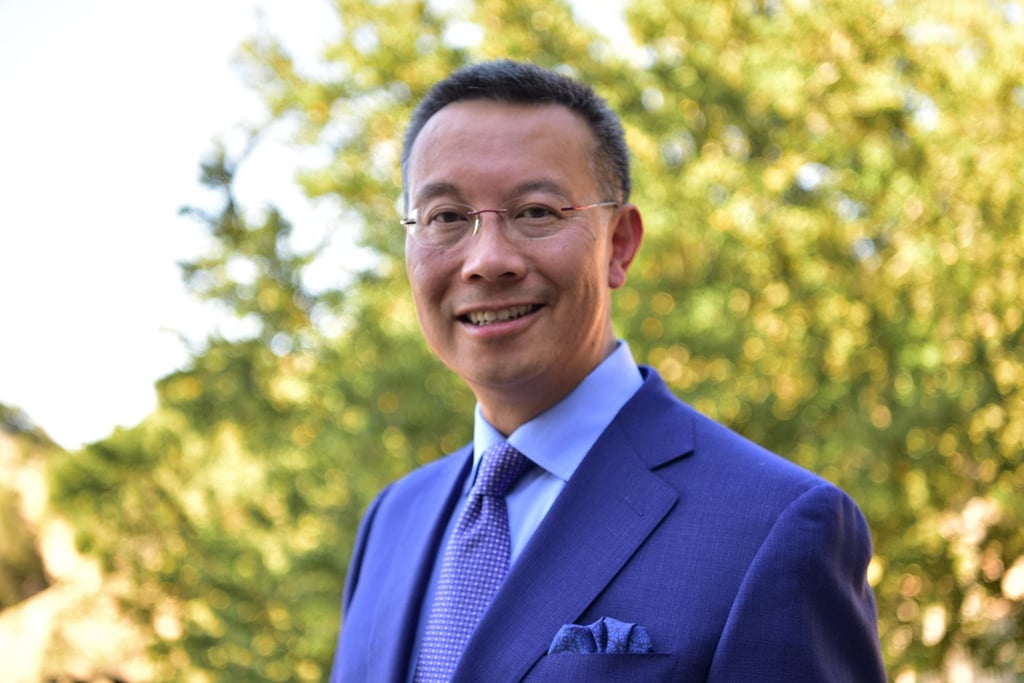
Daniel Siu, founder and CEO of Rainbow Genomics, says Hong Kong is known for its high-quality medical care and internationally recognised clinical standards. Photo: Handout

Daniel Siu, founder and CEO of Rainbow Genomics, says Hong Kong is known for its high-quality medical care and internationally recognised clinical standards. Photo: Handout

“In the end, my results showed surprisingly few mutations,” she says. “That has left me worrying I might live until I’m 105, like my great aunt – which could, in fact, be even worse.”

Her experience reflects a broader shift in approaches to healthcare. Advances in genomics are reshaping healthcare from a reactive system into a predictive and personalised model.

As regional genome projects scale up, clinicians are increasingly using genetic data to guide both diagnosis and therapy. Yet the effectiveness of these tools depends heavily on the data behind them.

“Most existing genomic reference data sets are heavily skewed toward European populations,” says Daniel Siu, CEO of Rainbow Genomics. “This creates real clinical limitations, as variants may be misclassified, and risk predictions may be less accurate for Asian individuals.”

Rainbow Genomics, which has operations in Hong Kong and San Francisco, has launched an Asian genomic database integrating genome sequencing, pharmacogenomics and clinical data from thousands of patients to improve how disease risk and other metrics are interpreted in populations in the region.

The aim of combining genetic data with detailed clinical profiles is to improve the accuracy of diagnosis and risk prediction, particularly as genetic testing moves beyond specialist settings into broader health planning. In addition to diagnosis, genetic testing can aid in day-to-day decisions.

A growing number of services now translate this information into lifestyle recommendations, from diet and exercise to sleep patterns and preventive screening. This so-called “precision living” approach has gained traction among younger wealthy clients already accustomed to tracking health metrics through wearable devices.

Genes determine where we start – they define our baseline health risk. However, proteins and metabolites reflect our current physical health

However, the scientific basis for some of these recommendations remains uneven. While certain gene-disease links are well established, others are still the subject of ongoing research, raising questions about how precisely lifestyle interventions can be tailored.

“I tried to adjust things after my results came in – what I was eating, how I exercised – but it’s not that easy to sustain,” says Carole.

Where genetic testing moves most clearly beyond lifestyle guidance is in its application to treatment, particularly in the emerging field of pharmacogenomics. This, combined with advances in data analysis, is also expanding how biological information is used in clinical decision-making.

Researchers at the University of Hong Kong (HKU) last month announced they had developed an artificial intelligence-based tool that integrates genetic, protein and metabolic data to predict cardiovascular risk years before symptoms appear.

“Genes determine where we start – they define our baseline health risk. However, proteins and metabolites reflect our current physical health,” says Zhang Qingpeng, associate professor in HKU’s department of pharmacology and pharmacy. “Our AI tool is designed to decode these signals, enabling doctors and patients to identify risks much earlier.” By analysing specific gene variants, clinicians can better understand how a patient metabolises certain drugs, helping to reduce adverse reactions and improve the medication’s effectiveness.

In practice, this can help avoid the trial-and-error approach that often characterises prescribing, particularly in areas such as mental health, oncology and cardiovascular disease. For patients, the impact can be immediate: genetic testing may indicate that a commonly prescribed drug is unlikely to work, or that a different dosage is required.

While this approach is gradually entering mainstream healthcare systems, adoption remains uneven. Private providers are often able to offer broader testing and faster integration into care, reinforcing the gap between those with access to personalised medicine and those without, while mass-market firms such as 23andMe offer relatively low-cost genetic testing.

At the more specialised end, companies such as Veritas Genetics and Human Longevity provide whole-genome sequencing alongside physician-led interpretation and ongoing health programmes for individuals.
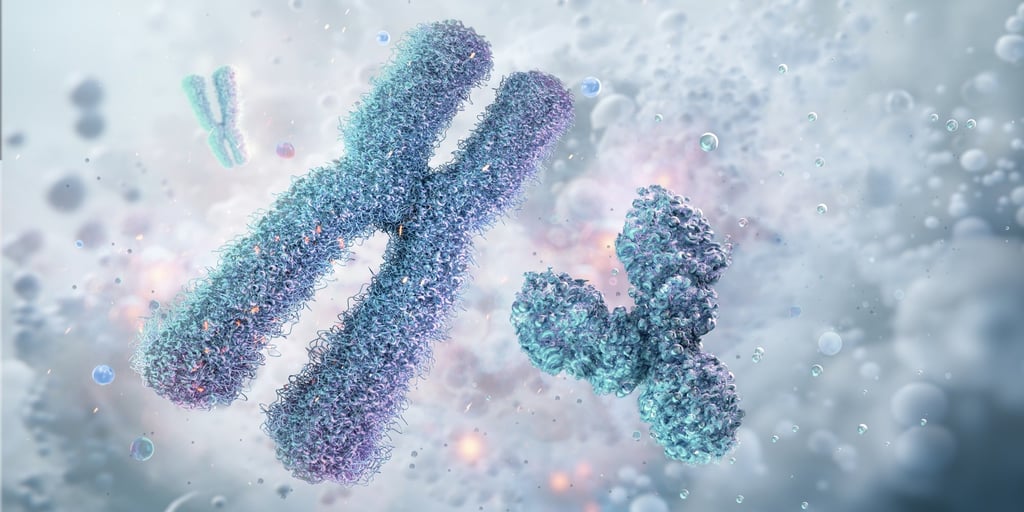
An artist’s impression of human X and Y chromosomes. Photo: Shutterstock

An artist’s impression of human X and Y chromosomes. Photo: Shutterstock

For UHNWIs, the choice of provider often hinges not just on scientific capability, but on discretion. Genetic data is uniquely sensitive, and concerns about privacy, storage and potential misuse remain central to the decision-making process.

Despite falling sequencing costs, comprehensive genomic programmes remain expensive. Basic genetic tests can cost a few hundred US dollars, but full genome sequencing with clinical interpretation typically runs into the thousands. Ongoing programmes that include continuous monitoring and personalised care can cost significantly more.

This has created a two-tier system. While elements of genetic testing are becoming more accessible, the most advanced forms of personalised medicine remain largely confined to those able to pay for private care.

Even for those with the resources, for all its promise, personalised medicine is far from a crystal ball. Genetic testing can highlight risk factors, but it cannot fully account for environmental factors, lifestyle choices or the randomness inherent in biology. Nor can it predict exactly when, or if, a condition will develop.

For individuals like Carole, the experience can be as much psychological as medical. “Because nothing alarming came up, I think I’ve ended up just trusting my genes to carry me through,” she says. “I mean that’s probably a case of famous last words, but it has given me a degree of reassurance.”