











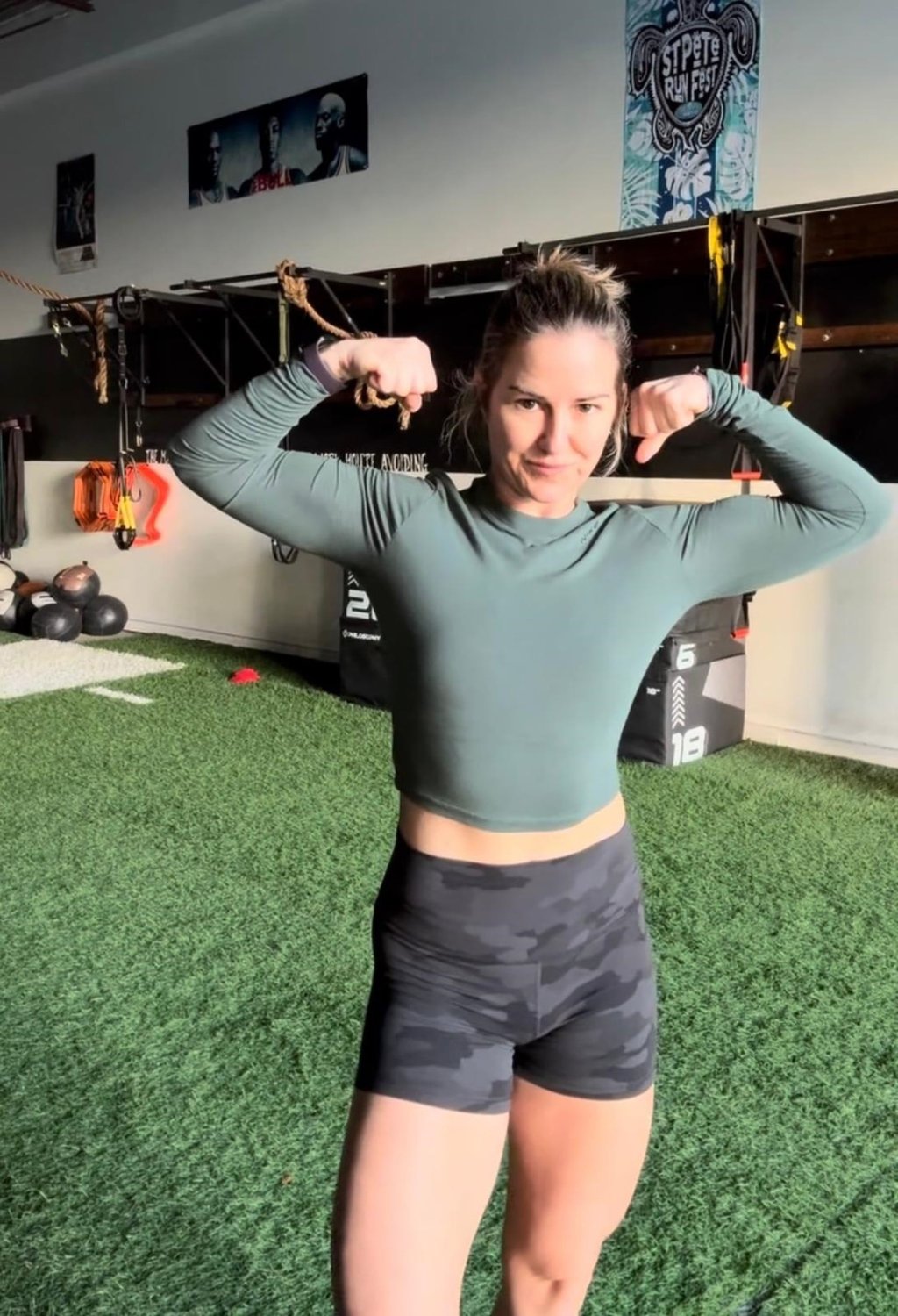
Jennifer Lynn knows she is a “guinea pig”. The 43-year-old former ice hockey player turned athletic coach, who is based in Tampa Bay, Florida, has been “stacking” synthetic peptides for the last year. It is a trend that some see as the future of medicine, but others view as a reckless gamble.
“I know a lot of people who are sceptical and who are not willing to be guinea pigs,” she says. “While I never push peptides on my clients, I will tell people about my experiences if they ask. Personally, I feel good on it, strong and well-recovered. If I stop taking it, I notice.”
Lynn is no casual user; she is a high-performance athlete, working with a coach herself four to five days a week. Her routine involves hurdles, explosive sprints and “jump training” exercises, designed to increase muscle power, speed and strength. Rapid muscle recovery is crucial for her.
Peptides are short chains of two or more amino acids – the building blocks of proteins – linked by peptide bonds. They are not exotic chemicals; they are signalling molecules that your body already produces naturally.
Insulin, oxytocin and growth hormones are all peptides that tell your cells how to act, whether to repair a tear, produce collagen or regulate your metabolism.
“Peptide stacking” is the practice of taking different synthetic molecules together – either orally or by injection – to amplify their effects. That could be to help with insomnia, injury recovery, weight loss, muscle growth and more.
For example, semaglutide, a glucagon-like peptide-1 (GLP-1), is a well-known synthetic peptide approved by the US Food and Drug Administration used in newer weight-loss drugs. It is often “stacked” with another peptide known as CJC-1295/Ipamorelin – which has not yet been approved – to lose weight while preserving and building muscle.
此内容由惯性聚合(RSS阅读器)自动聚合整理,仅供阅读参考。 原文来自 — 版权归原作者所有。