


The notes of one of Chopin’s nocturnes drifted up through the deep underground air inside Noksapyeong station in Seoul on a recent Monday afternoon, echoing off curved walls and bouncing against translucent glass banisters.
A commuter sat at an upright piano in the concourse – one of the station’s cultural fixtures – and for a few unannounced minutes, the cavernous hall felt less like a subway station and more like a dream that missed its exit.
That is precisely the effect Noksapyeong station tends to have on people.
Even after 25 years of operation, the most architecturally audacious station on Seoul Metro Line 6 can still make passengers pause mid-escalator, compelled to look up, down or sideways at a structure that seems more like a science-fiction film set than a city subway system.
In a sense, it was built for a world that never quite materialised.
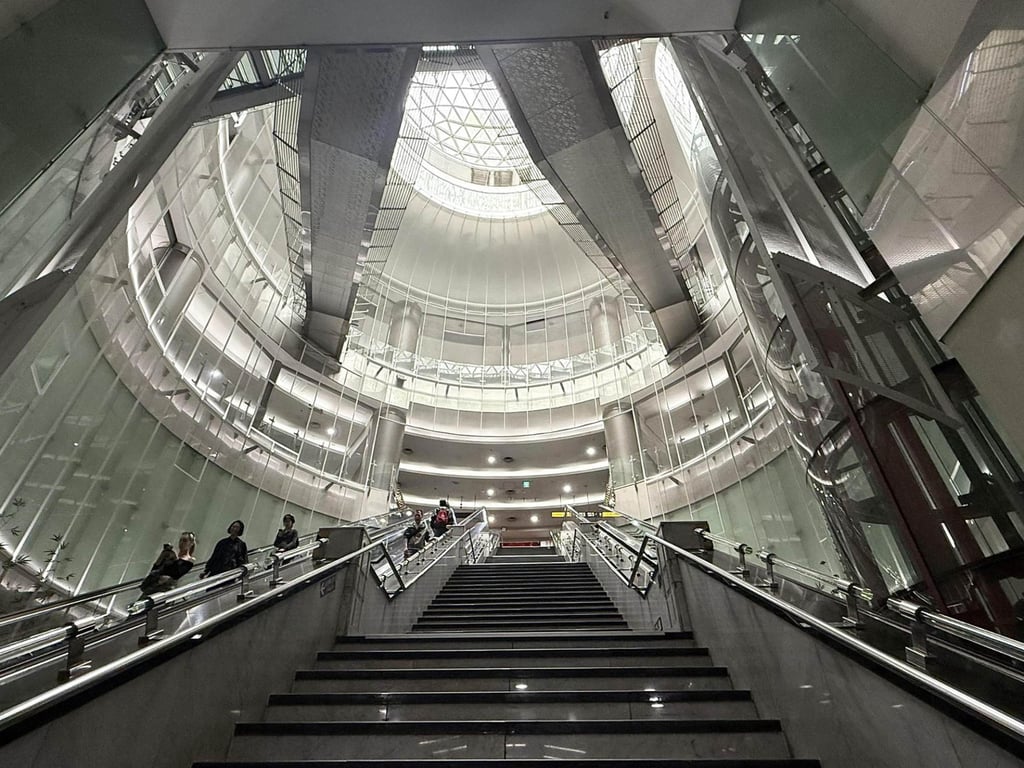
When Seoul began constructing its sixth metro line in the mid-1990s, planners had a reason to dream big around the Noksapyeong area: officials were considering relocating Seoul City Hall there, to the site of the current Yongsan district office.
此内容由惯性聚合(RSS阅读器)自动聚合整理,仅供阅读参考。 原文来自 — 版权归原作者所有。